The Blue Jay : : By Hamlin Garland
▼
His eye is bright as burnished steel,
His note a quick defiant cry;
Harsh as a hinge his grating squeal
Sounds from the keen wind sweeping by.
Rain never dims his smooth blue coat,
The winter never troubles him.
No fog puts hoarseness in his throat
Or makes his merry eyes grow dim.
His cry at morning is a shout. —
His is subject to his heart.
Of fear he knows not—doubt
Did not draw his sailing-chart.
He is an universal emigre;
His foot is set in every land.
He greets me by gray Casco bay,
And laughs across the Texas sand.
In heat or cold, in storm or sun
He lives unfearingly, and when he dies
He folds his feet up one by one
And turns his last look at the skies.
He is the true American! He fears
No journey and no wood or wall
And in the desert, toiling voyagers
Take heart of courage from his call.
Blue Jay And Sparrow : Max Eberts : ( 1 ) : Blue Jay ( Fun Facts ) Narrative Video : Lesley ( Bird Nerd ) : ( 2 ) : : Bird Poems : :

likes the blue jay over the sparrow
my mother loves. The jay is a winner,
the color of first prize. Blue
is ablaze when the jay takes flight.
Blue—my father’s favorite color. : CLICK HERE In BELOW to Know 10 Interesting 🤔 Fun Facts in A Narrative Video Presented By Lesley ( Bird Nerd ) : : 1) One of the first American Blue Jay Bird found by The Colonial Visitors / Resident migrant As most beautiful & Intelligent On American Soil. ( 2 ) Blue Jay babies grow very fast. ( 3 ) Blue Jay is not State Bird of Any American States. ( 4 ) Blue Jays are very noisy Birds. ( 5 ) No Visual difference between the male & Female Blue Jays. ( 6 ) Length of Blue Jay is Avg. 10 To 12 Inches , Up to a Foot long & They fly with the Speed @ 20 To 25 Miles Per Hour. ( Wing Span is 13 To 17 Inches & Weight of 2.5 To 3.5 Ounces ) ( 7 ) Blue Jay s communicate with their Crest ( 8 ) Blue Jays are aggressive in maintaining their territories, They prevent other small Birds of their areas and can ward them off. If few people / Some animals don’t like them it is because of their noisy , Shrilling Voices. ( 9 ) Avg. Life Of Blue Jays is 7 Years , Yet many Blue Jays are found to live as long as 10 To 25 years. A Record long life was even 27 years in the oldest Blue Jay. ( 10 ) Blue Jays belong to family dated back 25 Million years Old. : : : :
https://youtu.be/NPta-zaYnaQ?si=LIAVdRkOok3hEOKS
Blue Jay : : by Max Eberts
Blue feather, blue flame—my father
likes the blue jay over the sparrow
my mother loves. The jay is a winner,
the color of first prize. Blue
is ablaze when the jay takes flight.
Blue—my father’s favorite color.
Once when I was young helping
with yard chores, I found
a blue jay feather glistening in the light—
and ran to show it to my father, who asked,
Is there anything bluer than a jaybird,
unless it’s your brother’s eyes?
It’s true—eyes like blue jade,
eyes that startle when they catch
yours—not brown like mine.
My brother, a real looker, but loud
and raucous, a blusterer always
busting onto the scene, a prankster,
his antics an unrelenting routine—
grabbing food off my plate,
especially steak, hoarding cookies
before downing the last two in the jar,
wrecking my bike, my guitar,
or raiding my tidy room, taking
whatever he likes. But when I enter
the jay bird’s nest, that tousled mess
of a room, to retrieve what’s mine,
he screams at the top of his lungs
Thief! Thief! And when my friends
come over, big brother—taller, stronger—
dares us all to take him on,
goading, shouting, Do it! Do it!
What’s worse is when his friends are over—
a gang of jays ganging up on a sparrow—
the blitz reaches its shrillest pitch.
Yet my father forgives my brother
for his noisy ways, his bad habits,
just as he does the jay—too beautiful,
too spirited not to forgive.
My brother, too handsome, too boyish
not to favor, always showing off,
always stirring up my father’s pride.
The natural athlete hurls himself
into danger the way a jay bounds
with ease through perilous tree tops.
Diving headfirst to steal home plate, flying
into the end zone for a touchdown pass,
like a jay swooping to snatch
a cicada on the wing—my brother,
a winner, Fall River’s Boys League
MVP, every year, every sport,
taking first prize. And so for years,
I kept that glistening blue feather—
perfect, beautiful as his eyes—placing it
in an old leather box my father gave me,
stashing it under my lucky jersey,
my blue baseball jersey,
certain it would give me power—
to play like him, to be handsome like him,
to win my father’s pride.
— Max Eberts
” Blue Jay and Sparrow”, A Bird Poem By Max Eberts is About The Two Birds , their life – like Pictorial depictions ; “The first prize Winner Blue Jay having Blue feather, blue flame : : the color of first prize. Blue is ablaze ( looking brilliant ) when the jay takes flight.”; 💙 And About The sparrow of brown colour of low brightness and low saturation like Wood 🪵 ; And About The Speaker’s World in association With These Two Birds and his own Family of his Father and Mother and With father’s blue eyed son , taller and stronger , his big brother having eyes , more bluer than the Jay Bird. : The Speaker believes this as “true”as he calls the said eyes consisting of “jaded” , that is, ‘blueish green’ colour, “startle/ surprise with taking hold of you / “catch(ing)” , that is, succeed in seeking your complete attention. Not like his own brown 🟤 colour of eyes.

The Speaker kept “glistening blue colour feather” ( found by him while doing some tasks in home yard ) “in an old leather box his father gave him.” He saved it up as for future use by “stashing under his lucky blue baseball jersey” : He was “certain that it would give him power to play like his big brother, to be as handsome like him to win his father’s pride.” — “His brother” was always “a winner, Fall River’s Boys League
MVP ( Member Vice President ) every year, every sport,” : The Speaker honours His brother as “too handsome, too boyish , not to favor, always showing off, always stirring up my father’s pride.”: : He has described his brother calling him a “real looker, but loud
and raucous ( rowdy ) , a blusterer( big mouth ) always busting ( raiding ) onto the scene ( to get what he needed ), a prankster” ( playing jokes on others ) : When he gangs up with his friends , he looks like so many “Jays” in group have come over the “groups of Sparrows taking them on, goading and shouting , emitting the highest level shrill.” Yet the “father forgives his brother for his noisy ways, his bad habits, just as he does , ( like ) the jay—too beautiful, too spirited not to forgive. The Speaker narrates how his brother is unreasonable in his odd outrageous tricks in “his antics”, an “unrelenting ( continual ) routine— grabbing ( snatching ) food off my plate, especially steak, hoarding cookies ( in large numbers ) before downing the last two ( eats up entirely leaving hardly two ) in the jar 🫙🫙, wrecking ( bringing ) my bike, my guitar (to a weakened/fallible condition), or raiding my tidy room, taking whatever he likes. But when I enter the jay bird’s nest, that tousled mess ( disorderly Jam/ mess up ) of a room, to retrieve ( bring/get back, recollect ) what’s mine, he screams at the top of his lungs : Thief! Thief ! : : : :
The natural athlete hurls ( thrusts ) himself ( forward ) into danger the way a jay bounds ( springs up to move forward ) with ease through perilous ( unsafe ) tree tops. The Speaker presents a picture of “Diving headfirst to steal home plate, flying
into the end zone for a touchdown pass,
like a jay swooping ( moving down as if attacking on prey ) to snatch
a cicada ( stout bodied insect with large membranous wings ) 💸 on the wing—my brother, ( pounces on to be ) a winner.” 🏆🏆
It is clearly established from the aforesaid discussion as presented by The Poet Speaker in the way to looking through the Blue Jay Bird switching seemingly the two living beings domineering the locale of his living during the time when he was young and growing up alongwith his big brother and The Blue Jay Bird alongside both being substitutional and with an exemplary standing in the place of one another. Although his big brother in Blue and Blue Jay Bird outshined the embrowned Sparrow – like little brother –the Poet Speaker remains inseparable From his inspiring Family just like a Familiar House Sparrow From The Human habitation. 🏠🏡🏠🏡
“Blue Jay And Sparrow”, A Bird Poem By Max Eberts Information Appreciation and poem Analysis Presented by V Jayaraj Pune India December 18, 2023 : : : : : : : :
Dream : Blue Jay Or Archeopteryx : Margaret Atwood : : Bird Poems : :


“Dream: Blue Jay or Archeopteryx”, A Bird Poem By Margaret Atwood is About The blue jay’s moving and noise and the excitement it feels in the wild. Here, the blue jay is a symbol of happiness, speed, and adventure.
Notes for each of the lines Pending visit this post again later on to enjoy the appreciation of the poem V Jayaraj Pune India December 17, 2023 : : : :
Blue Jay : Edgar A Guest : : Bird Poems : :
Blue Jay : : By Edgar A Guest

“Blue Jay”, A Bird Poem By Edgar A Guest is About An Intro of a Blue Jay Bird in nutshell that unveils his familiarity with the Poet Speaker who has been impressed by his braveness in staying back in a Cedar tree all along long Winter. The Speaker describes him as gayly dressed ( in blue and white ) , feathered robber, not decent and insistently crow – like that can be believed to be cousin to Crow. He has no morals and has very few manners that can be rarely noticeable. There is no music in his call. Yet, he should be regarded for his absorbed look of rapt attention and delight for his charm that lies in his coat of 💙🔵 When all other birds including richer throated birds flee away on many a dismal days of Winter The Blue Jay is brave enough to stay. Because of difficulty in finding rich source of food in Winter ❄️ The Winter Blue Jay likes to wait for daily gift of bread from the known people near to him. : :
“Blue Jay”, A Bird Poem By Edgar A Guest , Information Appreciation and poem Analysis Presented by V Jayaraj Pune India December 16, 2023 : : : : : : : :
The Rat Of Faith : Philip Levine : : Bird Poems : :

The Rat Of Faith : : by Philip Levine
A blue jay poses on a stake
meant to support an apple tree
newly planted.
A strong wind
on this clear cold morning
barely ruffles his tail feathers.
When he turns his attention
toward me, I face his eyes
without blinking.
A week ago
my wife called me to come see
this same bird chase a rat
into the thick leaves
of an orange tree.
We came as
close as we could and watched
the rat dig his way into an orange,
claws working meticulously.
Then he feasted, face deep
into the meal, and afterwards
washed himself in juice, paws
scrubbing soberly.
Surprised
by the whiteness of the belly,
how open it was and vulnerable,
I suggested I fetch my .
22.
She said, “Do you want to kill him?”
I didn’t.
There are oranges
enough for him, the jays, and us,
across the fence in the yard
next door oranges rotting
on the ground.
There is power
in the name rat, a horror
that may be private.
When I
was a boy and heir to tales
of savagery, of sleeping men
and kids eaten half away before
they could wake, I came to know
that horror.
I was afraid
that left alive the animal
would invade my sleep, grown
immense now and powerful
with the need to eat flesh.
I was wrong.
Night after night
I wake from dreams of a city
like no other, the bright city
of beauty I thought I’d lost
when I lost my faith that one day
we would come into our lives.
The wind gusts and calms
shaking this miniature budding
apple tree that in three months
has taken to the hard clay
of our front yard.
In one hop
the jay turns his back on me,
dips as though about to drink
the air itself, and flies.
— Philip Levine
“THE RAT OF FAITH “, A Bird Poem by American Poet Laureate , Philip Levine is About A blue jay who poses on a stake meant to support an apple tree newly planted. The Poet Speaker has established an encounter as he sees between him and A Blue Jay. He watched the bird chasing a Rat in to the thick leaves of an Orange tree and failing to catch it as it could work out the digging craftily for its disappearance. He observed him how he feasted in to his meal. Also, His appearance in open with his fascinating and unguarded white belly as if attractive to kill easily. The Poet Speaker didn’t kill him for his thinking that there were enough oranges for both the Blue Jay and for his family.
Then The Poet Speaker explains why he always has had a fear of his flesh being eaten cruelly by the same horrifying , hugely grown , and powerful Rat as that would be susceptible to such infesting attempts upon him while asleep.
His dream of living by a bright beautiful city would not be fulfilled as he experienced waking from his incomplete dreams every night. He narrates in one recall in the last stanza of the Poem, ” The wind gusts and calms
shaking this miniature budding
apple tree that in three months
has taken to the hard clay
of our front yard.
In one hop
the jay turns his back on me,
dips as though about to drink
the air itself, and flies.”
The “hard clay” like formation of an “Apple tree of their front yard” in his dream , is suggestive of a deathblow by a gust of wind , instead of coming true of his cherished desire of growing Apple Tree that was as envisaged by the Poet Speaker , was supposed to have been supported by the Blue Jay Winter Bird ( a representative guardian Angel Bird ) who showed his interest in the tree for his marked posture of seat. The miniature budding Apple Tree has not lasted for long and has been shaken off and calmed down. All His hopes for a beautiful living, in the brightness of the city he dreams up to fulfill quickly, and would be proved vulnerable to some natural disaster and would be lost.
Richard Hugo commented in the American Poetry Review: “Levine’s poems are important because in them we hear and we care.” We look through the place where we have to live and then we dream of the beauty adjacent to us that will show us a bright days to come. We look up to our imaginative guard. We also see, hear and feel the fears around our living. As Richard Tillinghast in his New York Times Book Review noted about Levin’s poetry, “We are someone with thinking and feelings and a free-wheeling imagination that constantly fights to free him from his prosaic environment.” The wearisome constancy of fear would devour us and as a matter of fact we might not challenge the Fear : The “Rat of Faith.” : : : : : 🍎🍏🍎🍏🍎🍏🍎🍏🍎🍏🍎🍏🍎🍏🍎🍏🍎🍏
“The Rat of Faith”, A Bird Poem By Philip Levine, Information Appreciation and poem Analysis Presented by V Jayaraj Pune India December 15, 2023 : : : : : : : :
A Winter Blue Jay : Sara Teasdale : : Bird Poems : :

1884 – 1933
Sara Trevor Teasdale was born on August 8, 1884, in St. Louis, into an old, established, and devout family. She was home-schooled until she was nine and traveled frequently to Chicago, where she became part of the circle surrounding Poetry magazine and Harriet Monroe. Teasdale published Sonnets to Duse, and Other Poems (The Poet Lore Company), her first volume of verse, in 1907. Her second collection, Helen of Troy, and Other Poems (G. P. Putnam’s Sons), followed in 1911, and her third, Rivers to the Sea (Macmillan), in 1915.
In 1914, Teasdale married Ernst Filsinger. She had previously rejected a number of other suitors, including Vachel Lindsay. She moved with her new husband to New York City in 1916. In 1918, she won the Columbia University Poetry Society Prize (which became the Pulitzer Prize for Poetry) and the Poetry Society of America’s Prize for Love Songs (Macmillan), which had appeared in 1917. She published three more volumes of poetry during her lifetime: Stars To-night: Verses New and Old for Boys and Girls (Macmillan, 1930); Dark of the Moon (Macmillan, 1926); and Flame and Shadow (Macmillan, 1920).
Teasdale’s work has been characterized by its simplicity and clarity, her use of classical forms, and her passionate and romantic subject matter. Her later books trace her growing finesse and poetic subtlety. She divorced in 1929 and lived the rest of her life as a semi-invalid. Weakened after a difficult bout with pneumonia, Teasdale died by suicide on January 29, 1933. Her final collection, Strange Victory (Macmillan) appeared posthumously that same year. ( From poets.org )

A Winter Blue Jay : : By Sara Teasdale ( 1884 – 1933 )
Crisply the bright snow whispered,
Crunching beneath our feet;
Behind us as we walked along the parkway,
Our shadows danced,
Fantastic shapes in vivid blue.
Across the lake the skaters
Flew to and fro,
With sharp turns weaving
A frail invisible net.
In ecstasy the earth
Drank the silver sunlight;
In ecstasy the skaters
Drank the wine of speed;
In ecstasy we laughed
Drinking the wine of love.
Had not the music of our joy
Sounded its highest note?
But no,
For suddenly, with lifted eyes you said,
“Oh look!”
There, on the black bough of a snow flecked maple,
Fearless and gay as our love,
A bluejay cocked his crest!
Oh who can tell the range of joy
Or set the bounds of beauty?
— Sara Teasdale
This poem is in the public domain.
“A Winter Blue Jay”published in Teasdale’s book Rivers to the Sea (The Macmillan Company, 1915) ; A Bird Poem By a known American lyric Poet Sara Teasdale ( 1884 – 1933 ) is About The RANGE of LOVE attaining the “music of joy / Sounded in its highest note” by The Poet Speaker together with her companion while “walk(ing) through the whisper(ing) snow, along the parkway”, on a snowy day of Winter ❄️ ☃️ ☃️❄️ when her companion showed her A “Fearless and gay as their love / A bluejay cocking his crest !” The Happiness Note Of This Bird Poem is that joy we attain can not be restrainable as there may be more beyond its understood limit / extent of “beauty.. . in ecstasy” or beyond an ambit of “joy” which is waiting for you sweeties 💙 💙 ( Two lovers with sweetheart: sweetie is a person loved by another person ) 🧁🎂🧁🎂
1 ) lines 1 To 5 : : “Crisply the bright snow whispered, 1
Crunching beneath our feet; 2
Behind us as we walked along the parkway,3
Our shadows danced, 4
Fantastic shapes in vivid blue.” 5 : : : :
About : Pending visit this post again later on to enjoy the appreciation of the poem V Jayaraj Pune India December 14, 2023 : : : :
The Blue Jay : D H Lawrence : : Bird Poems : :

Born 11 September 1885 ,Eastwood, Nottinghamshire, England — Died 2 March 1930
Aged 44 , Vence, Alpes-Maritimes, France : : Genre: Modernism &philosophical fiction : Novels: Sons and Lovers , The Rainbow, Women in love, Lady Chatterley’s Lover, : Short stories: “Odour of Chrysanthemums , The Rocking-Horse Winner”English novelist, short story writer, poet and essayist. His modernist works reflect on modernity, social alienation and industrialization, while championing sexuality, vitality and instinct. Several of his novels were the subject of censorship trials for their radical portrayals of sexuality and use of explicit language. : : Lawrence’s opinions and artistic preferences earned him a controversial reputation; he endured contemporary persecution and public misrepresentation of his creative work throughout his life, much of which he spent in a voluntary exile that he described as a “savage enough pilgrimage”. At the time of his death, he had been variously scorned as tasteless, avant-garde, and a pornographer who had only garnered success for erotica; however, English novelist and critic E. M. Forster, in an obituary notice, challenged this widely held view, describing him as “the greatest imaginative novelist of our generation”. Later, English literary critic F. R. Leavis also championed both his artistic integrity and his moral seriousness. Leavis stressed that The Rainbow, Women in Love, and the short stories and tales were major works of art. : : His long-time friend Catherine Carswell summed up his life in a letter to the periodical Time and Tide published on 16 March 1930. In response to his critics, she wrote:
In the face of formidable initial disadvantages and lifelong delicacy, poverty that lasted for three quarters of his life and hostility that survives his death, he did nothing that he did not really want to do, and all that he most wanted to do he did. He went all over the world, he owned a ranch, he lived in the most beautiful corners of Europe, and met whom he wanted to meet and told them that they were wrong and he was right. He painted and made things, and sang, and rode. He wrote something like three dozen books, of which even the worst page dances with life that could be mistaken for no other man’s, while the best are admitted, even by those who hate him, to be unsurpassed. Without vices, with most human virtues, the husband of one wife, scrupulously honest, this estimable citizen yet managed to keep free from the shackles of civilisation and the cant of literary cliques. He would have laughed lightly and cursed venomously in passing at the solemn owls—each one secretly chained by the leg—who now conduct his inquest. To do his work and lead his life in spite of them took some doing, but he did it, and long after they are forgotten, sensitive and innocent people—if any are left—will turn Lawrence’s pages and will know from them what sort of a rare man Lawrence was. : : Since 2008, an annual D. H. Lawrence Festival has been organised in Eastwood to celebrate Lawrence’s life and works; in September 2016, events were held in Cornwall to celebrate the centenary of Lawrence’s connection with Zennor.Lawrence voiced his opposition to enfranchising the working class and his hostility to the burgeoning labour movements, and disparaged the French Revolution, referring to “Liberty, Equality, and Fraternity” as the “three-fanged serpent.” Rather than a republic. in 1924 Lawrence wrote an epilogue to Movements in European History (a textbook he wrote, originally published in 1921) in which he denounced fascism and Soviet-style socialism as bullying and “a mere worship of Force”. Further, he declared “I believe a good form of socialism, if it could be brought about, would be the best form of government.”In the late 1920s, he told his sister he would vote Labour if he was living back in England. In general, though, Lawrence disliked any organized groupings, and in his essay Democracy, written in the late twenties, he argued for a new kind of democracy in which
each man shall be spontaneously himself – each man himself, each woman herself, without any question of equality or inequality entering in at all; and that no man shall try to determine the being of any other man, or of any other woman.
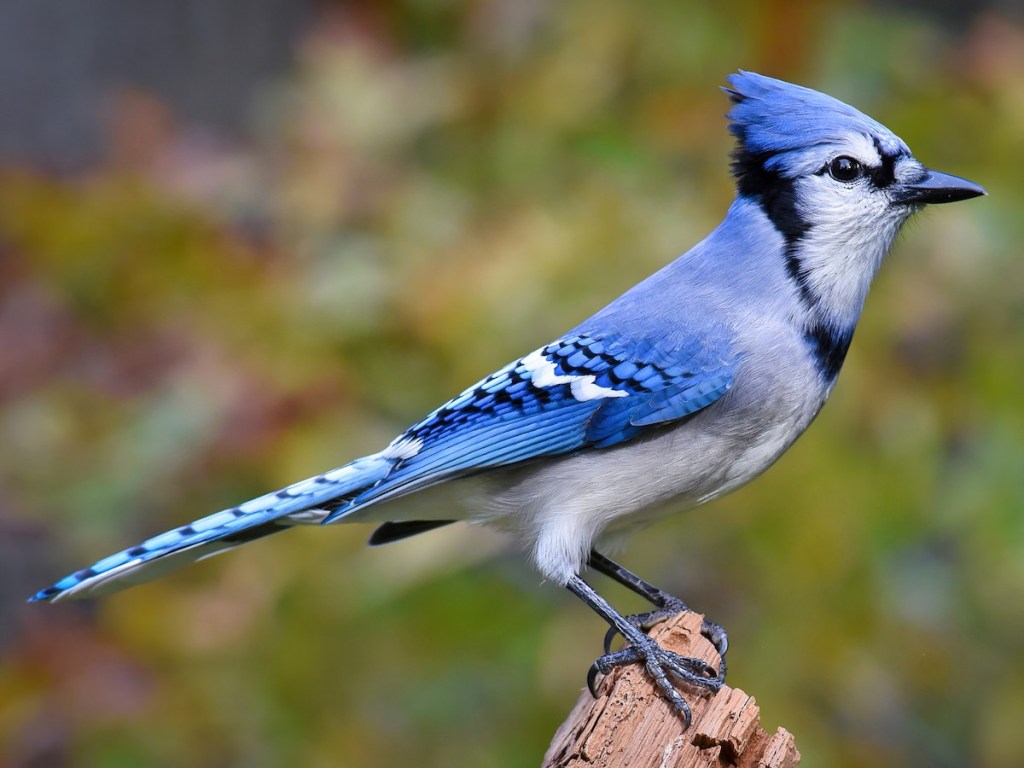
The Blue Jay : : By D H Lawrence (1885 – 1930)
The blue jay with a crest on his head
Comes round the cabin in the snow.
He runs in the snow like a bit of blue metal,
Turning his back on everything.
From the pine-tree that towers and hisses like a pillar of
shaggy cloud
Immense above the cabin
Comes a strident laugh as we approach, this little black dog
and I.
So halts the little black bitch on four spread paws in the snow
And looks up inquiringly into the pillar of cloud,
With a tinge of misgiving.
_Ca-a-a_! comes the scrape of ridicule out of the tree.
_What voice of the Lord is that, from the tree of smoke_?
Oh Bibbles, little black bitch in the snow,
With a pinch of snow in the groove of your silly snub nose.
What do you look at me for?
What do you look at me for, with such misgiving?
It’s the blue jay laughing at us.
It’s the blue jay jeering at us, Bibs.
Every day since the snow is here
The blue jay paces round the cabin, very busy, picking up
bits,
Turning his back on us all,
And bobbing his thick dark crest about the snow, as if
darkly saying:
_I ignore those folk who look out_.
You acid-blue metallic bird,
You thick bird with a strong crest
Who are you?
Whose boss are you, with all your bully way?
You copper-sulphate blue-bird!
— D H Lawrence : : : : From allpoetry.com : for educational purposes only.
“The Blue Jay”, A Bird Poem By D H Lawrence ( 1885 – 1930 ) is About The Blue Jay Bird watching, its descriptions, and the bully jobs involving intimidating,noisy , aggressive and rude behaviour. The Poet Speaker questions the domineering bossy face of The Blue Jay and lowers the blue characteristics calling , ” copper – sulphate blue -bird. : : : :
Notes for each of the lines Pending visit this post again later on to enjoy the appreciation of the poem V Jayaraj Pune India December 13, 2023 : : : :
The Blue Jay : Emily Dickinson : : Bird Poems : :


The Blue Jay : : By Emily Dickinson
The Blue Jay
No brigadier throughout the year 1
So civic as the jay. 2
A neighbor and a warrior too, 3
With shrill felicity 4
Pursuing winds that censure us 5
A February day, 6
The brother of the universe 7
Was never blown away. 8
The snow and he are intimate; 9
I ‘ve often seen them play 10
When heaven looked upon us all 11
With such severity, 12
I felt apology were due 13
To an insulted sky, 14
Whose pompous frown was nutriment 15
To their temerity. 16
The pillow of this daring head 17
Is pungent evergreens; 18
His larder — terse and militant — 19
Unknown, refreshing things; 20
His character a tonic, 21
His future a dispute; 22
Unfair an immortality 23
That leaves this neighbor out. 24
— Emily Dickinson
“The Blue Jay”, A 24 lines , Bird Poem By Emily Dickinson is About description of The Blue Jay as A “daring Warrior” ( lines 17 To 24 ) : The Bird Watching / bonding with Emily Dickinson happened for 222 times referred mentions in Emily Dickinson’s Bird Poems / Nature Poems out of her nearly 1800 Poems published after her death as noted by some analysts ( Schumann and Hodgman ) who has enlisted 26 different birds , favourite among her references ( in poetic instances described by her during seasonal coming / going / migration of The Birds ( in the New England’s Massachusetts area of her living ) which included American Robins, Blackbirds, Sparrows , and Jays. : : : :
1 ) lines 1 To 5 : : “No brigadier throughout the year 1
So civic as the jay. 2
A neighbor and a warrior too, 3
With shrill felicity 4
Pursuing winds that censure us 5″ : : : : : : : : : : About The Blue Jay as the most “civic” brigadier in service throughout the year. Thus , Blue Jay is the most naturalized member civically, like the most familiar citizen of the community The Poet Speaker is proud of ; found as not only a “neighbour” seen always nearby or adjacent to her locale, but also as attending “warrior- like” 🪖 too ( lines 3 ) This is not only in ” felicity”( line 4 ), that is colourful appearance, manners and style which is always pleasurable but also “With shrill” ( line 4 ) that is, unpleasantly loud ‘shrill cry’ insistant of being heard. With the aforesaid presence Brigadier Blue Jay is “pursuing winds that censure us.” ( line 5 ) ; Meaning, The Brigadier Jay is “pursuing”following an order overtaking “winds”around the life of the civilians ( as explained in line 5 ) with which The Poet Speaker feels like being pinned down by approving or disapproving watch ( also by criticism and reprimand that will go in ‘nature’s record‘) : : The word “bluejay” is a phrase and not a single word. The word ‘jay’ is derived from the old French word ‘gai’ and the Latin word ‘gaius’, which means a harsh echo of a bird that is similar to a “censure” or ‘warning cry.’ : : “The blue jay” also represents confidence because it is believed that they are guardian angels who give them courage and engage them as protector guard and as messanger of guidance. : : : :
2 ) lines 6 To 16 : : ” A February day, 6
The brother of the universe 7
Was never blown away. 8
The snow and he are intimate; 9
I ‘ve often seen them play 10
When heaven looked upon us all 11
With such severity, 12
I felt apology were due 13
To an insulted sky, 14
Whose pompous frown was nutriment 15
To their temerity. 16 ” : : : :
About “A February day” ( line 6 ) , which is a beginning of Springtime of Summer season and ending with Snowy Winter. Emily describes The Bird’s Behaviour as she has watched , so also “The Blue Jay” in usual way in American poetry personifying and naming the subjects with affectionate relations of human family hereby as ” The brother of the universe 7″ ( line 7 ) as also described earlier as ” neighbour” ( ln line 3 ) and “Was never blown away” ( line 8 ) , Meaning, ‘ was never carried away’ : She has often seen this brother playing with his intimate ,”The snow “❄️🌨️ ( lines 9 & 10 ) in Winter. : : : :
She believes that”When the heaven instead of being considerate in thinking 🤔 of ( the rights , feelings and needs ) of living beings / had treated them “With such severity,”( line 12 ) of hard look ( shown off by snowy weather of Winter ( that was changed from the springtime started from February’s springtime 🌼 🌱 and friendly Autumn 🍂🍁 ) thereafter./ She felt like regretting with “apology ” which were due” ( line 13 ) ( on year- ending time of Winter scheduled from the “February day” onwards ) / “To an insulted sky.” ( line 14 ) who was dissed by the harsh echoing ( of unpleasant shrill !! of the daring Blue Jay ! ) : : The “Pompous frown”, that is, the displeasure displayed by the sky’s expression in disapproving look was “nutriment” ( line 15 ) / was ‘nutritive support’ / “To their temerity” ( line 16 ) / To the fearless daring that has become a characteristic of The Blue Jays” : : : :
3 ) lines 17 To 24 : : “The pillow of this daring head 17
Is pungent evergreens; 18
His larder — terse and militant — 19
Unknown, refreshing things; 20
His character a tonic, 21
His future a dispute; 22
Unfair an immortality 23
That leaves this neighbor out. 24 ” : : : :
About Descriptions of the daring Blue Jay, who is a confident Brigadier Of The Area : : ( A ) “The pillow(y)” support that the “daring head” is resting on / that is, his hard boldness or bold hardiness “Is pungent evergreens;” ( lines 17 & 18 ) / Is One that is always capable of wounding ; ( B ) “His larder” / — His pantry for wines and food is “terse”; / clean and neat ; and ( C ) he is “militant –” ( in fighting ); / he is disposed to warfare –taking to a war-ridden hardline; ( line 19 ) ( D ) He is for “Unknown, refreshing things;” ( line 20 ) / He is constantly revising new and afresh ( plans , targets and strategies ) – no matter in unexplored area ; ( E ) “His character a tonic” ( line 21 ) /He is reputably invigorating ; ( F ) “His future a dispute:” ( line 22 ) / He always approaches and holds out resistance ; ( G ) He is “Unfair ” ; ( line 23 ) / Unjust and inequitable — Not fair in methods and ready to take advantage using foul means ; ( H ) “An immortality”( line 23 ); “That leaves this neighbour out.” ( line 24 ) ; / He believes in perpetual life after death, that is, in quality and state of being immortal ;That he will let the neighbour fall to the ground; and will not prevent neighbour’s fall or his own going down to the lower levels. : : : :
” The Blue Jay”, A Bird Poem By Emily Dickinson is a representative example of the American Renaissance writers of the 19 Th Century who wrote their poetry in response to what they were observing in the surrounding Nature they lived with. Emily Dickinson was one among such canonical writers with her own unique style and imagist depictions. : : : :
“The Blue Jay”, A Bird Poem By Emily Dickinson, Information Appreciation and poemnce Analysis Presented by V Jayaraj Pune India December 12, 2023 : : : : : : : :
Mocking Bird Poems : Various Poets : : Bird Poems : :

Jem and Scout befriend a boy named Dill, who visits Maycomb to stay with his aunt each summer. The three children are terrified, yet fascinated, by their neighbor, the reclusive Arthur “Boo” Radley. The adults of Maycomb are hesitant to talk about Boo, and many of them have not seen him for many years. The children feed one another’s imagination with rumors about his appearance and reasons for remaining hidden, and they fantasize about how to get him out of his house. After two summers of friendship with Dill, Scout and Jem find that someone is leaving them small gifts in a tree outside the Radley place. Several times the mysterious Boo makes gestures of affection to the children, but, to their disappointment, he never appears in person.
Judge Taylor appoints Atticus to defend Tom Robinson, a black man who has been accused of raping a young white woman, Mayella Ewell. Although many of Maycomb’s citizens disapprove, Atticus agrees to defend Tom to the best of his ability. Other children taunt Jem and Scout for Atticus’s actions, calling him a “nigger-lover”. Scout is tempted to stand up for her father’s honor by fighting, even though he has told her not to. One night, Atticus faces a group of men intent on lynching Tom. Scout, Jem, and Dill unexpectedly show up, and Scout inadvertently breaks the mob mentality by recognizing and talking to a classmate’s father, causing the would-be lynchers to disperse.
Atticus does not want Jem and Scout to be present at Tom Robinson’s trial. No seat is available on the main floor, but the Rev. Sykes, the pastor of Calpurnia’s church, invites Jem, Scout and Dill to watch from the colored balcony. Atticus establishes that Mayella Ewell and her father, Bob, are lying. It is revealed that Mayella made sexual advances toward Tom, resulting in her being beaten by her father. The townspeople refer to the Ewells as “white trash” who are not to be trusted, but the jury convicts Tom regardless. Jem’s faith in justice is badly shaken. Atticus is hopeful that he can get the verdict overturned, but Tom is shot and killed while trying to escape from prison.
Despite Tom’s conviction, Bob Ewell is humiliated by the events of the trial. Atticus explains that he destroyed Ewell’s last shred of credibility. Ewell vows revenge, spitting in Atticus’ face, trying to break into the judge’s house and menacing Tom Robinson’s widow. Finally, he attacks Jem and Scout while they are walking home on a dark night after the school Halloween pageant. Jem suffers a broken arm and is knocked unconscious in the struggle, but amid the confusion, someone comes to the children’s rescue. The mysterious man carries Jem home, where Scout realizes that he is Boo Radley.
Sheriff Tate arrives and discovers Ewell dead from a knife wound. Atticus believes that Jem was responsible, but Tate is certain it was Boo. The sheriff tells Atticus that, to protect Boo’s privacy, he will report that Ewell simply fell on his own knife during the attack. Boo asks Scout to walk him home. After she says goodbye to him at his front door, he disappears, never to be seen again by Scout. While standing on the Radley porch, Scout imagines life from Boo’s perspective. : : : : : : The racial injustice appears symbolically in the novel as wellAtticus must shoot a rabid dog, even though it is not his job to do so.Carolyn Jones argues that the dog represents prejudice within the town of Maycomb, and Atticus, who waits on a deserted street to shoot the dog, must fight against the town’s racism without help from other white citizens. He is also alone when he faces a group intending to lynch Tom Robinson and once more in the courthouse during Tom’s trial. Lee even uses dreamlike imagery from the mad dog incident to describe some of the courtroom scenes. Jones writes, “[t]he real mad dog in Maycomb is the racism that denies the humanity of Tom Robinson … When Atticus makes his summation to the jury, he literally bares himself to the jury’s and the town’s anger. : : : : “Songbirds and their associated symbolism appear throughout the novel. Their family name Finch is also Lee’s mother’s maiden name. The titular mockingbird is a key motif of this theme, which first appears when Atticus, having given his children air-rifles for Christmas, allows their Uncle Jack to teach them to shoot. Atticus warns them that, although they can “shoot all the bluejays they want”, they must remember that “it’s a sin to kill a mockingbird”Confused, Scout approaches her neighbor Miss Maudie, who explains that mockingbirds never harm other living creatures. She points out that mockingbirds simply provide pleasure with their songs, saying, “They don’t do one thing but sing their hearts out for us.” Writer Edwin Bruell summarized the symbolism when he wrote in 1964, “‘To kill a mockingbird’ is to kill that which is innocent and harmless—like Tom Robinson.”[56] Scholars have noted that Lee often returns to the mockingbird theme when trying to make a moral point. : : : : R. A. Dave claims that because every character has to face, or even suffer defeat, the book takes on elements of a classical tragedy. In exploring how each character deals with his or her own personal defeat, Lee builds a framework to judge whether the characters are heroes or fools. She guides the reader in such judgments, alternating between unabashed adoration and biting irony. Scout’s experience with the Missionary Society is an ironic juxtaposition of women who mock her, gossip, and “reflect a smug, colonialist attitude toward other races” while giving the “appearance of gentility, piety, and morality”. Conversely, when Atticus loses Tom’s case, he is last to leave the courtroom, except for his children and the black spectators in the colored balcony, who rise silently as he walks underneath them, to honor his efforts. : : ( The Above information is based on Wikipedia’s Article )
* To a Mocking-Bird : : by Henry Jerome Stockard
The name thou wearest does thee grievous wrong;
No mimic thou: that voice is thine alone.
The poets sing but strains of Shakespeare’s song;
The birds, but notes of thine imperial own.
* * The Mocking-Bird : : by Paul Hamilton Hayne
▼
A golden pallor of voluptuous light
Filled the warm southern night:
The moon, clear orbed, above the sylvan scene
Moved like a stately queen,
So rife with conscious beauty all the while,
What could she do but smile
At her own perfect loveliness below,
Glassed in the tranquil flow
Of crystal fountains and unruffled streams?
Half lost in waking dreams,
As down the loneliest forest dell I strayed,
Lo! from a neighboring glade,
Flashed through the drifts of moonshine, swiftly came
A fairy shape of flame.
It rose in dazzling spirals overhead,
Whence to wild sweetness wed,
Poured marvellous melodies, silvery trill on trill;
The very leaves grew still
On the charmed trees to hearken; while for me,
Heart-trilled to ecstasy,
I followed—followed the bright shape that flew,
Still circling up the blue,
Till as a fountain that has reached its height,
Falls back in sprays of light
Slowly dissolved, so that enrapturing lay,
Divinely melts away
Through tremulous spaces to a music-mist, Soon by the fitful breeze
How gently kissed
Into remote and tender silences.
* * * The Mocking-Bird : : by Alexander Beaufort Meek
▼
From the vale, what music ringing,
Fills the bosom of the night;
On the sense, entrancéd, flinging
Spells of witchery and delight!
O’er magnolia, lime and cedar,
From yon locust-top, it swells,
Like the chant of serenader,
Or the rhymes of silver bells!
Listen! dearest, listen to it!
Sweeter sounds were never heard!
‘Tis the song of that wild poet—
Mime and minstrel Mocking—Bird.
See him, swinging in his glory,
On yon topmost bending limb!
Caroling his amorous story,
Like some wild crusader’s hymn!
Now it faints in tones delicious
As the first low vow of love!
Now it bursts in swells capricious,
All the moonlit vale above!
Listen! dearest, etc.
Why is’t thus, this sylvan Petrarch
Pours all night his serenade?
‘Tis for some proud woodland Laura,
His sad sonnets all are made!
But he changes now his measure—
Gladness bubbling from his mouth—
Jest, and gibe, and mimic pleasure—
Winged Anacreon of the South!
Listen! dearest, etc.
Bird of music, wit and gladness,
Troubadour of sunny climes,
Disenchanter of all sadness,—
Would thine art were in my rhymes.
O’er the heart that’s beating by me,
I would weave a spell divine;
Is there aught she could deny me,
Drinking in such strains as thine?
Listen! dearest, etc.
* V : : Lament of a Mocking-Bird : : by Frances Anne Kemble
▼
Silence instead of thy sweet song, my bird,
Which through the darkness of my winter days
Warbling of summer sunshine still was heard;
Mute is thy song, and vacant is thy place.
The spring comes back again, the fields rejoice,
Carols of gladness ring from every tree;
But I shall hear thy wild triumphant voice
No more: my summer song has died with thee.
What didst thou sing of, O my summer bird?
The broad, bright, brimming river, whose swift sweep
And whirling eddies by the home are heard,
Rushing, resistless, to the calling deep.
What didst thou sing of, thou melodious sprite?
Pine forests, with smooth russet carpets spread,
Where e’en at noonday dimly falls the light,
Through gloomy blue-green branches overhead.
What didst thou sing of, O thou jubilant soul?
Ever-fresh flowers and never-leafless trees,
Bending great ivory cups to the control
Of the soft swaying, orange scented breeze.
What didst thou sing of, thou embodied glee?
The wide wild marshes with their clashing reeds
And topaz-tinted channels, where the sea
Daily its tides of briny freshness leads.
What didst thou sing of, O thou winged voice?
Dark, bronze-leaved oaks, with silver mosses crowned,
Where thy free kindred live, love, and rejoice,
With wreaths of golden jasmine curtained round.
These didst thou sing of, spirit of delight!
From thy own radiant sky, thou quivering spark!
These thy sweet southern dreams of warmth and light,
Through the grim northern winter drear and dark.
V * : : Mocking Bird : : By David Wagoner : :

V * * : : The Mocking Bird : : By Harriet Monroe

V * * * [Poem written by Mocking bird Tobe to his mate Florence] : : One of 1,686 poems in the series: Charles B. Moore Family papers, 1832-1917 available on site texashistory.unt.edu : For Educational Purposes only.

* X : : Zion : Vernacular Exposure : Mocking Bird Song : : By R T Smith : : From poetryfoundation.org : For Educational Purposes only.

X : : Pending.. . .. .
“The Mocking Bird By Various Poets, Information Appreciation and poem Analysis Presented by V Jayaraj Pune India December 11, 2023 : : : : : : : :

HarperLee used the mockingbird to symbolize innocence in the novel : ” To Kill A Mockingbird”

Monroeville, Alabama , U. S. — February 19, 2016 , (aged 89) , Monroeville, Alabama , U S. Notable works
To Kill a Mockingbird (1960) & Go Set a Watchman (2015) : Harper Lee was portrayed by Catherine Keener in the film Capote (2005), by Sandra Bullock in the film Infamous (2006), and by Tracey Hoyt in the TV movie Scandalous Me: The Jacqueline Susann Story (1998)
The Mocking-Bird and The Donkey : : Bird Poems : :
The Mocking-Bird and the Donkey : : by William Cullen Bryant. From the Spanish of the Mexican poet José Rosas.
▼
A mock-bird in a village
Had somehow gained the skill
To imitate the voices
Of animals at will.
And singing in his prison,
Once, at the close of day,
He gave, with great precision,
The donkey’s heavy bray.
Well pleased, the mock-bird’s master
Sent to the neighbors ’round,
And bade them come together
To hear that curious sound.
They came, and all were talking
In praise of what they heard,
And one delighted lady
Would fain have bought the bird.
A donkey listened sadly,
And said: “Confess I must
That these are shallow people,
And terribly unjust.
“I’m bigger than the mock-bird,
And better bray than he,
Yet not a soul has uttered
A word in praise of me.”
“The Mocking Bird And The Donkey”, A Bird Poem By William Cullen Bryant is more aptly an Animal Poem About “The Donkey”and a Mock -Bird. The Poem for imitation creates the unique emotional situation that wins a reader’s heart delightedly as in the last lines of the poem , said by the donkey, “I’m bigger than the mock-bird,
And better bray than he,
Yet not a soul has uttered
A word in praise of me.” : : The Mocking Bird who mimicked the “curious heavy”sound of “Bray”with great precision that could win the praise of the gathering of the villagers for this imitation. They “bid”, that is , all attained the Mock-Bird’s show seriously. And “one delighted Lady among them bought the Mock -Bird in fainness” /inclined with pleasure to have bought” the Bird. : : : : Do you believe !? in what the donkey expressed in his sad reaction to the aforesaid story, “these are shallow people,
And terribly unjust.”
“Bray” or braying ‘hee- haw’is a natural characteristic of an ass / 🐴 donkey who makes such loud sound in his / her states of crying 😭 in sadness or insecurity , as well as laughing ( say while eating ) in happiness. The harshness involves in both the states of braying of which the donkey 🐴 of the village bigger than barely a foot – long small , caged ( imprisoned ) Mock -Bird in our story / fable, complains the readers that nobody has uttered a word in praise of his braying which might be better than the Mock -Bird.
A delighted Lady and the great Villagers have a worldly attitude and pleasure in enjoying the mimicry of the braying of the donkey , the four footer made an another name of proverbial stupidity. The sad donkey in the above poem, has not sought any false pride in his braying. Yet (s)he is sure that his/her is the better than a bird , and original one. The Poet Speaker has not given any contrasted descriptions of the two sounds. While imitating a braying sound,The Mocking Bird does not have intended to make a spoof of donkey. Braying would not be a soft creamy candy that he should have liked. Yet, it is in nature of human race . Our students/youth in great learning parodies their teachers / professors / elders. Likewise, the politicians and journalists with a view to nearing top , that is the Topmost stature, ridicule one another by tweeting / addressing their opponents with lampooning remarks. They should refrain from such parodies as they do not gain respect because this is an unthinkable , futile attempt to reach any better stage of achievement or impressiveness. The hee – haw laughing sound of neighing horses ( horse laugh ), or haw haw of the dogs are not regarded as satirical issues. Let us not become a coldhearted Heroes lacking in warmth, sympathy and feelings besides our fondness for some preferences.
“The Mocking-Bird and the Donkey”A Bird Poem by William Cullen Bryant Information Appreciation and poem Analysis Presented by V Jayaraj Pune India December 10, 2023 : : : : : : : :

