1850 portrait of Phoebe Cary in New York City which hangs in her childhood home in North College Hill, Near Cincinnati, Ohio : Phoebe Cary ( September 4, 1824 North College Hill, Ohio, U.S – July 31, 1871, Newport, Rhode Island, U.S. ) was an American poet, and the younger sister of poet Alice Cary (1820–1871). The sisters co-published poems in 1849, and then each went on to publish volumes of their own. After their deaths in 1871, joint anthologies of the sisters’ unpublished poems were also compiled. More outgoing than her sister, Cary was a champion of women’s rights and for a short time edited Revolution, a newspaper published by Susan B. Anthony. In 1848, their poetry was published in the anthology Female Poets of America edited by Rufus Wilmot Griswold and with his help, Poems of Alice and Phoebe Cary was published in 1849 1868, Horace Greeley wrote a brief joint biography of Alice and Phebe (as he spelled her name) Alice died in 1871 from tuberculosis; Phoebe died five months later of hepatitis on July 31, 1871, in Newport, Rhode Island. Both the sisters were buried in Green-Wood Cemetery, Brooklyn, New York.Fat Broiler Chicken : (Gallus gallus domesticus) full body looking at the camera, on Poultry – yard / farm The little Bird Female ( superb fairy ) Wren on branch of a Tree.
The Envious Wren : : by Phoebe Cary
ON the ground lived a hen, In a tree lived a wren, Who picked up her food here and there; While biddy had wheat And all nice things to eat. Said the wren, I declare, ‘t is n’t fair!”
“It is really too bad!” She exclaimed — she was mad — “To go out when it is raining this way! And to earn what you eat, Does n’t make your food sweet, In spite of what some folks may say.
“Now there is that hen,” Said this cross little wren, “She’s fed till she’s fat as a drum; While I strive and sweat For each bug that I get, And nobody gives me a crumb.
“I can’t see for my life Why the old farmer’s wife Treats her so much better than me; Suppose on the ground I hop carelessly round For a while, and just see what I’ll see.”
Said this ‘cute little wren, “I’ll make friends with the hen, And perhaps she will ask me to stay; And then upon bread Every day I’d be fed, And life would be nothing but play.”
So down flew the wren. “Stop to tea,” said the hen; And soon biddy’s supper was sent; But scarce stopping to taste, The poor bird left in haste, And this was the reason she went:
When the farmer’s kind dame To the poultry-yard came, She said — and the wren shook with fright — “Biddy’s so fat she’ll do For a pie or a stew, And I guess I shall kill her to-night.” : : : : : : : : : : : : : : : : : : : : : : : : : : : “The Envious Wren”, A Bird Poem By Phoebe Cary is About a fable / Children’s Story about Cute little Wren Bird living on a tree , and A Hen living on the ground of poultry – yard of an old farmerwhose lady cunningly calls her “Biddy”, an Adult , so fatty female Chicken. While Wren has to pick up her food , mostly some crumbs , here and there ; biddy is given wheat and all nice things to eat. The Wren feels that it is not fair. She feels for nobody gives her crumbs and she has to strive and sweat for the each bug. Whereas, The hen is fed untill she’s “as fat as a drum.” So we have learnt why The little Bird Wren has become “Envious of Biddy”, The hen who has been treated so much , better than her by the old farmer’s wife. : : One day , The Wren found a thought of making friendship with Hen so that she might be invited to stay on the ground of poultry farm where she would be fed upon bread everyday, and there would be nothing in life but to play and pray. Finally , The Wren was invited by The hen to take a stop from her flight and have a taste of Tea. Soon Biddy’s supper was sent; What did happen thereafter !? The Poet Speaker clears the air saying, ” But scarce stopping to taste, The poor bird left in haste,” Why ?! ? : :
“When the farmer’s kind dame To the poultry-yard came, She said — and the wren shook with fright — “Biddy’s so fat she’ll do For a pie or a stew, And I guess I shall kill her to-night.” : : : : : : : : What a pity ! And sorrow for the misfortune of Biddy , the fatty hen ! And Good – luck to The industrious little bird Wren who for the time being, became jealous of Biddy and developed a thought of urging for the hen’s position, and had wanted there all advantages or possessions. The little Wren admired the hen enviously and set her heart on gaining friendship of the hen whose life was about to come to an end , as the farmer’s kind looking grand “dame” was not gentle, but very selfish and cruel . The lady provided her hen of the poultry with sweet eateries , day and night, untill she made her so fat and good for a pie or a stew , And she had a plan to kill Biddy that night. When The little Bird Wren heard a lady saying about her plan to kill Biddy , The hen , The little bird Wren shook with fright . The Wren got alarmed at the right time, of the danger in stopping to taste Tea and few pieces of Supper, and fearfully experienced a sudden desire to flee and escape from the killing ground of an old farmer’s poultry-yard. : : : : : : : : : : : : : : : : : : : Our learning and an understanding is hereby noted , out of the observation that gives it a flick with the stroke in a storyline.: The hidden agenda is ‘A Secret / Ulterior Motive‘ , especially one that is selfish , or one that is not liked by other people. The outward semblance misrepresents the true nature of a gentle looking person. Here , The Little Wren Bird was so envious of Biddy The hen that she failed to examine hidden or concealed motive which is often unseeable disguise of the provider 🥸 behind – the- scene . The outcome would then be fatally overwhelmed. That’s why both , Biddy the hen , as well as , The Songbird Wren, should be clever enough to grasp the hidden agendas for them as set up by hen’s provider. This is always seeable in the sporadic instances of ‘infrequent occasional timing‘ of the event(s). The questions could be aimed even to a gentle provider. : Why free ? For how long ? Any selfish agenda ? What is unseeable ? Any attire can modify the real appearance in order to conceal the wearer’s identity 🆔 🆔 🆔 🆔 : : : : : : : : : LEARNING In A Story of The Little Bird , “The Envious Wren” : : ” See an internode between the two segments and refuse to put down one’s ☢️ ☢️ seal and Signature. ” 🛑🛑 : : : : “Freedom and Self Striving And Independence Is better than the imprisoned carefree life of free enjoyment.” :: :: :: ::
” The Envious Wren”, A Bird Poem / Children’s Poem By Phoebe Cary Information Appreciation and poem Analysis Presented by V Jayaraj Pune India January 12 , 2024 : : : : : : : :
Paul Hemilton Hayne ( January 1, 1830 Charleston, South Carolina – July 6, 1886 ( aged 56 Copse Hill, at Grovetown, Georgia ) : : was a Southern American poet, critic, and editor.Hayne moved his family to Grovetown, Georgia, a wooded area about 16 miles from Augusta, Georgia. Here, Hayne lived and worked until his death in 1886. He contributed to important magazines of the South during his era, including the Charleston Literary Gazette, the Southern Literary Messenger, the Home Journal, and Southern Bivouac. Hayne was also instrumental with Southern novelist William Gilmore Simms in the founding of Russell’s Magazine, which Hayne edited. Hayne is also noteworthy for his friendship with fellow Southern poet Henry Timrod, whom Hayne helped with both his life and his career. Timrod was frail and ill throughout his life with tuberculosis, and Hayne helped to provide financially for Timrod and his wife and young son. Most importantly for literature and history, Hayne preserved Timrod’s poems and edited them into a collection that was published in 1872 and that presented such historically important poems as “The Cotton Boll” and “Ode Sung On The Occasion Of Decorating The Graves Of The Confederate Dead”. Timrod now has the greater reputation as a poet, while Hayne is known more for his role as an editor and literary critic than as a poet.: : Hayne had a friendship also with Sidney Lanier. Though the two never met, they corresponded, and advised each other–Hayne suggested to Lanier that he leave the medievalism of his poem “The Jacquerie” alone and turn to Southern topics, and Lanier helping Hayne to strive for “more simplicity and directness in his poems” : : Hayne’s first volume of poetry, Poems, was published in 1855 by Ticknor and Fields. : later volumes. Sonnets and Other Poems (1857) sold fewer than 200 copies, and Avolio (1859) was little noticed despite a positive review by James Russell Lowell. After the Civil War, Legends and Lyrics (1872) and The Mountains of the Lovers (1875) fared no better. : : Scores of poems in Collected Poems of Paul Hamilton Hayne offer heartfelt dedications to his mother, father, wife, and fellow southern authors. The dedication of Sonnets (1857) and the end piece to Legends and Lyrics (1872) pay homage to his mother, whereas “My Father” honors the man Hayne never really knew. Similarly, “The Bonny Brown Hand,” “An Anniversary,” “Love’s Autumn,” and “A Little While I Fain Would Linger Yet,” among dozens of others, commemorate Hayne’s devotion to his wife. Elegies such as “Monody” on William Gilmore Simms and “By the Grave of Henry Timrod” bespeak of the debt Hayne owed to his poetic mentors and friends. : Poems of Paul Hamilton Hayne solidified his position as “the poet laureate of the South,” Prolific writer, Hayne wrote hundreds of sonnets, lyric poems, and essays in his lifetime. A complete edition appeared in 1882. His poetry emphasizes romantic verse, long narrative poems, and ballads. Like other fellow Southern poets of his day, his work was highly descriptive of nature. Some critics contend that his graceful lyrics reflect the influence of poet John Keats : : Hayne’s papers are variously preserved in the libraries of the College of Charleston, Duke University, the University of Virginia, and the South Carolina Historical Society.
Visit Of The Wrens : : By Paul Hemilton Hayne ( 1830 – 1886 ) , Southern American Poet : : : :
FLYING from out the gusty west, To seek the place where last year’s nest, Ragged, and torn by many a rout Of winter winds, still rocks about The branches of the gnarled old tree Which sweep my cottage library — Here on the genial southern side, In a late gleam of sunset’s pride, Came back my tiny, springtide friends, The self-same pair of chattering wrens That with arch eyes and restless bill Used to frequent you window sill, Winged sprites, in April’s showery glow. ‘Tis now twelve weary months ago Since first I saw them; here again They drop outside the glittering pane, Each bearing a dried twig or leaf, To build with labor hard, yet brief, This season’s nest, where, blue and round, Their fairy eggs will soon be found. But sky and breeze and blithesome sun, Until that little home is done, Shall — wondering, maybe — hear and see Such chatter, bustle, industry, As well may stir to emulous strife Slow currents of a languid life, Whether in bird or man they run!
But when, in sooth, the nest complete Swings gently in its green retreat, And soft the mother birdling’s breast Doth in the cozy circlet rest, How, back from jovial journeying, Merry of heart, though worn of wing, Her brown mate, proudly perched above The limb that holds his brooding love, His head upturned, his aspect sly, Regards her with a cunning eye, As one who saith, “How well you bear The dullness of these duties, dear; To dwell so long on nest or tree Would be, I know, slow death to me; But, then, you women folk were made For patient waiting, in — the shade!”
So tame one little guest becomes — ‘Tis the male bird — my scattered crumbs He takes from window sill and lawn Each morning in the early dawn; And yesterday he dared to stand Serenely on my outstretched hand, While his wee wife, with puzzled glance, Looked from her breezy seat askance!
My pretty pensioners! ye have flown Twice from your winter nook unknown, To build your humble homestead here, In the first flush of springtide cheer; But ah! I wonder if again, Flitting outside the window pane, When next the shrewd March winds shall blow, Or in mild April’s showers glow, New come from out the shimmering west, You’ll seek the place of this year’s nest, Ragged and torn by then, no doubt, And swinging in worn shreds about The branches of the ancient tree.
Nay, who may tell? Yet, verily, Methinks when, spring and summer passed, Adown the long, low autumn blast, In some dim gloaming, chill and drear, You, with your fledglings, disappear, That ne’er by porch or tree or pane Mine eyes shall greet your forms again!
What then? At least the good ye brought, The delicate charms for eye and thought Survives; though death should be your doom Before another spring flower’s bloom, Or fairer clime should tempt your wings To bide ‘mid fragrant blossomings On some far Southland’s golden lea, Still may fresh spring morns light for me Your tiny nest, their breezes bear Your chirping, household joyance near And all your quirks and tricksome ways Bring back through many smiling days Or future Aprils; not the less Your simple drama shall impress Fancy and heart, thus acted o’er Toward each small issue, as of yore, With sun and wind and skies of blue To witness, wondering, all you do, Because your happy toil and mirth May be of fine, ideal birth; Because each quick, impulsive note May thrill a visionary throat, Each flash of glancing wing and eye Be gleams of vivid fantasy; Since whatsoe’er of form and tone A past reality hath known, Most charming unto soul and sense, But wins that subtle effluence, That spiritual air which softly clings About all sweet and vanished things, Causing a bygone joy to be Vital as actuality, Yet with each earthlier tint or trace Lost in a pure, ethereal grace!
“Visit Of The Wrens”A Bird Poem in 6 Stanzas of Conversation with the Wrens, By Paul Hemilton Hayne is About “chattering wrens with arch eyes and restless bill” who are affectionately called by him , ” my tiny, springtide friends. : : : : : : : : : : : : : : : : : : : : : : Stanza 1 : : The Wrens were “frequently” found at the window sill of his library; The Poet Speaker describes their activities at length. He calls them affectionately, The “Winged sprites”( small being(s) playful and with magical ability – like fairy ) in “April’s showery glow.” : They visited him “after 12 months.” Each one is seen “bearing a dried twig or leaf, / To build with labor hard, yet brief,/This season’s nest,” where, they would lay their “blue and round,/ fairy eggs”. : The “sky and breeze and blithesome sun”, that is, a merry blithsome Nature should cheerfully hear and see their bustle and chatter, untill their little home / nest is done. Such noisy “chatter”and hoo -hah “bustle,” are so energetic that it may “stir to emulous strife” ( competitive discord ) and arouse the “Slow currents of a languid life” / ( inactive / lethargic life.) which are operating “in birds” as well as “in man.”: : : : : : : : : : : : : : : : : : : : : : : Stanza 2 : : About The Pair of Wren’s dutiful parenting. Their “nest in sooth” / in reality in its “green retreat” / a place of privacy affording peace , quiet and a hideaway where the Mother Wren can live alone and can have a “gentle swing out” to relaxation in “cozy circle rest” . They have been “back at the place after a jovial journey” and were “merry at heart”/”though worn of wings” / affected by long use of journeying. Her “brown mate” remains outside “perching proudly above the nest”( which was downside ) with his grasping leg that “holds his love” who is now at their “brooding nest.” He can be seen with his “head turned up.”: His “aspects sly” Meaning, he expresses covert behaviour for his wife is under his protection. He “regards her with a cunning eye” as per one’s bird’s eye/ panoramic observation as if he is saying her, “How well you bear The dullness of these duties, dear; To dwell so long on nest or tree Would be, I know, slow death to me; But, then, you women folk were made For patient waiting, in — the shade!” : : : : : : : : Stanza 3 : : About The Male Wren’s activity of gathering food, “each morning in the early dawn.” : : which includes the “scattered crumbs from window sill and lawn.”, and About his hospitable feel or his becoming “tamed.” : : The Poet Speaker describes him to his “daring” shown to him yesterday when he “stands serenely / peacefully “on his outstretched hand while his wee wife” , that is, teeny – weeny little quickly looked at ( with bemused / “puzzled glance” ) from her “breezy”/ revived windy “seat” with her “misted”/ unclear “askance look”/ that is , with a side long look of disapproval./ Or in suspicion .: : : :
Stanza 4 : : The Poet Speaker addresses to his “pretty pensioners” / Wrens narrating how they have “flown twice from the their unknown winter ❄️ nook” / corner of shelter. : “My pretty pensioners! ye have flownhis place adjacent to their humble dwelling house they build everytime. The First, “flush of springtide”( greater rush of warmth and light ) cheer ; The second time , when the “shrewd March winds blows” and establishes , Or in “mild April ‘s showers glow.” But , he is not sure this time for the next repeating / When he sees their Fleeting/ sees them dashing into the outside of the glittery window pane.”They come out new from the “shimmering west”/ Meaning, the west side shines again reflecting with their reappearance. When they come again they will seek the place of this/ then , past year’s nest which , no doubt , would have been / “Ragged”/ worn and torn by then and would find their tiny piecesmoving back and forth among the “branches of the ancient tree”: : : :
Stanza 5 : : It seems to The Poet Speaker who from his observation , can “verily”/certainly tell The Wrens will “disappear” from the scene when, “Spring and summer have passed.”: “Adown” / pour down “the long , / low autumn blast”/ move by impacting / “In some dim”/ bleak shadowy “Gloaming” / dusk , “chill”/ shivering icy cold and “drear” / dry cheerless dark. That will be disappearance of the Wren’s alongwith their “fledglings”/ newb flying young ones.
“That ne’er by porch or tree or pane Mine eyes shall greet your forms again!” : : : :
Stanza 6 : : About “vital actuality,” that is , objective in living with a hope that progressed from possibility to actuality and what matters is earthly being , earthly love and earthly home rather than heavenly contemplation. That is what The Poet Speaker thinks as, “earthlier tint or trace lost in pure ethereal grace !” : The Wrens have ” in what, The Poet Speaker reconcile his poetic urges that was narrated by him in glorified appreciation of these “tiny birds and their wonderful tiny nests.” : ” They brought this “delicate charms for eye and thought survives ; though death should be their doom.”/ their fate and predesignated destiny. : He continues in with his conversation , saying , ” Before another spring flower’s bloom, Or fairer clime “/ ( climate ) should “tempt” / ( invite ) your “wings / To bide”/ ( stay with ) ‘mid fragrant blossomings ( flowerings ) 🌺🌹/ “On some far Southland’s golden lea,”/ ( Pasture of grassy herbage ) / “Still may fresh spring morns light for me.”: : Your “tiny nest, their breezes bear / Your chirping, household joyance near/ And all your quirks and tricksome ways /Bring back through many smiling days” : : Or “future Aprils ; not the less / Your simple drama shall impress / Fancy and heart, thus acted o’er / Toward each small issue, as of yore.” / ( timeling past ) / With “sun and wind and skies of blue / To witness, wondering, all you do, / Because your happy toil and mirth May be of fine, ideal birth”; / Because each quick, impulsive note / “May thrill a visionary throat, / Each flash of glancing wing and eye Be gleams of vivid fantasy; / Since whatsoe’er of form and tone / A past reality hath known,” / Most charming unto soul and sense, / But “wins that subtle effluence, / That spiritual air which softly clings / About all sweet and vanished things/ Causing a bygone joy to be Vital as actuality, Yet with each earthlier tint or trace Lost in a pure, ethereal grace!” : : : :
“Visit Of The Wrens”, A Bird Poem By Paul Hemilton Hayne Information Appreciation and poem Analysis Presented by V Jayaraj Pune India January 11, 2024 : : : : : : : :
Larry Levis ( 1946 – 1996 ) : A Photo by Jay Paul : : Larry Levis grew up in Selma, California. In his youth, he worked on his father’s vineyard. In 1968, he earned a BA from Fresno State College, where he studied with Philip Levine. He completed a master’s degree at Syracuse University in 1970; there, he and his peer Stephen Dunn studied under the poet Donald Justice. In 1974, Levis earned a PhD at the University of Iowa. Author of several poetry collections, including The Dollmaker’s Ghost (1981), winner of the Open Competition of the National Poetry Series; The Afterlife (1977), which won the Lamont Poetry Prize; and Wrecking Crew (1972), which received the United States Award from the International Poetry Forum. Levis taught at the University of Missouri, the University of Utah, and the Warren Wilson College MFA Program for Writers.
imagist or surrealist approach in his work. As Diane Wakoski wrote in Contemporary Poets, Levis’s “work is best when the poems are short and are shaped by his imagist instincts or his gestures towards surrealism. He is a master of the brief moment of recognition.
“The landscapes in which I live always have a powerful and direct, although often delayed, effect on my poetry,” Levis once explained to Contemporary Authors. Among Levis’s personal sources of inspiration are his childhood experiences surrounded by migrant workers at his family’s farm and his time during college when he was exposed to tough, violent, and crude people while working as a janitor in a steel mill. However, as Levis said, “the most important landscape, for me, , is that of my childhood: the central valley of California.”
“Levis’s first book, Wrecking Crew, includes poems on war, rape, discrimination, death, and wasted lives,” Steven M. Wilson explained in the Dictionary of Literary Biography. “However, little of the book suggests solutions to the troubles; the book is more an existentialist’s litany of America’s cruelty.” “He describes the book as ‘overtly political,’” the critic continued, “and he does deal with the major concerns of his day, but his decision to ‘witness’ leaves the reader ultimately disappointed by what could be seen as artistic cowardice.” Wrecking Crew poems are short—often very short—relying on calculated understatement and the connecting of concretely described images (a sort of exhausted imagism), often explained by the use of simile. … [Levis] had not yet found the technique that best suited his poetic philosophy.”
Levis explained ,“My themes have changed since Wrecking Crew. The poems are far less overtly political, and, in The Afterlife, much more personal. By personal I do not mean ‘confessional’ at all. I mean the creation of a private, familial mythology which intends to be representative rather than idiosyncratic.” According to Wilson, critics recognized that “The Afterlife is evidence of a maturing writer. he struggles to find meaning in a chaotic world. … Levis’s later poetry [is] an unexpected pleasure, as he moves beyond experimentation into an artistry and insight of the best kind.”
Levis continued to mature as a poet throughout the 1980s. In his essay expounding on Levis’s growth as a poet, Wilson commented, “In [The Leopard’s Mouth Is Dry and Cold Inside] are the beginnings of an important feature of Levis’s work: he uses his poetry and imagination to reach into other people’s lives and find symbols there.” “The value Levis discovers in poetry, then,” the critic continued, “seems to be its ability to illustrate the similarities of all people. … There is moving clarity of vision in The Dollmaker’s Ghost, and Levis’s technical abilities have matured, resulting in a volume that contains his best writing to that point.” Wilson has similarly complimentary remarks about Levis’s later works: “Winter Stars, even though it concerns the death of Levis’s father, is finally an affirmation of the ability of the poet and his art to rejuvenate the soul. The Widening Spell of the Leaves is a journey through moments from the poet’s life that have taken on symbolic or personal importance, and that lead him through a sometimes dizzying maze of images and meanings as he explores the uses of intuition and personal history in reaching an understanding and acceptance of human existence.”
“As Levis … progressed and … [drew] more heavily from his experiences,” Wilson summarized, “his work [took] on greater depth and eloquence, in laterbooks. Thus he is an important figure in contemporary American poetry, both as a highly decorated practitioner of a style and philosophy many see as the dominant method of poetry in recent decades and as a writer who considers, with at times artistic brilliance, the issues involved in being human.”
Levis died in Richmond, Virginia on May 8, 1996.
To a Wren on Calvary BY LARRY LEVIS “Prince Jesus, crush those bastards …” —Francois Villon, Grand Testament
It is the unremarkable that will last,
As in Brueghel’s camouflage, where the wren’s withheld, While elsewhere on a hill, small hawks (or are they other birds?) Are busily unraveling eyelashes & pupils From sunburned thieves outstretched on scaffolds, Their last vision obscured by wings, then broken, entered. I cannot tell whether their blood spurts, or just spills, Their faces are wings, & their bodies are uncovered.
The twittering they hear is the final trespass.
~
And all later luxuries—the half-dressed neighbor couple Shouting insults at each other just beyond Her bra on a cluttered windowsill, then ceasing it when A door was slammed to emphasize, like trouble,
The quiet flowing into things then, spreading its wake From the child’s toy left out on a lawn To the broken treatise of jet-trails drifting above—seem Keel scrapes on the shores of some enlarging mistake,
A wrong so wide no one can speak of it now in the town That once had seemed, like its supporting factories That manufactured poems & weaponry, Like such a good idea. And wasn’t it everyone’s?
Wasn’t the sad pleasure of assembly lines a replica Of the wren’s perfect, camouflaged self-sufficiency, And of its refusal even to be pretty, Surviving in a plumage dull enough to blend in with
A hemline of smoke, sky, & a serene indifference?
~
The dead wren I found on a gravel drive One morning, all beige above and off-white Underneath, the body lighter, no more than a vacant tent
Of oily feathers stretched, blent, & lacquered shut Against the world—was a world I couldn’t touch. And in its skull a snow of lice had set up such An altar, the congregation spreading from the tongue
To round, bare sills that had been its eyes, I let It drop, my hand changed for a moment By a thing so common it was never once distracted from The nothing all wrens meant, the one feather on the road.
No feeding in the wake of cavalry or kings changed it. Even in the end it swerved away, & made the abrupt Riddle all things come to seem … irrelevant: The tucked claws clutched emptiness like a stick.
And if Death whispered as always in the language of curling Leaves, or a later one that makes us stranger, “Don’t you come near me motherfucker”; If the tang of metal in slang made the New World fertile,
Still … as they resumed their quarrel in the quiet air, I could hear the species cheep in what they said … Until their voices rose. Until the sound of a slap erased A world, & the woman, in a music stripped of all prayer,
Began sobbing, & the man become bystander cried O Jesus. In the sky, the first stars were already faint And timeless, but what could they matter to that boy, blent To no choir, who saw at last the clean wings of indifferent
Hunger, & despair? Around him the other petty thieves,
With arms outstretched, & eyes pecked out by birds, reclined, Fastened forever to scaffolds which gradually would cover An Empire’s hills & line its roads as far As anyone escaping in a cart could see, his swerving mind
On the dark brimming up in everything, the reins Going slack in his hand as the cart slows, & stops, And the horse sees its own breath go out Onto the cold air, & gazes after the off-white plume,
And seems amazed by it, by its breath, by everything. But the man slumped behind it, dangling a lost nail Between his lips, only stares at the swishing tail, At each white breath going out, thinning, & then vanishing,
For he has grown tired of amazing things. Larry Levis, “To a Wren on Cavalry” from The Widening Spell of the Leaves. ( 1991 ) All rights by the University of Pittsburgh Press. http://www.upress.pitt.edu. Source: poetryfoundation.org : For Educational Purposes only.
“To A Wren On Cavalry”, A Bird Poem By Larry Levis is About
Christina Georgina Rossetti ( 5 December 1830 London, England – 29 December 1894 (aged 64) ,London, England ) : : An English writer of romantic, devotional and children’s poems, including “Goblin Market” and “Remember”. She also wrote the words of two Christmas carols well known in Britain: “In the Bleak Midwinter”, later set by Gustav Holst, Katherine Kennicott Davis, and Harold Darke, and “Love Came Down at Christmas”, also set by Darke and other composers. She was a sister of the artist and poet Dante Gabriel. He painted Rossetti featured in several of his paintings. : : Literary movement Pre- Raphaelite. : Song When I am dead, my dearest, Sing no sad songs for me; Plant thou no roses at my head, Nor shady cypress tree: Be the green grass above me With showers and dewdrops wet: And if thou wilt, remember, And if thou wilt, forget.
I shall not see the shadows, I shall not feel the rain; I shall not hear the nightingale Sing on as if in pain: And dreaming through the twilight That doth not rise nor set, Haply I may remember, And haply may forget.
By Christina Rossetti ( 1862 ) Illustration for the cover of Christina Rossetti’s Goblin Market and Other Poems (1862), by her brother Dante Gabriel Rossetti. The year stood at its equinox, And bluff the North was blowing. A bleat of lambs came from the flocks, Green hardy things were growing. I met a maid with shining locks, Where milky kine were lowing.
She wore a kerchief on her neck Her bare arm showed its dimple. Her apron spread without a speck Her air was frank and simple.
From “The Milking-Maid” poem by Christina Georgina RossettiWren Nest in coconut Shell ( in garden ) in South wells : Photo by Howard Grant. : “The wondrous nest for you and me; The outside rough perhaps, but filled With wool and down; ah, you should see The cosy nest that it would be.” Wren nest wonderfully in rolled-up blind, Shropshire : Photo by Susie and Dick Quan-Taylor : Wrens are well known for constructing intricate nests in some pretty unusual nooks and crannies.Cactus wren nesting in prickly pear cactus, Campylorhynchus brunneicapillus, Cactus: Opuntia species, Sonoran Desert, Organ Pipe Cactus National Monument, Southwestern Arizona, USA, (Photo by Wild Horizons/Universal Images Group via Getty ImagesEurasian Wren ( Troglodytes troglodytes) and hatchlings in nest made in tangled electric wire in garage of house. (Photo by: Arterra/Universal Images Group via Getty Images)
Child’s Talk In April: : By Christina Georgina Rossetti ( 1830 – 1894 ) , London , England : :
I wish you were a pleasant wren, And I your small accepted mate; How we’d look down on toilsome men! We’d rise and go to bed at eight Or it may be not quite so late. Then you should see the nest I’d build, The wondrous nest for you and me; The outside rough perhaps, but filled With wool and down; ah, you should see The cosy nest that it would be. We’d have our change of hope and fear, Some quarrels, reconcilements sweet: I’d perch by you to chirp and cheer, Or hop about on active feet, And fetch you dainty bits to eat. We’d be so happy by the day, So safe and happy through the night, We both should feel, and I should say, It’s all one season of delight, And we’ll make merry whilst we may. Perhaps some day there’d be an egg When spring had blossomed from the snow: I’d stand triumphant on one leg; Like chanticleer I’d almost crow To let our little neighbours know. Next you should sit and I would sing Through lengthening days of sunny spring; Till, if you wearied of the task, I’d sit; and you should spread your wing From bough to bough; I’d sit and bask. Fancy the breaking of the shell, The chirp, the chickens wet and bare, The untried proud paternal swell; And you with housewife-matron air Enacting choicer bills of fare. Fancy the embryo coats of down, The gradual feathers soft and sleek; Till clothed and strong from tail to crown, With virgin warblings in their beak, They too go forth to soar and seek. So would it last an April through And early summer fresh with dew, Then should we part and live as twain: Love-time would bring me back to you And build our happy nest again.
— Christina Rossetti
House Wren. 1. Male. 2. Female. 3. Young. (In an old Hat.), Audubon, John James, 1785-1851 (Photo by: Sepia Times/Universal Images Group via Getty Images)
“Child’s Talk In April”, A Bird Poem in 53 lines By Christina Georgina Rossetti ( 1830 – 1894 ) is About The Poet Speaker’s imagery of how she alongwith her pleasant partner would spend “day(s) & night(s)” during the “delightful sunny season of promising blossomy Springtime” 🌺 🌹 like a “triumphant” happy couple living in a “cosy wondrous nest”, and about Wren Bird’s life in Springtime. She imagines in personified view in becoming a Female Wren bird to retain some human characteristics like “clothing ( “from tail to crown” ), “changing hope and fear” , “Crowing of loud”/ harsh voice like a “chanticleer” or Cock , “quarreling” followed by “sweet reconcilements” , and at the end of summer “parting and living as Twain”, that is, separate yet a part of twosome pair to be associated as a pair for the next mating season’s “happy nesting andlove -time”. She portrays Their Bird life involving looking down on hard laborious exhausting life of “toilsome men” as they are now free Birdsaway from such strenuous days of difficulties. They would “go to bed right at 8 O’clock” in night and “not late” like men. Because of her dream of becoming a perching Bird She would “perch by her beloved partner” ( would sit on high branch of trees ), to “chirp and cheer” ( which is their duet song of creation calling or for independent boundary / territory ) Or “hop about on active feet,” ( jump across their own territory. ) And “fetch you dainty” / choicest or tasty “bits” / pieces to eat.” : : They will “sit together” and sing in the duets – a characteristic of mating Wren’s. Even in loud harsh voice of crowing “like a chanticleer” / Cock to let their little neighbours know. She would build their _rough” looking “cosy nest filled with wool” that gives them warmth and make them safe and happy through the night. As it would be at “downside”, they will have to face “hope and fear”. They will have egg one day where upon she will “sit and bask” and will watch her partner “wearied of the task” of hatching , and so “spreading his wings from bough to bough.”: She would visualise the event of”/ “breaking of the egg – shell” by their “wet and bare chickens” coming out in to the air with their chirpings. She has a dream of fulfilling the Wren’s role play of “house -wife ‘s” responsibility and that of “matron” / that is, incharge of nursing and nurturing in her family ; she sees her partner ,”Enacting choicer bills of fare.” , Meaning , her partner will have a choice/ prime role to act out the list of particulars / playbill or “bill of fare.” : ” How fancifulsuch “untried proud paternal swell” ! Cracking an excellent show and then growing in size and gradually acquiring “soft and sleek feathers” till completely “clothed from tail to crown” with parent- like strong built – up. Born with new(ly) learnt warbling in their beaks. They will have to come out from the nest , and “go forth” / go away leaving the parents for their own emergence by “soaring ( Fly – rising rapidly to next high ) and seeking” ( quest of searching ) everything on their own. As a Parents they will proudly watch this “all through April and an early summer” refreshing “with dew”. : : : : ” Then should we part and live as twain: Love-time would bring me back to you And build our happy nest again.”
The Poet Speaker believes that she would be a faithful pair with her same mate during every Springtime that will be a love -time Forever and they will fulfill their happy and life – time partnership Forever. : : : : ♾️♾️
Davies in 1913 ( by Alvin Langdon Coburn ) William Henry Davies 3 July 1871 Newport, Monmouthshire, Wales – 26 September 1940 (aged 69) , Nailsworth, Gloucestershire, England ) : : Poet, writer, tramp : Wrote Lyrical poetry, autobiography. Knownfor his Nature Poems , begging, the life of a tramp. : Literary movement Georgian poetry : Notable works The Autobiography of a Super-Tramp, “Leisure” : : A Welsh poet and writer, who spent much of his life as a tramp or hobo in the United Kingdom and the United States, yet became one of the most popular poets of his time. His themes included observations on life’s hardships, the ways the human condition is reflected in nature, his tramping adventures and the characters he met. His work has been classed to as Georgian, though it is not typical of that class of work in theme or style. : DAVIES Famous Poems : LEISURE , THE SLEEPERS From Songs Of Joy & Others , INQUEST THE KINGFISHER ,THE RAIN, THE SOUL’S DESTROYER, THE VAGABOND, THE VILLAIN , Davies’ friend and mentor, the poet Edward Thomas, drew a comparison with the work of Wordsworth: “He can write commonplace or inaccurate English, but it is also natural to him to write, such as Wordsworth wrote, with the clearness, compactness and felicity which make a man think with shame how unworthily, through natural stupidity or uncertainty, he manages his native tongue. : : ” Leisure ” : :
What is this life if, full of care, We have no time to stand and stare.
No time to stand beneath the boughs And stare as long as sheep or cows.
No time to see, when woods we pass, Where squirrels hide their nuts in grass.
No time to see, in broad day light, Streams full of stars, like skies at night.
No time to turn at beauty’s glance, And watch her feet, how they can dance.
No time to wait till her mouth can Enrich that smile her eyes began.
A poor life this if, full of care, We have no time to stand and stare.
from Songs of Joy and Others (1911) Happy wren (Pheugopedius felix): : : : Wrens are a family of brown passerine birds in the predominantly New World family Troglodytidae. The family includes 88 species divided into 19 genera. Only the Eurasian wren occurs in the Old World, where, in Anglophone regions, it is commonly known simply as the “wren”, as it is the originator of the name. The name wren has been applied to other, unrelated birds, particularly the New Zealand wrens (Acanthisittidae) and the Australian wrens (Maluridae).
Jenny Wren : : By W. H. Davies Her sight is short, she comes quite near; A foot to me’s a mile to her; And she is known as Jenny Wren, The smallest bird in England. When I heard that little bird at first, Methought her frame would surely burst With earnest song. Oft had I seen Her running under leaves so green, Or in the grass when fresh and wet, As though her wings she would forget. And, seeing this, I said to her — ” My pretty runner, you prefer To be a thing to run unheard Through leaves and grass, and not a bird! “ ‘Twas then she burst, to prove me wrong, Into a sudden storm of song; So very loud and earnest, I Feared she would break her heart and die. ” Nay, nay, ” I laughed, ” be you no thing To run unheard, sweet scold, but sing! O I could hear your voice near me, Above the din in that oak tree, When almost all the twigs on top Had starlings chattering without stop. “
— William Henry Davis English
“Jenny Wren”, A Bird Poem and A Children Poem By William Henry Davis is About The Smallest “Little Bird Jenny Wren” The Wren, Of England Portrayed here as having a “Short Sight” yet singing “very loud , sweet and earnest” and as a “pretty runner under green leaves”. The Speaker sees her from “a foot away” that appeared a “mile long”. She is such a little bird that he “feared that her frame ( medium-small to very small : in size from the white-bellied wren, which averages under 10 cm (3.9 in) and 9 g (0.32 oz), to the giant wren, which averages about 22 cm (8.7 in) and weighs almost 50 g (1.8 oz).) would surely burst with her earnest song as if she would break her heart and die.” The Wrens are visually inconspicuous though they have loud and often complex songs. Wrens have short wings that are barred in most species, and they often hold their tails upright. Believing that she wanted to bring attention towards her only by very loud song , the Speaker said to her, ” be you no thing To run unheard, sweet scold, but sing! O I could hear your voice near me, Above the din in that oak tree, When almost all the twigs on top Had starlings chattering without stop. “
“Starlings”are the gregarious birds native to the old world who had chattering / in a noisy sound in tittle – tattle ( unimportant ) manner conveying nothing “without stop.” They were chattering away “Above the din in the Oak trees .. from all the twigs on top.” Which appeared booming harshly ( like artillery ) Hence it was better Jenny , The little Wren bird would “run unheard” and convey the sweet song from a distance that could be heard by the Speaker like a “voice near” him ( The songs of members of the genera Cyphorhinus and Microcerculus have been considered especially pleasant to the human ear, leading to common names such as song wren, musician wren, flutist wren, and southern nightingale-wren. ) : Please enjoy the Video Song of The Wren Bird ( Troglodytes Troglodytes ) in Spring by Clicking on the YouTube Link Given At The Top Of The Post.
Marsh wren (Cistothorus palustris ) : : The wren features prominently in culture. The Eurasian wren has been long considered “the king of birds” in Europe. Killing one or harassing its nest is associated with bad luck, such as broken bones, lightning strikes on homes, or injury to cattle. Wren Day, celebrated in parts of Ireland on St. Stephen’s Day (26 December), features a fake wren being paraded around town on a decorative pole; up to the 20th century, real birds were hunted for this purpose. A possible origin for the tradition is revenge for the betrayal of Saint Stephen by a noisy wren when he was trying to hide from enemies in a bush.
The Carolina wren (Thryothorus ludovicianus) has been the state bird of South Carolina since 1948, and features on the back of its state quarter. The British farthing featured a wren on the reverse side from 1937 until its demonetisation in 1960. The Cactus wren (Campylorhynchus brunneicapillus) was designated the state bird of Arizona in 1931.
The Women’s Royal Naval Service (WRNS) were nicknamed Wrens based on the acronym WRNS. After the Women’s Royal Navy Service was integrated into the Royal Navy in 1993, the title of Wren was dropped from official usage, however unofficially female sailors are still referred to as Wrens.
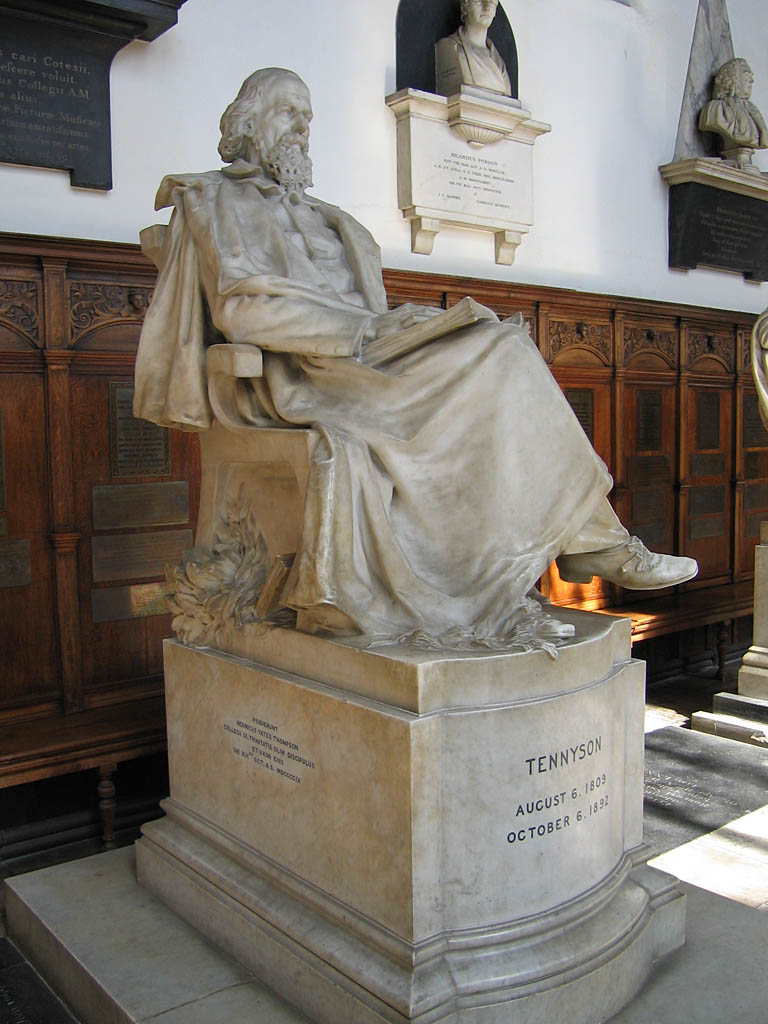
Tennyson, Lord Alfred ( 6 August 1809 Somersby, Lincolnshire, England – 6 October 1892 (aged 83) Lurgashall, Sussex, England ) ; Tennyson, 1st Baron; Tennyson Of Aldworth And Farringford, Baron. At the age of 12 , he wrote a poem of 6000 lines and at the tender age of fourteen, he wrote a drama of blank verse. At seventeen , Tennyson collaborated with his elder brother Charles and published a youthful collection of poems known as “Poems by two brothers”, which got much recognition. Tennyson attained Grammar school of Louth, and further moved to Trinity College at Cambridge and won the Chancellor’s Medal for a poem on Timbuctoo. Then he lived with his parents for twenty years, writing poems in serenity. : : In 1850, he was appointed as Poet Laureate succeeding Wordsworth. He moved to Isle of Wright and eventually was regarded as the best poet of the era. Among Tennyson’s major poetic achievements are the elegy mourning the death of his friend Arthur Hallam, “In Memoriam” (1850), “Charge of the Light Brigade”, Enoch Arden (1864), Idylls Of The King (1859-1885) ,so on.Although described by some critics as overly sentimental, his verse soon proved popular and brought Tennyson to the attention of well-known writers of the day, including Samuel Taylor Coleridge. Tennyson’s early poetry, with its medievalism and powerful visual imagery, was a major influence on the Pre -Raphaelite Brotherhood. Statue of Lord Tennyson in the chapel of Trinity College, Cambridge: : : : The May Queen
YOU must wake and call me early, call me early, mother dear; To-morrow ‘ll be the happiest time of all the glad new-year, – Of all the glad new-year, mother, the maddest, merriest day; For I’m to be Queen o’ the May, mother, I’m to be Queen o’ the May.
As I came up the valley, whom think ye should I see But Robin leaning on the bridge beneath the hazel-tree? He thought of that sharp look, mother, I gave him yesterday, – But I’m to be Queen o’ the May, mother, I’m to be Queen o’ the May.
They say he’s dying all for love, – but that can never be; They say his heart is breaking, mother, – what is that to me? There’s many a bolder lad ‘ll woo me any sum- mer day; And I’m to be Queen o’ the May, mother, I’m to be Queen o’ the May.
If I can, I’ll come again, mother, from out my resting-place; Though you’ll not see me, mother, I shall look upon your face; Though I cannot speak a word, I shall hearken what you say, And be often, often with you when you think I’m far away.
So now I think my time is near; I trust it is. I know The blessed music went that way my soul will have to go. And for myself, indeed, I care not if I go to-day; But Effie, you must comfort her when I am past away.
And say to Robin a kind word, and tell him not to fret; There’s many worthier than I, would make him happy yet. If I had lived – I cannot tell – I might have been his wife; But all these things have ceased to be, with my desire of life.
Forever and forever, all in a blessed home, And there to wait a little while till you and Effie come, – To lie within the light of God, as I lie upon your breast, – And the wicked cease from troubling, and the weary are at rest.
From “The May Queen” poem by Alfred TennysonEmbossed cover of the 1871 scoreMale and Female Superb Fairy-Wren.Taken in Ensay, Victoria. : 24 January , 2007.
SPRING. Birds’ love and birds’ song Flying here and there, Birds’ song and birds’ love, And you with gold for hair! Birds’ song and birds’ love. Passing with the weather, Men’s song and men’s love, To love once and for ever. Men’s love and birds’ love, And women’s love and men’s! And you my wren with a crown of gold, You my queen of the wrens! You the queen of the wrens— We’ll be birds of a feather, I’ll be King of the Queen of the wrens, And all in a nest together.
The Window; or, The Songs of the Wrens is a song cycle by Arthur Sullivan with words by Alfred, Lord Tennyson. Written in 1867–1870, it was eventually published in 1871. There are multiple versions of the title: On the cover of the 1871 edition, the subtitle is given as “The Loves of the Wrens”, however, “Songs of the Wrens” is used on the frontispiece and is the one generally used.
The original drawing by John Everett Millais, entitled “A Reverie”.
Tennyson wrote in 1870 for the “Song Cycle”“FOUR years ago Mr. Sullivan requested me to write a little song-cycle, German fashion, for him to exercise his art upon. He had been very successful in setting such old songs as ‘Orpheus with his lute,’ and I drest up for him, partly in the old style, a puppet, whose almost only merit is, perhaps, that it can dance to Mr. Sullivan’s instrument. I am sorry that my four-year-old puppet should have to dance at all in the dark shadow of these days; but the music is now completed, and I am bound by my promise.” December, 187O. A. TENNYSON
By February 1867, Tennyson had a draft of the text. Sullivan noted in a letter he wrote home from Tennyson’s house on February 10. ( his note HERE In BELOW ) Tennyson refused to allow publication until November 1870, when he finally agreed. The songs were finally published early in 1871 and included the twelve poems by Tennyson, eleven of which Sullivan had set to music.
He read me all the songs (twelve in number), which are absolutely lovely, but I fear there will be a great difficulty in getting them from him. He thinks they are too light, and will damage his reputation, &c. All this I have been combating, whether successfully or not
Songs in the cycle edit I. On the Hill – “The Lights and Shadows fly.” II. At the Window – “Vine, Vine and Eglantine.” III. Gone! – “Gone ! Gone till the end of the year.” IV. Winter – “The Frost is here, and Fuel is dear.” V. Spring – “Birds’ Love and Bird’s Song.” VI. The Letter – “Where is another Sweet as my Sweet?” VII. No Answer – “The Mist and the Rain.” VIII. No Answer. – “Winds are loud and you are dumb.” IX. The Answer – “Two little Hands that meet.” IXB. Ay! – “Be merry, all birds, to-day.”1 X. When? – “Sun comes, Moon comes, Time slips away.” XI. Marriage Morning – “Light so low upon Earth.” 1 Sullivan did not set this song, but it is included in the score as poetry.
The song cycle was recorded in 1989 by Peter Allanson (baritone) and Stephen Betteridge (piano) on Symposium, 1074, as part of their recording, An Album of Victorian Song. The cycle is part of the 2017 Chandos Records collection, Songs, which includes 35 other Sullivan songs. The Window is sung by tenor Ben Johnson. David Owen Norris accompanies.
“Spring”A Lyrical Bird Poem in the rhyme scheme of abcbcbcb cbxbbdbd , By Lord Tennyson is About Wren Birds , appreciating their merry making and passion during the Springtime, the love that exists between Wren and the Poet Speaker. With the passing season the love of bird changes and so does their song but men’s love are supposed to remain throughout. : : : : : : : : “Men’s song and men’s love, To love once and for ever.” : : Man ‘s and Woman’s love happen once and last forever. The King and Queen of the wrens also create a beautiful image in our mind. The Moving and Singing of the birds display love, fondness and affection ; hence the ‘Birds’ love’ is personified. The Flying birds are given human attributes. They are said to change with the weather, the imagery defines their ephemeral characteristics.“Birds’ song and birds’ love Passing with the weather” : Bird’s love and song is lasting only for a Season of Spring. It passes with the weather.: The ‘crown of gold’ is a symbol of passion and grandeur : : : : : : : “Birds’ song and birds’ love And you with gold for hair!” : : : : In the lines , “We’ll be birds of a feather” is a symbolism that the poet and his lady love would be having each other’s company, and living in joyous flying . The group of Birds move together.
“You my queen of the wrens! You the queen of the wrens— We’ll be birds of a feather, I’ll be King of the Queen of the wrens, And all in a nest together.” : : : : : : : : : Here, The Poet Speaker along with her lady love wish to become birds of a feather. They will be a part of flying group of Birds. The last line , “And all in a nest together”As “King of the Queen of wren” / A happy go lucky couple with avian characteristics of passion and joyous flying to freedom. “Nest”is a place of cosy dwelling built by lovers for shelter and comfort , and for living together with beautiful experience of affection , warmth nestling along each other.
“Spring”, A Bird Poem By Alfred Lord Tennyson Information Appreciation and poem Analysis Presented by V Jayaraj Pune India January 6 , 2024 : : : : : : : :
John Clare ( 13 July 1793 , Helpston, Northamptonshire, England – 20 May 1864 , aged 70, Northampton General Lunatic Asylum , Northampton, England ) was an English poet. The son of a farm labourer, he became known for his celebrations of the English countryside and sorrows at its disruption. His work underwent major re-evaluation in the late 20th century; he is now often seen as a major 19th-century poet. Notable works “Poems Descriptive of Rural Life and Scenery” His biographer Jonathan Bate called Clare “the greatest labouring-class poet that England has ever produced. No one has ever written more powerfully of nature, of a rural childhood, and of the alienated and unstable self.”Photo by SHERRY SCHELLENGER PARKER : The time of morning feeding his babes frantic coming in / going out of Wren Bird having a brood in a Hut – like Birdhouse in the backyard proximity.
Why is the cuckoo’s melody preferred, And nightingale’s rich songs so madly praised In poets’ rhymes! Is there no other bird Of Nature’s minstrelsy, that oft hath raised One’s heart to ecstasy and mirth as well? I judge not how another’s taste is caught, With mine are other birds that bear the bell, Whose song hath crowds of happy memories brought: — Such the wood robin, singing in the dell; And little wren, that many a time hath sought Shelter from showers, in huts, where I did dwell In early spring, the tenant of the plain, Tending my sheep; and still they come to tell The happy stories of the past again.
“The Wren”, A Bird Poem By John Clare ( 1793 – 1864 ) is About The “Wood Robin” singing in the Dell / the wooded hollow, and “Little Wren”,that has sought shelter from showers, in huts , where The Poet Speaker dwells. He believes that they are the hilarious birds that bear the bell , whose song has brought / filled or occupied with overflowing number/ “crowds” of happy memories. They deserve to be considered together although alongside the preference for the ” Cuckoo’s melody and praise for “Nightingale’s rich songs”/ “In ( other ) poet’s rhymes !” : : The Robin and The Wren who actually are the “tenant of the plain /In early spring”🌼🌱 and are friendly visiting and “Tending ( his ) sheep” / that is, having care or looking after the sheep; one who is timid and defenseless simpleton ( vulnerable / readily preyed upon ) requiring a lead to follow ; and here are Robin and Wren visiting his place repeatedly. Besides, they “come to tell / The happy stories of the past” : The Poet Speaker has penchant ( strong liking) for their “mirth(ful)”/”minstrelsy” / singing style in “Nature” which he has regarded high in his heart filled with great merriment / “raised ecstasy” 💜❤️ : The events that are near to one another are perceived as belonging together as a unit in close connection which is A Law Of Proximity. : : : :
“The Wren”, A Bird Poem By John Clare Information Appreciation and poem Analysis Presented by V Jayaraj Pune India January 5, 2024 : : : : : : : :
The Creation of Light by Gustave Doré : : Artists use darkness to emphasize and contrast the presence of light. Darkness can be used as a counterpoint to areas of lightness to create leading lines and voids. Such shapes draw the eye around areas of the painting. Shadows add depth and perspective to a painting.Separation of light and darkness on the first day of creation, from the Sistine Chapel ceiling by Michelangelo. : : Darkness can encompass a primitive chaos, and the powers of that chaos; it is not essentially evil, yet it is largely associated with death and destruction, captivity and spiritual darkness. Darkness can also be linked to the time spent in the womb and seed germination, both of wich take place in the dark. It is the “complementary opposite of light in a fundamental duality” (Biederman, 90). In the Book of Revelation, darkness indicates that the end of the world is forthcoming. Can be an emblem of bad judgment, misfortune and ignorance. The Prince of Darkness is the devil. ( umich.edu Michigan University Website ) : Caravaggio’s The Calling of St Matthew uses darkness for its chiaroscuro effects.Color paints are mixed together to create darkness, because each color absorbs certain frequencies of light. Theoretically, mixing together the three primary colors, or the three secondary colors, will absorb all visible light and create black. In practice, it is difficult to prevent the mixture from taking on a brown tint.અંધાર ખુશ્બો ભર્યો : અનહધ્ય અનહદ ના અજવાળાં Photo by Elti Meshau : :Pointing out things hidden or suppressed within ourselves or society. Darkness can represent new beginnings or revelations . Being in the dark is often seen as a way to come closer to truth and understanding, leading people toward enlightenment and greater insight . : : On our spiritual path, it can be easy to get lost in the darkness and forget who we truly are. : : In Buddhism speaks of darkness as a symbol, representing the human ignorance between us and enlightenment. : : In Christianity, darkness can be seen as a symbol of judgment and damnation. : : In Hinduism, darkness denotes mortality, death, fear, and chaos. It is seen as a representation of ignorance, evil, and suffering. Hindu Goddess Kali, the goddess of death, destruction, and dissolution, is often associated with darkness. Her dark acts were believed to purify the soul from the imperfections of this world.: અંધારે થી અજવાળાં સાકાર કરવા નો સાક્ષાત્કાર : અંતરધ્વનિ અને અંતઃ સ્ફૂર્તિ ના અનહદનાદ This photo of jasmine flowers has only soft shadows cast by diffused lightTree shadow against the backdrop of daylight. In Greek mythology, Hades was the dark lord of the underworld who controlled all aspects of death, including the passing from life to death. He was often depicted as a mysterious figure who dwelled in the shadows and was feared by many. Photo by Irina Iriser : : White Flower field under darkened twigs waiting for the enlightened lights : “નિમિલિત નેણાં કેમ નિરખશે ખીલ્યાં ફૂલ રૂપાળાં ? મનવા ! ખોલ તિમિર નાં તાળાં.” મનુભાઈ ત્રિવેદી સરોદ Use darkness to explore their innermost thoughts or feelings to gain insight. exposing unknown truths that lie beneath the surface,delve deeply into what is real. : : Beauty can only be found in the shadows of uncertainty.મનવા ! ખોલ તિમિર નાં તાળાં: તારી આંખો માં ડોકાતા અનહદ નાં અજવાળાં
અહીં ક્લિક કરો અને સાંભળો : : https://youtu.be/OiaiRW5LP0k?si=lj9fC2ldWgWhETNa મનવા , ખોલ તિમિર ના તાળાં : કવિ શ્રી મનુભાઈ ત્રિવેદી (સરોદ ) : સ્વર : ગાર્ગી વોરા : સ્વરાંકન : રાસબિહારી દેસાઇ : આલ્બમ : ભક્તિ ભાવ : : આસ્વાદ , કાવ્યાર્થ , વિચાર : વિ જયરાજ : : : : : : : : : : : : રોશની ના અભાવની કે દેખીતું અજવાળું સપાટીએ બાહ્ય રૂપ માં શોષી લેતાં અનુભૂતિ થાય, તેવી સ્થિતિ ને અંધકાર કહે ; તિમિર કહ્યું છે. ક્ષિતિજ પર ૧૮ * અંશ નીચે ગબડી જતો ⛅ સૂર્ય તિમિરાવૃત્ત નાં આવરણો ને અનુસરવા સર્જેલી રાત્રી દરમિયાન, મનુષ્ય અને પ્રાણી માત્ર ને આરામ /નિદ્રા ની ફરજ પાડે કે નિશાચર તથા પિશાચ ની ગતિ ને પણ પ્રવૃત્ત કરે. ખ્રીસ્તી માન્યતા મુજબ પ્રભુ જિસસે અંધકાર અને પ્રકાશ ને છૂટાં મેલ્યાં અને ઓળાં – પડછાયાં , પાપ – અનિષ્ટ , અપશુકન ના અણસારકે ભાવી ના ભણકાર તરીકે સમજાવ્યાં. સૂર્ય ☀️ અને ચંદ્ર 🌒 સર્જન ના ચોથા દિવસે નિર્માણ પામ્યાં. આધુનિક સંદર્ભે, તિમિર પથરાવો એટલે શુષ્ક ગમગીનફેલાવ; ઉગ્ર – કડક તો વળી, ક્યાંક બિહામણું અને ક્યારેક પીડા ભર્યું કે ગ્લાનિ થી ભગ્નોત્સાહ ઉપજાવનારી કાલ મર્યાદા નું ભોગવણું . જૈન ધર્મમાં એને “બાંધેલ કર્મ નો સ્થિતિ બંધ” સ્વભાવ કહ્યો છે. darkness was considered “the second to last plague” (Exodus 10:21), and the location of “weeping and gnashing of teeth”: ભીંસ્યા દાંતે રોવાની જગાએ (Matthew 8:12) : : કાવ્ય રચનામાં, શેક્સપિયર કિંગ લિયર ( ૩ / ૪ ) નાટકમાં “prince of darkness” તિમિર કુમાર ! નું સર્જન કરે , તો દાંતે “ડિવાઇન કોમેડી” માં solid stain’d darkness સંગીન કલંકિત દૂષણ નું અંધારું કહે. : : ગર્ભિત રૂપક / શિલ્પ થકી સાહિત્યકાર , વ્યાપ્ત અંધાર ને પાપ , ઉદાસીનતા, અજાણ્યું ગૂઢ રહસ્ય વિ. અનિષ્ટ ની રજૂઆત અન્વયે જોડી શકે છે. આમ , જ્યોત નું કહેણ , વિષણ્ણ અંધેર હાલત દૂર રાખીને, સૃષ્ટિ ગત પ્રસન્નતા ના ભક્તિ ભાવ ની વધામણી લાવી આપનાર નીવડે. જેને માટે તિમિર નાં / તૃષ્ણા ( લાલસા )નાં તાળાં ખોલીને , નવા વર્ષનીઆંખો માંડોકિયું કરતા અનહદ ના અપાર બેશુમાર અજવાળાંના પ્રસાર કરવા માટેની ચિત્ત ને / મનને , અનહધ્ય ( સતત વહેતા ) ઉપલબ્ધ પ્રકાશ ને આધિન અંતરધ્વનિ સાંભળી સમજને પ્રાપ્ત કરવા માટે પ્રેરણાદાયી આજ્ઞા કરતા કવિશ્રી સરોદ લિખિત “મનવા” ભક્તિ ગાન ના આસ્વાદ કાવ્યાર્થ વિચાર કરીશું. : : : :
રીતુ વસંત મીઠી વેણુ વગાડતી આવશે જ્યારે કોયલ સુહાગી એટલે કે સુભાગી હોય સૌભાગ્ય આપનારા સુંદર બોલતાન ( creation calling ) ના ટહુકાર કરશે ; જેને મીઠો ટેકો 🌮 આપવાના સરસંધાન તાકવા પડે. મીઠી ટાપસી પૂરવી પડે . એક તરફ રૂપાળાં ફૂલો ખીલ્યાં હશે ત્યારે નિમિલિત નેણાં કેમ કરીને એ તરફ નિરખશે !? જ્યારે , ચિત્ત – મન પર તાળાં વાસ્યા હોય !?!? (સં)મિલિત એટલે, જોડાયેલ , સંધાયેલ : People in gathering / assembly : : નીરખી રહ્યાં “નિમિલિત નેણાં” ‘સ્થિતિ બંધ સ્વભાવ’ ને લીધે કોણ જાણે શે’ સમજી ને કેવાં કેવાં નકૂચા વાસી ને , તાળાં ભીડી ને , આંખો મીંચીને , એકલાં અટુલા બેસી રહે અને ભેગા થવાથી ભાગે. : they remain unassembled and refuse to come together : અને નિમિલિત રહેશે. માટે આજ્ઞા હજો ! મનવા , ખોલ તિમિર નાં તાળાં. : : : :
” સાચવણું ” એટલે મકાન વિગેરે સચવાય રહે એ માટે નું તાળું. મકાનની માયા – મૂડી નો ખજાનો અખૂટ રહે. છાબમાં મળેલાં લગ્ન 💒 ના લૂગડાં અને પોશાક, તથા શણગાર શોભા ના ભપકા ને સંઘરી રાખવાની જરી પુરાણી રીતોથી , તાળાંવાસી ને ક્યાં લગી જતન કરશો !? વેણી બૂહાં ના પાટીયા જોડેલા કમાડ ને મિજાગરા થી ચોકઠાં પર ચઢાવી લોખંડી હાથા , આગળિયા , સાંકળ , કડીઓ વાસીને , નકૂચા પર તાળાં વાસી ને , સંઘરો કરીને ” સાચવણું ” કરતાં રહેશો તો એમાંથી નરી વેદના મળવાની છે. વેણી ની વરણી ( પસંદગીઓ ) ના કોઈ ટાપસી – બોલ નથી કે કહીએ. : : મધરાતે મનડાને મળતાં ( “ઝડ ઝરડા” ) /કપડાં માં પડતા નાના ચીરા અને ( “જાળાં” ) એટલે કે પડદા ચીરાતા , નીકળ્યા અવાજ ચોંટયા ચિત્ત – મન ને આ સિવાય શું મળશે !? માટે , આજ્ઞા હજો ! મનવા ખોલ તિમિર નાં તાળાં. : : : :
અજાણ રહ્યાં , નિમિલિત રહ્યાં , મળ્યું જ્ઞાન સમજાયું નહીં. એ સમજાવનાર કારીગર નો / જ્ઞાની ગુરુ નો સાથ કરી લો. એની પાસે થી ચાલાક ચાવીરૂપ હોશિયારી મેળવી લો. કુશળ કાર્ય-શિલ્પ , કળા-કૌશલ પ્રાપ્ત કરી લો. સંસારી મનસા લાલસા / તૃષ્ણા નાં તાળાં ખોલવાનીચાવી હાથમાં આવવાથી ચાવીરૂપ ભૂમિકા અદા કરનાર બની જશો. નિયામક સ્થાને , મુખ્ય સ્થિતિ પર પહોંચવા નો એ જ સાચો , સમુચિત માર્ગ છે. “તૃષ્ણા નાં તાળાં ખોલતાં માં” જિંદગીમાં અનહદ “અજવાળું જ અજવાળું” ઝગમગી ઉઠ્યું સમજો. માટે આજ્ઞા હજો ! મનવા ખોલ તિમિર નાં તાળાં. : : : :
પ્રકાશ માનત્વ અને અંધકાર નાં વૈવિધ્ય તાલબદ્ધ રીતે સ્થિર થયા છે . પરંતુ તે શરતી કે પ્રાસંગિક એટલે કે અનિશ્ર્ચિત મનની સ્થિતિ તરીકે રહે. સૂર્યના ડૂબવાથી અંધાર આવે . માટે તેમાં ગૂઢ રહસ્ય લાગે . પ્રકાશ સર્જન સાથે સંકળાયેલ રહીને સંચાલન નિયમન કરે. હૂંફ આપી શકે , બૌદ્ધિક અને આધ્યાત્મિક રૂપથી અજવાળું ફેલાવે. અંધાર આવે તો સર્જક તરીકે નિષ્ફળતા મળે . જીવ ને હર્ષ કેમ ન મળે !? વિકાસકર્તા બનો છો ત્યાં પ્રકાશ માનત્વ ની દીપ્તિ અને સિદ્ધિ , જેનું સતત થનાર નવીકરણ અંધારને પણ ખુશબો ભર્યો રાખે. અંતર પ્રેરણા અને અંતઃસ્ફૂર્તિ / મનમાં આપમેળે થતી સમજ ઉક્ત પ્રકાશ-જન્ય હોય ; સમજોપલબ્ધિ , જેની સાથે અંધારે છતુંપાટ / સુપ્ત રહેવાની મોજીલી ટેવ માંથી બહાર નીકળી ને પ્રકાશ ધારા / તેજ ના પ્રવાહ ને આધિન થતાં , છતું થતું આધ્યાત્મ નું જ્ઞાન એ ઈશ્વર ના સાક્ષાત્કાર જેવી જ દૈવિક દેન છે જેનો સીધો સંબંધ , ભારતીય ઉપનિષદ પ્રમાણે પ્રકાશિત સભાનતાની હોશિયારી થી કરેલા કાર્યો છે. . . મનવા – બ્રાહ્મણનું ચિત્ત મન જે અજ્ઞાનના સર્વ તાળાં ખોલીને , આધ્યાત્મિકતાના અજવાળાં સાકાર કરે. મીણ ની બત્તીઓ અને દીપ પ્રાગટ્ય , મંદિર કે મજાર પર , ઉંબરે ઉંબરે , દિવાલે દિવાલે , દેવ દેવી સમક્ષ, વરઘોડે – સરઘસો માં , આતશબાજીના સ્વરૂપે દીપાવલીના / ક્રિસમસ ના / હનુક્કાહ ના તહેવારોમાં અજવાળાં ને સજાવે અને સમજાવે : જેની ચાવી હાથમાં આવી જવાથી ભક્તિ ભાવ ના બોલ આધ્યાત્મિક સફળતાની ટોચે પહોંચવા મનવા ને , એવાં ને તેવાં જાળાં ચીરીને , અને તાળાં ખોલીને , તિમિરાવલિ / અંધકારના સમૂહ પર જીત અપાવશે. : આ છે , તિમિરાવલિ થી દીપાવલી સુધી પહોંચવા નો માર્ગ ; જેના પર સવાર થઈ આવી છે ૨૦૨૪ ના નવા ખ્રીસ્તી વર્ષ ની વધામણી ; સાથે હેપ્પી ન્યૂ યર : : અહીં નીચે ક્લિક કરીને સાંભળીએ: : : : https://drive.google.com/file/d/1kOzZH5i62CYfhlv99JYpf65g04nV6ERj/view?usp=drivesdk
કાજળના અંધકારે કાજળની કીકી થકી કાજળનાં લેખ અમે વાંચ્યા. ધરતીની ભોંયે નહીં ઝાંઝર ઝમકાર નહીં અમે પાની વિનાનાં એવા નાચ્યાં કાજળના અંધકારે…
પાણીનું કોડિયું ને પાણીની વાટ લહી પાણીની જ્યોત દીપ ફૂટયો પાણીનાં મહેલમાં પાણીનાં તેજ અને પાણી પવનથી બૂઝયો સૂરજના કંઠ સોહે એવો એક હાર રચ્યો બુદ બુદનાં મોતી અમે ગાંઠયાં કાજળનાં અંધકારે…
આકાશી વાદળાંની આકાશી ધાર અમે આકાશી ભોમ પરે ઝીલી આગળ ને પાછળ પાછળ ને આગળ આકાશી હરિયાળી ખીલી મૃગલાં ને ડૂબવે ચારે કોર ઘૂઘવે એ મૃગજળનાં પૂરને કંઈ નહીં ના હાથ થકી નાથ્યાં કાજળના અંધકારે…
A Necklace of Wrens For Mícheál Ó Ciarmhaic, file When I was very young I found a nest Its chirping young were fully fledged.
They rose and re-alighted around my neck, Made in the wet meadow a feather necklet.
To them I was not human but a stone or tree: I felt a sharp wonder they could not feel.
That was when the craft came which demands respect. Their talons left on me scars not healed yet. *The Gloaming:A Necklace of Wrens.In Irish An Muince Dreoilíní Do Mhícheál Ó Ciarmhaic, file I mo bhuachaill óg, fadó fadó, d’aimsíos nead. Bhí na gearrcaigh clúmhtha, fásta, is iad ag scread.
D’éirigh siad – is thuirling arís ar m’ucht Ormsa bhí muince clúimh sa mhóinéar fliuch.
Níor dhuine mé ach géag crainn nó carn cloch ach bhí iontas crua nár bhraith said ag bualadh faoi m’ucht.
B’in an lá ar thuirling ceird a éilíonn ómós: is d’fhág a n-ingne forba orm nár leigheasadh fós.
The Gloaming — “A Necklace Of Wrens”A Bird Poem By Irish Poet Michael Hartnwtt is About Mystic invitation into the Poet’s life and the mysterious paradox.In Ireland, St. Stephen’s Day is also known as Wren’s Day – a tradition descending either from Celtic or Nordic mythology, where boys would hunt for a wren and then take the captured bird around town singing and asking for coins.
A wren betrayed Irish soldiers to invading Vikings, by beating its wings upon their shields, earning the moniker, ‘traitor-birds’.
Notes for each of the lines Pending visit this post again later on to enjoy the appreciation of the poem V Jayaraj Pune India December 31, 2023 : : : :
“Just sharing this perfect little nest of moss amongst the ivy in our lean-to shed right down the other end of the garden where we keep the lawnmower, the empty pots, saucers and garden wire.
We’ve seen the little wren hopping in and out but I don’t want to disturb her too much.
I hope it will be safe from the cats.” : ( thetialys.wordpress.com
A Wren’s Nest AMONG the dwellings framed by birds In field or forest with nice care, Is none that with the little Wren’s In snugness may compare.
No door the tenement requires, And seldom needs a laboured roof; Yet is it to the fiercest sun Impervious, and storm-proof.
So warm, so beautiful withal, In perfect fitness for its aim, That to the Kind by special grace Their instinct surely came.
And when for their abodes they seek An opportune recess, The hermit has no finer eye For shadowy quietness.
These find, ‘mid ivied abbey-walls, A canopy in some still nook; Others are pent-housed by a brae That overhangs a brook.
There to the brooding bird her mate Warbles by fits his low clear song; And by the busy streamlet both Are sung to all day long.
Or in sequestered lanes they build, Where, till the flitting bird’s return, Her eggs within the nest repose, Like relics in an urn.
But still, where general choice is good, There is a better and a best; And, among fairest objects, some Are fairer than the rest;
This, one of those small builders proved In a green covert, where, from out The forehead of a pollard oak, The leafy antlers sprout;
For She who planned the mossy lodge, Mistrusting her evasive skill, Had to a Primrose looked for aid Her wishes to fulfill.
High on the trunk’s projecting brow, And fixed an infant’s span above The budding flowers, peeped forth the nest The prettiest of the grove!
The treasure proudly did I show To some whose minds without disdain Can turn to little things; but once Looked up for it in vain ‘Tis gone—-a ruthless spoiler’s prey, Who heeds not beauty, love, or song, ‘Tis gone! (so seemed it) and we grieved Indignant at the wrong.
Just three days after, passing by In clearer light the moss-built cell I saw, espied its shaded mouth; And felt that all was well.
The Primrose for a veil had spread The largest of her upright leaves; And thus, for purposes benign, A simple flower deceives.
Concealed from friends who might disturb Thy quiet with no ill intent, Secure from evil eyes and hands On barbarous plunder bent,
Rest, Mother-bird! and when thy young Take flight, and thou art free to roam, When withered is the guardian Flower, And empty thy late home,
Think how ye prospered, thou and thine, Amid the unviolated grove Housed near the growing Primrose-tuft In foresight, or in love. — William Wordsworth
“A Wren’s Nest”, A Bird Poem By William Wordsworth is an Appreciation About the beauty and an enfoldment of nature shown in the cosy dwelling of warm comfort framed by the little Wren Bird. The wren’s nest in a snugness is comparable with other nice nests of care built in the fields and forest by other birds. It is “small, round mossy nest.. . made of “fibres from the ivy, cotton, and the moss” and is “bound with cobwebs light and thin.”, that is, “hidden near a waterfall.”: : Itis “lined with feathers, warm and soft” and thus, it is “built with magic art” created in Nature. : : “What a world of wonder and delight / Is opened to the view!”, Wordsworth values it’s apprize in his account of the Poetry of Birds. : Nature is “brimming o’er with life and joy” and how it is “a world of happiness and love.”The brief nature of life, its brevity reminds us of human’s mortality . The essence of Wordsworth ‘s Poem on A Wren’s Nest can be learnt in knowing the poet’s gratitude for nature and enrichment of life. :
Notes for each of the Stanzas Pending visit this post again later on to enjoy the appreciation of the poem V Jayaraj Pune India December 30 , 2023 : : : :