Robin Redbreast : : By William Allingham. Good-by, good-by to Summer!
For Summer’s nearly done;
The garden smiling faintly,
Cool breezes in the sun;
Our thrushes now are silent,
Our swallows flown away,—
But Robin’s here in coat of brown,
And scarlet brestknot gay.
Robin, Robin Redbreast,
O Robin dear!
Robin sings so sweetly
In the falling of the year.
Bright yellow, red, and orange,
The leaves come down in hosts;
The trees are Indian princes,
But soon they’ll turn to ghosts;
The leathery pears and apples
Hang russet on the bough;
It’s autumn, autumn, autumn late,
‘T will soon be winter now.
Robin, Robin Redbreast,
O Robin dear!
And what will this poor Robin do?
For pinching days are near.
The fireside for the cricket,
The wheat stack for the mouse,
When trembling night winds whistle
And moan all round the house.
The frosty ways like iron,
The branches plumed with snow,—
Alas! in winter dead and dark,
Where can poor Robin go?
Robin, Robin Redbreast,
O Robin dear!
And a crumb of bread for Robin,
His little heart to cheer.
“Robin Redbreast”, A Bird Poem by William Allingham is About conversation with Robin in Autumn 🍂 🍁 time, by The Poet Speaker who informs the bird that it will soon be “Winter when the trembling night – winds whistle” and in disapproval and disfavour “moan around all the house”, Meaning, it indicates pain, discomfort and displeasure. The cricket will have a fireside and tha mouse will have wheat stack. But the Robin has no such stocks, and a Search of worms will be difficult. The branches of the trees plumed with snow, that is covered with snow as like plums appear all along the branches. The “pinching days” would be like dead and dark 🌑 in Winter.Then where can poor Robin go ? 🕶️ 🕶️ And so a “crumb of bread” 🍞 only available at a time for dear Robin to “cheer with its little ❤️ heart”
“Robin RedBreast”, A Bird Poem by William Allingham Information Appreciation and poem Analysis Presented by V Jayaraj Pune India October 22, 2023 : : : : : : : :
With a flower across his chest. “The Robin”, A Bird Poem by Seren Roberts is about twirp of a Robin and about his deplorable condition when he fell off his perch into the snow ❄️ as someone pointed and shooted a camera and he became chuffed that is, “huffed and puffed” as he made his way up blowing hard and loudly to look his best, yet failed. What is the moral of the story? You have to keep balance ♎⚖️ while posing in your happiness to be alive.”happiness 😊😊
“The Robin”, A bird Poem by Seren Roberts Information Appreciation and poem Analysis Presented by V Jayaraj Pune India October 21, 2023 : : : : : : : :
“Robin And His Friend Worm “, A Bird Poem by Roger Horsch is About trusting a bird in negative, even if you are his friend which is a life time learning and a moral of the story told in A Bird Poem.
“Red Robin”, A Bird Poem by Cona Adams is About Pleasure , love and optimism of life and it’s spirit realised on observing four to five Robins with scarlet breast and charcoal back. Their happiness was described by The Poet Speaker in their hoping and jumping on the house loans of green grass that came alive,too and the way they ignored his presence. However they drew the attention by bobbing ( moving ) up and down , and around with a view to pulling the hapless worm with the beak into the cheek, the Poet Speaker found its ways uncommonly rude.
“Red Robin”, A Bird Poem by Cona Adams Information Appreciation and poem Analysis Presented by V Jayaraj Pune India October 19, 2023 : : : : : : : :
“What Robin Told”A Bird Poem by George Cooper is About The way Robin Redcrust build their nest(s) and where the Robin Redcrust hide their nest(s).
Notes for each of the lines Pending visit this post again later on to enjoy the appreciation of the poem V Jayaraj Pune India October 18 , 2023 : : : :
A poet, novelist, traveler, and editor of Atlantic Monthly, Thomas Baily Aldrich ( November 11, 1836 , Portsmouth, New Hampshire, United States– March 19, 1907 , Boston, Massachusetts, United States, Aged 70 ) He is notable for his long editorship of The Atlantic Monthly, during which he published writers including Charles W. Chesnutt. He was also known for his semi-autobiographical book The Story of a Bad Boy, which established the “bad boy’s book” subgenre in nineteenth-century American literature, and for his poetry. Aldrich befriended other young poets, artists and wits of the metropolitan bohemia of the early 1860s, including Edmund Clarence Stedman, Richard Henry Stoddard, Fitz Hugh Ludlow, Bayard Taylor and Walt Whitman. From 1856 to 1859, Aldrich was on the staff of the Home Journal, then edited by Nathaniel Parker Willis. During the Civil War he was the editor of the New York Illustrated News. : . As editor of The Atlantic he created tension with his publisher Henry Oscar Houghton by refusing to publish articles that Houghton commissioned from friends including Woodrow Wilson and Francis Marion Crawford. When Houghton chastised Aldrich for turning down submissions from his friend Daniel Coit Gilman, Aldrich threatened to resign and finally did so in June 1890. : Beginning with the collection of stories entitled Marjorie Daw and Other People (1873), Aldrich wrote works of realism and quiet humor. His novels Prudence Palfrey (1874), The Queen of Sheba (1877), and The Stillwater Tragedy (1880) had more dramatic action. The first portrayed Portsmouth with the affectionate touch shown in the shorter humorous tale, A Rivermouth Romance (1877). In An Old Town by the Sea (1893), Aldrich commemorated his birthplace again. Travel and description are the theme of From Ponkapog to Pesth (1883). : : Aldrich died in Boston on March 19, 1907.His last words were recorded as, “In spite of it all, I am going to sleep; put out the lights.”His Life was written by Ferris Greenslet (1908). He is buried on Grapevine Path lot 6109 of Mount Auburn Cemetery in Cambridge, Massachusetts. : He was a critic of the dialect verse that was popular at the time. In a 1900 letter referencing contemporary poet James Whitcomb Riley, he wrote, “The English language is too sacred a thing to be mutilated and vulgarized.
Ingratitude : : By Thomas Baily Aldrich
FOUR bluish eggs all in the moss! Soft-lined home on the cherry-bough! Life is trouble, and love is loss– There’s only one robin now.
O robin up in the cherry-tree, Singing your soul away, Great is the grief befallen me, And how can you be so gay?
Long ago when you cried in the nest, The last of the sickly brood, Scarcely a pinfeather warming your breast, Who was it brought you food?
Who said, “Music, come fill his throat, Or ever the May be fled”? Who was it loved the low sweet note And the bosom’s sea-shell red?
Who said, “Cherries, grow ripe and big, Black and ripe for this bird of mine”? How little bright-bosom bends the twig, Sipping the black-heart’s wine!
Now that my days and nights are woe, Now that I weep for love’s dear sake — There you go singing away as though Never a heart could break!
— Thomas Baily Aldrich
” Ingratitude “, A Classic Contemporary Bird Poem by A poet, novelist, traveler, and editor of Atlantic Monthly, Thomas Baily Aldrich ( November 11, 1836 , Portsmouth, New Hampshire, United States– March 19, 1907 , Boston, Massachusetts, United States, Aged 70 ) is About ingratitude and ungratefulness.
COMPARISON Create an image from this poem : : by Paul Laurence Dunbar The sky of brightest gray seems dark To one whose sky was ever white. To one who never knew a spark, Thro’ all his life, of love or light, The grayest cloud seems over-bright. The robin sounds a beggar’s note Where one the nightingale has heard, But he for whom no silver throat Its liquid music ever stirred, Deems robin still the sweetest bird.
Notes for each of the lines Pending visit this post again later on to enjoy the appreciation of the poem V Jayaraj Pune India October 16, 2023 : : : :
John G Whittier ( 1807 – 1892 ) A Portrait December 17, 1807, near Haverhill, Massachusetts, U.S.—died September 7, 1892, Hampton Falls, New Hampshire), American poet and abolitionist who, in the latter part of his life, shared with Henry Wadsworth Longfellow the distinction of being a household name in both England and the United States.. : Awards And Honors: Hall of Fame (1905) : notable Works: “Maud Muller” “Snow-Bound” Movement / Style: American RenaissanceBorn on a farm into a Quaker family, Whittier had only a limited formal education. He became an avid reader of British poetry, however, and was especially influenced by the Scot Robert Burns, whose lyrical treatment of everyday rural life reinforced his own inclination to be a writer. four periods: poet and journalist (1826–32), abolitionist (1833–42), writer and humanitarian (1843–65), and Quaker poet (1866–92). At age 19 he submitted his poem “The Exile’s Departure” to the abolitionist William Lloyd Garrison for publication in the Newburyport Free Press, and it was accepted. Garrison encouraged other poetic contributions from Whittier, and the two men became friends and associates in the abolitionist cause. Whittier soon turned to journalism. He edited newspapers in Boston and Haverhill and by 1830 had become editor of the New England Weekly Review in Hartford, Connecticut, the most important Whig journal in New England. He also continued writing verse, sketches, and tales, and he published his first volume of poems, Legends of New England, in 1831. In 1832, however, a failed romance, ill health, and the discouragement he felt over his lack of literary recognition caused him to resign and return to Haverhill.
Deciding that his rebuffs had been caused by personal vanity, Whittier resolved to devote himself to more altruistic activities, and he soon embraced Garrisonian abolitionism. next two decades he matured as a poet, publishing numerous volumes of verse, among them Lays of My Home (1843), Voices of Freedom (1846), Songs of Labor (1850), The Panorama (1856), and Home Ballads and Poems (1860). Among his best-known poems of this period is “Maud Muller” (1854), with its lines “Of all sad words of tongue and pen/ The saddest are these, ‘It might have been.’ ” Most of his literary prose, including his one novel, Leaves from Margaret Smith’s Journal (1849), was also published during this time, along with numerous articles and reviews. : The publication in 1866 of his best-known poem, the winter idyll Snow-Bound, was followed by other triumphs in the verse collections The Tent on the Beach (1867), Among the Hills (1868), and The Pennsylvania Pilgrim (1872). Whittier’s 70th birthday was celebrated at a dinner attended by almost every prominent American writer, and his 80th birthday became an occasion for national celebration. : After outgrowing the Romantic verse he wrote in imitation of Robert Burns, Whittier became an eloquent advocate of justice, tolerance, and liberal humanitarianism. The lofty spiritual and moral values he proclaimed earned him the title of “America’s finest religious poet,” and many of his poems are still sung as church hymns by various denominations. After the Civil War he changed his focus, depicting nature and homely incidents in rural life. Whittier’s best poems are still read for their moral beauty and simple sentiments.( From britannica.com : An Article revised and updated by J.E. Luebering. )
How the Robin Came : An Algonquin Legend: By John Greenleaf Whittier ( 1807–1892 ) From The Poetical Works in Four Volumes. 1892.
HAPPY young friends, sit by me, Under May’s blown apple-tree,
While these home-birds in and out
Through the blossoms flit about.
Hear a story, strange and old,
By the wild red Indians told,
How the robin came to be:
Once a great chief left his son,—
Well-beloved, his only one,—
When the boy was well-nigh grown,
In the trial-lodge alone.
Left for tortures long and slow
Youths like him must undergo,
Who their pride of manhood test,
Lacking water, food, and rest.
Seven days the fast he kept,
Seven nights he never slept.
Then the young boy, wrung with pain,
Weak from nature’s overstrain,
Faltering, moaned a low complaint:
“Spare me, father, for I faint!”
But the chieftain, haughty-eyed,
Hid his pity in his pride.
“You shall be a hunter good,
Knowing never lack of food;
You shall be a warrior great,
Wise as fox and strong as bear;
Many scalps your belt shall wear,
If with patient heart you wait
Bravely till your task is done.
Better you should starving die
Than that boy and squaw should cry
Shame upon your father’s son!”
When next morn the sun’s first rays
Glistened on the hemlock sprays,
Straight that lodge the old chief sought,
And boiled samp and moose meat brought.
“Rise and eat, my son!” he said.
Lo, he found the poor boy dead!
As with grief his grave they made,
And his bow beside him laid,
Pipe, and knife, and wampum-braid,
On the lodge-top overhead,
Preening smooth its breast of red
And the brown coat that it wore,
Sat a bird, unknown before.
And as if with human tongue,
“Mourn me not,” it said, or sung;
“I, a bird, am still your son,
Happier than if hunter fleet,
Or a brave, before your feet
Laying scalps in battle won.
Friend of man, my song shall cheer
Lodge and corn-land; hovering near,
To each wigwam I shall bring
Tidings of the coming spring;
Every child my voice shall know
In the moon of melting snow,
When the maple’s red bud swells,
And the wind-flower lifts its bells.
As their fond companion
Men shall henceforth own your son,
And my song shall testify
That of human kin am I.”
Thus the Indian legend saith
How, at first, the robin came
With a sweeter life from death,
Bird for boy, and still the same.
If my young friends doubt that this
Is the robin’s genesis,
Not in vain is still the myth
If a truth be found therewith:
Unto gentleness belong
Gifts unknown to pride and wrong;
Happier far than hate is praise,—
He who sings than he who slays.
— John G Whittier
“How The Robin Came “, A 28 lines in 7 Stanzas, each of 4 lines , Bird Poem by John Whittier is About Nature and happiness of the Bird, Robin. : : Notes for each of the lines Pending visit this post again later on to enjoy the appreciation of the poem V Jayaraj Pune India October 15, 2023 : : : :
James William Whilt in 1917 James William Whilt (January 8, 1878 – March 10, 1967) was a cowboy poet known as “The Poet of the Rockies”He was born on January 8, 1878, in Benton County, Minnesota. He moved to Fort Benton, Montana in 1900 and became a cowboy. He spent 30 years in Glacier National Park as a guide, caretaker, and trapper. : :
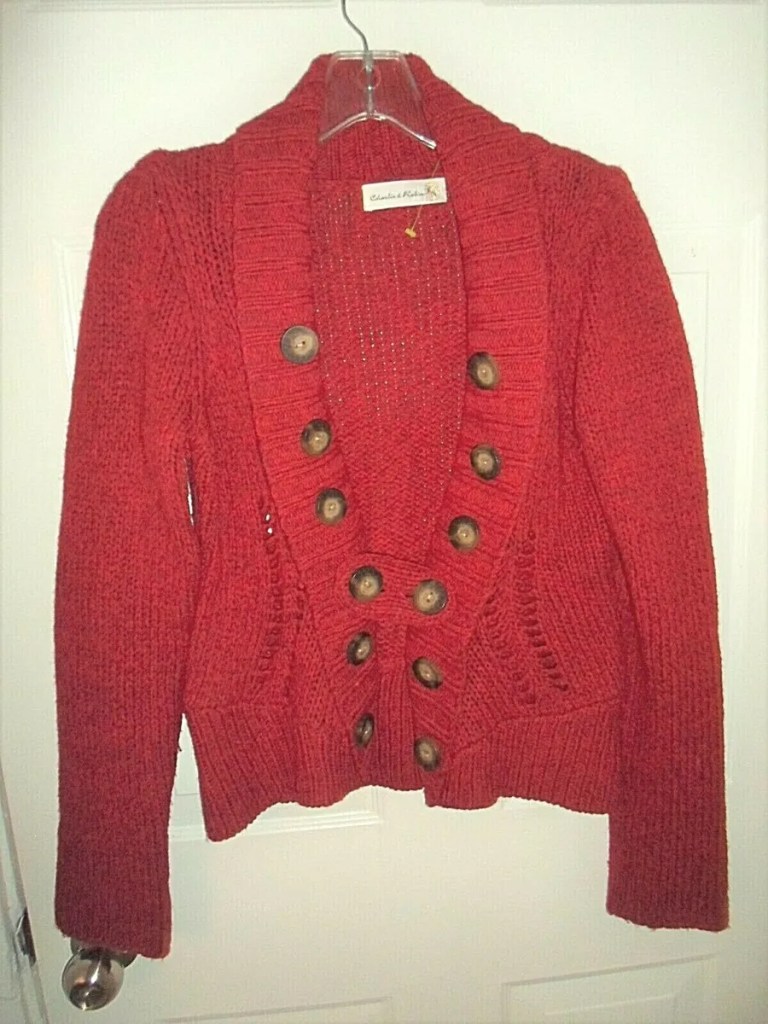
He died on March 10, 1967, in Kalispell, Montana. : : ” Ain’t it the Truth? ” Is his famous poem. Whilt’s Publications include Rhymes of the Rockies (1922) Our Animal Friends of the Wild (1927) Giggles from Glacier Guides (1935) Mountain Echoes (1951) : : He spent a major part of his life in the Rocky Mountains as a timber cruiser, packer, trapper, and guide, making his descriptions vivid and enjoyable. Most of the poems in his book,”Rhymes of the Rockies ( 1922 ) praise nature, isolation, and the forest’s silence in a rainstorm, but there are also a few poems with a story to tell. One such was ‘The Trapper’s Trail,’ where the poet follows a path up into the mountains, one that is clear only to his trained eye. ‘My Blanket-Roll’ honored the poet’s long-time friend, his cowboy bedroll. He says that it was always ready to go wherever Whilt suggested without any complaining. He sincerely wished that he would get to snuggle inside his blanket roll when he takes his last journey. The whole collection displayed Whilt’s wonderful ideas and imagery. In addition, he did an excellent job putting his thoughts into literary form throughout. These verses take the readers on a beautiful journey into the captivating world of poetry. It comprises several poems, including Adventurer’s Luck, My Garden, Springtime, and many more.Dick Grayson , Red Sweater with dark red Robin.Robin Pullover For Kids child friendly with its standing collar and easy-peasy snap closure.Dog life festive Robin Sweater fashionable jumper to help keep your dog warm during the cold weather over the festive season. The attractive red body together with the fun robins collar detail will ensure your furbaby keeps in style with the appropriate colours for the Christmas period. ROCKIN’ ROBIN RED WINTER CARDIGAN WITH EMBROIDERED ROBINS, LEAVES AND BERRIES : Perfect for the Autumn/ Winter season as the embroidery depicts a little robin sat on a branch with mistletoe, flowers and pineconesCharlie & Robin Womens Medium Cardigan Sweater Red Wool Button Shawl Collar. Knitted Cardigan Sweater. 6 decorative buttons on each side of the shawl collar. Ribbed waistband and collar. No pockets. No shoulder pads. Color is heathered red. Brown stone-look buttons made of a resin-like material.Kids’ Rodney Robin Christmas Jumper
Robin Christmas Jumper for Children Rodney Robin loves jingly dancing. With bells on his feet he just can’t help it. And this little robin has a squeaker in his belly!
To the Robin : : By James W Whilt
Dear little, sweet little robin
Dressed in nice grey coat
With your warm red sweater about you
Drawn close around your throat.
With your bright pink stockings,
That you keep so clean;
Don’t you ever stain them
In the grass so green?
Eyes so dark and beautiful
Bright as they can be,
Can spy a worm upon the ground,
And you high in a tree.
And the songs you sing me!
I remember every note,
All so sweet and silver pure,
Warbled from your throat.
When you sing at break of dawn
Heralding the day,
Tell of hearts so young and true With your sweetest lay.
Then again at eventide
When the sun is low
You sing your sweetest lullaby
Crooning, soft and low.
Then it starts me thinking Of the One above
Who put you here to sing to us
Telling of His love.
Notes for each of the lines Pending visit this post again later on to enjoy the appreciation of the poem V Jayaraj Pune India October 14, 2023 : : : :







 MADHU MALTI