Christina Rossetti ( 1830 in London – 1894 London) Christina Rossetti, the author of Goblin Market and Other Poems, is a major Victorian Poet. Live Red Roses, Rosaceae Rosoideae Rosa, Flower blossoms on a plant with green leaves in garden, showing early signs of decay and aging, and beginning to wither and wilt, in autumn. Pink rose blossoms in late bloom in autumn under mostly cloudy sky and distant tree with leaves that have turned color for the fall season.
An October Garden Christina Rossetti – 1830-1894
In my Autumn garden I was fain To mourn among my scattered roses; Alas for that last rosebud which uncloses To Autumn’s languid sun and rain When all the world is on the wane! Which has not felt the sweet constraint of June, Nor heard the nightingale in tune.
Broad-faced asters by my garden walk, You are but coarse compared with roses: More choice, more dear that rosebud which uncloses, Faint-scented, pinched, upon its stalk, That least and last which cold winds balk; A rose it is though least and last of all, A rose to me though at the fall.
— Christina Rossetti
Autumn Rose
“October Garden” 15 lines rose poem , By Christina Rossetti ( December 5 1830 – December 29, 1894 ) is About her all time devotion to roses 🌹🌹🌹🌹 even to the scattered roses in the Autumn Garden in October. The Autumn bespeaks before “Fall”, with its unenergetic “languid sun” and “rain” and “balky”, that is unwilling weak “cold wind which is holding back and that “all the world is on the wane ! which has not felt the constraints of June, Nor heard the nightingale in tune”, that is, surely overcoming the June causing to slow the growth. Even that last rose to Christina “least and last of all,” is still a rose and still smells sweet. Still the choice is “rosebud” which uncloses ( opens ), faint – scented , pinched, that is lean thin , upon its stalk. which although in her garden walk , she finds fall – blooming ,” broad faced asters ” which are “coarse compared with roses ” in autumn. That is, when she is “fain to mourn among her scattered roses” in her autumn garden of October. She is having a disposed mindset with sad inclination for dispersed roses in place of earlier regular blooming inabundance in the Springtime. : :The Speaker expresses her grief and bemoans waning of last roses in her garden. A rose is still a rose and maintain the complete attention with its beauties and scent and hence such last rose in the autumn is fascinated . : : Listen to the poem recitation video by visiting cafe poem @ You Tube , the link given HERE In BELOW : : : :
“October Garden” , An October Poem By Christina Rossetti , Information Appreciation and poem Analysis Presented by V Jayaraj Pune India , May 3 , 2023 : : : : ::::
Close up of purple aster flowers growing in the garden in autumn. (Photo by: Nigel Kirby/Loop Images/Universal Images Group via Getty Images)
John Clare ( 1793 – 1864 ) Original Artwork: Engraving after Hilton. (Photo by Edward Gooch Collection/Getty Images) : Though his first book, Poems Descriptive of Rural Life and Scenery (1820), was popular with readers and critics alike, Clare struggled professionally for much of his life. His work only became widely read some hundred years after his death. :born into a peasant family in the small English village of Helpston in 1793. Clare’s favorite books included Daniel Defoe’s Robinson Crusoe and Izaak Walton’s The Compleat Angler. During his school days Clare met fellow student Mary Joyce and embarked upon a romantic relationship with her. Although the two eventually separated and Clare married Patty Turner, Clare would devote much of his later poetry to Mary. Clare was inspired to write his first poem, “The Morning Walk,” after reading James Thompson’s Seasons. Clare’s descriptive powers appears in the poem “Noon”: “All how silent and how still / Nothing heard but yonder mill; / While the dazzled eye surveys / All around a liquid blaze; / And amid the scorching gleams, / If we earnest look, it seems / As if crooked bits of glass / Seem’d repeatedly to pass.” : The success of Rural Life brought Clare recognition and the assistance of several benefactors. Clare’s next major effort to be published was The Shepherd’s Calendar (1827). Clare devises a poem for each month of the year, offering a celebration of rural life with a shepherd figuring throughout. The Rural Muse was the last major collection published in Clare’s lifetime. In 1836 Clare was admitted to High Beech asylum, In 1841 Clare walked away from the asylum and continued to walk until he reached his home four days later. written in 1860, reads: “Dear Sir, I am in a Madhouse & quite forget your Name or who you are you must excuse me for I have nothing to communicate or tell of & why I am shut up I dont know I have nothing to say so I conclude yours respectfully John Clare.” After more than twenty years at Northampton, Clare died in 1864. : : Scholars now recognize Clare as an important poet and prose writer. “As an observer of what it was like in England in the early nineteenth century, not only for the peasant but also from a peasant point of view, he is irreplaceable,” declared Thornton. In Clare’s prose, Thornton concluded, “we… see reflected there in sharp clarity the very essence of a period, a place, a language, a culture, and a time.”The only known photograph of Clare, 1862.
The Shepherd’s Calendar – October : : by John Clare ( 1793 – 1864 ) ( Northamptonshire / England )
Nature now spreads around in dreary hue A pall to cover all that summer knew Yet in the poets solitary way Some pleasing objects for his praise delay Somthing that makes him pause and turn again As every trifle will his eye detain The free horse rustling through the stubble land And bawling herd boy with his motly band Of hogs and sheep and cows who feed their fill Oer cleard fields rambling where so ere they will The geese flock gabbling in the splashy fields And quaking ducks in pondweeds half conseald Or seeking worms along the homclose sward Right glad of freedom from the prison yard While every cart rut dribbles its low tide And every hollow splashing sports provide The hedger stopping gaps wi pointed bough Made by intruding horse and blundering cow The milk maid tripping on her morning way And fodderers oft tho early cutting hay Dropping the littering forkfulls from his back Side where the thorn fence circles round the stack The cotter journying wi his noisev swine Along the wood side where the brambles twine Shaking from dinted cups the acorns brown And from the hedges red awes dashing down And nutters rustling in the yellow woods Scaring from their snug lairs the pheasant broods And squirrels secret toils oer winter dreams Picking the brown nuts from the yellow beams And hunters from the thickets avenue In scarlet jackets startling on the view Skiming a moment oer the russet plain Then hiding in the colord woods again The ploping guns sharp momentary shock Which eccho bustles from her cave to mock The sticking groups in many a ragged set Brushing the woods their harmless loads to get And gipseys camps in some snug shelterd nook Where old lane hedges like the pasture brook Run crooking as they will by wood and dell In such lone spots these wild wood roamers dwell On commons where no farmers claims appear Nor tyrant justice rides to interfere Such the abodes neath hedge or spreading oak And but discovered by its curling smoak Puffing and peeping up as wills the breeze Between the branches of the colord trees Such are the pictures that october yields To please the poet as he walks the fields Oft dames in faded cloak of red or grey Loiters along the mornings dripping way Wi wicker basket on their witherd arms Searching the hedges of home close or farms Where brashy elder trees to autum fade Each cotters mossy hut and garden shade Whose glossy berrys picturesquly weaves Their swathy bunches mid the yellow leaves Where the pert sparrow stains his little bill And tutling robin picks his meals at will Black ripening to the wan suns misty ray Here the industrious huswives wend their way Pulling the brittle branches carefull down And hawking loads of berrys to the town Wi unpretending skill yet half divine To press and make their eldern berry wine That bottld up becomes a rousing charm To kindle winters icy bosom warm That wi its merry partner nut brown beer Makes up the peasants christmass keeping cheer While nature like fair woman in decay Which pale consumption hourly wastes away Upon her waining features pale and chill Wears dreams of beauty that seem lovely still Among the heath furze still delights to dwell Quaking as if with cold the harvest bell The mushroom buttons each moist morning brings Like spots of snow in the green tawney rings And fuzz balls swelld like bladders in the grass Which oft the merry laughing milking lass Will stoop to gather in her sportive airs And slive in mimickd fondness unawares To smut the brown cheek of the teazing swain Wi the black powder which their balls contain Who feigns offence at first that love may speed Then charms a kiss to recompence the deed The flying clouds urged on in swiftest pace Like living things as if they runned a race The winds that oer each coming tempest broods Waking like spirits in their startling moods Fluttering the sear leaves on the blasting lea That litters under every fading tree And pausing oft as falls the pattering rain Then gathering strength and twirling them again The startld stockdove hurried wizzing bye As the still hawk hangs oer him in the sky Crows from the oak trees qawking as they spring Dashing the acorns down wi beating wing Waking the woodlands sleep in noises low Pattring on crimpt brakes withering brown below While from their hollow nest the squirrels (pop) Adown the tree to pick them as they drop The starnel crowds that dim the muddy light The crows and jackdaws flapping home at night And puddock circling round its lazy flight Round the wild sweeing wood in motion slow Before it perches on the oaks below And hugh black beetles revelling alone In the dull evening with their heavy drone Buzzing from barn door straw and hovel sides Where fodderd cattle from the night abides These pictures linger thro the shortning day And cheer the lone bards mellancholy way And now and then a solitary boy Journeying and muttering oer his dreams of joy
— John Clare
“The Shepherd’s Calendar”115 lines By John Clare is Abouta rural pictures slowly proceeding through the shortening day of October over and above it’s animal World. These picture cheers the lonely and solitary lyric Poet ( “lone bards” ) on his sad and gloomy way ( “melancholy way” ) who has to be journeyingnow and then , and muttering over his dreams of joy. : : After Edmund Spenser’s Elizabethan Shepheardes Calendar, the most famous ‘shepherd’s calendar’ in English verse is by one of England’s greatest nature poets, John Clare (1793-1864). : : The repetitions in the world and in poetry are never exactly the same, but postulates irregularity as an aspect of natural regularity, revealed with the prowess as observed in nature. . The shepherd presented by John Clare in his repetitive experience illuminateshis narrative lyrics. When they reflect his cheers in his journeying on his “melancholy way”also help with expression in Poetry that will be read throughout the ongoing time of readingpoetry. : : : :
“The Shepherd’s Calendar – October ” , An October Poems by John Clare Information Appreciation and poem Analysis Presented by V Jayaraj Pune India May 2 , 2023 : : : : :: :
** Ode For September Poem by Robert Laurence Binyon : England : : : : : : : : : : : : : : :
On that long day when England held her breath, Suddenly gripped at heart And called to choose her part Between her loyal soul and luring sophistries, We watched the wide, green–bosomed land beneath Driven and tumultuous skies; We watched the volley of white shower after shower Desolate with fierce drops the fallen flower; And still the rain’s retreat Drew glory on its track, And still, when all was darkness and defeat, Upon dissolving cloud the bow of peace shone back. So in our hearts was alternating beat, With very dread elate; And Earth dyed all her day in colours of our fate.
But oh, how faint the image we foretold In fancies of our fear Now that the truth is here! And we awake from dream yet think it still a dream. It bursts our thoughts with more than thought can hold; And more than human seem These agonies of conflict; Elements At war! yet not with vast indifference Casually crushing; nay, It is as if were hurled Lightnings that murdered, seeking out their prey; As if an earthquake shook to chaos half the world, Equal in purpose as in power to slay; And thunder stunned our ears Streaming in rain of blood on torrents that are tears.
Around a planet rolls the drum’s alarm. Far where the summer smiles Upon the utmost isles, Danger is treading silent as a fever–breath. Now in the North the secret waters arm; Under the wave is Death: They fight in the very air, the virgin air, Hovering on fierce wings to the onset: there Nations to battle stream; Earth smokes and cities burn; Heaven thickens in a storm of shells that scream; The long lines shattering break, turn and again return; And still across a continent they teem, Moving in myriads; more Than ranks of flesh and blood, but soul with soul at war!
All the hells are awake: the old serpents hiss From dungeons of the mind; Fury of hate born blind, Madness and lust, despairs and treacheries unclean; They shudder up from man’s most dark abyss. But there are heavens serene That answer strength with strength; they stand secure; They arm us from within, and we endure. Now are the brave more brave, Now is the cause more dear, The more the tempests of the darkness rave As, when the sun goes down, the shining stars are clear. Radiant the spirit rushes to the grave. Glorious it is to live In such an hour, but life is lovelier yet to give.
Alas! what comfort for the uncomforted, Who knew no cause, nor sought Glory or gain? they are taught, Homeless in homes that burn, what human hearts can bear. The children stumble over their dear dead, Wandering they know not where. And there is one who simply fights, obeys, Tramps, till he loses count of nights and days, Tired, mired in dust and sweat, Far from his own hearth–stone; A common man of common earth, and yet The battle–winner he, a man of no renown, Where “food for cannon” pays a nation’s debt. This is Earth’s hero, whom The pride of Empire tosses careless to his doom.
Now will we speak, while we have eyes for tears And fibres to be wrung And in our mouths a tongue. We will bear wrongs untold but will not only bear; Not only bear, but build through striving years The answer of our prayer, That whosoever has the noble name Of man, shall not be yoked to alien shame; That life shall be indeed Life, not permitted breath Of spirits wrenched and forced to others’ need, Robbed of their nature’s joy and free alone in death. The world shall travail in that cause, shall bleed, But deep in hope it dwells Until the morning break which the long night foretells.
O children filled with your own airy glee Or with a grief that comes So swift, so strange, it numbs, If on your growing youth this page of terror bite, Harden not then your senses, feel and be The promise of the light. O heirs of Man, keep in your hearts not less The divine torrents of his tenderness! ‘Tis ever war: but rust Grows on the sword; the tale Of earth is strewn with empires heaped in dust Because they dreamed that force should punish and prevail. The will to kindness lives beyond their lust; Their grandeurs are undone: Deep in man’s suffering soul are all his victories won.
Robert Laurence Binyon Wednesday, : : : : : : : From poemhunter.com : For Educational Purposes only.
*** The End Of September Poem by Audrey Heller,Bronx, New York/ Now in Florida : : ::
It’s almost the end of September and in most places, fall is in the air! But I live down south, where the heat persists and still, lingers there! At times, it can get to be monotonous, but when the chill of winter and the snow, comes your way, how great it is, to be here. No worry, about cleaning up drive ways, to make the snow, disappear! Here I am, still running around in shorts and enjoying the warmth, of the sun! I’m feeling happy and carefree. If you could change places, wouldn’t you change, places with me? Who, needs the snow piled up high and the cold, that bites at your nose? You can hardly, make your way walking, as parts of your body, have already froze! Not my cup of tea, to be sure! For me, there’s only one, simple cure. Pack up your gear and drive down here, to enjoy, the warm and breezy nights. Stay as long as you can, get that golden tan and take in, all the lovely sights! Perhaps like me, you’ll like it so much, you’ll make this, your permanent home. And once you do, you’ll get that feeling and no longer, will you want, to roam!
Audrey Heller Saturday, September 26, 2009: From poemhunter.com : For Educational Purposes only.
**** September In Australia Poem by Henry Kendall : Ulladulla, New South Wales : : : : : : :
Grey Winter hath gone, like a wearisome guest, And, behold, for repayment, September comes in with the wind of the West And the Spring in her raiment! The ways of the frost have been filled of the flowers, While the forest discovers Wild wings, with the halo of hyaline hours, And the music of lovers.
September, the maid with the swift, silver feet! She glides, and she graces The valleys of coolness, the slopes of the heat, With her blossomy traces; Sweet month, with a mouth that is made of a rose, She lightens and lingers In spots where the harp of the evening glows, Attuned by her fingers.
The stream from its home in the hollow hill slips In a darling old fashion; And the day goeth down with a song on its lips Whose key-note is passion; Far out in the fierce, bitter front of the sea I stand, and remember Dead things that were brothers and sisters of thee, Resplendent September.
The West, when it blows at the fall of the noon And beats on the beaches, Is filled with a tender and tremulous tune That touches and teaches; The stories of Youth, of the burden of Time, And the death of Devotion, Come back with the wind, and are themes of the rhyme In the waves of the ocean.
We, having a secret to others unknown, In the cool mountain-mosses, May whisper together, September, alone Of our loves and our losses. One word for her beauty, and one for the grace She gave to the hours; And then we may kiss her, and suffer her face To sleep with the flowers.
Oh, season of changes — of shadow and shine — September the splendid! My song hath no music to mingle with thine, And its burden is ended; But thou, being born of the winds and the sun, By mountain, by river, Mayst lighten and listen, and loiter and run, With thy voices for ever.
Henry Kendall Saturday, : Ulladulla, New South Wales : : : : From poemhunter.com : For Educational Purposes only.
V : Black September Poem by Adam M Snow Phoenix, AZ AZ : : : : : : : : : : : : : : : : : : : : : : : : : : : : : : : : : : : : : :
Burning to ashes, smoke brazen ‘gainst auburn skies, with black-like coal, flowing down like rain. The tears of many flows the streets below, many on their knees crying, pleading. The blood that day overflowed the land, the blood that day filled the seas. Orphans were born, O’ such tragedy, the towers fell, ashes erupt; crashing like ocean waves onto the land. Stampede of many people running, lost within the cloud of dust and ashes. A nation mourning the loss of many; children among many in their forever sleep, The world witnessed man’s darkest desires, O’ such a black September morn; a tragic day, a year of terror, a massacre. Short cut lives, forever remembered; a nation coming together. Candlelight glow fills the nightly streets, that day still lingering years pass. Many left with unanswered questions, burning; burning forever, forever, ‘Why? ‘
Adam M Snow Thursday, : : From poemhunter.com : : For Educational Purposes only.
V* Falling In Love In September Poem by Peter S. Quinn :
Falling in love in September Is now once more true While the wishing stars ember In the faint night to renew With a feeling so apart In their directions dancing go Right from this and that heart With deep dark again to know
With this loveliest love song That is to an end untimely In a waltz and a sing-a-long Aloft and set high sublimely In an alluringly seductive way When spirit’s of love’s out stretched And together in beats would play When they to love are etched
Falling in love and be touched of Every comparable turning too On like a passionate turtle dove Flying across wide sky and blue So much here to give and take With blue feeling coming tonight From moments of joy to wake When fervent day was bright
(Today I’ve been reading some lyrics by Lorenz Hart, from ‘The Complete Lyrics of Lorenz Hart’; Hart wrote about 500-600 lyrics and was called the Poet of Broadway.)
Peter S. Quinn
September is the month of the harvest, shortening days, yellowing leaves and sweet apple harvests. It has inspired poetry for ages, and continues to do so.
V** September by John Updike
The breezes taste Of apple peel. The air is full Of smells to feel- Ripe fruit, old footballs, Burning brush, New books, erasers, Chalk, and such. The bee, his hive, Well-honeyed hum, And Mother cuts Chrysanthemums. Like plates washed clean With suds, the days Are polished with A morning haze.
V*** September by Annette Wynne Golden in the garden, Golden in the glen, Golden, golden, golden September’s here again! Golden in the tree tops, Golden in the sky— Golden, golden, golden September’s going by!
V****
Golden September by Annette Wynne
5. September Tomatoes by Karina Borowicz The whiskey stink of rot has settled in the garden, and a burst of fruit flies rises when I touch the dying tomato plants.
Still, the claws of tiny yellow blossoms flail in the air as I pull the vines up by the roots and toss them in the compost.
It feels cruel. Something in me isn’t ready to let go of summer so easily. To destroy what I’ve carefully cultivated all these months. Those pale flowers might still have time to fruit.
My great-grandmother sang with the girls of her village as they pulled the flax. Songs so old and so tied to the season that the very sound seemed to turn the weather.
X : September by L.M. Montgomery
Lo! a ripe sheaf of many golden days Gleaned by the year in autumn’s harvest ways, With here and there, blood-tinted as an ember, Some crimson poppy of a late delight Atoning in its splendor for the flight Of summer blooms and joys This is September.
X* : This afternoon was the colour of water falling through sunlight; The trees glittered with the tumbling of leaves; The sidewalks shone like alleys of dropped maple leaves, And the houses ran along them laughing out of square, open windows. Under a tree in the park, Two little boys, lying flat on their faces, Were carefully gathering red berries To put in a pasteboard box. Some day there will be no war, Then I shall take out this afternoon And turn it in my fingers, And remark the sweet taste of it upon my palate, And note the crisp variety of its flights of leaves. To-day I can only gather it And put it into my lunch-box, For I have time for nothing But the endeavor to balance myself Upon a broken world.
X** Sky in September
In spite of the months of knowing and the years autumn comes with astonishment light held up in a glass the terrible news in a haze caught breath in the warm leaves
in spite of the gathering dust and the vast moon the day comes with a color its words cannot touch so it is when I see you after the years when the ailanthus leaves drifted unnoticed down the gray wall
they have disappeared and nothing is missing after their rocking and clinging they have vanished with the thieves and shufflers and the words of the dealers taking nothing they have fallen like scales from the eyes and at last we are here together light of autumn clear morning in the only time
–– W. S. Merwin, from his book, The Rain in the Trees : : From merwinconservancy.org : For Educational Purposes only.
Born: 1552 or 1553 London England Died: January 13, 1599 London England. : : Spenser was considered in his day to be the greatest of English poets, who had glorified England and its language by his long allegorical poem The Faerie Queene, just as Virgil had glorified Rome and the Latin tongue by his epic poem the Aeneid. Spenser had a strong influence upon his immediate successors, and the sensuous features of his poetic style, as well as his nine-line stanza form, were later admired and imitated by such poets as Lord Byron and Percy Bysshe Shelley in the Romantic period of the late 18th and early 19th centuries. He is widely studied today as one of the chief begetters of the English literary Renaissance and as a master who embodied in poetic myth a view of the virtuous life in a Christian universe.
The Shepheardes Calender: September
From luminarium.org For Educational Purposes only.
September. [Woodcut for September.
A R G V M E N T.
HErein Diggon Dauie is deuised to be a shepheard, that in hope of more gayne, droue his sheepe into a farre countrye. The abuses whereof, and loose liuing of Popish prelates, by occasion of Hobbinols demaund, he discourseth at large. Hobbinol. Diggon Dauie. DIggon Dauie, I bidde her god day: Or Diggon her is, or I missaye. Diggon. Her was her, while it was daye light, But nowe her is a most wretched wight. For day, that was, is wightly past, And now at earst the dirke night doth hast. Hobbinoll. Diggon areede, who has thee so dight? Neuer I wist thee in so poor a plight. Where is the fayre flocke, thou was wont to leade? Or bene they chaffred? or at mischiefe dead? Diggon. Ah for loue of that, is to thee moste leefe, Hobbinol, I pray thee gall not my old griefe: Sike question ripeth vp cause of newe woe, For one opened mote vnfolde many moe. Hobbinoll. Nay, but sorrow close shrouded in hart I know, to kepe, is a burdenous smart. Eche thing imparted is more eath to beare: When the rayne is faln, the cloudes wexen cleare. And nowe sithence I sawe thy head last, Thrise three Moones bene fully spent and past: Since when thou hast measured much grownd, And wandred I wene about the world rounde, So as thou can many thinges relate: But tell me first of thy flocks astate. Diggon. My sheepe bene wasted, (wae is me therefore) The iolly shepheard that was of yore, Is nowe nor iolloye, nor shepehearde more. In forrein costes, men sayd, was plentye: And so there is, but all of miserye. I dempt there much to haue eeked my store, But such eeking hath made my hart sore. In tho countryes, whereas I haue bene, No being for those, that truely mene, But for such, as of guile maken gayne, No such countrye, as there to remaine. They setten to sale their shops of shame, And maken a Mart of theyr good name. The shepheards there robben one another, And layen baytes to beguile her brother. Or they will buy his sheepe out of the cote, Or they will caruen the shepheards throte. The shepheards swayne you cannot wel ken, But it be by his pryde, from other men: They looken bigge as Bulls, that bene bate, And bearen the cragge so stiffe and so state, As cocke on his dunghill, crowing cranck. Hobbinoll. Diggon, I am so stiffe, and so stanck, That vneth may I stand any more: And nowe the Westerne wind bloweth sore, That nowe is in his chiefe souereigntee, Beating the withered leafe from the tree. Sitte we downe here under the hill: Tho may we talke, and tellen our fill, And make a mocke at the blustring blast. Now say on Diggon, what euer thou hast. Diggon. Hobbin, ah hobbin, I curse the stounde, That euer I cast to haue lorne this grounde. Wel-away the while I was so fonde, To leaue the good, that I had in honde, In hope of better, that was vncouth: So lost the Dogge the flesh in his mouth. My seely sheepe (ah seely sheepe) That here by there I whilome vsed to keepe, All were they lustye, as thou didst see, Bene all sterued with pyne and penuree. Hardly my selfe escaped thilke payne, Driuen for neede to come home agayne. Hobbinoll. Ah fon, now by thy losse art taught, That seeldome chaunge the better brought. Content who liues with tryed state, Neede feare no chaunge of frowning fate: But who will seeke for vnknowne gayne, Oft liues by losse, and leaues with payne. Diggon. I wote ne Hobbin how I was bewitcht With vayne desyre, and hope to be enricht. But sicker so it is, as the bright starre Seemeth ay greater, when it is farre: I thought the soyle would haue made me rich: But nowe I wote, it is nothing sich. For eyther the shepeheards bene ydle and still, And ledde of theyr sheepe, what way they wyll: Or they bene false, and full of couetise, And casten to compasse many wrong emprise. But the more bene fraught with fraud and spight, Ne in good nor goodnes taken delight: But kindle coales of conteck and yre, Wherewith they sette all the world on fire: Which when they thinken agayne to quench With holy water, they doen hem all drench. They saye they con to heauen the high way, But by my soule I dare vndersaye, Thye neuer sette foote in that same troade, But balk the right way, and strayen abroad. They boast they han the deuill at commaund: But aske hem therefore, what they han paund. Marrie that great Pan bought with deare borrow, To quite it from the blacke bowre of sorrowe. But they han sold thilk same long agoe: For thy woulden drawe with hem many moe. But let hem gange alone a Gods name: As they han brewed, so let hem beare blame. Hobbinoll. Diggon, I praye the speake not so dirke. Such myster saying me seemeth to mirke. Diggon. Then playnely to speake of shepheards most what, Badde is the best (this english is flatt.) Their ill hauiour garres men missay, Both of their doctrine, and of their faye. They sayne the world is much war then it wont, All for her shepheards bene beastly and blont. Other sayne, but how truely I note, All for they holden shame of theyr cote. Some sticke not to say, (whote cole on her tongue) That sike mischeife graseth hem emong, All for the casten too much of worlds care, To deck her Dame, and enrich her heyre: For such encheason, If you goe nye, Fewe chymneis reeking you shall espye: The fat Oxe, that wont ligge in the stal, Is nowe fast stalled in her crumenall. Thus chatten the people in theyr steads, Ylike as a Monster of many heads. But they that shooten neerest the pricke, Sayne, other the fat from their beards doen lick. For bigge Bulles of Basanbrace hem about, That with theyr hornes butten the more stoute: But the leane soules treaden vnder foote. And to seeke redresse mought little boote: For liker bene they to pluck away more, Then ought of the gotten good to restore. For they bene like foule wagmoires ouergrast, That if thy galage once sticketh fast, The more to wind it out thou doest swinck, Thou mought ay deeper and deeper sinck. Yet better leaue of with a little losse, Then by much wrestling to leese the grosse. Hobbinoll. Nowe Diggon, I see thou speakest to plaine: Better it were, a little to feyne, And cleanly couer, that cannot be cured. Such il, as is forced, mought nedes be endured. But of sike pastoures howe done the flocks creepe? Diggon. Sike as the shepheards, sike bene her sheepe, For they nill listen to the shepheards voyce, But if he call hem at theyr good choyce, They wander at wil, and stray at pleasure, And to theyr foldes yeeld at their owne leasure. But they had be better come at their cal: for many han into mischiefe fall, And bene of rauenous Wolues yrent, All for they nould be buxome and bent. Hobbinoll. Fye on thee Diggon, and all thy foule leasing, Well is knowne that sith the Saxon king, Neuer was Woolfe seene many nor some, Nor in all Kent, nor in Christendome: But the fewer Woolues (the soth to sayne,) The more bene the Foxes that here remaine. Diggon. Yes, but they gang in more secrete wise, And with sheepes clothing doen hem disguise, They walke not widely as they were wont For feare of raungers, and the great hunt: But priuely prolling too and froe, Enaunter they mought be inly knowe. Hobbinoll. Or priue or pert yf any bene, We han great Bandogs will tear their skinne. Diggon. Indeede thy ball is a bold bigge curre, And could make a iolly hole in theyr furre. But not good Dogges hem needeth to chace, But heedy shepheards to discerne their face. For all their craft is in their countenaunce, They bene so graue and full of mayntenaunce. But shall I tell thee what my selfe knowe, Chaunced to Roffynn not long ygoe? Hobbinoll. Say it out Diggon, what euer it hight, For not but well mought him betight. He is so meeke, wise, and merciable, And with his word his worke is conuenable. Colin clout I wene be his selfe boye, (Ah for Colin he whilome my ioye) Shepheards sich, God mought vs many send, That doen so carefully theyr flocks tend. Diggon. Thilk same shepheard mought I well marke: He has a Dogge to byte or to bark, Neuer had shepheard so nene a kurre, That waketh, and if but a leafe sturre. Whilome there wonned a wicked Wolfe, That with many a Lambe had glutted his gulfe. And euer at night wont to repayre Vnto the flocke, when the Welkin shone faire, Ycladde in clothing of seely sheepe, When the good old man vsed to sleepe. Tho at midnight he would barke and ball, (For he had eft learned a curres call.) As if a Woolfe were emong the sheepe. With that the shpheard would breake his sleepe, And send out Lowder (for so his dog hote) To raunge the fields with wide oppen throte. Tho when as Lowder was farre away, This Woluish sheepe would catchen his pray, A Lambe, or a Kidde, or a weanell wast: With that to the wood would he speede him fast. Long time he vsed this slippery pranck, Ere Roffy could for his laboure him thanck. At end the shepheard his practise spyed, (For Roffy is wise, and as Argus eyed) And when at euen he came to the flocke, Fast in theyr folds he did them locke, And tooke out the Woolfe in his counterfect cote, And let out the sheepes bloud at his throte. Hobbinoll. Marry Diggon, what should him affraye, To take his owne where euer it laye? For had his wesand bene a little widder, He would hue deuoured both hidder and shidder. Diggon. Mischiefe light on him, and Gods great curse, Too good for him had bene a great deale worse: For it was a perilous beast aboue all, And eke had he cond the shepherds call. And oft in the night came to the shepecote, And called Lowder, with a hollow throte, As if it the old man selfe had bene. The dog his maisters voice did it weene, Yet halfe in doubt, he opened the dore, And ranne out, as he was wont of yore. No sooner was out, but swifter then thought, Fast by the hyde the Wolfe lowder caught: And had not Roffy renne to the steuen, Lowder had be slaine thilke same euen. Hobbinoll. God shield man, he should so ill haue thriue, All for he did his deuoyr beliue. If sike bene Wolues, as thou hast told, How mought we Diggon, hem be-hold. Diggon. How, but with heede and watchfulnesse, Forstallen hem of their wilinesse? For thy with shepheard sittes not playe, Or sleepe, as some doen, all the long day: But euer liggen in watch and ward, From soddein force theyr flocks for to gard. Hobbinoll. Ah Diggon, thilke same rule were too straight, All the cold season to wach and waite. We bene of flesh, men as other bee, Why should we be bound to such miseree? What euer thing lacketh chaungeable rest, Mought needes decay, when it is at best. Diggon. Ah but Hobbinol, all this long tale, Nought easeth the care, that doth me forhaile. What shall I doe? what way shall I wend, My piteous plight and losse to amend? Ah, good Hobbinol, mought I thee praye, Of ayde or counsell in my decaye. Hobbinoll. Now by my soule Diggon, I lament The haplesse mischief, that has thee hent, Nethelesse thou seest my lowly saile, That froward fortune doth euer auaile. But were Hobbinoll, as God mought please, Diggon should soone find fauour and ease. But if to my cotage thou wilt resort, So as I can, I wil thee comfort: There mayst thou ligge in a vetchy bed, Till fayrer Fortune shewe forth her head. Diggon. Ah Hobbinol, God mought it thee requite. Diggon on fewe such freends did euer lite.
“The Shepherd’s Calendar, September”is About a cautionary tale of the other man’s grass. Edmund Spenser’s series of 12 eclogues / The Shepheardes Calender (1579), is considered the first outstanding pastoral poem in English.
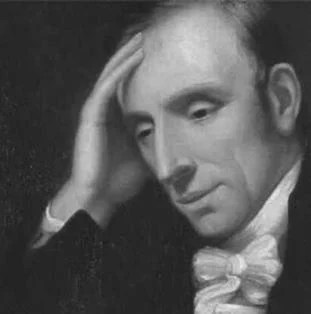
William Wordsworth who rallied for “common speech” within poems and argued against the poetic biases of the period, wrote some of the most influential poetry in Western literature, including his most famous work, The Prelude, which is often considered to be the crowning achievement of English romanticism. Westminster Bridge as it appeared in 1808 . :
Composed upon Westminster Bridge, September 3, 1802 : : sonnet by William Wordsworth ( 1770-1850 ) : : : : : : : : : : : : : : ::
Earth has not anything to show more fair: Dull would he be of soul who could pass by A sight so touching in its majesty: This City now doth, like a garment, wear The beauty of the morning; silent, bare, Ships, towers, domes, theatres, and temples lie Open unto the fields, and to the sky; All bright and glittering in the smokeless air. Never did sun more beautifully steep In his first splendour, valley, rock, or hill; Ne’er saw I, never felt, a calm so deep! The river glideth at his own sweet will: Dear God! the very houses seem asleep; And all that mighty heart is lying still!
This poem is in the public domain.
Composed upon Westminster Bridge, September 3, 1802 , A Petrarhan Sonnet ( 14 ) is About London and the River Thames, viewed from Westminster Bridge in the early morning. It was first published in the collection Poems, in Two Volumes in 1807. The sonnet was originally dated 1803, but this was corrected in later editions and the date of composition given precisely as 31 July 1802, when Wordsworth and his sister Dorothy were travelling to Calais to visit Annette Vallon and his daughter Caroline by Annette, prior to his forthcoming marriage to Mary Hutchinson.
The sonnet has always been popular, escaping the generally excoriating reviews from critics such as Francis Jeffrey in the Edinburgh Review when Poems in Two Volumes was first published. The reason undoubtedly lies in its great simplicity and beauty of language, turning on Dorothy’s observation that this man-made spectacle is nevertheless one to be compared to nature’s grandest natural spectacles. Cleanth Brooks analysed the sonnet in these terms in The Well Wrought Urn: Studies in the Structure of Poetry. ( Brooks, Cleanth (1956). : Page 5 , The Well Wrought Urn: Studies in the Structure of Poetry. Mariner Books.
Stephen Gill remarks that at the end of his life Wordsworth, engaged in editing his works, contemplated a revision even of “so perfect a poem” as this sonnet in response to an objection from a lady that London could not both be “bare” and “clothed” (an example of the use of paradox in literature). : ( Gill, Stephen (1989). William Wordsworth: A Life. pp. 389, 4186n..,Oxford University Press. : )
That the sonnet so closely follows Dorothy’s journal entry comes as no surprise because Dorothy wrote her Grasmere Journal to “give Wm pleasure by it” and it was freely available to Wordsworth, who said of Dorothy that “She gave me eyes, she gave me ears” in his poem “The Sparrow’s Nest”. ( Wordsworth, William. “The Sparrow’s Nest”. Bartleby.com. Retrieved 30 May 2012. Bostridge, Mark (9 March 2008). & “The Ballad of Dorothy Wordsworth, By Frances Wilson”. The Independent. London. Retrieved 30 May 2012. )
[…] we left London on Saturday morning at 1⁄2 past 5 or 6, the 31st July (I have forgot which) we mounted the Dover Coach at Charing Cross. It was a beautiful morning. The City, St pauls, with the River & a multitude of little Boats, made a most beautiful sight as we crossed Westminster Bridge. The houses were not overhung by their cloud of smoke & they were spread out endlessly, yet the sun shone so brightly with such a pure light that there was even something like the purity of one of nature’s own grand Spectacles
— Dorothy Wordsworth, The Grasmere Journal, 31 July 1802.
The above Informations are as from the Wikipedia’s Article. : : Notes for each of the 14 lines Pending visit this post again later on to enjoy the appreciation of the poem V Jayaraj Pune India April 29 , 2023 : : : : : : : :
.Just after World War II, a young Princeton student journeyed to St. Elizabeth’s Hospital in Washington, DC, to visit Ezra Pound. The great poet had been tried for treason for broadcasts he made in Italy for the fascist government and, pleading insanity, wound up serving a dozen years in the psychiatric institution. To the astonishment of his young visitor that day in 1946, Pound greeted him as if he were a serious poet. Like an elder, he also offered advice. “You don’t really have anything to write about at the age of eighteen,” Pound warned. “The way to do it is to learn a language and translate. That way you can practice, and you can find out what you can do with language, with your language.” Despite their age difference, the two writers began a correspondence afterward, and some time later, as he prepared to enter graduate school in Romance languages, the young poet received a postcard from Pound. “Read seeds not twigs,” it pronounced, signing off, “EP.”
The young poet was W.S. Merwin, and if his pilgrimage to a master was a clue, apprenticeship was a notion he took seriously. At Princeton Merwin had memorized John Milton by heart, and he crashed R. P. Blackmur’s classes with John Berryman, who showed up the first time in a pork-pie hat. Following Pound’s call, Merwin also began to translate. He started out in school with the New York poems of Federico García Lorca and moved on to the early Spanish texts such as the epic Poem of Cid. Over the next 65 years, as he launched one of the most brilliant postwar careers in poetry, Merwin continued at the trade, working in a comically diverse array of languages: French, German, Russian, Spanish, Catalan, Portuguese, Italian, Chinese, Romanian, Greek, Irish, Quechuan, and Kabyle, to name just a few. A second collection of such translations was published this spring, alongside a new edition of haiku by Yosa Buson. Had he merely plied his trade as a translator, Merwin would have been one of the most significant figures in American letters.But of course Merwin’s own poetry has eclipsed this work.
SEPTEMBER By dawn the little owls that chattered in the red moon have turned into magpies in the ash trees resting between journeys dew stays in the grass until noon every day the mist wanders higher to look over the old hill and never come back month of eyes your paths see for themselves you have put your hand in my hand the green in the leaves has darkened and begun to drift the ivy flowers have opened on the weasel’s wall their bees have come to them the spiders watch their bellies and along all the shores boats of the spirit are burning without sound without smoke without flame unseen in the sunlight of a day under its own king
— W.S. Merwin : : From his book Writings to an Unfinished Accompaniment (Atheneum, 1973),also found in the National Book Award-winning Migration: New and Selected Poems (Copper Canyon Press, 2004). : : From merwinconservancy.org : : For Educational Purposes only.
“September” By W S Merwin: Notes Pending visit this post again later on to enjoy the appreciation of the poem V Jayaraj Pune India April 28 , 2023 : : : : : : : :
Colm Toibin ( 1955 b. ) : Photo Credit: LauraWilson : : Colm Tóibín is an Irish novelist, essayist, playwright, and poet. Tóibín was born on May 30, 1955 in Enniscorthy, County Wexford, Ireland and studied at University College Dublin. From 1975–78, he lived in Barcelona and used the experience as inspiration for two books—the novel The South (Scribner, 1990), which was shortlisted for the Whitbread First Novel Award and won the Irish Times / Aer Lingus First Fiction Award, and the nonfiction work Homage to Barcelona (Simon & Schuster, 1990). He has published twenty-four works of fiction, nonfiction, and plays, including The Magician (Scribner, 2021); Brooklyn (Scribner, 2009), which was later adapted into an Academy Award-nominated film; and The Master (Scribner, 2004), which received the International Dublin Literary Award and the Stonewall Book Award. In 2022, Tóibín published Vinegar Hill (Beacon Press), his first poetry collection.
Tóibín has been short-listed three times for the Booker Prize and has won the Los Angeles Times Novel of the Year, the Costa Novel of the Year, the Lambda Literary Award, and the Irish PEN Award for his contributions to Irish literature.
Tóibín is currently the Irene and Sidney B. Silverman Professor of the Humanities at Columbia University. He is a member of the American Academy of Arts and Letters and the American Academy of Arts and Sciences, and is a vice president of the Royal Society of Literature. ( From poets.oeg ) : :
September Colm Tóibín – 1955-
The first September of the pandemic, The sky’s a watercolour, white and grey, And Pembroke Street is empty, and so is Leeson Street. This is the time after time, What the world will look like when the world Is over, when people have been ushered into Seats reserved for them in the luminous Heavens. Moving towards the corner of Upper Pembroke Street and Leeson Street, An elderly man wears a mask; his walk is Sprightly, his movements brisk. I catch His watery eye for a watery moment. Without stopping, all matter-of-fact, He says: ‘Someone told me you were dead.’
— Colm Toibin : : From Vinegar Hill by Colm Tóibín (Beacon Press, 2022) Boston, Massachusetts. : : From poets.org. : For Educational Purposes only. : :
“September “, By Colm Toibin ( born on May 30, 1955 in Enniscorthy, County Wexford, Ireland ) is About The First September of the Pandemic. : : Notes for each of the lines Pending visit this post again later on to enjoy the appreciation of the poem V Jayaraj Pune India April 27, 2023 : : : : : : : :
September : : By Ted Hughes : : : : We sit late, watching the dark slowly unfold: No clock counts this. When kisses are repeated and the arms hold There is no telling where time is.
It is midsummer: the leaves hang big and still: Behind the eye a star, Under the silk of the wrist a sea, tell Time is nowhere.
We stand; leaves have not timed the summer. No clock now needs Tell we have only what we remember: Minutes uproaring with our heads
Like an unfortunate King’s and his Queen’s When the senseless mob rules; And quietly the trees casting their crowns Intothe pools. — Ted Hughes : : From allpoetry.com. : For Educational Purposes only.
“September” By English Poet & Children’s Writer Ted Hughes ( Poet Laureate from 1984 until his death ) is About end of the Time or troubled andimportant relationship. ‘September‘ was published in Birthday Letters in 1998. It was released only a few months before his death. It came after the death of his wife, Sylvia Plath, ( one of the most important feminist poets of all time. ) Rightly or wrongly, Hughes’s own reputation was tied to his treatment of Plath during their troubled marriage. ( Some believe that he was responsible for her suicide.) It was with this collection that he sought to redeem himself in public domain. This autobiographical book hit the top of best-seller lists. It was awarded the Forward Poetry Prize, the T.S. Eliot Prize for Poetry, as well as several other prestigious awards. : The speaker describes how “we,” presumably him and his lover, sit and watch the world changing around them. There is no “clock” to count the changes that are occurring, it is something more emotional , transitory and short lived. : :
Hughes focuses on small moments, like the feeling of someone’s wrist, while repeatedly stresses that time means nothing. The captivating image of “trees casting their crowns / Into pools” which touches the change that Hughes has suggested. : :
it’s clear that Hughes has been dealing with an intense emotions while facing his own terminal illness and recalling Plath’s death 35 years ago. : : : :
Notes for each of the Stanzas Pending visit this post again later on to enjoy the appreciation of the poem V Jayaraj Pune India April 26 , 2023 : : : : : : : :
Thomas Kinsella (May 4, 1928, in Inchicore, – 22 December 2021 ) The Irish poet Kinsella accepting the Ulysses Medal, the highest honor from University College Dublin, in 2008.Credit… Julien Behal/PA Images, via Getty Images. : : : : His work — difficult and often contentious — was likened to the prose of James Joyce for its sense of place. He was also a translator of ancient texts, including the Tain Bo Cuailnge. : Mr. Kinsella’s work was frequently described as difficult, inviting — or forcing — the reader to complete what Mr. Kinsella regarded as a central process of his poetry. “A poem, whatever else it is, is an act of communication, involving an audience,” he said in 2004. “Communication is central — an audience completing an act of communication.” : In early 1950 s, he translated early Irish poetry into English.: : His first major collection, “Another September,” was published in 1958. : : Butcher’s Dozen: A Selected Life” (1972), in memory of Sean O Riada, and “The Good Fight” (1973), on the 10th anniversary of the death of John F. Kennedy. : In 2013, the collection “Late Poems” drew together more work published in the Peppercanister series, including “Free Fall” (2011), and reprised the dreamlike, enigmatic quality. : :In “Downstream” (1962), the reader follows the poet on a journey by “frail skiff” on a “seam / Of calm and current” ending at a barrier of rock, where “We glided — blotting heaven as it towered / Searching the darkness for a landing place.” : : His early work revolved around his love for Eleanor, his wife / inspiration, with whom he had three children, and some of his poetry from that period, notably the Wormwood series (1968), cast a dark shadow. he spent many years as an academic in the United States, chiefly at Temple University in Philadelphia, which they saw as a retreat from the Irish literary milieu.He was appointed a professor of English at Temple in 1970 and held the position for 20 years. : : Kinsella preferred to publish his work initially in limited editions or in expensive pamphlets and rarely gave interviews or readings. : : Kinsella’s poetic career as falling into two clear segments: first an embrace of “elegant formalism and a lyrical style” beginning in the early 1960s, influenced by W.H. Auden, Patrick Kavanagh and others; and then a more experimental phase in which formal verse was abandoned, reflecting his exposure to the writings of Ezra Pound and William Carlos Williams and his study of the Swiss psychologist Carl Jung. : : Kinsella’s best-known poems, “Nightwalker,” a journey on foot leads to a place where the dust “has a human taste” :His father, John Paul Kinsella, had worked at the Guinness brewery and had a reputation as a labor union organizer,a life his son Thomas eulogized in his poem “The Messenger” (1978) : Kinsella studied at University College and secured qualifications to work as a civil servant. : : : : : : : : : : : : : : : : : ” I was falling helpless in a shower of waste reaching my arms out toward the others falling in disorder everywhere around me. At the last instant, approaching the surface, the fall slowed suddenly, and we were all unconcerned, regarding one another in approval.”
Another September : By Thomas Kinsella : ::: Dreams fled away, this country bedroom, raw 1 With the touch of dawn, wrapped in a minor peace, 2 Hears through an open window the garden draw 3 Long pitch black breaths , lay bear its apple trees, 4 Ripe pear trees, brambles,5 windfall-sweethened soil, Exhale rough sweetness against the starry slates. 6 Nearer the river sleeps St.Johns, all toil 7 Locked fast inside a dream with iron gates. 8 Domestic autumn, like an animal 9 Long used to handling by those countrymen, 10 Rubs her kind hide against the bedroom wall 11 Sensing a fragrant child come back again 12 – Not this half tolerated consciousness 13 That plants its grammar in her unyielding weather 14 But that unspeaking daughter, growing less 15 familiar where we fell asleep together. 16 Wakeful moth-wings blunder near a chair 17 Toss their light shell at the glass and go 18 To inhabit the living starlight,Stranded hair 19 Stirs on the still linen. It is as though 20 The black breathing that billows her sleep, her name, 21 Drugged under judgement, waned and – bearing daggers 22 And balances – down the lampless darkness they came, 23 Moving like women: Justice, Truth, suchfigures. 24
“Another September”, voted 35th in a vote by readers of the ‘Irish Times’ for Ireland’s favourite poems in 1999 , A 24 lines September Poem By an Irish Poet Thomas Kinsella is About religious fervour and the matters like church,domestic damp Autumn, Truth and Justice. Autumn is a symbol of cold and barren life without identified love and feelings. : : : : : : : : : : : : : : : * The Poem starts with an expression, “Dreams fled away” Meaning quickly passing away of the “Dreams” : The dreaming sequence indulged in with a visitor Poet in the country house “bedroom” was ‘cut and run’. ; and the sleep is over ” raw with the touch of dawn” ( lines 1 & 2 ) is suggestive of the Coldness of the damp Autumn “wrapped in a minor peace,” ( line 2 ) that has been broken by the moving breeze coming from the still “sleeping garden” having an orchard of “apple trees , ripe pear trees ,and brambles”( lines 4 & 5 ) , that is brambly thorny shrubs or vines. The background is a cosy and familiar “room near a garden” : : “drawn” in through the window”( line 3 ) he “Hears minor peace.”( line 2 ) which is peaceful time for hard working rural People in the countryside as their summertime toiling work is over ; In this backdrop the Poet wakes up but in unfamiliar background. : : The narrative in lines 5 & 6 , “windfall – sweethened soil, 5 Exhale rough sweetness against the starry slates.” 6 : Meaning more pleasant and more agreeable , sweetened soil of the fruit Orchard “Exhale(s)” , that is , give out “rough” / scratchy sweetness against the starry slates.” Of the lightly dark sky , on getting illuminated by the dawning. “windfall”in line 5, means fruits in abundance which have been fallen from the trees . People are free from the Harvesting of orchard fruits. Whereas the setting is a time of dawning by a river, and nearer sleeping church –St. John’s , the past events in dreams while asleep are stopped revealing and the Poet’s consciousness comes homein the presentday. : : As in narrative in lines 7 & 8 , “Nearer the river sleeps St.Johns, all toil 7 Locked fast inside a dream with iron gates.” 8 : : Meaning , the People are free and secured in their privacy as if it were sleeping to “dream locked” tight / “fast” from inside. Yet, a “sleeping church” bears discomfort which causes pain and likens with mourning for death and soon with a prayer for someone’s death in the morning. : : : : : : : : : : : : : : : : : : : : : : : : : : : : : : : : ** Here, an “animal” that is “rubbing its hide “against the bedroom wall/ sensing a fragrant child comes back again.” , as in lines 11 & 12 , evokes the sense of personification of Autumn as a domestic Animal which is “long used to handling by those countrymen”( line 10 ) is envisaged with friendly and familiar Autumn, although the Poet imagines it differently as an “animal”( line 9 ) in destructiveness which is rusting the human’s existence. The Poet being a visitor of the countryside , sees Autumn , unimaginatively as a part of “unyielding weather”( line 14 ) : : Kinsella’s first volume of collected work; Another September (1958; rev. ed. 1962), which contains poems that explore the imposition of existential order through various forms, be they natural or products of the poet’s imagination. : : It combines the world as it is seen with however , the different findings in it. : : “Another September” will be required to face up the foreseeable future , may it be the same as like the ongoing September.The Poem travels into one’s mindset or outlook and takes poetic analogy practiced traditionally widely , by many Poets , yet it is differently deviating from the People’s views who are closely related to their natural surroundings and habitats of what the Poet’sare unaware of. The Poet thus calls it “domestic Autumn”but with different perception : As in lines 9 & 10 : : “Domesticautumn, like ananimal 9 Long used to handling by those countrymen,” 10 ; and presents autumn’s connexion with ageing , pain and , the church’s deathly inkling. : : : : : : : : : : : : : : : : : : *: : : : : : : : : : : : : : : : : : : : : : : : : : : : : : : : : : : : : : : :: *** The life the countryside people represent belongs to his wife, not to him. In the first half of the poem, the backdrop of rural Irish scene is calm and peaceful, secured from all intruder. While perceiving differently however, Kinsella begins to realise that he himself is an intruder . He feels estranged in the new surroundings he has visited with his wife who grew here. So he says he is only “half-tolerated’” ( line 13 ) by the autumn morning, personifying Autumn , here as a friendly “domestic animal” as likened by the Countryside People which only “half – tolerates” in the sense of fondling of an estranging visitor. The comparisons suggested is as through a large domestic animal ( Autumn ) has entered the cosy room . Immediately, it is confronted by a stranger who tries to win favour by his poetic narrations. However, the poet’s friendships are overlaid and seems ignored: it is not for his sake but for his wife’s, as he calls her, “this unspeaking daughter” ( line 15 ) that the morning dawns so beautifully.The personification is difficult & theatrical. :: **** In the Second half of the Poem , lines 17 & 18 , “Wakefulmoth-wings blunder near a chair 17 Toss their light shell at the glass and go 18 To inhabit the living starlight,”he focuses on his wife who sounds strange and not familiar with him. : So he says , As in lines 21 & 22 , “breathing that billows her sleep, her name, 21 Drugged under judgement, waned and – bearing daggers “22 ; The breathing in her sleep heard as billowy, that is wild , rustic and rough ; and his wife’s image known to him looks “waned”, that is , looks ‘smaller’, may it be on using ‘recreational drugs’ “under judgement” — Perhaps local religious ritual in the church ; and “bearing daggers”( line 22 ) “( short knifes with pointed blade, here kept by Irish women for self – defence since historic time ) – and balances”( line 23 ) , that is , ‘counterweights’ which are ‘threatening images.’ : : There are depicted images of Irish women including his wife, emerging before The Poet : Other vivid images created by him are , for instance , a “fragrant child “( in line 12 ) ; “unspeaking daughter” ( in line 15 ) ; “stranded hair stirs on the still linen” ( in lines19 & 20 ) : : : : And ” down the lampless darkness.” ( in line 23 ) which are newly found characteristics of ‘muliebrity’ : ( typical feminine behaviours ) : : : : : : : : : : : : : : : : : : : : : : : : : : : : : IV* : : In addition to this , there are other images of as scene described in rural life : : Such as , in line 4, “Long pitch black breaths” suggestive of exertion ; as well as in the words of expression in line 14 : : : : : : : : ” .. . half tolerated consciousness..That plants its grammar in her unyielding weather.” 14 ( hard / resistant weather of September ) ; And above all, “a sleeping Church , St. John“, hinting at its inactive status ( sleeping in the morning ) , may be for someone’s death!? However , The Poetdistances with a safeguarded cover offigurativelanguage which cleverly strainsthroughhisimaginative literalreflections. : Also the image in lines 23 , “lampless darkness”they came, 23 : Thus , the Poem starts with light of“dawning” and endswith“lamplessdarkness.” : : And the last image of vigour , moving deeds and achievements of the Irish Women of rustic countryside is noteworthy in appreciation of this poem, “Another September” And that is, “Moving like women: Justice, Truth, such figures.” last line24, which reassures and restores confidence to feel sure and certain. : : : :
“Another September”, A September Poem By an Irish Poet Thomas Kinsella Information Appreciation and poem Analysis Presented by V Jayaraj Pune India April 25 , 2023 : : : :::::
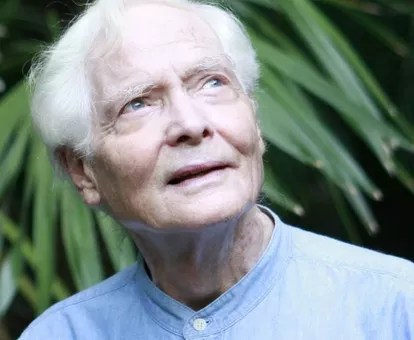
William Stanley (W.S.) Merwin ( b. New york City , September 30, 1927 – died March 1919 , At Age of 91 years. ) : : and raised in New Jersey and Scranton, Pennsylvania, the son of a Presbyterian minister. His numerous collections of poetry, his translations, and his books of prose have won praise over seven decades. Merwin would continue to alter and innovate his craft with each new book, and at each stage he served as a powerful influence for poets of his generation and younger poets. while serving as a staunch anti-war activist and advocate for the environment. He won nearly every award available to an American poet, and he was named U.S. poet laureate twice. A practicing Buddhist as well as a proponent of deep ecology, Merwin lived since the late 1970s on an old pineapple plantation in Hawaii which he has painstakingly restored to its original rainforest state. Poet Edward Hirsch wrote that Merwin “is one of the greatest poets of our age. He is a rare spiritual presence in American life and letters (the Thoreau of our era).” : : His first collection of poetry, A Mask for Janus (1952), was chosen by W.H. Auden for the Yale Younger Poets Prize. Merwin attended Princeton University and studied with R.P. Blackmur and John Berryman. graduating in 1948, he continued as a post-graduate student of Romance languages and eventually traveled through much of Europe, translating poetry. : His books from this period, Green with Beasts (1956) and The Drunk in the Furnace (1960), show the beginning of a shift in style and tone as Merwin began to experiment with irregular forms. His obsession with the meaning of America and its values can make Merwin sometimes seem like the great nineteenth-century poet Walt Whitman, : The Lice (1967), often read as a response to the Vietnam War, also condemns modern man in apocalyptic and visionary terms. “These are poems not written to an agenda but that create an agenda,” wrote poet and critic Reginald Shepherd. : His next book, The Carrier of Ladders (1970) won the Pulitzer Prize for poetry in 1971. : He famously donated the prize money to the draft resistance movement. Merwin’s The Miner’s Pale Children: A Book of Prose ( 1971 ) which was like the poems. : Merwin moved to Hawaii to study Zen Buddhism in 1976. He eventually settled in Maui and began to restore the forest surrounding his former plantation. : striking poems using nature as a backdrop. The Vixen (1996), was an exploration of the rural forest in southwestern France that Merwin called home for many years..: the book is suffused with details of country life—solitary walks and garden work, woodsmoke, birdsong, lightfall.”His later poetry doesn’t merely describe the natural world; it also records and condemns the destruction of nature, from the felling of sacred forests to the extinction of whole species. : . Migration: New and Selected Poems (2005) exposes Merwin’s evolution as a stylist over half a century , tracks the literal impoverishment of our planet, making it symbolize the impoverishment of our culture’s capacity for symbolization.” Migration was awarded the National Book Award for poetry. : His collections such as Garden Time (2016) and The Moon Before Morning (2014 ) Merwin has also translated poets as diverse as Osip Mandelstam and Pablo Neruda. His translation of Dante’s Purgatorio (2000) and the Middle English epic Sir Gawain and the Green Knight (2004) both won high praise for their graceful, accessible language, and his Selected Translations (2013) won the Harold Morton Landon Translation Award. With Takako Lento he translated the Collected Haiku of Yosa Buson (2013). : Merwin won most awards available to American poets, including the Bollingen Prize, two Pulitzer Prizes, the Aiken Taylor Award for Modern American Poetry, a Ford Foundation grant, the Ruth Lilly Poetry Prize, the PEN Translation Prize, the Shelley Memorial Award, the Wallace Stevens Award, the Zbigniew Herbert International Literary Award, a Lila Wallace-Reader’s Digest Writers’ Award, and the Harold Morton Landon Translation Award. He has also been awarded fellowships from The Academy of American Poets, the Guggenheim Foundation, the National Endowment for the Arts, and the Rockefeller Foundation. Merwin is a former chancellor of the Academy of American Poets and two-time U.S. poet laureate (1999-2000, 2010-2011
Merwin commented on a ROLE OF A POET : : : “I think there’s a kind of desperate hope built into poetry now that one really wants, hopelessly, to save the world. One is trying to say everything that can be said for the things that one loves while there’s still time. I think that’s a social role, don’t you? … We keep expressing our anger and our love, and we hope, hopelessly perhaps, that it will have some effect. But I certainly have moved beyond the despair, or the searing, dumb vision that I felt after writing The Lice; one can’t live only in despair and anger without eventually destroying the thing one is angry in defense of. The world is still here, and there are aspects of human life that are not purely destructive, and there is a need to pay attention to the things around us while they are still around us. And you know, in a way, if you don’t pay that attention, the anger is justbitterness.”For a Coming Extinction BY W. S. MERWIN Gray whale Now that we are sending you to The End That great god Tell him That we who follow you invented forgiveness And forgive nothing
I write as though you could understand And I could say it One must always pretend something Among the dying When you have left the seas nodding on their stalks Empty of you Tell him that we were made On another day
The bewilderment will diminish like an echo Winding along your inner mountains Unheard by us And find its way out Leaving behind it the future Dead And ours
When you will not see again The whale calves trying the light Consider what you will find in the black garden And its court The sea cows the Great Auks the gorillas The irreplaceable hosts ranged countless And fore-ordaining as stars Our sacrifices
Join your word to theirs Tell him That it is we who are important W. S. Merwin, “For a Coming Extinction” from The Lice. Copyright Source: The Lice (Atheneum Publishers, 1967) : From poetry foundation.org. : For Educational Purposes only. : : : : : : : : : : : : : : Grimly regretful of human waste, “For a Coming Extinction” (1967) expresses Merwin’s pessimism about the earth’s future. Line lengths vary from double beats in lines 1 and 4 to longer statements of four or five stresses.Wavyleaf mullein,( Verbascum sinuatum ) : with yellow Petals flowers. : “mullein leaf” often refers to the leaves of Verbascum thapsus, the great or common mullein, which is frequently used in herbal medicine. : Dark mullein (V. nigrum) In gardening and landscaping, the mulleins are valued for their tall narrow stature and for flowering over a long period of time, even in dry soils.
These cultivars have received the Royal Horticultural Society’s Award of Garden Merit:
‘Gainsborough’ (Cotswold Group) ‘Letitia’ ‘Pink Domino’ (Cotswold Group) ‘Tropic Sun’“To The Light Of September “( W S Merwin ) : In the light focuses the ” Mullein ” of flowers of yellow petels. : : Photo by Stefan Schaeferbranch with plums.Ripe Blue plums on a tree branch in the orchard.Plums growing on the tree. : Blue Damson plums Blue Damson plums are small to medium-sized stone fruits, typically around the same size as a large cherry, and have a round to oval shape, sometimes slightly pointed at one end. : : : : : Blue plums have a mellow, sweet flavour, making them the most popular variety to be enjoyed out of hand. Vineland Growers offers several varieties of including the Italian prune plum, Empress, Valour and Victory, all perfect for snacking. : : Plums are known as aloo bukhara, and they are a nutrient-rich fruit option that provides a wide range of health benefits, according to nutritionist Lovneet Batra. And Indian summer is especially known for its sweet and juicy produce. One such extremely loved and healthy summer fruit is the plum or aloo bukhara. The common Sage Salvia officianalis Herbs plant grown in a gardenpit. Flowers blooming off the culinary plants of Common Sage ( Salviav officianalis ) A single flower of the sage plant.Very small almost spherical seeds of the Sage ( Salvia officianalis ) Herbs plant.
To the Light of September BY W. S. MERWIN When you are already here you appear to be only a name that tells of you whether you are present or not
and for now it seems as though you are still summerW still the high familiar endless summer yet with a glint of bronze in the chill mornings and the late yellow petals of the mullein fluttering on the stalks that lean over their broken shadows across the cracked ground
but they all know that you have come the seed heads of the sage the whispering birds with nowhere to hide you to keep you for later
you who fly with them
you who are neither before nor after you who arrive with blue plums that have fallen through the night
perfect in the dew — W S Merwin : : In ‘Poetry’ Magazine September 2003 ,The oldest monthly devoted to verse in the English-speaking world. : : From poetryfoundation.org : For Educational Purposes only. : :
“To The Light Of September” , A September Poem By W S Merwin is About changing of the season from end of summertime through the Autumn to be fast approaching Fall thereafter. Merwin avoids brown ,yet presents glint ( shining in small bright flashes ) of bronze in the chill mornings : Meaning September feels like “high familiar endlesssummer” , yet Fall is nearing ;Autumnbrings coolness as well as hint of winter in the colours being changed. And so , attitudes also change. Merwin projects to enkindle the early autumn feeling through a number of images from Nature ; decisively reaching for instance, in the blue plums “thathavefallenthroughthenight / perfect inthe dew”: : : : Another image described is Mullein – a velvet plant of flannel ( that is large wooly leaves ( in genus verbascum ) having terminal spikes ( of white or purplish or ) as here, of yellow flowers which is fluttering on the stalks ( that is moving speedily ) that lean over their broken shadows across the cracked ground.” Such fall over is a pleasing aspects created by the September light. The sage plant’s purple, pink, white, or red flowers produce nutlet fruits that contain very small spherical seeds by the start of the September which are “kept for later.” : Before the start of the Fall , the whispering birds fly off to spend a suitable Places elsewhere for winter. And “September too , flies off ( ends ) with them” The sage cultivars ( salvia officinalis ) are prepared from the Summer time Stems or from the seeds and are grown only after Fall. flower in the spring or late summer. Merwin is concerned not only with what to renounce / relinquish / turn away in the metropolis but also wants to preserve in the country. Like all his later writings , this poem , “To The Light Of September”has alsoa strong senseof connection to the Natural World and the Environment . He noted once , “The world is still here, and there are aspects of human life that are not purely destructive, and there is a need to pay attention to the things around us while they are still around us.” : :