Carl Sandburg ( 1878 – 1967 ) : He won three Pulitzer Prizes: two for his poetry and one for his biography of Abraham Lincoln. During his lifetime, Sandburg was widely regarded as “a major figure in contemporary literature”, especially for volumes of his collected verse, including Chicago Poems (1916), Cornhuskers (1918), and Smoke and Steel (1920). “Chicago” celebrates the city alongside the alternative names for Chicago that note its connections to industry, such as “Hog Butcher of the World” and “Stacker of Wheat.” It conveys that Chicago City could be rough around the edgeyet defends Chicago. Sandburg’s another poem ,” Wilderness” is about his connection to the Nature and to other living Creatures as he describes having all manner of Creatures inside him, including a Wolf, a Fox, a Hog, a Fish, a Baboon, an Eagle and a Mockingbird. : : Sandburg wrote poetry mainly in free verse. Concerning rhyme versus non-rhyme Sandburg once said airily, “If it jells into free verse, all right.” : :
Hydrangeas : By Carl Sandburg ( 1878 – 1967 ) DRAGOONS, I tell you the white hydrangeas turn rust and go soon.
Already mid September a line of brown runs over them.
One sunset after another tracks the faces, the petals.
Waiting, they look over the fence for what way they go. — Carl Sandburg : : From Chicago Poems. ( 1916 ) : : From bartleby.com › lit-hub : For Educational Purposes only.
“Hydrangeas”, A September Poem By Carl Sandburg is About the rusty brown of autumnal decay, not in the leaves of trees, but on the white flowers of the hydrangea bush. It’s an informative twist strange to a figurative sense of language of most poems describing Seasonal Changes. Here , the Mid – September shows ” a line of brown runs over the Hydrangeas White Flowers which is a spread over to start connotatively appearing in passing of the season in to the fast approaching Fall. : : The imposing troops of soldiers going up with their advancing motorised units of Army are being addressed by the Speaker to give warning in the matter of advancing of the season with the sun keeping an eye over the attentive faces of blooming Dragoons. The Hydrangeas plants herelook like just ready to advance from the place they stand, like the soldiers in Dragoon formations. A Strange Metaphor of Dragoons (soldiers) and Hydrangeas of White Flowers. The soldiers tread on , also stomp through in their heavy boots , and when required, may drop down on the plain to take safeguardedshooting positions. In that march on the battlefield ,they may flatten even the spread over of hydrangeas flowers coming in theie ways. So , the question is How does a soldier lives on and metaphorically correct with the flowers trampled down. Addressing this September Poem to Dragoons with warning of an adverse season by giving an example of Hydrangeas White Flowers should be seen in this limited perspective , although themetaphor is interesting. The Poem thus is a Poem Of Hydrangeas in Mid – September. : : ::
The later half of the poem proceeds with the series of “Sunset”, each one tracks the faces , the petals of the white Flowers of Hydrangeas who are “Waiting as they look over the fence which way they go. And over a scheduled period of the days passing by , the change over in the appearance of Fall gradually take place of which an early signs get perfused with “a line of brown” colour “runs over” the petals of the white Flowers by “mid September.”The white Flowers of Hydrangeas is the straightforward choice of the Speaker which resembles to the Snow white colour of the fast approaching Fall. : : : : : : : :
“Hydrangeas “, A September Poem By Carl Sandburg Information Appreciation and poem Analysis Presented by V Jayaraj Pune India April 23 , 2023 : : : : : : : :
This is the year the old ones, the old great ones leave us alone on the road.
The road leads to the sea. We have the words in our pockets, obscure directions. The old ones
have taken away the light of their presence, we see it moving away over a hill off to one side.
They are not dying, they are withdrawn into a painful privacy
learning to live without words. E. P. “It looks like dying”-Williams: “I can’t describe to you what has been
happening to me”- H. D. “unable to speak.” The darkness
twists itself in the wind, the stars are small, the horizon ringed with confused urban light-haze.
They have told us the road leads to the sea, and given
the language into our hands. We hear our footsteps each time a truck
has dazzled past us and gone leaving us new silence. Ine can’t reach
the sea on this endless road to the sea unless one turns aside at the end, it seems,
follows the owl that silently glides above it aslant, back and forth,
and away into deep woods.
But for usthe road unfurls itself, we count the words in our pockets, we wonder
how it will be without them, we don’t stop walking, we know there is far to go, sometimes
we think the night wind carries a smell of the sea…
— Denise Levertov: From poemhunter.com For Educational Purposes only.
“September 1961” A September Poem By Denise Leverton is About a strong literary sense of something passing on.: : This Poem is a Tribute to the greater Poets of our time , E. P. , H. D. , & Williams with expression of their lossas well as her note of ambivalence ( Mixed feelings and emotions ) : : Levertov emigrated to America from England in 1948 since when she had a profound association with the three legendary Poets living in America who influenced her literary creativity. : : Levertov while giving tributetothem in this Poem expresses that Levertov and her contemporaries areleft to try to follow theroad opened up by the older poets,but in the dark , without “the light of their presence”. These older Poets ( great ones ) she mentioned are her thrilling association with the three greater Poets of distinct legacy provided to succeeding generations of literature. 1) E. P. = Ezra Pound , 2) Williams = William Carlos Williams ( her closefriend & major influencer since long lasted correspondence untill death ) and , and 3) H. D. = HildaDolittle ( her inspiration and friendship since 1960 & correspondence untill death ) who “have dazzled past and goneleaving silence.”They have given language in to the hands and utterly alone on the roads leading to the sea ( of abilities to fruitfully produce and originate aims and purposes ) appearing as endless with the owls silently gliding above to follow ( aslant back and forth and away in to the woods ) the road unfurled ( that is , unfolded and spread out ). : : The way in darkness twists itself in the wind, the stars are small, the horizon ringed with confused urban light-haze.” : What they have to is to wander and count the“words in pockets”that provide an obscure direction , and without stopping , they have to continue far to go without direction on the path of literary aims and purposes alongwith whatever moves covered with passing of day and night. : : Levertov wanders what “legacy means without light of their presence” The last line , ” The night windcarries a smell of sea” is the spiritual being felt to be nearby” yet in reality,isalso only in the thinking. : : : :
“September 1961″By Denise Levertov Information Appreciation and poem Analysis Presented by V Jayaraj Pune India April 22 , 2023 : : : : : : : :
Geoffrey Hill ( 1932 – 2016 ) : tight cropped portrait , face slightly tilted downward and starting directly in to the camera. : :Known as one of the greatest poets of his generation writing in English, and one of the most important poets of the 20th century, Geoffrey Hill lived a life dedicated to poetry and scholarship, morality and faith. He was born in 1932 in Worcestershire, England to a working-class family. He attended Oxford University, where his work was first published by the U.S. poet Donald Hall and later collected in For the Unfallen: Poems 1952-1958 marked an astonishing debut. : Hill’s work is noted for its seriousness, its high moral tone, extreme allusiveness and dedication to history, theology, and philosophy. In early collections such as King Log (1968) and Mercian Hymns (1971), Hill sought “to convey extreme emotions by opposing the restraint of established form to the violence of his insight or judgment,” : According to New York Review of Books critic Irvin Ehrenpreis. “He deals with violent public events… Appalled by the moral discontinuities of human behavior.: Both King Log and Mercian Hymns, a series of prose poems combining memories of Hill’s childhood with tales of the eighth-century Mercian king, Offa, are acclaimed for their use of Christian symbolism combined with what Craig Raine called the “high seriousness”: Hill also has said of difficulty, “We are difficult. Human beings are difficult. We’re difficult to ourselves, we’re difficult to each other. And we are mysteries to ourselves, we are mysteries to each other. One encounters in any ordinary day far more real difficulty than one confronts in the most ‘intellectual’ piece of work. : Hill’s book Tenebrae (1978), “meaning ‘darkness’ in Latin,” is concerned with the Good Friday ritual in which candles are extinguished to symbolize the crucifixion of Jesus. : Throughout the publication of his early work, Hill was teaching in universities. : In a profile of the poet in the Guardian, Hill admits, “I believed that I wrote very little because of the encroachments of duty … but I don’t think it can have been that. I think the encroachments were encroachments of chronic anxiety. : Hill served as codirector of the Editorial Institute for roughly a decade when Hill began to write poetry again at an unprecedented ratethe next ten years: Canaan (1997), The Triumph of Love (1998), Speech! Speech! (2000), The Orchards of Syon (2002), Without Title (2006) and A Treatise of Civil Power (2007). Hill’s Selected Poems was published in 2006..:Hill’s next books, Speech! Speech!, The Orchards of Syon, Scenes from Comus (2005) and Without Title (2006) are as wide-ranging and intricate as any he has written. Speech! Speech! is made of characteristically dense and allusive numbered sections that run the gamut from theology, cultural criticism, autobiography, history and elegy. The Orchards of Syon is set in the landscape of Hill’s childhood. : Hill’s books after his Selected Poems include Oraclau/Oracles (2010), a long sequence meditating on Welsh history, and Clavics (2011) and Odi Barbare (2012), : Hill’s Broken Hierarchies: Poems 1952-2012 collected 60 years of work and ran to almost 1,000 pages. : books like The Lords of Limit: Essays on Literature and Ideas (1984), The Enemy’s Country (1995) and Style and Faith (2003), Hill mapped a precise intellectual terrain in essays that considers issues of morality, judgment, literary production and civic engagement. : honors for his work including the Faber Memorial Prize, the Hawthornden Prize, and the Loines Award from the American Academy of Arts and Letters. In 2010 Hill was elected to serve as Professor of Poetry at Oxford for five years. As Adam Kirsch wrote in a review of Without Title,“Mr. Hill [is] one of the most fascinating poets at work today—one whose every new book promises a revelation.”
Hill died in 2016, leaving behind a massive collection of poetry and criticism dating back to the 1950s. Posthumous works published include The Book of Baruch by the Gnostic Justin (2019).
September Song BY GEOFFREY HILL born 19.6.32—deported 24.9.42
Undesirable you may have been untouchable 1 you were not. 2 Not forgotten or passed over at the proper time.3
As estimated, you died. 4 Things marched, sufficient, to that end. 5 Just so much Zyklon and leather, 6 patented terror, so many routine cries. 7
(I have made 8 an elegy for myself it 9 is true) 10
September fattens on vines. Roses 11 flake from the wall. The smoke 12 of harmless fires drifts to my eyes. 13
This is plenty. This is more than enough. 14 — Geoffrey Hill, “September Song” from New and Collected Poems, 1952-1992. Houghton Mifflin Company, 1994 : : From poetry foundation.org : :ForEducational Purposes only.
“September Song”, A 14 lines War Poem in Conversationby Geoffrey Hill is About War and Conflict , the holocaust to the living and death of a child and Military Euphemism, And Nature and Fall.The 10 year old child was in fact killed which has been said as “deported on 24 . 9. 1942” ; The depictions of loss of innocent lives, memory of sufferings and the terrible planning of death and mass murdering ( genocides ) within Nazi Germany presumably in one of Nazi Germany’s concentration camps touch us affecting emotionally . It is written ina free verse with norhyme or pattern. : : : :
An epigraph before the start of the poem reads as : : born 19.6.32—deported 24.9.42 : : the birth and death dates of a child who was killed in 1942, at only ten years of age – deported is an euphemistic reference to the killing place / events of mass killing in concentration camps in Nazi Germany. : The child with miserable suffering is unnamed. : : The facial expressions of dislike and disapproval is the angree signalling by The Poet meeting us with the depicted imagery to tragedies of the War. The Poet is conveying hispoeticconversation with this Unnamed Child as aforesaid epigraph. : : : :
Stanza 1 : : “Undesirable you may have been untouchable 1 you were not. 2 Not forgotten or passed over at the proper time.” 3 : : lines 1 To 3 : : : :
About an Unnamed Child mentioned in the epigraph stated as being “Undesirable” in the eyes of the state ( of war mongering Nation of Germany ruled by Nazis ) : Snatching a 10 year old Child by his ruler of Nation of his birth to send him to the sufferings of war and horrors of concentration campsmade him ” untouchable“:but as the Poet says that Child was “Not forgotten” or ” passed over at the proper time.” ( line 3 ) : Meaning , he was not gone down in the history or say , embed deeply. The truth of horror was digged off in the proper time in Future , when it was revealed slowly to one and all across the Nations ; Even to the future generations of Germany so that the same history will not be forgotten and repeated in future.It is remembered till present day. These lines also disguise to “Passover”at the proper time and the reactions of the people or government or inaction of God to prevail. : : : :
Stanza 2 : : “As estimated, you died. 4 Things marched, sufficient, to that end. 5 Just so much Zyklon and leather, 6 patented terror, so many routine cries. 7 : : lines 4 To 7 : : : :
About a Child , as The Poet address him even after his untimely death, in his words , ” As estimated , you died.” ( line 3 ) : It was a part of an estimated plan , scheme and schedules and hence a reckoning truth of expected death of living Humans including women and childs belonging to one particular race. : In the counted quantity over the time in the hands of authorities, with a predetermined judgements , as ordered. As it was revealed, It was a planned tragedies of death after sufferings in the Gas Chambers of Mass Killings with the use of Zyklon A , in Concentration camps run along by Nazi Germany’s Military. : : ” Things marched, sufficient, to that end.” ( line 5 ) refers to the routines of Gas Chambers Acts of mass killings and Holocausts of War with “routine cries”: : : :
The Poet has called ” so much of Zyklon and leather” as ” patented terror” intension leading to ” so many routine cries.” ( lines 7 & 8 ) : Zyklon A is a pesticide with methyl cyanoformate as an active ingredient. Research at Degesch of Germany led to the development of Zyklon A , which was a patented Pesticide that would release Hydrogen Cyanide upon exposure to water and heat. This one is representative of acts and weapons of mass destruction and loss of life in the second world War and or by fire 🔥 in the streets of Many Cities of many nations : “so much of leather” refers to the Skin merely attached to the perishable skeleton or dead bodies. That is a Holocaust and as it was known later, such acts of War ledto the development of invention of Nuclear Power and more terrifying Holocausts.: : : :
Stanza 3 : : “(I have made 8 an elegy for myself it 9 is true) 10 : : lines 8 To 10 : : : :
About an “elegy ” written and confirmed by The Poet that it is true ; “I have made an elegy for myself ” he says. .. . : With this , It becomes an elegy for a living person who is The Poet by himself. Hence, A Childin“epigraph ” is living in the poet and not dead. The date of birth is : 19.6.32 :A day after the birth date of Geoffrey Hill Who is aware of this deliberate act of incorporation, acquisition , and uniting with an unnamed Child calling him as deported in his “September Song.” ; which is his scheme of poetic purpose without any requirement of permission. Hill , himself as a dramatic device of ” aside” speaks to the readers of his Poem, his inner thoughts, and admits the report of death of a Child who is living in him with all the sufferings of War andHolocausts. : : : :
Stanza 4 : : “September fattens on vines. Roses 11 flake from the wall. The smoke 12 of harmless fires drifts to my eyes. 13 : : lines 11 To 13 ; : : :
About The Horrors and Atrocities of The Second World War reverberated in these lines ( 11 To 13 ) of reference to the early Autumn’s Imageries in Nature, which categorise the Poem as ” September Poems “. The September makes the vines fat or plump as to have a pleasing fullness of body. “Roses flake from the wall” ( line 12 ) : Meaning the petals of Roses come off in flakes , or thin fragments . These are the signs of an Early Autumn / and fast approaching Fall thereafter. In a sense, the emotions and mental composure of The Poet in Pensive Sadness and pain ( due to the Start and spread of Second World War and its devastating effects on the lives of the People in Europe) fell to pieces with the learning of planned killings and death of innocent People including women and children. : : : : The “smoke of harmless fires” ( line 13 ) is a force, the Poet could see, in an approaching time finding “drifts to my eyes.” : Meaning the force moves something along , be it some impetus / impulsion , which is so suddenly applying to his vision. What could he do in such poetic situation ? Does he have enough inner thoughts and vision meant for giving voice to the living and dead Fellow Humans in his world!? : : : :
Stanza 5 : : “This is plenty. This is more than enough.” 14 : : last line 14 : : : :
About The Poet , The Poem And The Literature .. . With what and to what extent they will serve to the people of the war stricken sufferers. He says, ” plenty .. . More than Enough.” ( line 14 ) : Meaning , in all probability it is nothing much the Poets or Their Poems can truly do to bring peace tothe victims or change the terrible past except for writing and conveying the inner thoughts , truth and real feelings to voice the suffering people of the World. : : : :
“September Song “, A September Poem ( of War ) By Geoffrey Hill Information Appreciation and poem Analysis Presented by V Jayaraj Pune India April 21 , 2023 : : : : : : : :
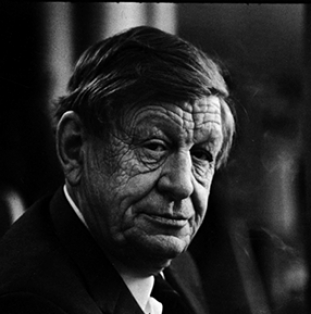
W. H. Auden ( 1907 – 1973 ) was admired for his unsurpassed technical virtuosity and ability to write poems in nearly every imaginable verse form; his incorporation of popular culture, current events, and vernacular speech in his work; and also for the vast range of his intellect, which drew easily from an extraordinary variety of literatures, art forms, social and political theories, and scientific and technical information.
September 1, 1939 W. H. Auden : ( 1907-1973 ) : : : :
I sit in one of the dives On Fifty-second Street Uncertain and afraid As the clever hopes expire Of a low dishonest decade: Waves of anger and fear Circulate over the bright And darkened lands of the earth, Obsessing our private lives; The unmentionable odour of death Offends the September night.
Accurate scholarship can Unearth the whole offence From Luther until now That has driven a culture mad, Find what occurred at Linz, What huge imago made A psychopathic god: I and the public know What all schoolchildren learn, Those to whom evil is done Do evil in return.
Exiled Thucydides knew All that a speech can say About Democracy, And what dictators do, The elderly rubbish they talk To an apathetic grave; Analysed all in his book, The enlightenment driven away, The habit-forming pain, Mismanagement and grief: We must suffer them all again.
Into this neutral air Where blind skyscrapers use Their full height to proclaim The strength of Collective Man, Each language pours its vain Competitive excuse: But who can live for long In an euphoric dream; Out of the mirror they stare, Imperialism’s face And the international wrong.
Faces along the bar Cling to their average day: The lights must never go out, The music must always play, All the conventions conspire To make this fort assume The furniture of home; Lest we should see where we are, Lost in a haunted wood, Children afraid of the night Who have never been happy or good.
The windiest militant trash Important Persons shout Is not so crude as our wish: What mad Nijinsky wrote About Diaghilev Is true of the normal heart; For the error bred in the bone Of each woman and each man Craves what it cannot have, Not universal love But to be loved alone.
From the conservative dark Into the ethical life The dense commuters come, Repeating their morning vow; “I will be true to the wife, I’ll concentrate more on my work,” And helpless governors wake To resume their compulsory game: Who can release them now, Who can reach the deaf, Who can speak for the dumb?
All I have is a voice To undo the folded lie, The romantic lie in the brain Of the sensual man-in-the-street And the lie of Authority Whose buildings grope the sky: There is no such thing as the State And no one exists alone; Hunger allows no choice To the citizen or the police; We must love one another or die.
Defenceless under the night Our world in stupor lies; Yet, dotted everywhere, Ironic points of light Flash out wherever the Just Exchange their messages: May I, composed like them Of Eros and of dust, Beleaguered by the same Negation and despair, Show an affirming flame.
— – W H Auden : : : : From Another Time by W. H. Auden,published by Random House 1940 / Curtis Brown,Ltd. : : From poets.org : : For Educational Purposes only. ::
“September 1 , 1939″ , A September Poem By W H Auden is About Grief And War : As Prof. Dr. Oliver Tearle wrote, ” specifically Nazi Germany’s invasion of Poland and the ensuing outbreak of war – rather than a more general September mood. : : it’s closer to Yeats’s September poem than the others – and, indeed, Auden borrowed the stanza form for this September poem from another one by Yeats, “Easter 1916″. Auden later disowned this poem, written shortly after the outbreak of the Second World War, arguing that the rhetoric won out over truth (‘We must love one another or die’ should, he reasoned, strictly be ‘We must love one another and die’).” : : : :
Notes for each of the 8 Stanzas Pending visit this post again later on to enjoy the appreciation of the poem V Jayaraj Pune India April 20 , 2023 : : : : : : : :
On An Apple-Ripe September Morning : : By Patrick Kavanagh : County Monaghan : : : : : : On an apple-ripe September morning Through the mist-chill fields I went With a pitch-fork on my shoulder Less for use than for devilment.
The threshing mill was set-up, I knew, In Cassidy’s haggard last night, And we owed them a day at the threshing Since last year. O it was delight
To be paying bills of laughter And chaffy gossip in kind With work thrown in to ballast The fantasy-soaring mind.
As I crossed the wooden bridge I wondered As I looked into the drain If ever a summer morning should find me Shovelling up eels again.
And I thought of the wasps’ nest in the bank And how I got chased one day Leaving the drag and the scraw-knife behind, How I covered my face with hay.
The wet leaves of the cocksfoot Polished my boots as I Went round by the glistening bog-holes Lost in unthinking joy.
I’ll be carrying bags to-day, I mused, The best job at the mill With plenty of time to talk of our loves As we wait for the bags to fill.
Maybe Mary might call round… And then I came to the haggard gate, And I knew as I entered that I had come Through fields that were part of no earthly estate.
— Patrick Kavanagh: from poemhunter.com For Educational Purposes only
“On an Apple-Ripe September Morning”first published in 1956 , A September Poem By Patrick Kavanagh is About recalling of an autumn morning as experienced by a Child on Irish countryside ( in early 20 Th Century Monaghan ) , and his walking through the mist-chill fields on an Apple ripe September morning, with a mischief making longhandled sharp tool of “pitchfork on a shoulder”as if ready to help manually withthethreshing ( beating the seedsout of grains ) : The tool of “pitch – fork was less for use than for devilment.”; devilment 😈 is indicative of the meaning in ‘mischief making’. : : The Irish poem spreads smell of the apples in the orchard, circulates the sound of the thresher , transmits a delightful picture of surprises and moves the events from the harvest time in the past to the reader’s time. The poem describes the beauty of an early autumn morning in the Irish countryside and reflects on the brevity of time and the inevitability of change. : : : :
A Child’s farmer family owed the Mills work of threshing since last one year and the payments are continued for the bills for the services they provide. Alongside this , its a place of chaffy ( worthless ) gossips entertaining with laughter simultaneously in addition to the socialising andfarmworks ; “With work thrown in to ballast The fantasy-soaring mind”. : Here, the “fantasy– soaringmind.”means the lofty feelings or lofty mind that was required to be steady with that ballast whichtended to be in stabilised character and morals. : : : :
While crossing the wooden bridge, It was a wonderful looking in to the flow of rainwater/ ” drain” during summertime raining when he would have shrivelled upeels ( scaleless elongate fish of marine water / freshwater ) as he did before. : : : :
He “thought of the wasp’s nest in the banks , and of that day when he chased it” but was forced to “leave the drag and the scraw – knife behind “Then he “covered his face with the hay”to keep safeguard from the wasps. : : : :
He has remembered how the wet leaves of cocksfoot ( stout hay of the bog land Pasteur ) polished his boots when hewentround by the glistening ( that is , glossy shinning ) bog – holes. Such things gave him unthinking joy to get lost un – caringly. : : : :
He liked to enjoy the best job in having plenty of time to talk of his / their loves as they waited for the bags he carried to fill at the threshingMill. : : : :
As he paid a short time visit ( inferred from the word ” called round” ) to that “haggard gate” ofthe “threshingMill”with no forethought , yet he would meet with the sweet memoirs of the childhood rolling towards him and he knew he had entered the gate coming through “fields that were part of no earthly estate” because those fields had no designated boundary or gates. That’s why he called the gate of the threshing Mill as “haggard gate”/ ‘careworn’ indicating ‘wearing effects’ of overuse in time ; and in contrast to this , the fields were part of no earthly estate. :And transmitted in this fashion , the walking through the fields of the countryside , where from , the Sweet Childhood Memories of early Autumn Morning , in the apple ripe Septemberwould reach with joy to the like-minded readers / viewers. : : : :
“On an Apple-Ripe September Morning” A September Poem By Patrick Kavanagh : Information Appreciation and poem Analysis Presented by V Jayaraj Pune India April 19 , 2023 : : : : : : : :
September Midnight BY SARA TEASDALE Lyric night of the lingering Indian Summer, Shadowy fields that are scentless but full of singing, Never a bird, but the passionless chant of insects, Ceaseless, insistent. 4
The grasshopper’s horn, and far-off, high in the maples, The wheel of a locust leisurely grinding the silence Under a moon waning and worn, broken, Tired with summer. 8
Let me remember you, voices of little insects, Weeds in the moonlight, fields that are tangled with asters, Let me remember, soon will the winter be on us, Snow-hushed and heavy. 12
Over my soul murmur your mute benediction, While I gaze, O fields that rest after harvest, As those who part look long in the eyes they lean to, Lest they forget them. 16 — Sara Teasdale : Originally published in Poetry,March 1914 : poetryfoundation.org : For Educational Purposes only.
“September Midnight” , A 16 lines September Poem By Sara Teasdale is About desire to remember the “voices”of “little insects” and the “passionless chant” of the insects , and the clicking of the chirrupy insects producing high pitched sounds at “lyric midnight” of the lingering/ late night during “Indian Summer”. the hot summer weather has lasted into early autumn. She depicts the “grasshopper’s horn” as well as “locust’s grinding” of the night’s “silence” and the “waning , worn and broken moon”that appears to her as moon being “tired of summer” and the “fields” – “tangled” with “Asters” herbs which blooms with snowy flowers in upcoming fall . : Shegazes andtalks to the “resting fields aftertheharvest” has ended , with the start of Autumn. : : And above all she invokes in the murmur of her soul , the blessings for the divine protection however it is a “mute benediction.” : : : :
Notes for each of the 4 Stanzas Pending visit this post again later on to enjoy the appreciation of the poem V Jayaraj Pune India April 18 , 2023 : : : : : : : :
Lucy Maud Montgomery OBE (November 30, 1874 Clifton, Prince Edward Island, Canada – April 24, 1942 (aged 67) Toronto, Ontario, Canada ) : Education: Prince of Wales College, Dalhousie University . : : published as L. M. Montgomery, was a Canadian author best known for a collection of novels, essays, short stories, and poetry beginning in 1908 with Anne of Green Gables. She published 20 novels as well as 530 short stories, 500 poems, and 30 essays. Anne of Green Gables was an immediate success; the title character, orphan Anne Shirley, made Montgomery famous in her lifetime and gave her an international following. Most of the novels were set on Prince Edward Island, and those locations within Canada’s smallest province became a literary landmark and popular tourist site – namely Green Gables farm, the genesis of Prince Edward Island National Park. She was made an officer of the Order of the British Empire in1935. Beautiful field of red poppies in the sunset light. Russia, Crimea Anzac Day memorial poppies. Field of red poppy flowers to honour fallen veterans soldiers in battle of Anzac armistice day. Wildflowers blooming poppy field landscape. Meadow with flowers : Canada Beautiful woman crouching amidst poppy field
September : : Lucy Maud Montgomery : : : : Lo! a ripe sheaf of many golden days1 Gleaned by the year in autumn’s harvest ways, 2 With here and there, blood-tinted as an ember, 3 Some crimson poppy of a late delight4 Atoning in its splendor for the flight 5 Of summer blooms and joys 6 This is September. 7 — Lucy Maud Montgomery : : included in The Watchman and Other Poems (1916) : : From allpoetry.com : For Educational Purposesonly.
“September” A , 7 lines short Poem By Lucy Maud Montgomery is About Autumn harwest , summer blooms and joys . Montgomery also wrote ,”It was a lovely afternoon – such an afternoon as only September can produce when summer has stolen back for one more day of dream and glamour.” ) : Her character Anne Shirley, in her book , “Anne Of Green Gables” speaks, “I’m so glad I live in a world where there are Octobers. It would be terrible if we just skipped from September to November, wouldn’t it?.” : : She wrote the opening lines of the poem, “November Evening” , thus , “Come, for the dusk is our own; let us fare forth together, With a quietdelight in our hearts for the ripe, still, autumn weather. ” : : Here, she pays tribute to the ‘late delight’ of themonth of September. Montgomery speaks of a Northrn Hemisphere September, with it’s beautiful hues of brown and amber.
The Poem opens with an interjection, “Lo !” Meaning , ‘ Behold ‘ ; she draws attention to “a ripe sheaf of many golden days Gleaned by the year in autumn’s harvest ways. “( lines 1 & 2 ) : “Gleaned ” means ,the natural crops are ‘reaped’ and ‘gathered’; That is , Many bundles of harvested grains matured and mellowed as a result of many golden daysofthe year in summer have been cut / plucked off and tied / gatheredfor carrying and storing are ready in the starting of Autumn. In other words, “The harvest is past, the summeris ended”). : “With here and there blood- tintedas an ember” ( line 3 ) : The word “blood – tinted ” means a lightly red coloured, which is as an “ember” , and is looking like a hot fragmentof wood or a coalthat is left from fire 🔥and is glowing or smouldering , that is burning slowly but without a flame. : :
The next description is , ” Some crimson poppy of a late delight 4 Atoning in its splendor for the flight 5 Of summer blooms and joys” 6 ( lines 4 To 6 )
Here, the “flight of Summer blooms and joys” ( line 5 /6 ) is indicative of an escape characteristics physically of ( blooms and joys, which are no more seen as performing ) Summer flowering plants. That is the change over of seasons from Summertime to the new Autumnal start that has prevented from happening continuously of the Summertime flowering. But “Some crimson Poppy , an example of some annual , biennial ( life cycle of 2 Season ) Orperennial ( life cycle lasting long time , suggesting self renewal ) herbs having ‘Showy Flowers’of a “late delight” ( line 4 ) are seen as “Atoning in its splendor” ( line 5 ) make reparation for wrong doing , that is mending or fixing in order again of natural beauty of flowering. This amendment of “crimson Poppy” is also equally appealing. So,This is September.” : : : :
“September” A September Poem By Lucy Maud Montgomery Information Appreciation and poem Analysis Presented by V Jayaraj Pune India April 17 , 2023 : : : : :::
William Butler Yeats ( 1865 – 1939 ) one of the greatest of all Irish poets. His first collection, Crossways, appeared in 1889 when he was still in his mid-twenties, and his early poetry bore the clear influence of Romanticism. : With Modernism in the early decades of the twentieth century, Yeats’s work retained its focus on traditional verse forms and rhyme schemes, but he became more political, more allusive, and more elliptical. : His 1927 poem ‘Sailing to Byzantium’, about growing old, show a thoughtful and contemplative poet whose imagery and references defy easy exegesis. : A directness to his work makes readers feel personally addressed, and situates his work always at one remove from more famous modernist poets (such as T. S. Eliot and Ezra Pound). : He was awarded the Nobel Prize for Literature in 1923. : A woman named Maud Gonne was his muse. Yeats asked her to marry him several times, but she always refused. She knew she could be of more use to him as a muse than as a wife or lover : Yeats was in favour of Irish independence but, in poems such as ‘Easter 1916’ which respond to the Easter Rising. : He was uneasy with the violent and drastic political and military methods adopted by many of his compatriots. : Yeats died in 1939.
September 1913 BY WILLIAM BUTLER YEATS What need you, being come to sense, But fumble in a greasy till And add the halfpence to the pence And prayer to shivering prayer, until You have dried the marrow from the bone; For men were born to pray and save: Romantic Ireland’s dead and gone, It’s with O’Leary in the grave.
Yet they were of a different kind, The names that stilled your childish play, They have gone about the world like wind, But little time had they to pray For whom the hangman’s rope was spun, And what, God help us, could they save? Romantic Ireland’s dead and gone, It’s with O’Leary in the grave.
Was it for this the wild geese spread The grey wing upon every tide; For this that all that blood was shed, For this Edward Fitzgerald died, And Robert Emmet and Wolfe Tone, All that delirium of the brave? Romantic Ireland’s dead and gone, It’s with O’Leary in the grave.
Yet could we turn the years again, And call those exiles as they were In all their loneliness and pain, You’d cry, ‘Some woman’s yellow hair Has maddened every mother’s son’: They weighed so lightly what they gave. But let them be, they’re dead and gone, They’re with O’Leary in the grave.
” September 1913″, Actually written in September 1913 , By W B Yeats is Aboutmonth of September in Irishhistory. Yeats’s acknowledgment that Irish people, are living through a critical moment in Irish history. Yeats’s own dismay at the turn away from the old Ireland built on romantic ideals towards a new, more pragmatic but more culturally devoid Ireland. ‘Petty materialism’ ( Edward Larrissy’s phrase ; in his note to ‘September 1913 ) is threatening Ireland’s aim to build a national culture of its own. Most notably, the poem provides insight into Yeats’ detestation of the middle classes whilst also glorifying figures such as John O’Leary.
[ The use of the strong ABAB rhyme scheme maintains a spiteful and accusatory tone, and unpleasant adjectives such as ‘greasy’ are very much indicative of this. Notably, in all four of the refrains, Yeats mentions John O’Leary, who was an Irish separatist ‘of a different kind’. O’Leary’s political stance was much less self-interested than many of his contemporaries, as he instead focused on getting the greatest good for Ireland: : Yeasts questions whether these great historical figures, whom he admired and previously emulated in the style of his earlier work, are comprehensive in their understanding of the world in which they livedand wishes for a return to the less egotistical and self-driven politics of a bygone era. A devoted reader of both William Blake and Percy Shelley, Yeats’ repetition of the phrase “Romantic Ireland” connects the politically motivated ideals of the Romantics “to an Irish national landscape.” ( George Bornstein, “Yeats and Romanticism,” The Cambridge Companion to W.B. Yeats, 27. ) The fact that Yeats attaches a second repetition of “It’s with O’Leary in the grave” indicates further the speaker’s belief that John O’Leary embodied a nationalism in his political actions that now rests solely within the poem. Indeed, John O’Leary “directed Yeats not just to large-mindedness, but to a way of combining Romanticism with Irishness into an original synthesis.”( George Bornstein ) Now that “Romantic Ireland’s dead and gone,” it can no longer express its will and thus requires Yeats poetic prowess to clarify Ireland’s message. : : Yeats describes Irish leaders such as Edward Fitzgerald, Robert Emmet and Wolfe Tone, as brave yet a bit delirious, a classification that treats the poet as far more grounded in his politics than the Irish nationalists who died. Yeats channels the fervor of their idealism and struggle through his words by insisting that his own poem continues the nationalist project initiated by those who came before him. The speaker’s voice thus becomes “the characteristic note of Yeats’s great mature poetry.” ( George Bornstein ) : : Hugh Lane offered his collection of paintings to the Dublin Municipal Corporation. Public reaction was mostly negative on economic and moral grounds. In the end, as Yeats said “the mob” prevailed. In a note to this poem Yeats wrote that the pictures “works by Corot, Degas and Renoir – were compared to the Trojan Horse ‘which destroyed a city’. They were dubbed ‘indecent’ and those who admired the painting were called ‘self-seekers, self-advertisers, picture dealers, log-rolling cranks, and faddists’…”Adele M dalsimer, “By the Irish Political Ballad, Colby Library Quarterly, 12,1 March 1976, p38) ] : : : :
The above Informations are as from Wikipedia ‘s Article ,”September , 1913 ” Poem . : : : :
Notes for each of the 4 Stanzas Pending visit this post again later on to enjoy the appreciation of the poem V Jayaraj Pune India April 16 , 2023 : : : : : : : :
Helen Hunt Jackson ( 1830 – 1885 ) “September” By Helen Hunt Jackson ( 1830 – 1885 ) “September” by Helen Jackson is from Boston: Roberts Brothers,1892. : From poetry-archive.com : For Educational Purposes only.
SEPTEMBER
by: Helen Hunt Jackson (1830-1885)
HE golden-rod is yellow; The corn is turning brown; The trees in apple orchards With fruit are bending down. 4 The gentian’s bluest fringes Are curling in the sun; In dusty pods the milkweed Its hidden silk has spun. 8 The sedges flaunt their harvest, In every meadow nook; And asters by the brook-side Make asters in the brook. 12 From dewy lanes at morning The grapes’ sweet odors rise; At noon the roads all flutter With yellow butterflies. 16 By all these lovely tokens September days are here, With summer’s best of weather, And autumn’s best of cheer. 20 But none of all this beauty Which floods the earth and air Is unto me the secret Which makes September fair. 24 ‘T is a thing which I remember; To name it thrills me yet: One day of one September I never can forget. 28
“September”A 28 lines Poem in Quatrains By an activist who campaigned on behalf of Native Americans , Helen Hunt Jackson is About a poem of quatrains, in deep thinking upon “the secret / Which makesSeptemberfair.”: The outcome of all the months being remembered is , “September days are here, with summer’s best of weather, and autumn’s best of cheer.” For which she creates a souvenir of “beauty which floods the earthandair.”calling it “lovely tokens”. :
She thinks about the yellow heavy harvest like wheat , corn , gourds ,and the butterflies are yellow. “At noon the roads all flutter 15 With yellow butterflies.”16 She says. And “golden rod is yellow.” : : : :
Notes for each of the 7 Stanzas Pending visit this post again later on to enjoy the appreciation of the poem V Jayaraj Pune India April 15 , 2023 : : : ; ; : : :
September, 1819 BY WILLIAM WORDSWORTH Departing summer hath assumed 1 An aspect tenderly illumed, The gentlest look of spring; That calls from yonder leafy shade Unfaded, yet prepared to fade, A timely carolling. 6
No faint and hesitating trill, 7 Such tribute as to winter chill The lonely redbreast pays! Clear, loud, and lively is the din, From social warblers gathering in Their harvest of sweet lays. 12
Nor doth the example fail to cheer 13 Me, conscious that my leaf is sere, And yellow on the bough:— Fall, rosy garlands, from my head! Ye myrtle wreaths, your fragrance shed Around a younger brow! 18
Yet will I temperately rejoice; 19 Wide is the range, and free the choice Of undiscordant themes; Which, haply, kindred souls may prize Not less than vernal ecstasies, And passion’s feverish dreams. 24
For deathless powers to verse belong, 25 And they like Demi-gods are strong On whom the Muses smile; But some their function have disclaimed, Best pleased with what is aptliest framed To enervate and defile. 30
Not such the initiatory strains 31 Committed to the silent plains In Britain’s earliest dawn: Trembled the groves, the stars grew pale, While all-too-daringly the veil Of nature was withdrawn! 36
Nor such the spirit-stirring note 37 When the live chords Alcæus smote, Inflamed by sense of wrong; Woe! woe to Tyrants! from the lyre Broke threateningly, in sparkles dire Of fierce vindictive song. 42
And not unhallowed was the page 43 By wingèd Love inscribed, to assuage The pangs of vain pursuit; Love listening while the Lesbian Maid With finest touch of passion swayed Her own Æolian lute. 48
O ye, who patiently explore 49 The wreck of Herculanean lore, What rapture! could ye seize Some Theban fragment, or unroll One precious, tender-hearted scroll Of pure Simonides. 54
That were, indeed, a genuine birth 55 Of poesy; a bursting forth Of genius from the dust: What Horace gloried to behold, What Maro loved, shall we enfold? Can haughty Time be just! 60 — William Wordsworth
“September , 1819” , A September Poem By William Wordsworth is About Romantic contemplation on the arrival of autumn in which the gentlest spring looking in the milder nature ofeverything reverberated.
Notes for each of the 9 Stanzas in 60 lines pending visit this post again later on to enjoy the appreciation of the poem V Jayaraj Pune India April 14 , 2023 : : : : : : : :