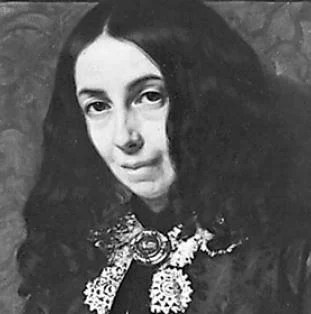
My Life Closed Twice Before Its Close — : Emily Dickinson : : Death Poems : :

My life closed twice before its close—
It yet remains to see
If Immortality unveil
A third event to me 4

So huge, so hopeless to conceive 5
As these that twice befell.
Parting is all we know of heaven.
And all we need of hell 8 — Emily Dickinson: : : : : : : :

” My Life Closed Twice Before It’s Close” By Emily Dickinson : reflects on Immortality and afterlife with a mysterious riddle.

Her “life closed” involved the deaths of her two loved ones , thus two occasions have surpassed ; and she is now waiting for “A third event to me”: : ‘Before she has died herself, she has known the deaths of two people who meant so much to her that their deaths led, in a small way, to her own. That’s why she says in the opening line of the poem ” My life closed twice before its close – ” : : Whether there is an afterlife , ” It yet remains to see
If Immortality unveil
A third event to me” ( As in lines 2 , 3 & 4 ) It is meaningless to try to understand it’s extent and scope in any Human contemplation. ” Parting is all we know of heaven out of becoming a witness to the death of our loved ones and the only way we can learn of hell, until we ourselves die , whether good or bad, might be like. Otherwise, we cannot conceive of such a thing : : The word “closed” chew over both the ‘hearbreak’ and ‘death’ at a time which produce a ‘void’ that can be filled with her own ‘death’ And she is waiting for the “immortality” to come to her as she says in lines 3 & 4 that will remove the cover of mystery and make a third event of ‘closure’ : : The 3 Rd time that heart will break and perhaps it will be her actual ‘death’ : :

Emily Dickinson’s ‘My life closed twice before its close’ : : information Appreciation and poem Analysis Presented by V Jayaraj Pune India September 17 , 2022 : : ભાદરવા વદ સાતમ : : : : : : : :

Because I Could Not Stop For Death : Emily Dickinson : : Death Poems : :

“Because I Could Not Stop For Death” (479) : : By Emily Dickinson: ( ) Because I could not stop for Death –
He kindly stopped for me –
The Carriage held but just Ourselves –
And Immortality. 4

We slowly drove – He knew no haste
And I had put away
My labor and my leisure too,
For His Civility – 8

We passed the School, where Children strove
At Recess – in the Ring –
We passed the Fields of Gazing Grain –
We passed the Setting Sun – 12

Or rather – He passed Us –
The Dews drew quivering and Chill –
For only Gossamer, my Gown –
My Tippet – only Tulle – 16

We paused before a House that seemed
A Swelling of the Ground –
The Roof was scarcely visible –
The Cornice – in the Ground – 20

Since then – ’tis Centuries – and yet
Feels shorter than the Day
I first surmised the Horses’ Heads
Were toward Eternity – 24

“I Could Not Stop For Death” By Emily Dickinson is her best-known poem, and is about her speaker’s leisurely journey into the ‘afterlife’ with personified Mortal “Death” leading the way , “Death”and “Immortality”:Mirror (opposite to death) image ; being living characters giving a feel of ‘ease’ as familiar, and also ‘cruel’ and ‘evil’ on shifting a ‘tone’ in the poem. The ( taxi – like ) carriage stopped as if a ride for the passenger (s) driven by Male ‘driver’ held ” just ourselves and Immortality”, and its “ Horses” Heads”pointed ” towards eternity–” They pass a school, fields, and the setting sun (a very obvious symbol of death). The three stages of human life: childhood (the school), our prime (embodied by the fertile ‘Gazing Grain’, suggesting the idea of cultivating a field and planting crops and working for one’s living), and then our decline into old age (the setting sun) passed them. They paused before a house that seems to rise naturally out of the earth, with its roof barely visible and its cornice (an ornamental moulding round the wall of a room, found just below the ceiling) in the ground. This is a house of earth, like a dolmen or earthwork built for a tomb The poem concludes with the speaker saying that it has been centuries since all this occurred. The poem’s speaker, and Death, dwelt in this ‘House’ (a house of death) for many centuries. Yet all that time has passed more quickly than a single day,What begins in the simple past ends in Eternity, endless life after death where time has no consequence. Mortality faces Eternity. : : : :

*I Could Not Stop For Death” By Emily Dickinson : : Information Appreciation and poem Analysis Presented by V Jayaraj Pune India September 16 , 2022 : : ભાદરવા વદ છઠ : ::

The Mower : Philips Larkin : : Death Poems : :

Philip Larkin (1922-1985)

The Mower

The mower stalled, twice; kneeling, I found
A hedgehog jammed up against the blades,
Killed. It had been in the long grass.

I had seen it before, and even fed it, once.
Now I had mauled its unobtrusive world
Unmendably. Burial was no help:

Next morning I got up and it did not.
The first day after a death, the new absence
Is always the same; we should be careful

Of each other, we should be kind
While there is still time.
-Philips Larkin:Written in Summer of 1979:

Inspired by a real-life event , “The Mower” A 12 Lines , Short Poem about ‘Death’ is his late elegiac masterpiece. The elegant rise from a tragical splitting of “hedgehog” a nocturnal garden-creature, with a mechanical mower pushed by a poet : to his sincere saintly conclusion is humanising emotions that surpasses superior standard of excellence. The 3 clear-cut 3 line stanzas ; A reflective turn (‘The first day after a death’) and lastly , A couplet like conclusion : is the emotion clicked hurriedly. “The Mower” unifies poetic sensibilities , self-pity and depression with the distant grief of others. and in Humanity. The poem crowns the others as a final hint urging kindness not just to one’s fellow man, but to all creatures, all life, in a humanly manners. Also, “The Mower”elucidates what is best about Larkin from being easily defined influenced poet as Little Englander or as a racist or sexist or gloomy ; Hardyesque, Yeatsian, Audenesque, Eliotic, Lawrentian ; plain-speaking or symbolist, formal or conversational, or as everyday poet. He is a writer whose major themes include musical sonatas ( compositions ) with rising and falling 3/4 movements. A strange poem that can bring the reader to tears is a given in a way of modern life and literature that reveals the inhumane savagery of men by using a symbolic mower. sharp like wedges in his ironic observation. The poet wants to hint the readers about the consequences of everyday acts happening unexpectedly , suddenly , accidentally and the unintended suffering thereon. : : : :

The poetic persona in the poem is cutting grass on his lawn with a mower. Suddenly, it halts and the poet finds a hedgehog jammed into its blades. He recognizes it to be the same hedgehog he fed once a few days back. the poet somehow feels a “new absence” in his world. The little creature was not a significant but after its death, it has captured a place in the poet’s heart. In the end, the poet warns the readers to be careful about one’s actions “While there is still time.” A mechanical mower represents the weapons meant for destruction. . The blades of the mower not only clear the garden but can kill the grasses taking alongside away an innocent life like the one creature, “hedgehog” in the poem. The theme of the poem is destruction, the mower as a weapon of destruction that can take away several lives unknowingly. It has no soul, no feelings at all. The operator sitting at the driving seat, simply gets his job done. The poet alerts the readers to how it affects humanity and creates a sense of absurdity. Another important theme is “Humanity” over the brural activities of humans. The poet feels the absence of the little “hedgehog” on which he caused an unmendable wound. But after the tragedy of its death he feels it is also rightfully significant in this world. In the end, the poet advises readers to be humane in their deeds. : : : :

“The Mower” By Philips Larkin: A short Death Poem : : Information Appreciation and poem Analysis Presented by V Jayaraj Pune India September 15 , 2022 : : ભાદરવા વદ પાંચમ : : : : : : : :

Inscription in St Mary Magdalene Church, Milk Street, Lindon : Anonymous : ( 1 ) : : Upon the Death of Sir Albert Morton’s Wife : Sir Henry Wotton : ( 2 ) : : The Bustle in a House : EMILY DICKINSON : ( 3 ) : An Epitaph : A E Housman : ( 4 ) : : Death : W B Yeats : ( 5 ) : : Short Poems : Death Poems : :

1. : : Anonymous, ‘Inscription in St Mary Magdalene Church, Milk Street, London : :: Grass of levity,
Span in brevity,
Flowers’ felicity,
Fire of misery,
Winds’ stability,
Is mortality.

Included in the wonderfully expansive Penguin Book of English Verse, this short inscription about mortality runs, in full : is A fine example of the memento mori, literally set in stone in one of London’s churches. : :

2. : : Sir Henry Wotton, “Upon the Death of Sir Albert Morton’s Wife”, : : : :

“He first deceased; she for a little tried
To live without him; liked it not, and died.”

Sir Henry Wotton (1568-1639) is not much read now, but he left behind this lovely little couplet as HERE In ABOVE. : : : :

3. : : The Bustle in a House (1108)
BY EMILY DICKINSON ( poetryfoundation.org ) : : : :
“The Bustle in a House
The Morning after Death
Is solemnest of industries
Enacted opon Earth –

The Sweeping up the Heart
And putting Love away
We shall not want to use again
Until Eternity –”

Emily Dickinson’s “The Bustle in a House” A short poem written in around 1866 , of 8 lines in the two Stanzas is about the impacts of death describing the “bustle” in the grief – stricken home in morning after death . Emily Dickinson was much possessed by death. The scene of dying at home is important to Dickinson’s representations of death throughout her literary work. : : ” Dickinson uses images of the house to treat all of her most pressing concerns which relate to her place in the universe. Home thus reflects her inner landscape … a sensitivity on both personal and social factors.” ( JeanMcClure writes in : ” Emily Dickinson and the Image Home “) : : : :

“The Bustle in a House
The Morning after Death
Is solemnest of industries
Enacted upon Earth— ” : : : : Stanza 1 : : ( lines 1 To 4 ) : :

On the morning after death the house of the departed soul comes alive with activity contrasting to the lifeless person at rest that would have been laid out in the set- up room for visitors in the house. : : “The Bustle in a house” ( line 1 ) : : “Bustle” means flurry of activities involving much ‘ado’ or ‘commotion’ speedily occuring in a brief period of time. : :

“The Morning after death” ( line 2 ) : : “The Morning” refers to : The “Bustle” occurs after a death, and it occurs in “The Morning”: : Both The “Morning” as well as The Mourning” have the same sound. But the subjective sensation of hearing is different for one another. A given ’cause’ for both is the ‘same’ under the roof of the house of a deceased person. Dickinson has not stated who has died and how and when the death has occurred. She has not mentioned even a word , “Mourning” in this poem. Yet it is hanging alongside The “Morning”under the resounding settings of housekeeping chores taking place in “The Morning after death”: : : :

“Is solemnest of industries
Enacted upon Earth— ” : : : : ( line 3 & 4 ) : :

“The Bustle” in the line 1 comes up as “solemnest” : : which means serious , sombre , earnest ( sincerely intended and with devout or heartfelt feelings ) Or it can mean sacred , ceremonial. : : Dickinson uses it to convey both the meanings in terms of “industries” ( meaning: diligence / with attention : assiduousness ; industriousness in any task of work, calling or services Or pious devotion. : : because the sacred rituals and ceremonies performed for the dead are the closest that most people “upon Earth” will ever get to the mystery of immortality ( perpetual life after death ) before passing away themselves. : : : :

Here , Dickinson mindfully invokes an older meaning of “solemn” to portray the house cleaning as a “sacred,” even a “ceremonial,” activity. The word “Enacted” consecrate the housework from “just woman’s work” to a solemnly dedicated work for a highly purified sacred purpose. The question here is yet to be revealed as to which sacred housework is being enacted which is what has been reenacted again and again “upon Earth –” !?

” The Sweeping up the Heart
And putting Love away” : : Stanza 2 : lines ( 5 & 6 ) : : : :

Dickinson uses ” The Sweeping” work of ‘housekeeping’ as a metaphor for the process of “Going” of the dead which she would let go of. The heart, broken to pieces by grief and, the mind disarrayed by the event of death and, the house being untidy, must be swept up and hidden from sight and the house be made orderly. And this enactment is also a ‘shown love’ and ‘respect’. If an Orderliness is embroiled up by the event it can neutralize a bedlam, and confusion, after death paving a thoughtful way, further to funeral ceremony to be taken care of. : : Here, the spotlight in sweeping is the “Heart” with which a reader should not get perplexed as if being expected to know something that you do not know. What is this “something”? Well, It’s a word “Hearth”( meaning a ‘fireplace’ similar to “Heart”which would have needed to “The sweeping up” ( the burnt ashes , etc. ) : : : : That would neaten up the Visitor’s (Living) Room before the arrival of the mourners. She wouldn’t name the Hearth/ Mourners / even Mourning, but would get this clarifications from her ‘high E.Q.’ Readers whose thoughtful involvement in the poem/ it’s wordings would play up with the quizzical expressions. The unconventional metaphor of housework to describe the process of mourning ! For Dickinson, home is, foremost, a metaphor for the ‘self’. Thus, Dickinson refers to the morning-after bustle as the “solemnest of industries,” as part of women’s spotlight of home industry or housework / “sweeping up”( perhaps the grief delayed ! ) : : : :

And the life in the Mourner’s House, goes on with “ “The sweeping up the Heart / And putting Love Away.”: : Even after the death. To die is then followed by turning away from the dead person at least temporarily. One has to put one’s love aside and place it from where it can not be removed. One’s “Love” for the deceased person are ‘pieces’ of the ‘self’. No-one can remove it from your chosen place and “Love” is not something that can escape from such place.

“We shall not want to use again
Until Eternity –” : : Stanza 2 : : lines ( 7 & 8 )

Here, the verb phrase, “shall not want to use.” means some Mourner’s ‘reactionary’ feelings shown expressing that they will not love again if love is inevitably lost, and departing soul of their loved one affects and afflict suddenly giving deep pain and long lasting sufferings. To add up more with what we know , Some Mourners would hide their “Love” away and rely solely in the faith and confidence in the good memories of the departed soul. Rational or irrational ,this is an important part in grieving. The idea of ‘Reunion’ with our loved ones in the afterlife : Eternity has always been a comfort for the grief-stricken sorrowful loved ones since the beginning of the time. Dickinson , however puts her “Love” aside temporarily and shall not want to use it under grief-stricken state of “Heart”. So to say , her Love shall withstand the ‘lose’ and ‘grief’, bear the ‘trauma’ and open up “again” in “Eternity” under an easy , the stable and peaceful vignette of the next life with no fear for unbearable grief.

4 . : : Epitaph on an Army of Mercenaries – A. E. Housman


These, in the day when heaven was falling,
The hour when earth’s foundations fled,
Followed their mercenary calling
And took their wages and are dead.

Their shoulders held the sky suspended;
They stood, and earth’s foundations stay;
What God abandoned, these defended,
And saved the sum of things for pay.”The Bustle In The House” By Emily Dickinson is a masterpiece for its brevity ( The use of brief expressions) : : And Other Short Death Poems : : Information Appreciation and poem Analysis Presented by V Jayaraj Pune India September 14 , 2022 : : : : ભાદરવા વદ પાંચમ : : : :

“Epitaph” is a poem in praise of the ‘Old Contemptibles’, the British Expeditionary Force (BEF) of 1914— the professional British army that existed before the advent of Kitchener’s ‘New Army’ of volunteers. The BEF was sent to France at the end of that year to fight against the Germans. “Epitaphs” are lines written on a grave, intended to commemorate the dead. “Mercenaries” are the most despised sort of soldier, men who fight for money rather than country or honour. The word is used here ironically, to subvert the language of German propaganda about the British army.

“…when heaven was falling”: suggests the end of the world , here with the start of the war.

“followed their mercenary calling”: Because , during the world war I , Germany , France and Russia had big armies. German propaganda called the professionals of the British Army mercenaries as an insult: Housman takes up the insult ironically. Every British soldier was better and fast with his rifles and in the start at the Battle of Mons looked like army with machine guns ; but in the last would be outnumbered by the massive army of Germany.

“…took their wages and they are dead”: Three years after the First Battle of Ypres, so many of the BEF were killed. The 120,000 BEF soldiers were more or less wiped out by 1916. Biblical axiom “The wages of sin is death” (Romans 6:23). can be reminded in the above line.

“Their shoulders held the sky suspended” : Atlas, the Titan who holds up the sky in Greek legend , All soldiers of BEF are like Atlas.

“They stood, and earth’s foundations stay”: One German General gave a credible admiration for BEF for halting the German troop’s advancement towards Paris. Thus BEF stood and saved Britain.

“What God abandoned, these defended” : : The “mercenaries” like BEF soldiers were defended the nations which were abandoned by God.

“And saved the sum of things for pay.”: : : : Housman uses the metaphor of ‘wages and payment’: : The BEFsoldiers’ ultimate payment, or wages, was death. : : : :

5. : : DEATH : By William Butler Yeats : : : : : Nor dread nor hope attend

A dying animal;

A man awaits his end

Dreading and hoping all;

Many times he died,

Many times rose again.

A great man in his pride

Confronting murderous men

Casts derision upon

Supersession of breath;

He knows death to the bone –

Man has created death.


Yeats, W. B. “Death.” 1933. Famous Poets and Poems.

When I am dead, my dearest : Christina Rossetti : : Death Poems : :

Song
When I am dead, my dearest,
Sing no sad songs for me;
Plant thou no roses at my head,
Nor shady cypress tree:
Be the green grass above me
With showers and dewdrops wet:
And if thou wilt, remember,
And if thou wilt, forget.

I shall not see the shadows,
I shall not feel the rain;
I shall not hear the nightingale
Sing on as if in pain:
And dreaming through the twilight
That doth not rise nor set,
Haply I may remember,
And haply may forget.

1862

A Song : ” When I Am Dead , My Dearest ” By Christina Rossetti (1830-94) written in 1848 when Christina Rossetti was still a teenager, but not published until 1862 when it appeared in her first volume of poetry, “Goblin Market and Other Poems” : It is her one of the most famous Love Song:

In the first stanza the speaker asks her beloved that when she dies, he doesn’t sing any sad songs for her, or put flowers or plant a tree on her grave. The grass on her grave, showered by rain and morning dew, will be enough – and if he does remember her, that’s fine, but if he forgets her, so be it. : : : :

In the second stanza, the speaker explains why she is not worries unnecessarily or excessively about what her beloved does to remember her after she has died. she will not be there to see the shadows or feel the rain, or hear the nightingale singing ; after death, she will be ‘dreaming’, and sleeping, through a eternal ‘twilight’, and she may remember him, but she may not. : : : :

Christina Rossetti implies, through stating that she may not remember her beloved after she has died, that there may be no life after death. She may not be capable of remembering him. ‘Haply’, the word Rossetti uses twice at the end of the poem, is not quite the same as ‘happily’: it means ‘by chance’ or, if you will, ‘perhaps’ : : She , in a way has rejected the superficial religious preaching of ‘afterlife’ persuaded in Christianity. All Christian are sure of their going Home in heaven after death wherefrom they would be able to look down on to their loved ones watching them and blessing them with God’s love. Instead she passes on a message – asking that her beloved not seek to remember her in all of the usual conventional ways a lover was expected to: placing flowers on the grave, singing sad songs. She speaks in lines 5 & 6 : ” Be the green grass above me
With showers and dewdrops wet;” Nature would be there to provide the tears on her grave. Nightingale ( Luscinia megarhynchos ) is Europian songbird noted for its melodious nocturnal songs which are said to be tragic pain songs as per story of Philomela in Greek mythology. It is human mind who has imagined this story giving such meaning ; which Christina Rossetti knows. She doesn’t bring this meaning in to her unemotional message which she passes on while writing in her teenage. The poem doesn’t tell readers anything about the speaker’s age, gender, health, etc., which thus remains unaffected in not telling any self-pity however she spent most of her life struggling with illness. she will be “dreaming through [a] twilight / That doth not rise or set.” In other words, she will be asleep to the world; regardless of whether or not she is able to remember it, she won’t be able to experience it. Her ideas resemble some of those presented in John Keats’s “Ode to a Nightingale.” And John Donne’s “A Valediction: Forbidding Mourning” : : Poems like “Song” and “Remember” having the same themes reveal Rossetti’s preoccupation with her poor health and her fear that she would die an early death. : : : :

Under the Queen Victoria ‘s Rule , England saw the returning to traditional family values. Women were expected to conform to strict expectations regarding everything from education to sexuality and marriage. In spite of—or, perhaps, in reaction to—these restrictive norms, female writers such as Rosetti began to write about (and receive popular and critical recognition for) their own lives, affirming the importance and meaningfulness of women’s experiences. : : : :

“When I am dead, my dearest” : Love Song : Death Poem By Christina Rossetti : : Information Appreciation and poem Analysis Presented by V Jayaraj Pune India September 13 , 2022 : : : : ભાદરવા વદ ચતુર્થી : : ::

Going : Philips Larkin : : Death Poems : :

Philip Arthur Larkin ( August 9 , 1922 Coventry, England – 2 December 1985 died aged 63 Kingston upon Hull, England: Resting place Cottingham municipal cemetery ) Alma Mater : St. John’s College Oxford : Poet, librarian, novelist jazz critic : Employed at Univ Of Hull 1955- 1985 : Notable works : The Whitsun Weddings (1964), High Windows (1974) : : Influenced by W. H. Auden, W. B. Yeats, and Thomas Hardy, his poems are highly structured but flexible verse forms. They were described by Jean Hartley, the ex-wife of Larkin’s publisher George Hartley (the Marvell Press), as a “piquant mixture of lyricism and discontent” : in 2010, 25 years after his death, it was Larkin’s adopted home city, Kingston upon Hull, that commemorated him with the Larkin 25 Festival : On 2 December 2016, the 31st anniversary of his death, a floor stone memorial for Larkin was unveiled at Poets’ Corner in Westminster Abbey. : :
culpture of Larkin as a toad, displayed during the Larkin 25 Festival in 2010, Kingston upon Hull : : : : ” Why should I let the toad work
Squat on my life?
Can’t I use my wit as a pitchfork
And drive the brute off? “

from “Toads” (1954), The Less Deceived
Headstone marking Larkin’s grave at Cottingham municipal cemetery, Cottingham, East Riding of Yorkshire : : : : : : : : : : : : : : : : : : “Being brave
Lets no one off the grave.
Death is no different whined at than withstood.”

(from “Aubade” (1977), Collected Poems ) “I work all day, and get half-drunk at night.
Waking at four to soundless dark, I stare.
In time the curtain-edges will grow light.
Till then I see what’s really always there:
Unresting death, a whole day nearer now,
Making all thought impossible but how
And where and when I shall myself die.”

(from “Aubade” (1977), Collected Poems)

“Going” : :
There is an evening coming in
Across the fields, one never seen before,
That lights no lamps.

Silken it seems at a distance, yet
When it is drawn up over the knees and breast
It brings no comfort.

Where has the tree gone, that locked
Earth to the sky? What is under my hands,
That I cannot feel?

What loads my hands down?

“Going” By Philips Larkin ( 9 August 1922 – 2 December 1985 ), is an example of Larkin’s mature engagement with the terrifying realisation that death will come for us all. In 10 unrhymed lines, each of the 3 ‘tersets’ is made up of one complete phrase. : : “Going”, explores death without ever mentioning it by name, instead referring to it as ‘an evening’ that is ‘coming in’. : : He depicts death as a dark form that consumes everything. The poem was originally published in 1955 in Larkin’s book, The Less Deceived. Larkin originally planned to title the work ‘Dying Day.’ Thus the work is about death indeed. An unstoppable “evening” takes a reader to the understanding that there is no way to ward off its arrival and an eventual uptake of every living being is a reality. A make believe as consolatory happening that will make every living gets worried later at some point of time. After reaching old age, or simply the point of death, the consolation or a solace is no longer there. There is no hope, light, or chance of escaping. One’s connection to the rest of the living world ( in the form of a tree ) has been severed and one’s means and ways are taken from them.: : : : It is interesting to point out that Larkin also wrote a companion piece titled, “Coming” that discusses the emotions centered around the arrival of spring.

Information Appreciation and poem Analysis Presented by V Jayaraj Pune India September 12, 2022 : : : :

“There is an evening coming in
Across the fields, one never seen before,
That lights no lamps.” : : : : ( 1 St terset ) : : :

1. : : There is an evening coming in in the far off distance. An evening which “lights no lamps” because there is no hope of warding off this darkness. It’s the darkness of death. The distance between a person and his death is very far away in time but it’s coming in nearer and nearer and the same can be visualised and one can sense although (s)he “has never seen before, Across the fields,” : : : :

“Silken it seems at a distance, yet
When it is drawn up over the knees and breast
It brings no comfort.” : : : : ( 2 Nd terset ) : :

2. : : An evening “at a distance,seems silken,” which “brings no comfort , When it is drawn up over the knees and breast.” An evening light is silkenly smooth apparently on its surface. But, its shadowy duskiness will make progression , reaching first up to the kneeside and thereafter it will reach to the breast side. And in this event , it will be steadily sensed with the dusky shadows : first approaching ( knee length covering) and then surrounding completely ( from toe to head ) in darkness of “death” : : ” It brings no comfort ” in shadows and darkness as it “lights no lamps”: : : :

“Where has the tree gone, that locked
Earth to the sky? What is under my hands,
That I cannot feel?” : : : : ( 3 Rd terset ) : :

3. : : Here, three questions have been asked ? First one : Where has the tree gone, that locked Earth to the sky? : : Human life has a grounded existence; and his so-called “afterlife” inhabiting in a divine heaven which is so-called celestial or heavenly existence. “Tree” has symbolically skyward growth during its lifetime and like a “lock” engages one life to all other earthly life connections ( as well as with the habitat of another world ) ; yet it remains earthbound like a tree. In the words “the tree has gone” the disappearance of grounded existence of life is suggestive of an imminent close of such engaging among the lives on the same earthly lands which means that the skyward trip is about to get off or has already occured. An act of departing from the earthly existence has happened leaving the ground : That is ” Going” On!? : A genteel expression of ‘Death’ : : : : The Second Question asked is : Ultimately, “What is under my hand?” : : The answer is : ‘ Death ‘ although not mentioned in the poem. Because He / She can not remember or feel or sense anything : : : : ( His / Her connections , lifetime experiences , sensitivity and consciousness ; enthalpy of a living being and governing lifeforces ) which altogether have ceased or ended with no mentioned! ‘Death’! ! : : : : : : In The 2 Nd question , a (Sub) Question asked is : “What is it that I can not feel?” : : The answer is ‘life in its entirety’: : : :

“What loads my hands down?” : : Last 10 Th line : : : :

Line 10 : : With the ceasing of life in its entirety and unstoppable departure from the grounded earthly existence and cutting off of the engagement(s), ( the trip for ) “Going” ( skywards / heavenwards ) is nothing but journeying in to the ‘darkness’ of an “evening” which is a metaphor for the ‘death’. So , the convenient answer to this 3 Rd Question is that a weight has borne or conveyed . We can not know whether it is onerous , burdensome or bearable or else .. . Whatever , this loads keep his/ her hands down with its heavyness : : : : : : : :

Philips Larkin ‘s Death Poem : “Going” : : : : Information Appreciation and poem Analysis Presented by V Jayaraj Pune India September 12, 2022 : : : : : : : : : :

One Sea-Side Grave : Christina Georgina Rossetti : : Death Poems : :

Christina Rossetti ( 5 December 1830 – 29 December 1894 ) : : born in Charlotte Street (now 105 Hallam Street), London, to Gabriele Rossetti, and John William Polidori. She had two brothers and a sister: Dante Gabriel became an influential artist and poet, and William Michael and Maria both became writers. : : Elizabeth Barrett Browning was the greatest female poet of the era; in any case, after Browning’s death in 1861 readers saw Rossetti as the older poet’s rightful successor as a Victorian Women Poets. Rossetti was educated at home by her mother and father, who had her study religious works, classics, fairy tales and novels. Rossetti delighted in the works of Keats, Scott, Ann Radcliffe and Matthew Lewis. : : : Her collections of verse include Goblin Market and Other Poems (1862), The Prince’s Progress and Other Poems (1866) and A Pageant and Other Poems (1881), and ‘A Birthday’, ‘Remember’, ‘Uphill’ and the Christmas carol ‘In the Bleak Mid-Winter’. She also wrote Sing-song, a Nursery Rhyme Book (1862) for children, which was illustrated by Arthur Hughes. Rossetti’s main concern was her religious poetry, and she had great lyrical gifts. She was associated with the Pre-Raphaelite movement, which included her brothers D.G. and W.M. Rossetti, Edward Burne-Jones and William Morris.
In the later decades of her life, Rossetti suffered from Graves’ Disease, diagnosed in 1872 suffering a nearly fatal attack in the early 1870s. She died in Bloomsbury on 29 December 1894 and was buried in Highgate Cemetery.
Grave of Christina Rossetti in Highgate Cemetery (West side) : : : : : : : : Song
When I am dead, my dearest,
Sing no sad songs for me;
Plant thou no roses at my head,
Nor shady cypress tree:
Be the green grass above me
With showers and dewdrops wet:
And if thou wilt, remember,
And if thou wilt, forget.

I shall not see the shadows,
I shall not feel the rain;
I shall not hear the nightingale
Sing on as if in pain:
And dreaming through the twilight
That doth not rise nor set,
Haply I may remember,
And haply may forget.

1862

Unmindful of the roses,
Unmindful of the thorn,
A reaper tired reposes
Among his gathered corn:
So might I, till the morn!


Cold as the cold Decembers,
Past as the days that set,
While only one remembers
And all the rest forget, –
But one remembers yet.

Christina Georgina Rossetti

“One Sea-Side Grave” A 10 Lines , short ‘Death Poem’ by Christina Georgina Rossetti substantiates mourning, death, love, and remembering which are common themes through Rossetti’s other work. It was Written in 1853 and published in 1884. It’s melancholy yearning impresses. It’s sadness and coldness affect any reader with sorrows.

A harvester (“reaper”) in the rose 🌹 garden is showing the disposition free from emotions attached with the roses ; And has become unattentive to roses and thorns which signifies tenderly love as well as pains. The 4 Th line in 1St Stanza : : “Among his gathered corn:” the word “corn” implies something sentimental or ‘timeworn’ trite : Perhaps , the repeated act of gathering lovey- dovey affections have tired him because of overly routine and low energy ( may be due to some prolonged incurable sickness and sufferings): : Hence, has now required a quietness and peaceful rest ( at Sea-Side Grave!? ) In the line ” Cold as the cold December” , the word “Cold” is suggestive of bleak sensitivity and low warmth of the missed feelings and inactivity. Amidst the sadness and coldness of the tiring present day, the yearning for the “past” is the only longing for the one affectionate rosy feel for the tenderness together with its pain which is remembered at this “One Sea-Side Grave” : : : :

“One Sea-Side Grave” : A Death Poem By Christina Rossetti : : information Appreciation and poem Analysis Presented by V Jayaraj Pune India September 11 , 2022 : : ભાદરવા સુદ એકમ : : : : : : : :

When the turf is your tower ( Whan the turuf is thy tour ) : Anonymous : : Death Poems : :


“Whan the turuf is thy tour” translation
When the turf is your tower : :
Anonymous Middle English poem, circa the 13th century AD
loose translation presented By Michael R. Burch : :

When the turf is your tower
and the pit is your bower,
your pale white skin and throat
only sullen worms shall note.
What help unto you, then
was all your worldly hope?

*

Original Middle English text:

Whan the turuf is thy tour,
And thy pit is thy bour,
Thy fel and thy whitë throtë
Shullen wormës to notë.
What helpëth thee thennë
Al the worildë wennë?

“Whan the turuf is thy tour” may be one of the oldest carpe diem (“seize the day”) poems in the English language, and an ancestor of Andrew Marvell’s “To His Coy Mistress” with its virginity-destroying worms. ( Michael R Burch writes in his blog : hellopoetry , DTD Feb 2020 ) : : The poet argues that When the grass lies over you from the soil over your grave , “your pale white skin and ( white ) throat” shall be good for “sullen” worms. In other words : with adjective ‘sullen’ , the depicted picture of ‘human flesh’ eater “worms” call forth an ill – natured darkened humour with dead human body appearing as a threatening lowery ( law-u-ree ) : : A glumly existence in our organic ( ‘struk-chu’ ) structure : ” What help unto you, then
was all your worldly hope?” A question appears. A pleasance is attached to fair and white complexion : As we call a fair and beautiful woman ( ગૌરાંગિની : ગૌરાંગના in Gujarati ) so , also with it’s softness : a characteristic womanishness. But , the same skin and throat of a beautiful woman once a source of pleasure more with her partner desiring to experience it , are devoured / eaten up completely by the worms ! when she dies and gets burial in the ground. What a pity then !? Then there’s no use of it. Actually , the poet wishes to take his pleasure with her. His expression here is enticing her in to temptation to go to bed with him before the lovely pair go to their burying ground. A calculative daresay opinion as it might be looked ; consider it as a black humour or a purposefully expressed lyric of sexual gratification. The fact is , sooner or later , the beauty in whatever form and/ or with a vigour, always begins to fade. The question remains is : Which one is better ? A ‘Burying’ in the ground !? Or A ‘Cremation’? of a dead body !! With Burying , the human body gets useful to other living life forms which continue their existence on the planet Earth and by Cremation , the enthalpy sourced in Human’s system of organic body gets away in to Only ‘Heat’ ! which is thus , a wasted energy content ! And detrimental to Earth’s Environment too ! ! : : : :

“When the terf is your tower” A Death Poem by Anonymous : : information Appreciation and poem Analysis Presented by V Jayaraj Pune India September 10 , 2022 : : પ્રતિપદા શ્રાદ્ધ : : ભાદરવા વદ એકમ : પડવો : : : :

Bouquet Of ( Short ) Rain Poems : :

“Telltale”: : A steady drip – drip – drip : : Of intrusive thoughts .
A silly poem : : A raindrop which waxes and wanes :
A lightning dance in the electric wild and dark night : :
Saying Goodbye To Regret : :
☂️ Umbrella In A Crowded Place ☂️ pointillism
Rainy Mourning
“Rain Of Tears” Rain As A Metaphor
Hellow Spring ! Rain Heralding Spring
To Persist: Rain As A Metaphor For Persistence
Comparing Love To Raindrops

The Rainbow : Walter De La Mare : ( 1 ) : : The Rainbow : Christina Rossetti : ( 2 ) : : Some Rainbow Coming From The Fair : Emily Dickinson : ( 3 ) : : Rainbow Poems ( Bouquet ) : :

(2) : : The Rainbow
by Christina Rossetti
Boats sail on the rivers,
And ships sail on the seas;
But clouds that sail across the sky
Are prettier than these.

There are bridges on the rivers,
As pretty as you please;
But the bow that bridges heaven,
And overtops the trees,
And builds a road from earth to sky,
Is prettier far than these.

(3) : : Some Rainbow – coming from the Fair! : Emily Dickinson


Some Rainbow – coming from the Fair!
Some Vision of the World Cashmere –
I confidently see!
Or else a Peacock’s purple Train
Feather by feather – on the plain
Fritters itself away!

The dreamy Butterflies bestir!
Lethargic pools resume the whir
Of last year’s sundered tune!
From some old Fortress on the sun
Baronial Bees – march – one by one –
In murmuring platoon!

The Robins stand as thick today
As flakes of snow stood yesterday –
On fence – and Roof – and Twig!
The Orchis binds her feather on
For her old lover – Don the Sun!
Revisiting the Bog!

Without Commander! Countless! Still!
The Regiments of Wood and Hill
In bright detachment stand!
Behold! Whose Multitudes are these?
The children of whose turbaned seas –
Or what Circassian Land?
—- Emily Dickinson : : F162 (1860) 64 : : : :

(3) : : Emily Dickinson’s ” Some Rainbow – Coming From The Fair” is a lovely ‘Spring Poem’. Spring is going to a pleasing “fair !” full of food , color and joy , and then returning under the beneficiary of a beautiful rainbow or as she visualises ” Some Vision of the World Cashmere –
I confidently see!” : : The ‘Rainbow” has all embracing impact on a wider world of ‘Nature’. “Or else a Peacock’s purple Train
Feather by feather – on the plain
Fritters itself away!” : : The “p” alliterations (Peacock’s / purple / plain) and “f” alliterations (feather / feather / fritters) : in this 1 St Stanza , create the pleasing rhythm.; : : : The “Lethargic pools resume the whir”: that is instead of it’s earlier listlessness and inactivity due to deficiency of water and vegetations in winter , it resumes rapid motion on getting new water and with that make soft swishing sound of “whir(ring) on warm spring coming in. She portrays some creatire’s activities of spring in the 2 Nd Stanza : “The dreamy Butterflies bestir!”: ‘ becoming active!’ : : And “Baronial Bees – march – one by one –
In murmuring platoon!”: They have “arrived from some old Fortress of sun ☀️ march(ing) as a murmuring platoon” in a stately manner which looks impressive : “Baronial”: : dragon and damselflies ; kaydid and whirring grasshoppers , alongside (bumble) bees are such creatures as we know. In the 3 Rd Stanza : : “The Robins stand as thick today
As flakes of snow stood yesterday –
On fence – and Roof – and Twig!” : : The crystals of “A flakes of snow on fence,Roof and twig” lied in layers and layers ; similarly, The Robins stand thick in the springtime as plenty of food eatery is available. “The Orchis”, that is the Orchids having fleshy tubers and flowers in erect recemes ( elongate clusters of flowers along the main stem in which the flowers at the base open first ) “binds her feather on for her old lover — Don the sun! Revisiting the Bog !”: Here ,” The sun” is prefixed with a title “Don”of Spanish Noble Man for it’s respectful authority and powerful image. Sir Don The Sun ☀️ is invited to visit the wet “Bog”(land) : ( prospectively to dry off its soil and vegetations furthermore) : : : : In the 4 Th Stanza : : There are lines of “Hill” and “Wood” which look like a small Army of “The Regiments standing in bright detachment” but “Without it’s Commander ! ” to form it with rigid discipline, order and systematization. “Behold! Whose Multitudes are these?” She exclaims drawing attention (By a commanding word”Behold !”and asks whose ‘batallion’ ( “Multitude” ) : in a large number of gathering — “are these ?” : : But she is a Poetess and not a military Commander , so she softly asks again ” The children of whose turbaned seas –
Or what Circassian Land?” : : The answer could well be : ‘ The Turkish Tulip. Turkey was ‘tulip-ville’ long before Holland). “Circassian” Land ( Mountainous region of the Caucasus in central Eurasia, near Georgia and Turkey and the Black Sea , where mostly Sunni Muslims live and they speak a northern Caucasian / Circassian language ) : : Here , “The children of turbaned seas –
Or Circassian Land” could be “Turkish 🌷 Tulip” : : The Fragrant and the Most beautiful Tulips in the Wood and Hill are abundantly widespread with bright in various colours of vibrancy and in bewildered gathering of indisciplined fresh blooming Flowers : : See the Pictures HERE In BELOW :: The unusual flora and fauna of the foreign land from Kashmir to Caucasus have been portrayed with by Dickinson in her Spring Poem : : which starts with Rainbow as harbinger of Spring and Don the 🌞 Sun of which she is extremely joyful. : : : :

Bouquet Of Rainbow Poems: : By Walter De La Mare , Christina Rossetti , and Emily Dickinson : Information Appreciation and poem Analysis Presented by V Jayaraj Pune India September 8 , 2022 : : : :

April 9,2019 : The garden is situated in the mesmerising foothills of the Zabarwan hills on the banks of the Dal Lake of Kashmir As far as your eyes can wander, all you will be able to see is a montage of colourful flowers.A treat for eyes and the soul — that is the tulip festival in Srinagar.The garden, known as Asia’s largest tulip garden, has over 12 lakh tulips of 51 varieties, all in full bloom. Think of any colour — red, yellow, purple — and tulips in those colours are present at the garden.
April 9 , 2019 : The flowers have distinct shapes from turban-like hemispheres to elongated to scattered petals to upward flowing petals to sepals that look like exploding fires. Every hybrid variety has its own flower bed, which is 1 metre wide and 80 metre long. Gazing upon this nature’s wonder from afar, you feel like the rainbow decided to descend on the earth and offer you a celestial view of what the paradise would look like.
April 9 ,2019 : The Tulip Festival is held at the beginning of spring in Srinagar, between March and April, when the tulip buds are ready to unfurl. This festival lasts for fifteen days as different flowers continue to bloom creating a rainbow of colors.
Gulmarg is a town, a hill station, a popular skiing destination and a notified area committee in the Baramulla district of the Indian state of Jammu and Kashmir. The town is situated in the Pir Panjal Range in the western Himalayas.
Turkish Tulip :bright beautiful fragrant flowers Turban like appearance. Springtime , Istanbul Turkey.
Amazing flowering garden, famous turkish park Emirgan Korusu in Istanbul during spring tulip festival, nature sunny landscape with different flowers, outdoor travel and botanical background, Turkey.

Design a site like this with WordPress.com
Get started