Hope Is The Thing With Feathers : Emily Dickinson : ( 1 ) : : Northern  Cardinal’s 4 Different Callings : ( 2 ) : A Narrative Video : Project Bolony : :  Bird Poems : :  “Rudolph the Red-Nosed Reindeer,” : Created by Robert L May : ( Recorded 1949 by Gene Autry )  : Johnny Marks : Remastered ( 18 / 12 / 2025 ) : ( 3 ) : : Happy Christmas ( 1971 ) War  is Over : John Lennon & Yoko Ono : : Christmas Songs : ( 4 ) : : 5000 Christmas Light Largest  Drone Show  ! ( 24 / 12 / 2024 ) GUINNESS WORLD RECORD : Sky Elements  : ( 5 ) : : Winter Poems / Songs : :

Gingerbread Birdhouse Template
Gingerbread House Pine Cone And Sprig The Cardinal Is Made Out Of Modeling Chocolate Royal Icing And Fondant Accents . : “Hope is the thing with feathers” Emily Dickinson : : Message on the Christmas Eve of 2025 : : : : : VERY MERRY CHRISTMAS And HAPPY NEW NEW YEAR 2026
Photo credit: Amherst College Library : : Emily Dickinson ( 1830 – 1886 )
Emily Dickinson was born on December 10, 1830, in Amherst, Massachusetts. She attended Mount Holyoke Female Seminary in South Hadley, but only for one year. Her father, Edward Dickinson, was actively involved in state and national politics, serving in Congress for one term. Her brother, Austin, who attended law school and became an attorney, lived next door with his wife, Susan Gilbert. Dickinson’s younger sister, Lavinia, also lived at home, and she and Austin were intellectual companions for Dickinson during her lifetime.

Dickinson’s poetry was heavily influenced by the Metaphysical poets of seventeenth-century England, as well as her reading of the Book of Revelation and her upbringing in a Puritan New England town, which encouraged a Calvinist, orthodox, and conservative approach to Christianity. She admired the poetry of Robert and Elizabeth Barrett Browning, as well as John Keats. Though she was dissuaded from reading the verse of her contemporary Walt Whitman by rumors of its disgracefulness, the two poets are now connected by the distinguished place they hold as the founders of a uniquely American poetic voice. While Dickinson was extremely prolific and regularly enclosed poems in letters to friends, she was not publicly recognized during her lifetime. The first volume of her work was published posthumously in 1890 and the last in 1955. She died in Amherst in 1886.

Upon her death, Dickinson’s family discovered forty handbound volumes of nearly 1,800 poems, or “fascicles,” as they are sometimes called. Dickinson assembled these booklets by folding and sewing five or six sheets of stationery paper and copying what seem to be final versions of poems. The handwritten poems show a variety of dash-like marks of various sizes and directions (some are even vertical). The poems were initially unbound and published according to the aesthetics of her many early editors, who removed her annotations. The current standard version of her poems replaces her dashes with an en-dash, which is a closer typographical approximation to her intention. The original order of the poems was not restored until 1981, when Ralph W. Franklin used the physical evidence of the paper itself to restore her intended order, relying on smudge marks, needle punctures, and other clues to reassemble the packets. Since then, many critics have argued that there is a thematic unity in these small collections, rather than their order being simply chronological or convenient. The Manuscript Books of Emily Dickinson (Belknap Press, 1981) is the only volume that keeps the order intact. ( From poets.org )
Cardinal ( Male Female Birds : Both sexes possess prominent raised crests and bright coral-colored beaks. : The species expresses sexual dimorphism. : Male is seen in feeding his Female during mating )In courtship, male and female raise heads high, sway back and forth while singing softly; male often feeds female early in breeding season. Female sings mainly in spring before start of nesting. : Both parents feed nestlings. Young leave nest about 9-11 days after hatching. Male may feed fledglings while female begins next nesting attempt. 2-3 broods per year, rarely 4. Juvenile cardinals do not have the distinctive red-orange beak seen in adult birds until they are almost fully mature. On hatching, their beaks are grayish-black and they do not become the trademark orange-red color until they acquire their final adult plumage in the fall. :
Singing Cardinal Bird . : :Songs

Both sexes sing clear, whistled song patterns, which are repeated several times, then varied. Some common phrases are described as “cheeeer-a-dote, cheeer-a-dote-dote-dote”, “purdy, purdy, purdy…whoit, whoit, whoit, whoit”, “what-cheer, what-cheer… wheet, wheet, wheet, wheet” and “cheer, cheer, cheer, what, what, what, what”. Cardinals were once prized as pets due to their bright color and distinctive song. In the United States, this species is protected under the Migratory Bird Treaty Act of 1918, which also banned their sale as cage birds. It is illegal to take, kill, or possess northern cardinals, and violation of the law is punishable by a fine of up to US$15,000 and imprisonment of up to six months. It is also protected by the Convention for the Protection of Migratory Birds in Canada
Male Cardinal Bird : The northern cardinal (Cardinalis cardinalis), known colloquially as the redbird, common cardinal, red cardinal, or just cardinal, is a bird in the genus Cardinalis. The cardinal is named after cardinals of the Roman Catholic Church, who wear distinctive red robes and caps. : The term “northern” in the common name refers to its range, as it is the northernmost cardinal species known. : It can be found in southeastern Canada, through the eastern United States from Maine to Minnesota to Texas, New Mexico, southern Arizona, southern California, and south through Mexico, Belize, and Guatemala. It is also an introduced species in a few locations such as Bermuda and Hawaii. Its habitat includes woodlands, gardens, shrublands, and wetlands. : : The northern cardinal is a mid-sized songbird with a body length of 21–23.5 cm (8.3–9.3 in) and a wingspan of 25–31 cm (9.8–12.2 in). The adult weighs from 33.6–65 g (1.19–2.29 oz), with an average 44.8 g (1.58 oz). The male averages slightly larger than the female : : The Cardinal is the official state bird of no fewer than seven eastern states : Illinois, Indiana, Kentucky, North Carolina, Ohio, Virginia, and West Virginia; Although in each case the particular state just refers to the bird as “cardinal”.Woodland edges, thickets, suburban gardens, towns, desert washes. Found in a wide variety of brushy or semi-open habitats in the East, from forest clearings and swamps to city parks, almost wherever there are some dense bushes for nesting : global population of some 100 million. Populations appear to remain stable or increasing.
Cardinal Bird against the Snowy Background of Winter

https://youtu.be/3dLaeG6WCj0?si=IzEA3G-xJmfKeTqR

Hope is the thing with feathers (254) : : By Emily Dickinson  ( 1830 –1886 )
Hope is the thing with feathers
That perches in the soul,
And sings the tune without the words,
And never stops at all,

And sweetest in the gale is heard;
And sore must be the storm
That could abash the little bird
That kept so many warm.

I’ve heard it in the chillest land,
And on the strangest sea;
Yet, never, in extremity,
It asked a crumb of me.

— Emily Dickinson

“Hope is the thing with feathers”, Written around 1861 in ballad metre in loose rhyme scheme of common  meter ABCB with alternating 8 and 6-syllable lines  similar to a hymn.  ; A Bird Poem By Emily Dickinson  ( 1830 –1886 ) is About “Hope” as a bird with  feathers that perches in the human soul—and sings the tune without words , and never stops at all. ( no matter what )  Hope helps man bounce back from setbacks. Hope  is like a Cardinal ( as viewed  here considering her description of a little bird, she doesn’t name. ): Red Bird which  never stops Singing under  all circumstances. In saying : Hope “perches in the soul” it is  suggested that it is a basic part of human experience. : : The  Birds do not speak with a structured language. The Spirituality and Symbolism involves Cardinals more meaningfully with death. That means , The Cardinals illustrate the life of a loved one and his / her spirit after death. The ideal  here is for connection with the Spirit in afterlife which provides solace to the grieving survivors of the departed human soul who are then satisfied with easier healing that is posing no difficulty. : : : :
                                                                     
The gale and storm symbolising  hardships , struggle and emotional turmoil in one’s heart are the toughest experiences and are requiring comfort and consolation made available by  Hopeful little bird which keeps on providing to the Humans . It doesn’t require anything in return. : : The Cardinal’s song is the Sweetest and loudest when heard in the current of gale , moderately  strong and moving although seemingly a fierce wind. Only the violent “storm.. that could break or abash” / that could embarrass because of it’s hurting behaviour, would be afflictive on the little Cardinal Bird to get helplessly distressed and  silent. Like The tuneful note would not be lowered in its pitching ; the  Hope in the same way can not be flattened. The  wordless, constant tunes are self – generated and spontaneous  feelings of a singing bird like Cardinal. Such  little Bird of Hope has made many people feel warm.  Song of  a singing bird Symbolizes the indomitable power of hope and its ability to uplift : : : :

The Poet Speaker has heard the bird’s “singing in the chillest land” ( when she was having extreme loneliness and crushing grief driven depression in desolate place like stark inhospitable “chillest land” ),  and “on the Strangest Seas” ( Unknown / Uncharted and dangerous situations ) in another part of the unfamiliar World. Yet in her experiences, even the most extreme ones, the bird has never asked her for anything in return, the smallest piece of food, here, even a “crumb”: Meaning, the aforesaid “Hope” keeps providing her resilience and endurance : comfort and consolation. : : : : 


As Both Male & Female Cardinals sing their pleasant song throughout the year ( since  they do not migrate and are seen in all seasons ) people may recall cherished memories of better times. The beautiful birds are a reminder that loved ones will never truly be forgotten. The sweetly singing Bird of Hope would sing merrily and this Hope would keep us alive.
The poem, ” Hope is the thing with feathers” 🪶 🪶 is considered to be one of Dickinson’s most optimistic poem , focusing on the inborn as well as talented quality of  humans to endure, rather than focusing on fear or despair. : : : :
“Hope is the thing with feathers” (254),  A Bird Poem By Emily Dickinson Information Appreciation and poem Analysis Presented by V Jayaraj Pune India December 21, 2023 : : ; : : : : :                                                               એમિલી ડિકિન્સન (૧૮૩૦–૧૮૮૬) દ્વારા લિખિત કવિતા “આશા એ પીંછા થી ઢાંકી વસ્તુ છે ” નો ગુજરાતી અનુવાદ , જે આશાના શાશ્વત સ્વરૂપને દર્શાવે છે : : વિ જયરાજ  : : : :
“આશા”એ પીંછાથી ઢાંકી વસ્તુ છે:(૨૫૪) :એમિલી ડિકિન્સન
“આશા”એ પીંછાથી ઢાંકી વસ્તુ છે,
જેનું વિરામ સ્થાન આત્મામાં છે,
અને શબ્દો વિનાનું સુરીલું ગાન ( મધુર સુસ્વરમાં ) ગાય છે,
અને ક્યારેય અટકતી નથી,
અને સૌથી મીઠાં મધુરાં અવાજ સંભળાય છે , વાવંટોળિયાં પવનમાં ;
અને એ વંટોળ પીડાં કરનાર હોવો જોઈએ,
જે નાનકડાં પક્ષીને ગભરાવી શકે
એ ( પક્ષી ) જેણે ઘણાંને ગરમાવો કરી આપેલ 

મેં એને સૌથી ઠંડાં પ્રદેશ માં સાંભળી છે,
અને તદ્દન અપરિચિત સમુદ્ર પર ;
છતાં, ક્યારેય પ્રતિકૂળ પરિસ્થિતિમાં પણ,
એણે મારી પાસે એક દાણો સુદ્ધાં માંગ્યો નથી.
— એમિલી ડિકિન્સન  : ( ગુજરાતી માં અનુવાદ વિ જયરાજ )

Northern Cardinal ( Male ) In New York, U. S. The northern cardinal is a mid-sized perching songbird with a body length of 21–23 cm (8.3–9.1 in) and a crest on the top of the head. Males are a vibrant red color, and have a black mask on the face, as well as a larger crest. The male behaves territorially, marking out his territory with song. During courtship, the male feeds seed to the female beak-to-beak. : The adult male is a brilliant crimson red color with a black face mask over the eyes, extending to the upper chest. The color becomes duller and darker on the back and wings : A study conducted in 2016 in Atlanta, Georgia, on West Nile virus transmission in the United States found that unlike other species, northern cardinals biologically suppress the disease upon infection.
Northern Cardinal ( Female ) In New York , U S Females are a reddish olive color, and have a gray mask around the beak. female is fawn-colored, with mostly grayish-brown tones and a slight reddish tint on the wings, crest, and tail feathers. The face mask of the female is gray to black and is less defined than that of the male.
Male juvenile Cardinal in Manhasset, New York
Female juvenile in Manhasset , New york.

“આશા” ( Hope ) પીંછાથી  ઢાંકી એક વસ્તુ છે જે માનવ આત્મામાં બિરાજે છે, ઘુમે છે , અરે રહે છે—અને મધુર ધૂન સુસ્વરમાં ગાયા કરે છે : શબ્દો વિનાનું ગાન ; ગમે તેવા સંજોગોમાં પણ ક્યારેય અટકતી નથી.
આશા , આવ્યાં કરતી આપત્તિઓમાંથી બહાર આવવામાં મદદ કરે છે. એવું કાર્ડીનલ જેવું નાનું લાલ પક્ષી જે તમામ પરિસ્થિતિઓમાં ગાવાનું ક્યારેય બંધ કરતું નથી.
આશા “આત્મામાં બિરાજે છે” તેમ કહેવા પાછળનો આશય એ છે કે તે અસ્તિત્વવાદી માનવ અનુભવનો એક મૂળભૂત ભાગ છે. પક્ષીઓ કોઈ રચનાત્મક ભાષામાં બોલતા નથી. ગાતાં પક્ષી નાં  ટહુકા ભર્યાં ગાન નો પશ્ર્ચિમી આદર્શ પરલોકમાં ( afterlife ) આત્મા સાથેના જોડાણ માટેનો છે , જે દિવંગત માનવ આત્માના શોકગ્રસ્ત સ્વજનોને સાંત્વના પૂરી પાડે છે, ; જેઓ પછી સરળતાથી હીલિંગ ( healing ) સાજું  થવાનો સંતોષ અનુભવે છે , જેમાં કોઈ મુશ્કેલી પડતી નથી.

સંઘર્ષ અને ભાવનાત્મક ઉથલપાથલ નાં પ્રતીક એવા તોફાન અને વાવાઝોડાં ( gale and storm ) મુશ્કેલી ભર્યાં સૌથી કપરાં અનુભવો છે, જ્યારે સમાધાન  રૂપ રાહત અને દિલાસા કે સાંત્વના ની જરૂર વર્તાય.

કાર્ડિનલ ( લાલ પક્ષી ) નાં  ટહૂકાર ! અરે આપણી કાળી કોયલ નાં વાસંતી ટહુકાઓ , તોફાની પવનની લહેરોમાં ય સાંભળો તો સૌથી સ્પષ્ટ મધુર  સુસ્વરમાં આહ્લાદક અનુભવ કરાવનાર નીવડશે. ગાતાં પક્ષી નાં ટહૂકારમાં ની સ્વરોત્પન્ન અને સ્વયંભૂ રેલાતી લાગણીઓ  પીડિત કે દુઃખિયા જનોને હૂંફનો અનુભવ કરાવે છે. ગાતાં પક્ષીનું ગીત આશાની અદમ્ય શક્તિ અને ઉત્થાન કરવાની તેની ક્ષમતાનું પ્રતીક છે.

કવયિત્રી ( એમિલી ડિકિન્સન ) ખૂબ જ એકલતા અને કચડી નાખતી શોકથી ભરી હતાશામાંથી પસાર થઈ રહી હશે  : જેમ કે કહ્યું છે કોઈ વેરાન ઉજ્જડ ભાસતી  જગ્યાએ,  “સૌથી ઠંડા  પ્રદેશે ” અને અજાણ્યા , “અપરિચિત સમુદ્રો પર” ( એટલે કે ખતરનાક પરિસ્થિતિઓ વચાળે પણ ) ગાતાં પક્ષી નાં આશાભર્યા ટહૂકાર સાંભળ્યાં હતાં ;  ત્યારે હૂંફ વળી હતી , ટકી રહેવાની સાંત્વના  સાંપડી હતી , દિલાસાયુક્ત ગરમાવાનો અનુભવ થયો હતો. પરંતુ પ્રતિકૂળ પરિસ્થિતિમાં પણ, બદલામાં એણે “મારી પાસે એક દાણો સુદ્ધાં માંગ્યો નથી.”Meaning, the aforesaid “Hope” keeps providing her resilience and endurance : comfort and consolation. : : : : 


—અર્થાત, ઉપરોક્ત આશાભર્યા ટહૂકારે ટહૂકારે , ઉલ્લસિત થઈ ને મન હલકું થયું . , ( વાદી , સંવાદી અને અનુવાદી  એ ત્રણેય સ્વર એક થઈને ) સ્વરત્રક્યૈ રૂપે ગુંજતા રહ્યાં .: અંતરમનમાં બિરાજમાન , કાવ્યાત્મા માં રહેતી અને કવિતા ની સંનિધિ માં વિહરતી આશા. : મુશ્કેલીભરી આપદાઓ અને  આપત્તિઓ નાં સમયે ટહૂકે ટહૂકે સહનશક્તિ પૂરી પાડતી રહે છે : પીંછાં ઢાંકી સ્વર સંવાહક આશા. : : : :

“Hope is the thing with feathers” : Emily Dickinson : : “આશા એ પીંછા થી ઢાંકી વસ્તુ છે.” એમિલી ડિકિન્સન  : અર્થ નિર્દેશ આસ્વાદ કાવ્યાર્થ વિચાર વિ જયરાજ પૂણે ઈન્ડિયા. ડિસેમ્બર ૨૧ / ૨૪, ક્રિસમસ ઈવ : ૨૦૨૫ : : Merry  Christmas : : Have a pearl of laughter : : AND VERY HAPPY NEW YEAR : :

Merry  Christmas : : Have a pearl of laughter : : May  this year’s Christmas time provide you All Jolly Days : a festal evening :  Zippy walk : half -cut  tipsy night : AND : Fully Merrymaking  Party With Your Loved Ones ::  AND  THEN :  Spirited HOPEFUL Knockabout For A Very Happy New Year 2026 : : : :

Rudolph the Red-Nosed Reindeer is associated with Santa Claus as his ninth, youngest, and most famous lead reindeer, using his glowing red nose to guide the sleigh through foggy weather, a character created for a 1939 store promotion by Robert L. May and popularized by a hit song ( hit No. 1 on the Billboard pop singles chart the week of Christmas 1949. Autry’s recording sold 2.5 million copies the first year, eventually selling a total of 25 million, and it remained the second best-selling record of all time until the 1980s.
https://en.wikipedia.o…) John Autry ( September 29, 1907 – October 2, 1998 ), nicknamed the Singing Cowboy, was an American actor, musician, singer, composer, rodeo performer, and baseball team owner, who largely gained fame by singing in a crooning style on radio, in films, and on television for more than three decades, :  His signature song “Back in the Saddle Again”, as well as his recording hit “At Mail Call Today”, Autry is still remembered for his association with Christmas music, : : Ridiculed for his nose as a fawn, the brightness of his nose is so powerful that it illuminates the team’s path through harsh winter weather. : Rudolph became a hero, earning the respect and love of the other reindeer and becoming a permanent part of Santa’s team in popular culture.  : : john Autry, member of both the Country Music Hall of Fame and the Nashville Songwriters Hall of Fame. He is the only person to be awarded stars in all five categories on the Hollywood Walk of Fame, for film, television, music, radio, and live performance.
    The town of Gene Autry, Oklahoma, was named in his honor, as was the Gene Autry precinct in Mesa, Arizona.

DIGITALLY REMASTERED ( 18 / 12 / 2025 ) For You Tube Released Video : ORIGINAL 1949 Audio Recording ReMixed By JARichardsFilm
HiQ Hybrid  =  Live Video Performance PLUS Studio Quality Sound.: : Click  HERE in BELOW and Enjoy the Song Rudolf The Red Nosed Reindeer 🦌 : : : :

https://youtu.be/Q0egvoXL-lo?si=dOO8EwIXXXG1gfkg

The iconic 1949 song “Rudolph the Red-Nosed Reindeer,” recorded by Gene Autry, was written by Robert L. May’s brother-in-law, Johnny Marks, based on May’s 1939 story for Montgomery Ward; here are the famous lyrics.
(Verse 1)
Rudolph the red-nosed reindeer, had a very shiny nose,
And if you ever saw it, you would even say it glows.
All of the other reindeer, used to laugh and call him names,
They never let poor Rudolph, join in any reindeer games.
(Verse 2)
Then one foggy Christmas Eve, Santa came to say,
“Rudolph with your nose so bright, won’t you guide my sleigh tonight?”
Then all the reindeer loved him, as they shouted out with glee,
“Rudolph the red-nosed reindeer, you’ll go down in history!”
(Verse 3)
(Often sung as a variation/outro)
You know Dasher and Dancer, and Prancer and Vixen,
Comet and Cupid, Donner and Blitzen,
But do you recall, the most famous reindeer of all?
Rudolph the red-nosed reindeer, had a very shiny nose,
And if you ever saw it, you would even say it glows.
All of the other reindeer, used to laugh and call him names,
They never let poor Rudolph, join in any reindeer games.
(Verse 4)
Then one foggy Christmas Eve, Santa came to say,
“Rudolph with your nose so bright, won’t you guide my sleigh tonight?”
Then all the reindeer loved him, as they shouted out with glee,
“Rudolph the red-nosed reindeer, you’ll go down in history!”

*********************************************

Happy Xmas ( War Is Over ) : : John Lennon & Yoko Ono Released : 1 December 1971 (US)
24 November 1972 (UK)
Recorded       28 and 31 October 1971
Studio            Record Plant East, New York City
Label              Apple
Songwriters :   John Lennon -Yoko Ono
Producers :  Phil Spector,  John Lennon,  Yoko Ono : : : :  Now : Audio/Video in 4 K ( wide Screen )
[Intro: Yoko Ono & John Lennon]
Happy Christmas, Kyoko
Happy Christmas, Julian

[Verse 1: John Lennon]
So this is Christmas
And what have you done?
Another year over
And a new one just begun
And so this is Christmas
I hope you had fun
The near and the dear ones
The old and the young


[Chorus: Yoko Ono & Harlem Community Choir]
A very merry Christmas
And a happy New Year
Let’s hope it’s a good one
Without any fear

[Verse 2: John Lennon & Harlem Community Choir]
And so this is Christmas (War is over)
For weak and for strong (If you want it)
The rich and the poor ones (War is over)
The road is so long (Now)
And so happy Christmas (War is over)
For black and for white (If you want it)
For yellow and red ones (War is over)
Let’s stop all the fight (Now)

[Chorus: Yoko Ono & Harlem Community Choir]
A very merry Christmas
And a happy New Year
Let’s hope it’s a good one
Without any fear

[Verse 3: John Lennon & Harlem Community Choir]
And so this is Christmas (War is over)
And what have we done? (If you want it)
Another year over (War is over)
And a new one just begun (Now)
And so happy Christmas (War is over)
We hope you have fun (If you want it)
The near and the dear ones (War is over)
The old and the young (Now)

[Chorus: Yoko Ono & Harlem Community Choir]
A very merry Christmas
And a happy New Year
Let’s hope it’s a good one
Without any fear

[Outro: Harlem Community Choir]
War is over
If you want it
War is over
Now
Happy Christmas (Happy Christmas)

Click HERE in BELOW To View and Listen to this very famous Beatles Christmas Song : :

https://youtu.be/7tSuREVliWM?si=NMCyMjn4TGOw02_I

Also , Listen to the Audio Song With Lyrics , “So this is Christmas , What have you done?” by clicking HERE in BELOW : : : :

https://youtu.be/TX9WKFn4KYQ?si=clqtmvfAOAH3QfhR

Hope The War in Gaza, Ukraine and in Kashmir is Over.. .
GINGERBREAD VILLAGE : 5000 Christmas Light Largest Show 24/12/24 : : The largest gingerbread village consists of 1,251 buildings and was constructed by Jon Lovitch (USA) and displayed at the New York Hall of Science in Corona, New York, USA, on 6 January 2017. ::
This was the fourth time that Jon has held this record title. A gingerbread house is a novelty confectionery shaped like a building that is made of cookie dough, cut and baked into appropriate components like walls and roofing. The usual base material is crisp gingerbread, hence the name. ::
A full-scale gingerbread house as a Christmas decoration in Stockholm, 2009 ( was made of 294 kg (648 lb) flour, 92 kg (203 lb) margarine, 100.4 kg (221 lb) sugar, 66.3 L (14.6 imp gal; 17.5 US gal) Golden syrup, 2.2 kg (4.9 lb) each of cinnamon, cloves, ginger and 3.7 kg (8.2 lb) baking powder. : : In 2013, a group in Bryan, Texas, US, broke the Guinness World Record set the previous year for the largest gingerbread house, with a 2,520-square-foot (234 m2) edible-walled house in aid of a hospital trauma centre. The gingerbread house had an estimated calorific value exceeding 35.8 million and ingredients included 2,925 pounds (1,327 kg) of brown sugar, 1,800 pounds (820 kg) of butter, 7,200 eggs and 7,200 pounds (3,300 kg) of general purpose flour.

5000 Christmas Light Show  ! GUINNESS WORLD RECORD : Sky Elements largest ( Full ) DRONE SHOWS : : To have ever flow in the United States.

Powered by  friends at UVify , the scenes that capture the spirit of the holidays are crafted , like a beautiful Thanksgiving turkey, a winter wonderland scene, gingerbread village ( which is now officially the largest, according to Guinness World Records ! )

Hope this show is a testament to what’s possible when creativity and innovation come together with a dedicated and passionate team.  Everyone’s holiday is a little more magical . Click HERE in BELOW To Enjoy the Video. : : : : A Very Merry HAPPY CHRISTMAS 🎄🎁🎄🎁🎄🎁🎄🎁🎄🎁🎄🎁

https://youtu.be/bxIc969qtYo?si=s9t0grqEN5FTBGFy

Thank you.

Blue Jay Poems : By Various Poets : : Bird Poems : :

* A prompt — executive Bird is the Jay — : : By Emily Dickinson
A prompt, executive Bird is the Jay,
Bold as a Bailiff’s hymn,
Brittle and brief in quality—
Warrant in every line;
Sitting a bough like a Brigadier,
Confident and straight,
Much is the mien
Of him in March
As a Magistrate. : : : : : : : : : : : : : : : : : : : : : : : : : : * * Bluejay : : By Robert Francis

So bandit-eyed, so undovelike a bird
to be my pastoral father’s favorite–
skulker and blusterer
whose every arrival is a raid.

Love made the bird no gentler
nor him who loved less gentle.
Still, still the wild blue feather
brings my mild father.

— Robert Francis : : From “Come Out into the Sun: Poems New and Collected” by Robert Francis (1965): :

Robert Frost once said Francis was “the best neglected poet.”

* * * Blue Jay at Dawn : : By Ken Hada


Even in gray sky before sunrise,
I see your blue-shaded wings,
your black, bold beak, your proud
head, turned to the sky – bare
branches surrounding you.
You are the first this morning –
first and foremost – like all things
beautiful, you command
presence as you move through
space, as your body joins
the imagination of those who watch,
who, unlike you, will never know
your agility, your scandalous
ability to always be new.


From Come Before Winter (Turning Plow Press, 2023).
From yourdailypoem.com : For Educational Purposes only.


Ken Hada is a professor at East Central University in Ada, Oklahoma, and hosts a weekly podcast, “The Sunday Poems.” Author of ten books, the latest being Come Before Winter, his 2021 book, Contour Feathers, received the Oklahoma book Award. Ken’s work has also received awards from Western Writers of America and the National Western Heritage Museum. Raised in the rural Ozarks, he enjoys hiking, flyfishing, and kayaking. Learn more about Ken at http://www.kenhada.org.


* V : : Blue Jay : By Katherena Vermette : : : : : : : : : : blue jay
poised for flight, one small

foot on the curb like a sprinter, this girl

with such rough skin the colour

of concrete in the rain, this girl is ready

to fly


her eyes pierce the wind that pulls

her hair back, like a mother’s hand

making a ponytail,

looking for a break


she falls

into a clumsy run, dodges cars with more luck

than precision, and lands

triumphant

on the other side


where she pushes the open

sides of her windbreaker

together and falls

behind a thin line of orange

patrols just leaving their posts


not far off

a school bells rings

Published online June 01, 2012

Katherena Vermette is a Métis writer of poetry and fiction. Her work has appeared in several literary magazines and anthologies, most recently Manitoapow: Stories from the Land of Water (Portage and Main Press, 2012). She is a long-time member of the Aboriginal Writers’ Collective of Manitoba and is currently completing her MFA at the University of British Columbia. Her first collection of poetry is set for release by The Muses’ Company in the fall of 2012.


This piece was published in In Nature’s Fold: Animism in Poetry, the Summer 2012 issue of CV2.

V : : The Biggest Blue Jay : : By Marilyn Kallet
Lives in the hedge next door.
I have hedge envy.

He swoops in once daily
on his no-bagel-crumbs

mission. Four times per,
if I have seeds or multi-grain

bits. Passover begins
tomorrow, so we’ll see

if whole-wheat matzo warrants
his bright blue flight.

I am in love with a bird,
whom Lou does not envy.

He’s a secure guy.
When I confessed that I write to

a poet once a week, the
Air Force dude, Lou

didn’t blink. 39 years,
and he’s serene about love.

The only thing we argue
in our suburban fort

is how to fold the
hand towels.

Also, whether to watch
“All Rise” or

“A French Village.”
I gave him that rerun.

I’ll name the jay
Beau: “O les beau jours

de bonheur
indicible…”

“Oh the fine days
of unspeakable joy.”

Hélas, Verlaine, these
unspeakable days

are not carefree.
Tell Rimbaud we’re done.

I am thankful to be cooped
with a good man,

grateful that the blues
have wings.

— Marilyn Kallet
Marilyn Kallet is currently serving her second term as Knoxville Poet Laureate. She has published 18 books, including How Our Bodies Learned, The Love That Moves Me, and Packing Light: New and Selected Poems, Black Widow Press. She has translated Paul Eluard’s Last Love Poems and Benjamin Péret’s The Big Game. Dr. Kallet is Professor Emerita at the University of Tennessee. She mentors poetry groups for the Virginia Center for the Creative Arts, in Auvillar, France. Her poetry has appeared recently in New Letters and North American Review. Poetry is forthcoming in Plume, Cutthroat, 101 Jewish Poems for the New Millennium, and New Voices, an anthology of contemporary voices confronting antisemitism.

V * : : Blue Jay : : By Hilda Conkling


All the flowers are sleeping,
A feather blanket of snow
Over them.
Blue Jay balances on a dry old sunflower’s bent head . . .
He dives under . . .
He strikes out seeds with angry beak.
His wings are barred with frost,
His snow-dusty feet
Are like dull crystal.
I like him . . . almost . . .
But must he keep on screeching in such a voice
And the flowers at their wits’ end
For a little quiet ?

V * * In Springtime : : by Rudyard Kipling
My garden blazes brightly with the rose-bush and the peach,
And the koil sings above it, in the siris by the well,
From the creeper-covered trellis comes the squirrel’s chattering speech,
And the blue jay screams and flutters where the cheery sat-bhai dwell.

But the rose has lost its fragrance, and the koil’s note is strange;
I am sick of endless sunshine, sick of blossom-burdened bough.

Give me back the leafless woodlands where the winds of Springtime range —
Give me back one day in England, for it’s Spring in England now!

Through the pines the gusts are booming, o’er the brown fields blowing chill,
From the furrow of the ploughshare streams the fragrance of the loam,
And the hawk nests on the cliffside and the jackdaw in the hill,
And my heart is back in England ‘mid the sights and sounds of Home.

But the garland of the sacrifice this wealth of rose and peach is,
Ah! koil, little koil, singing on the siris bough,
In my ears the knell of exile your ceaseless bell like speech is —
Can you tell me aught of England or of Spring in England now?


* koil — Then Indian bell-bird.

sat-bhai — Indian starlings.
— Rudyard Kipling

V * * * : : Blue Jay : : By Paul Lake ( From Another Kind of Travel )


A sound like a rusty pump beneath our window

Woke us at dawn. Drawing the curtains back,

We saw—through milky light, above the doghouse—

A blue jay lecturing a neighbor’s cat

So fiercely that, at first, it seemed to wonder

When birds forgot the diplomacy of flight

And met, instead, each charge with a wild swoop,

Metallic cry, and angry thrust of beak.


Later, we found the reason. Near the fence

Among the flowerless stalks of daffodils,

A weak piping of feathers. Too late now to go back

To nest again among the sheltering leaves.

And so, harrying the dog, routing the cat,

And taking sole possession of the yard,

The mother swooped all morning.


I found her there

Still fluttering round my head, still scattering

The troops of blackbirds, head cocked toward my car

As if it were some lurid animal,

When I returned from work. Still keeping faith.

As if what I had found by afternoon

Silent and still and hidden in tall grass

Might rise again above the fallen world;

As if the dead were not past mothering.


— Paul Lake


From Another Kind of Travel, The University of Chicago Press, © 1988. From poemtree.com For Educational Purposes only.

* X : : Pending : .. .

The Blue Jay : Hamlin Garland : : Bird Poems : :

The Blue Jay : : By Hamlin Garland


His eye is bright as burnished steel,
His note a quick defiant cry;
Harsh as a hinge his grating squeal
Sounds from the keen wind sweeping by.
Rain never dims his smooth blue coat,
The winter never troubles him.
No fog puts hoarseness in his throat
Or makes his merry eyes grow dim.
His cry at morning is a shout. —
His is subject to his heart.
Of fear he knows not—doubt
Did not draw his sailing-chart.
He is an universal emigre;
His foot is set in every land.
He greets me by gray Casco bay,
And laughs across the Texas sand.
In heat or cold, in storm or sun
He lives unfearingly, and when he dies
He folds his feet up one by one
And turns his last look at the skies.
He is the true American! He fears
No journey and no wood or wall
And in the desert, toiling voyagers
Take heart of courage from his call.

Blue Jay And Sparrow : Max Eberts : ( 1 ) : Blue Jay ( Fun Facts ) Narrative Video : Lesley ( Bird Nerd ) : ( 2 ) : : Bird Poems : :

Blue Jay in Flight : : Blue feather, blue flame—my father
likes the blue jay over the sparrow
my mother loves. The jay is a winner,

the color of first prize. Blue
is ablaze when the jay takes flight.
Blue—my father’s favorite color. : CLICK HERE In BELOW to Know 10 Interesting 🤔 Fun Facts in A Narrative Video Presented By Lesley ( Bird Nerd ) : : 1) One of the first American Blue Jay Bird found by The Colonial Visitors / Resident migrant As most beautiful & Intelligent On American Soil. ( 2 ) Blue Jay babies grow very fast. ( 3 ) Blue Jay is not State Bird of Any American States. ( 4 ) Blue Jays are very noisy Birds. ( 5 ) No Visual difference between the male & Female Blue Jays. ( 6 ) Length of Blue Jay is Avg. 10 To 12 Inches , Up to a Foot long & They fly with the Speed @ 20 To 25 Miles Per Hour. ( Wing Span is 13 To 17 Inches & Weight of 2.5 To 3.5 Ounces ) ( 7 ) Blue Jay s communicate with their Crest ( 8 ) Blue Jays are aggressive in maintaining their territories, They prevent other small Birds of their areas and can ward them off. If few people / Some animals don’t like them it is because of their noisy , Shrilling Voices. ( 9 ) Avg. Life Of Blue Jays is 7 Years , Yet many Blue Jays are found to live as long as 10 To 25 years. A Record long life was even 27 years in the oldest Blue Jay. ( 10 ) Blue Jays belong to family dated back 25 Million years Old. : : : :


https://youtu.be/NPta-zaYnaQ?si=LIAVdRkOok3hEOKS

Blue Jay : : by Max Eberts


Blue feather, blue flame—my father
likes the blue jay over the sparrow
my mother loves. The jay is a winner,

the color of first prize. Blue
is ablaze when the jay takes flight.
Blue—my father’s favorite color.

Once when I was young helping
with yard chores, I found
a blue jay feather glistening in the light—

and ran to show it to my father, who asked,
Is there anything bluer than a jaybird,
unless it’s your brother’s eyes?

It’s true—eyes like blue jade,
eyes that startle when they catch
yours—not brown like mine.

My brother, a real looker, but loud
and raucous, a blusterer always
busting onto the scene, a prankster,

his antics an unrelenting routine—
grabbing food off my plate,
especially steak, hoarding cookies

before downing the last two in the jar,
wrecking my bike, my guitar,
or raiding my tidy room, taking

whatever he likes. But when I enter
the jay bird’s nest, that tousled mess
of a room, to retrieve what’s mine,

he screams at the top of his lungs
Thief! Thief! And when my friends
come over, big brother—taller, stronger—

dares us all to take him on,
goading, shouting, Do it! Do it!
What’s worse is when his friends are over—

a gang of jays ganging up on a sparrow—
the blitz reaches its shrillest pitch.
Yet my father forgives my brother

for his noisy ways, his bad habits,
just as he does the jay—too beautiful,
too spirited not to forgive.

My brother, too handsome, too boyish
not to favor, always showing off,
always stirring up my father’s pride.

The natural athlete hurls himself
into danger the way a jay bounds
with ease through perilous tree tops.

Diving headfirst to steal home plate, flying
into the end zone for a touchdown pass,
like a jay swooping to snatch

a cicada on the wing—my brother,
a winner, Fall River’s Boys League
MVP, every year, every sport,

taking first prize. And so for years,
I kept that glistening blue feather—
perfect, beautiful as his eyes—placing it

in an old leather box my father gave me,
stashing it under my lucky jersey,
my blue baseball jersey,

certain it would give me power—
to play like him, to be handsome like him,
to win my father’s pride.
— Max Eberts

” Blue Jay and Sparrow”, A Bird Poem By Max Eberts is About The Two Birds , their life – like Pictorial depictions ; “The first prize Winner Blue Jay having Blue feather, blue flame : : the color of first prize. Blue is ablaze ( looking brilliant ) when the jay takes flight.”; 💙 And About The sparrow of brown colour of low brightness and low saturation like Wood 🪵 ; And About The Speaker’s World in association With These Two Birds and his own Family of his Father and Mother and With father’s blue eyed son , taller and stronger , his big brother having eyes , more bluer than the Jay Bird. : The Speaker believes this as “true”as he calls the said eyes consisting of “jaded” , that is, ‘blueish green’ colour, “startle/ surprise with taking hold of you / “catch(ing)” , that is, succeed in seeking your complete attention. Not like his own brown 🟤 colour of eyes.

House Sparrow : Passer domesticus

The Speaker kept “glistening blue colour feather” ( found by him while doing some tasks in home yard ) “in an old leather box his father gave him.” He saved it up as for future use by “stashing under his lucky blue baseball jersey” : He was “certain that it would give him power to play like his big brother, to be as handsome like him to win his father’s pride.” — “His brother” was always “a winner, Fall River’s Boys League
MVP ( Member Vice President ) every year, every sport,” : The Speaker honours His brother as “too handsome, too boyish , not to favor, always showing off, always stirring up my father’s pride.”: : He has described his brother calling him a “real looker, but loud
and raucous ( rowdy ) , a blusterer( big mouth ) always busting ( raiding ) onto the scene ( to get what he needed ), a prankster” ( playing jokes on others ) : When he gangs up with his friends , he looks like so many “Jays” in group have come over the “groups of Sparrows taking them on, goading and shouting , emitting the highest level shrill.” Yet the “father forgives his brother for his noisy ways, his bad habits, just as he does , ( like ) the jay—too beautiful, too spirited not to forgive. The Speaker narrates how his brother is unreasonable in his odd outrageous tricks in “his antics”, an “unrelenting ( continual ) routine— grabbing ( snatching ) food off my plate, especially steak, hoarding cookies ( in large numbers ) before downing the last two ( eats up entirely leaving hardly two ) in the jar 🫙🫙, wrecking ( bringing ) my bike, my guitar (to a weakened/fallible condition), or raiding my tidy room, taking whatever he likes. But when I enter the jay bird’s nest, that tousled mess ( disorderly Jam/ mess up ) of a room, to retrieve ( bring/get back, recollect ) what’s mine, he screams at the top of his lungs : Thief! Thief ! : : : :

The natural athlete hurls ( thrusts ) himself ( forward ) into danger the way a jay bounds ( springs up to move forward ) with ease through perilous ( unsafe ) tree tops. The Speaker presents a picture of “Diving headfirst to steal home plate, flying
into the end zone for a touchdown pass,
like a jay swooping ( moving down as if attacking on prey ) to snatch
a cicada ( stout bodied insect with large membranous wings ) 💸 on the wing—my brother, ( pounces on to be ) a winner.” 🏆🏆

It is clearly established from the aforesaid discussion as presented by The Poet Speaker in the way to looking through the Blue Jay Bird switching seemingly the two living beings domineering the locale of his living during the time when he was young and growing up alongwith his big brother and The Blue Jay Bird alongside both being substitutional and with an exemplary standing in the place of one another. Although his big brother in Blue and Blue Jay Bird outshined the embrowned Sparrow – like little brother –the Poet Speaker remains inseparable From his inspiring Family just like a Familiar House Sparrow From The Human habitation. 🏠🏡🏠🏡

“Blue Jay And Sparrow”, A Bird Poem By Max Eberts Information Appreciation and poem Analysis Presented by V Jayaraj Pune India December 18, 2023 : : : : : : : :

Dream : Blue Jay Or Archeopteryx : Margaret Atwood : : Bird Poems : :

Margaret Atwood : : Sueddeutsche Zeitung Photo / Alamy Stock Photo. : : Regarded as one of Canada’s finest living writers, Margaret Atwood is a poet, novelist, story writer, essayist, and environmental activist. Her books have received critical acclaim in the United States, Europe, and her native Canada, and she has received numerous literary awards, including the Booker Prize, the Arthur C. Clarke Award, and the Governor General’s Award, twice. Her books are regularly bestsellers and her novels have been adapted into popular movies and television series. : born in Ottawa and earned her BA from Victoria College at the University of Toronto and MA from Radcliffe College in Cambridge, Massachusetts. She first came to public attention as a poet in the 1960s with her collections Double Persephone (1961), winner of the E.J. Pratt Medal, and The Circle Game (1964), winner of a Governor General’s award. These two books marked out terrain her subsequent poetry has explored. Double Persephone dramatizes the contrasts between life and art, as well as natural and human creations. : : Suffering is common for the female characters in Atwood’s poems, although they are never passive victims. Atwood’s poems, West Coast Review contributor Onley maintained, concern “modern woman’s anguish at finding herself isolated and exploited (although also exploiting) by the imposition of a sex role power structure.” Atwood explained to Judy Klemesrud in the New York Times that her suffering characters come from real life: “My women suffer because most of the women I talk to seem to have suffered.” : : Atwood’s 1995 book of poetry, Morning in the Burned House, “reflects a period in Atwood’s life when time seems to be running out,” observed John Bemrose in Maclean’s. Noting that many of the poems address grief and loss, particularly in relationship to her father’s death and a realization of her own mortality, : : A selection of Atwood’s poems was released as Eating Fire: Selected Poems 1965-1995 in 1998. Showing the arc of Atwood’s poetics, the volume was praised by Scotland on Sunday for its “lean, symbolic, thoroughly Atwoodesque prose honed into elegant columns.” Atwood’s 2007 collection, The Door, was her first new volume of poems in a decade. Reviewing the book for the Guardian, the noted literary critic Jay Parini maintained that Atwood’s “northern” poetic climate is fully on view, “full of wintry scenes, harsh autumnal rain, splintered lives, and awkward relationships. Against this landscape, she draws figures of herself.” : : Atwood’s interest in female experience also emerges clearly in her novels, particularly in The Edible Woman (1969), Surfacing (1972), Life before Man (1979), Bodily Harm (1981), and The Handmaid’s Tale (1985). Even later novels such as The Robber Bride (1993) and Alias Grace (1996) feature female characters defined by their intelligence and complexity. By far Atwood’s most famous early novel, The Handmaid’s Tale also presages her later trilogy of scientific dystopia and environmental disaster Oryx and Crake (2003), The Year of the Flood (2009), and MaddAddam (2013). : : Atwood’s next few books deal less with speculative worlds and more with history, literary convention, and narrative hi-jinx.Atwood continues to investigate the conventions and expectations of genre literature in The Blind Assassin (2000), which won the prestigious Booker Prize. The novel involves multiple story lines; interspersed with these narrative threads are sections devoted to one character’s novel, The Blind Assassin, : : Atwood’s most recent novels include The Heart Goes Last (2015), which she began in serial installments online, Hag-Seed (2016), a retelling of Shakespeare’s The Tempest, and the graphic novel Angel Catbird (2016). : : She has also released several essay collections, including Moving Targets: Writing with Intent, 1982-2004 (2004) and Curious Pursuits: Occasional Writing, 1970-2005 (2005). In 2008 she published the collection Payback: Debt and the Shadow Side of Wealth. Examining the peculiar financial straits of the 21st century, Atwood also traces the historical precedents for lending, borrowing, and debt. Her collection In Other Worlds: SF and the Human Imagination (2011) explores the resources of science fiction as speculative thought.: : Although she has been labeled a Canadian nationalist, a feminist, a gothic and science fiction writer, given the range and volume of her work, Atwood both incorporates and transcends all of these categories. ( Based on Atwood ‘s biography from poetryfoundation.org )
Dream Blue Jay Or Archeopteryx By Margaret Atwood : From Poetry Magazine , April 1969 issue. : Available @ poetryfoundation.org

“Dream: Blue Jay or Archeopteryx”, A Bird Poem By Margaret Atwood is About The blue jay’s moving and noise and the excitement it feels in the wild. Here, the blue jay is a symbol of happiness, speed, and adventure.

Notes for each of the lines Pending visit this post again later on to enjoy the appreciation of the poem V Jayaraj Pune India December 17, 2023 : : : :

Blue Jay : Edgar A Guest : : Bird Poems : :

Blue Jay : : By Edgar A Guest

Blue Jay By Edgar A Guest : Photo of a newspaper cutting ✂️ kept for years in someone’s Grandfather’s Cupboard.

“Blue Jay”, A Bird Poem By Edgar A Guest is About An Intro of a Blue Jay Bird in nutshell that unveils his familiarity with the Poet Speaker who has been impressed by his braveness in staying back in a Cedar tree all along long Winter. The Speaker describes him as gayly dressed ( in blue and white ) , feathered robber, not decent and insistently crow – like that can be believed to be cousin to Crow. He has no morals and has very few manners that can be rarely noticeable. There is no music in his call. Yet, he should be regarded for his absorbed look of rapt attention and delight for his charm that lies in his coat of 💙🔵 When all other birds including richer throated birds flee away on many a dismal days of Winter The Blue Jay is brave enough to stay. Because of difficulty in finding rich source of food in Winter ❄️ The Winter Blue Jay likes to wait for daily gift of bread from the known people near to him. : :

“Blue Jay”, A Bird Poem By Edgar A Guest , Information Appreciation and poem Analysis Presented by V Jayaraj Pune India December 16, 2023 : : : : : : : :

The Rat Of Faith : Philip Levine : : Bird Poems : :

Philip Levine ( 1928 – 2015 ) : : Philip Levine was one of the leading poetic voices of his generation, “a large, ironic Whitman of the industrial heartland,” according to Edward Hirsch. The son of Russian-Jewish immigrants, Levine was born and raised in industrial Detroit, where he began working in the auto factories at the age of 14. : Noted for his interest in the grim reality of blue-collar work and workers, Levine resolved “to find a voice for the voiceless” while working in the auto plants of Detroit during the 1950s. “I saw that the people that I was working with … were voiceless in a way,” he explained in Detroit Magazine. “In terms of the literature of the United States they weren’t being heard. Nobody was speaking for them. And as young people will, you know, I took this foolish vow that I would speak for them and that’s what my life would be. And sure enough I’ve gone and done it. Or I’ve tried anyway.” : : Levine earned his BA from Wayne State University in 1950 and began attending writing workshops at the University of Iowa, earned an MFA from the University of Iowa in 1957, and later that year won a Jones Fellowship at Stanford University. thereafter, he began teaching at the California State University, Fresno, where he would remain until 1992. Levine also taught at Columbia, Princeton, NYU, Brown, the University of California at Berkeley, and Tufts. : : Detroit, its people and economy would remain central concerns of his poetry. Critic Herbert Leibowitz, commenting on Levine’s 1980 National Book award and National Books Critics Circle award-winning collection Ashes: Poems New and Old, wrote: “Levine has returned again and again in his poems to the lives of factory workers trapped by poverty and the drudgery of the assembly line, which breaks the body and scars the spirit.” However, the speaker in Levine’s poems “is never a blue-collar caricature,” argued Richard Tillinghast in his New York Times Book Review piece, “but someone with brains, feelings and a free-wheeling imagination that constantly fights to free him from his prosaic environment.” : : In his book, The Fierce Embrace: A Study of Contemporary American Poetry, Charles Molesworth explained that Levine connected the Spanish revolutionaries with Detroit’s laboring class during a brooding stay in Barcelona: “Both cities are built on the backs of sullen, exploited workers, and the faded revolution in one smolders like the blunting, racist fear in the other.” As Leibowitz summed up, “The poet’s ‘Spanish self,’ as he calls it, is kin to his Detroit self. Both bear witness to the visionary ideal destroyed.” : : Richard Hugo commented in the American Poetry Review: “Levine’s poems are important because in them we hear and we care.” Though Levine’s poems are full of loss, regret and inadequacy, Hugo felt that they also embody the triumphant potential of language and song. Levine has kept alive in himself “the impulse to sing,” Hugo concluded, adding that Levine “is destined to become one of the most celebrated poets of the time.” : : Levine himself, in an interview with Calvin Bedient for Parnassus, defined his ideal poem as one in which “no words are noticed. You look through them into a vision of … the people, the place.” : : David Baker , writing about What Work Is (1991), said Levine has “one of our most resonant voices of social conviction and witness, and he speaks with a powerful clarity … What Work Is may be one of the most important books of poetry of our time. Poem after poem confronts the terribly damaged conditions of American labor, whose circumstance has perhaps never been more wrecked.” The book won the National Book Award in 1991. His next book, The Simple Truth (1994), was awarded the Pulitzer Prize for Poetry. : : Levine explored the forces that shaped his life and poetry in The Bread of Time: Toward an Autobiography (1994), a collection of nine essays in which he addresses his experiences as a factory worker, his family and friends, : : Levine’s later books include The Mercy (1999), Breath (2004), and News of the World (2009). Breath was hailed by a Terrence Rafferty in the New York Times as a “graceful new collection” : : Levine won several other awards, including the Ruth Lilly Prize in Poetry and the Wallace Stevens Award. In 2006 he was elected a a chancellor of the Academy of American Poets, and in 2011 was appointed poet laureate of the United States. His poetry “will be remembered for his giving voice to the complicated lives of men and women and for making something closer to simple song than ordinary speech,” wrote the poet Carol Frost. “The territory of this poetry keeps coming back to a center—praise for the common person, an American, probably with immigrant parents, who having gotten ‘off the bus/at the bare junction of nothing/with nothing’ manages to find a way home.” : : Levine retired from teaching at the California State University, Fresno in 1992. He split his time between Fresno and Brooklyn in his later years, before his death in early 2015. A collection of poetry, The Last Shift (2016), was published posthumously. : : ( Based on biography from poetryfoundationorg )

The Rat Of Faith : : by Philip Levine
A blue jay poses on a stake
meant to support an apple tree
newly planted.
A strong wind
on this clear cold morning
barely ruffles his tail feathers.

When he turns his attention
toward me, I face his eyes
without blinking.
A week ago
my wife called me to come see
this same bird chase a rat
into the thick leaves
of an orange tree.
We came as
close as we could and watched
the rat dig his way into an orange,
claws working meticulously.

Then he feasted, face deep
into the meal, and afterwards
washed himself in juice, paws
scrubbing soberly.
Surprised
by the whiteness of the belly,
how open it was and vulnerable,
I suggested I fetch my .
22.

She said, “Do you want to kill him?”
I didn’t.
There are oranges
enough for him, the jays, and us,
across the fence in the yard
next door oranges rotting
on the ground.
There is power
in the name rat, a horror
that may be private.
When I
was a boy and heir to tales
of savagery, of sleeping men
and kids eaten half away before
they could wake, I came to know
that horror.
I was afraid
that left alive the animal
would invade my sleep, grown
immense now and powerful
with the need to eat flesh.

I was wrong.
Night after night
I wake from dreams of a city
like no other, the bright city
of beauty I thought I’d lost
when I lost my faith that one day
we would come into our lives.

The wind gusts and calms
shaking this miniature budding
apple tree that in three months
has taken to the hard clay
of our front yard.
In one hop
the jay turns his back on me,
dips as though about to drink
the air itself, and flies.
— Philip Levine

“THE RAT OF FAITH “, A Bird Poem by American Poet Laureate , Philip Levine is About A blue jay who poses on a stake meant to support an apple tree newly planted. The Poet Speaker has established an encounter as he sees between him and A Blue Jay. He watched the bird chasing a Rat in to the thick leaves of an Orange tree and failing to catch it as it could work out the digging craftily for its disappearance. He observed him how he feasted in to his meal. Also, His appearance in open with his fascinating and unguarded white belly as if attractive to kill easily. The Poet Speaker didn’t kill him for his thinking that there were enough oranges for both the Blue Jay and for his family.

Then The Poet Speaker explains why he always has had a fear of his flesh being eaten cruelly by the same horrifying , hugely grown , and powerful Rat as that would be susceptible to such infesting attempts upon him while asleep.

His dream of living by a bright beautiful city would not be fulfilled as he experienced waking from his incomplete dreams every night. He narrates in one recall in the last stanza of the Poem, ” The wind gusts and calms
shaking this miniature budding
apple tree that in three months
has taken to the hard clay
of our front yard.
In one hop
the jay turns his back on me,
dips as though about to drink
the air itself, and flies.”

The “hard clay” like formation of an “Apple tree of their front yard” in his dream , is suggestive of a deathblow by a gust of wind , instead of coming true of his cherished desire of growing Apple Tree that was as envisaged by the Poet Speaker , was supposed to have been supported by the Blue Jay Winter Bird ( a representative guardian Angel Bird ) who showed his interest in the tree for his marked posture of seat. The miniature budding Apple Tree has not lasted for long and has been shaken off and calmed down. All His hopes for a beautiful living, in the brightness of the city he dreams up to fulfill quickly, and would be proved vulnerable to some natural disaster and would be lost.

Richard Hugo commented in the American Poetry Review: “Levine’s poems are important because in them we hear and we care.” We look through the place where we have to live and then we dream of the beauty adjacent to us that will show us a bright days to come. We look up to our imaginative guard. We also see, hear and feel the fears around our living. As Richard Tillinghast in his New York Times Book Review noted about Levin’s poetry, “We are someone with thinking and feelings and a free-wheeling imagination that constantly fights to free him from his prosaic environment.” The wearisome constancy of fear would devour us and as a matter of fact we might not challenge the Fear : The “Rat of Faith.” : : : : : 🍎🍏🍎🍏🍎🍏🍎🍏🍎🍏🍎🍏🍎🍏🍎🍏🍎🍏

“The Rat of Faith”, A Bird Poem By Philip Levine, Information Appreciation and poem Analysis Presented by V Jayaraj Pune India December 15, 2023 : : : : : : : :

A Winter Blue Jay : Sara Teasdale : : Bird Poems : :

Sara Teasdale
1884 – 1933
Sara Trevor Teasdale was born on August 8, 1884, in St. Louis, into an old, established, and devout family. She was home-schooled until she was nine and traveled frequently to Chicago, where she became part of the circle surrounding Poetry magazine and Harriet Monroe. Teasdale published Sonnets to Duse, and Other Poems (The Poet Lore Company), her first volume of verse, in 1907. Her second collection, Helen of Troy, and Other Poems (G. P. Putnam’s Sons), followed in 1911, and her third, Rivers to the Sea (Macmillan), in 1915.

In 1914, Teasdale married Ernst Filsinger. She had previously rejected a number of other suitors, including Vachel Lindsay. She moved with her new husband to New York City in 1916. In 1918, she won the Columbia University Poetry Society Prize (which became the Pulitzer Prize for Poetry) and the Poetry Society of America’s Prize for Love Songs (Macmillan), which had appeared in 1917. She published three more volumes of poetry during her lifetime: Stars To-night: Verses New and Old for Boys and Girls (Macmillan, 1930); Dark of the Moon (Macmillan, 1926); and Flame and Shadow (Macmillan, 1920).

Teasdale’s work has been characterized by its simplicity and clarity, her use of classical forms, and her passionate and romantic subject matter. Her later books trace her growing finesse and poetic subtlety. She divorced in 1929 and lived the rest of her life as a semi-invalid. Weakened after a difficult bout with pneumonia, Teasdale died by suicide on January 29, 1933. Her final collection, Strange Victory (Macmillan) appeared posthumously that same year. ( From poets.org )
The Blue Jay Cock(ing) his Crest

A Winter Blue Jay : : By Sara Teasdale ( 1884 – 1933 )
Crisply the bright snow whispered,
Crunching beneath our feet;
Behind us as we walked along the parkway,
Our shadows danced,
Fantastic shapes in vivid blue.
Across the lake the skaters
Flew to and fro,
With sharp turns weaving
A frail invisible net.
In ecstasy the earth
Drank the silver sunlight;
In ecstasy the skaters
Drank the wine of speed;
In ecstasy we laughed
Drinking the wine of love.
Had not the music of our joy
Sounded its highest note?
But no,
For suddenly, with lifted eyes you said,
“Oh look!”
There, on the black bough of a snow flecked maple,
Fearless and gay as our love,
A bluejay cocked his crest!
Oh who can tell the range of joy
Or set the bounds of beauty?
— Sara Teasdale
This poem is in the public domain.

“A Winter Blue Jay”published in Teasdale’s book Rivers to the Sea (The Macmillan Company, 1915) ; A Bird Poem By a known American lyric Poet Sara Teasdale ( 1884 – 1933 ) is About The RANGE of LOVE attaining the “music of joy / Sounded in its highest note” by The Poet Speaker together with her companion while “walk(ing) through the whisper(ing) snow, along the parkway”, on a snowy day of Winter ❄️ ☃️ ☃️❄️ when her companion showed her A “Fearless and gay as their love / A bluejay cocking his crest !” The Happiness Note Of This Bird Poem is that joy we attain can not be restrainable as there may be more beyond its understood limit / extent of “beauty.. . in ecstasy” or beyond an ambit of “joy” which is waiting for you sweeties 💙 💙 ( Two lovers with sweetheart: sweetie is a person loved by another person ) 🧁🎂🧁🎂

1 ) lines 1 To 5 : : “Crisply the bright snow whispered, 1
Crunching beneath our feet; 2
Behind us as we walked along the parkway,3
Our shadows danced, 4
Fantastic shapes in vivid blue.” 5 : : : :

About : Pending visit this post again later on to enjoy the appreciation of the poem V Jayaraj Pune India December 14, 2023 : : : :

The Blue Jay : D H Lawrence : : Bird Poems : :

David Herbert Lawrence
Born 11 September 1885 ,Eastwood, Nottinghamshire, England — Died 2 March 1930
Aged 44 , Vence, Alpes-Maritimes, France : : Genre: Modernism &philosophical fiction : Novels: Sons and Lovers , The Rainbow, Women in love, Lady Chatterley’s Lover, : Short stories: “Odour of Chrysanthemums , The Rocking-Horse Winner”English novelist, short story writer, poet and essayist. His modernist works reflect on modernity, social alienation and industrialization, while championing sexuality, vitality and instinct. Several of his novels were the subject of censorship trials for their radical portrayals of sexuality and use of explicit language. : : Lawrence’s opinions and artistic preferences earned him a controversial reputation; he endured contemporary persecution and public misrepresentation of his creative work throughout his life, much of which he spent in a voluntary exile that he described as a “savage enough pilgrimage”. At the time of his death, he had been variously scorned as tasteless, avant-garde, and a pornographer who had only garnered success for erotica; however, English novelist and critic E. M. Forster, in an obituary notice, challenged this widely held view, describing him as “the greatest imaginative novelist of our generation”. Later, English literary critic F. R. Leavis also championed both his artistic integrity and his moral seriousness. Leavis stressed that The Rainbow, Women in Love, and the short stories and tales were major works of art. : : His long-time friend Catherine Carswell summed up his life in a letter to the periodical Time and Tide published on 16 March 1930. In response to his critics, she wrote:

In the face of formidable initial disadvantages and lifelong delicacy, poverty that lasted for three quarters of his life and hostility that survives his death, he did nothing that he did not really want to do, and all that he most wanted to do he did. He went all over the world, he owned a ranch, he lived in the most beautiful corners of Europe, and met whom he wanted to meet and told them that they were wrong and he was right. He painted and made things, and sang, and rode. He wrote something like three dozen books, of which even the worst page dances with life that could be mistaken for no other man’s, while the best are admitted, even by those who hate him, to be unsurpassed. Without vices, with most human virtues, the husband of one wife, scrupulously honest, this estimable citizen yet managed to keep free from the shackles of civilisation and the cant of literary cliques. He would have laughed lightly and cursed venomously in passing at the solemn owls—each one secretly chained by the leg—who now conduct his inquest. To do his work and lead his life in spite of them took some doing, but he did it, and long after they are forgotten, sensitive and innocent people—if any are left—will turn Lawrence’s pages and will know from them what sort of a rare man Lawrence was. : : Since 2008, an annual D. H. Lawrence Festival has been organised in Eastwood to celebrate Lawrence’s life and works; in September 2016, events were held in Cornwall to celebrate the centenary of Lawrence’s connection with Zennor.Lawrence voiced his opposition to enfranchising the working class and his hostility to the burgeoning labour movements, and disparaged the French Revolution, referring to “Liberty, Equality, and Fraternity” as the “three-fanged serpent.” Rather than a republic. in 1924 Lawrence wrote an epilogue to Movements in European History (a textbook he wrote, originally published in 1921) in which he denounced fascism and Soviet-style socialism as bullying and “a mere worship of Force”. Further, he declared “I believe a good form of socialism, if it could be brought about, would be the best form of government.”In the late 1920s, he told his sister he would vote Labour if he was living back in England. In general, though, Lawrence disliked any organized groupings, and in his essay Democracy, written in the late twenties, he argued for a new kind of democracy in which

each man shall be spontaneously himself – each man himself, each woman herself, without any question of equality or inequality entering in at all; and that no man shall try to determine the being of any other man, or of any other woman.
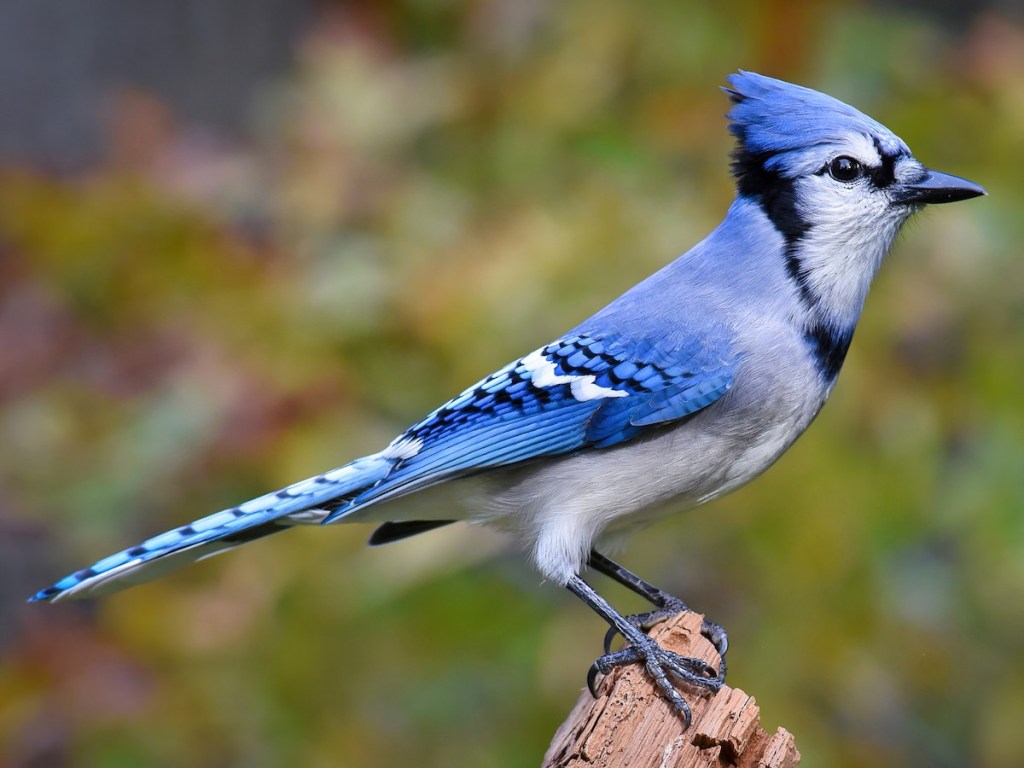
The Blue Jay : : This common, large songbird is familiar to many people, with its perky crest; blue, white, and black plumage; and noisy calls. Blue Jays are known for their intelligence and complex social systems with tight family bonds. Their fondness for acorns is credited with helping spread oak trees after the last glacial period.The name jay derives from the bird’s noisy, garrulous nature and has been applied to other birds of the same family, which are also mostly gregarious. Jays are also called jaybirds. Blue jays are noisy, bold, and aggressive birds. They are very territorial and will chase others from a feeder for an easier meal. Additionally, Blue jays may raid other birds’ nests, stealing eggs and chicks. According to animal communicator and psychic Nancy Mello, “A Blue Jay symbolizes your own intuition and your own spiritual energy. It can be used by your spirit guides to show you that you are on the right track in life.” : jays are symbols of communication, curiosity, and confidence. A sighting may be an omen urging you to speak up, be bold, and chase your goals. Seeing a blue jay may be a warning to second guess who you trust, as this rambunctious bird is also associated with trickery and deceit. : Blue Jays make a large variety of calls that carry long distances. Oak trees (acorns are a major staple of their diet) and bird feeders. Blue Jays are permanent residents across the eastern and central United States. Parts of the western population may be migratory. Blue Jays are also found in southern Canada. : Blue Jays are one of the smartest birds you’ll see visiting your feeder. They are members of the bird family corvid, which includes other jay species such as Steller’s Jays, along with ravens and crows. Scientific research has uncovered fascinating details about the human-like intelligence traits corvids possess. : Bluejays are much larger than bluebirds, commonly growing to 10-12 inches. Bluejays have large, strong beaks – which they use to feed on nuts, seeds and acorns. Bluejays are much louder and more aggressive than most birds. Bluejays don’t migrate and are commonly found in the eastern region of North America. : For Native Americans, a blue jay symbolizes good luck. These adaptable birds demonstrate their resilience and confidence, reminding those who spot them that they too have these traits. Studies show Blue Jays remember human faces, and if the birds take an interest in you, they might follow you around: Blue Jays make a large variety of calls. The most often heard is a loud jeer, Also makes clear whistled notes and gurgling sounds. Blue Jays frequently mimic hawks, especially Red-shouldered Hawks. : illegal to have just about any native wild bird as a pet anywhere in the United States, or to capture, kill, or harm them, and yes, that includes every species of jay. They’re protected under federal law (the Migratory Bird Treaty Act of 1918), regardless of how rare or plentiful they are. :

The Blue Jay : : By D H Lawrence (1885 – 1930)
The blue jay with a crest on his head
Comes round the cabin in the snow.
He runs in the snow like a bit of blue metal,
Turning his back on everything.

From the pine-tree that towers and hisses like a pillar of
shaggy cloud
Immense above the cabin
Comes a strident laugh as we approach, this little black dog
and I.
So halts the little black bitch on four spread paws in the snow
And looks up inquiringly into the pillar of cloud,
With a tinge of misgiving.
_Ca-a-a_! comes the scrape of ridicule out of the tree.

_What voice of the Lord is that, from the tree of smoke_?

Oh Bibbles, little black bitch in the snow,
With a pinch of snow in the groove of your silly snub nose.
What do you look at me for?
What do you look at me for, with such misgiving?

It’s the blue jay laughing at us.
It’s the blue jay jeering at us, Bibs.

Every day since the snow is here
The blue jay paces round the cabin, very busy, picking up
bits,
Turning his back on us all,
And bobbing his thick dark crest about the snow, as if
darkly saying:
_I ignore those folk who look out_.

You acid-blue metallic bird,
You thick bird with a strong crest
Who are you?
Whose boss are you, with all your bully way?
You copper-sulphate blue-bird!
— D H Lawrence : : : : From allpoetry.com : for educational purposes only.

“The Blue Jay”, A Bird Poem By D H Lawrence ( 1885 – 1930 ) is About The Blue Jay Bird watching, its descriptions, and the bully jobs involving intimidating,noisy , aggressive and rude behaviour. The Poet Speaker questions the domineering bossy face of The Blue Jay and lowers the blue characteristics calling , ” copper – sulphate blue -bird. : : : :

Notes for each of the lines Pending visit this post again later on to enjoy the appreciation of the poem V Jayaraj Pune India December 13, 2023 : : : :

The Blue Jay : Emily Dickinson : : Bird Poems : :

Daguerreotype taken at Mount Holyoke, December 1846 or early 1847; the only authenticated portrait of Dickinson after early childhood. : : Emily Dickinson ( December 10, 1830 , Amherst, Massachusetts, U S — May 15, 1886 (aged 55), Amherst, Massachusetts, U.S ) was an American poet. Little-known during her life, she has since been regarded as one of the most important figures in American poetry. Dickinson was born in Amherst, Massachusetts, into a prominent family with strong ties to its community. After studying at the Amherst Academy for seven years in her youth, she briefly attended the Mount Holyoke Female Seminary before returning to her family’s home in Amherst. Evidence suggests that Dickinson lived much of her life in isolation. Considered an eccentric by locals, she developed a penchant for white clothing and was known for her reluctance to greet guests or, later in life, even to leave her bedroom. Dickinson never married, and most of her friendships were based entirely upon correspondence. A prolific writer, her only publications during her lifetime were 10 of her nearly 1,800 poems, and one letter. Many of her poems deal with themes of death and immortality, two recurring topics in letters to her friends, and also explore aesthetics, society, nature, and spirituality.
The Blue Jay

The Blue Jay : : By Emily Dickinson
The Blue Jay
No brigadier throughout the year 1
So civic as the jay. 2
A neighbor and a warrior too, 3
With shrill felicity 4
Pursuing winds that censure us 5
A February day, 6
The brother of the universe 7
Was never blown away. 8
The snow and he are intimate; 9
I ‘ve often seen them play 10
When heaven looked upon us all 11
With such severity, 12
I felt apology were due 13
To an insulted sky, 14
Whose pompous frown was nutriment 15
To their temerity. 16
The pillow of this daring head 17
Is pungent evergreens; 18
His larder — terse and militant — 19
Unknown, refreshing things; 20
His character a tonic, 21
His future a dispute; 22
Unfair an immortality 23
That leaves this neighbor out. 24
— Emily Dickinson

“The Blue Jay”, A 24 lines , Bird Poem By Emily Dickinson is About description of The Blue Jay as A “daring Warrior” ( lines 17 To 24 ) : The Bird Watching / bonding with Emily Dickinson happened for 222 times referred mentions in Emily Dickinson’s Bird Poems / Nature Poems out of her nearly 1800 Poems published after her death as noted by some analysts ( Schumann and Hodgman ) who has enlisted 26 different birds , favourite among her references ( in poetic instances described by her during seasonal coming / going / migration of The Birds ( in the New England’s Massachusetts area of her living ) which included American Robins, Blackbirds, Sparrows , and Jays. : : : :

1 ) lines 1 To 5 : : “No brigadier throughout the year 1
So civic as the jay. 2
A neighbor and a warrior too, 3
With shrill felicity 4
Pursuing winds that censure us 5″ : : : : : : : : : : About The Blue Jay as the most “civic” brigadier in service throughout the year. Thus , Blue Jay is the most naturalized member civically, like the most familiar citizen of the community The Poet Speaker is proud of ; found as not only a “neighbour” seen always nearby or adjacent to her locale, but also as attending “warrior- like” 🪖 too ( lines 3 ) This is not only in ” felicity”( line 4 ), that is colourful appearance, manners and style which is always pleasurable but also “With shrill” ( line 4 ) that is, unpleasantly loud ‘shrill cry’ insistant of being heard. With the aforesaid presence Brigadier Blue Jay is “pursuing winds that censure us.” ( line 5 ) ; Meaning, The Brigadier Jay is “pursuing”following an order overtaking “winds”around the life of the civilians ( as explained in line 5 ) with which The Poet Speaker feels like being pinned down by approving or disapproving watch ( also by criticism and reprimand that will go in ‘nature’s record‘) : : The word “bluejay” is a phrase and not a single word. The word ‘jay’ is derived from the old French word ‘gai’ and the Latin word ‘gaius’, which means a harsh echo of a bird that is similar to a “censure” or ‘warning cry.’ : : “The blue jay” also represents confidence because it is believed that they are guardian angels who give them courage and engage them as protector guard and as messanger of guidance. : : : :

2 ) lines 6 To 16 : : ” A February day, 6
The brother of the universe 7
Was never blown away. 8
The snow and he are intimate; 9
I ‘ve often seen them play 10
When heaven looked upon us all 11
With such severity, 12
I felt apology were due 13
To an insulted sky, 14
Whose pompous frown was nutriment 15
To their temerity. 16 ” : : : :

About “A February day” ( line 6 ) , which is a beginning of Springtime of Summer season and ending with Snowy Winter. Emily describes The Bird’s Behaviour as she has watched , so also “The Blue Jay” in usual way in American poetry personifying and naming the subjects with affectionate relations of human family hereby as ” The brother of the universe 7″ ( line 7 ) as also described earlier as ” neighbour” ( ln line 3 ) and “Was never blown away” ( line 8 ) , Meaning, ‘ was never carried away’ : She has often seen this brother playing with his intimate ,”The snow “❄️🌨️ ( lines 9 & 10 ) in Winter. : : : :

She believes that”When the heaven instead of being considerate in thinking 🤔 of ( the rights , feelings and needs ) of living beings / had treated them “With such severity,”( line 12 ) of hard look ( shown off by snowy weather of Winter ( that was changed from the springtime started from February’s springtime 🌼 🌱 and friendly Autumn 🍂🍁 ) thereafter./ She felt like regretting with “apology ” which were due” ( line 13 ) ( on year- ending time of Winter scheduled from the “February day” onwards ) / “To an insulted sky.” ( line 14 ) who was dissed by the harsh echoing ( of unpleasant shrill !! of the daring Blue Jay ! ) : : The “Pompous frown”, that is, the displeasure displayed by the sky’s expression in disapproving look was “nutriment” ( line 15 ) / was ‘nutritive support’ / “To their temerity” ( line 16 ) / To the fearless daring that has become a characteristic of The Blue Jays” : : : :

3 ) lines 17 To 24 : : “The pillow of this daring head 17
Is pungent evergreens; 18
His larder — terse and militant — 19
Unknown, refreshing things; 20
His character a tonic, 21
His future a dispute; 22
Unfair an immortality 23
That leaves this neighbor out. 24 ” : : : :

About Descriptions of the daring Blue Jay, who is a confident Brigadier Of The Area : : ( A ) “The pillow(y)” support that the “daring head” is resting on / that is, his hard boldness or bold hardiness “Is pungent evergreens;” ( lines 17 & 18 ) / Is One that is always capable of wounding ; ( B ) “His larder” / — His pantry for wines and food is “terse”; / clean and neat ; and ( C ) he is “militant –” ( in fighting ); / he is disposed to warfare –taking to a war-ridden hardline; ( line 19 ) ( D ) He is for “Unknown, refreshing things;” ( line 20 ) / He is constantly revising new and afresh ( plans , targets and strategies ) – no matter in unexplored area ; ( E ) “His character a tonic” ( line 21 ) /He is reputably invigorating ; ( F ) “His future a dispute:” ( line 22 ) / He always approaches and holds out resistance ; ( G ) He is “Unfair ” ; ( line 23 ) / Unjust and inequitable — Not fair in methods and ready to take advantage using foul means ; ( H ) “An immortality”( line 23 ); “That leaves this neighbour out.” ( line 24 ) ; / He believes in perpetual life after death, that is, in quality and state of being immortal ;That he will let the neighbour fall to the ground; and will not prevent neighbour’s fall or his own going down to the lower levels. : : : :

” The Blue Jay”, A Bird Poem By Emily Dickinson is a representative example of the American Renaissance writers of the 19 Th Century who wrote their poetry in response to what they were observing in the surrounding Nature they lived with. Emily Dickinson was one among such canonical writers with her own unique style and imagist depictions. : : : :

“The Blue Jay”, A Bird Poem By Emily Dickinson, Information Appreciation and poemnce Analysis Presented by V Jayaraj Pune India December 12, 2023 : : : : : : : :

Design a site like this with WordPress.com
Get started