The Shepheardes Calender : October : Edmund Spenser : : October Poems : : Months Poems : :

October : Ægloga decima.

A R G V M E N T.


The Shepheardes Calender: October
Note on this Renascence Editions text:

This edition is copyright © The University of Oregon; it is distributed for scholarly and nonprofit purposes only. Risa S. Bea : From luminariun.org for Educational Purposes only.

October.
[Woodcut for October]

Ægloga decima.

A R G V M E N T.

IN Cuddie is set out the perfecte paterne of a Poete, whishe finding no maintenaunce of his state and studies, complayneth of the contempte of Poetrie, and the causes thereof: Specially hauing bene in all ages, and euen amongst the most barbarous alwayes of singular accounpt & honor, & being indeede so worthy and commendable an arte: or rather no arte, but a diuine gift and heauenly instinct not to bee gotten by laboure and learning, but adorned with both: and poured into the witte by a certaine [enthusiasmos], and celestiall inspiration, as the Author hereof els where at large discourseth, in his booke called the English Poete, which booke being lately come to my hands, I mynde also by Gods grace vpon further aduisement to publish.
Pierce. Cuddie.
CVddie, for shame hold vp thy heauye head,
And let vs cast with what delight to chace:
And weary thys long lingring Phoebus race.
Whilome thou wont the shepheards laddes to leade,
In rymes, in ridles, and in bydding base:
Now they in thee, and thou in sleepe art dead?


Cuddye.
Piers, I haue pyped erst so long with payne,
That all mine Oten reedes bene rent and wore:
And my poore Muse hath spent her spared store,
Yet little good hath got, and much lesse gayne.
Such pleasaunce makes the Grashopper so poore,
And ligge so layd, when Winter doth her straine.
The dapper ditties, that I wont deuise,
To feede youthes fancie, and the flocking fry,
Delighten much: what I the bett for thy?
They han the pleasure, I a sclender prise.
I beate the bush, the byrds to them doe flye:
What good thereof to Cuddie can arise?


Piers.
Cuddie, the prayse is better, then the price,
The glory eke much greater then the gayne:
O what an honour is it, to restraine
The lust of lawlesse youth with good aduice:
Or pricke them forth with pleasaunce of thy vaine,
Whereto thou list their trayned willes entice.
Soone as thou gynst to sette thy notes in frame,
O how the rurall routes to thee doe cleaue:
Seemeth thou dost their soule of sence bereaue,
All as the shepheard, that did fetch his dame
From Plutoes balefull bowre withouten leaue:
His musicks might the hellish hound did tame.


Cuddie.
So praysen babes the Peacoks spotted traine,
And wondren at bright Argus blazing eye:
But who rewards him ere the more for thy?
Or feedes him once the fuller by a graine?
Sike prayse is smoke, that sheddeth in the skye,
Sike words bene wynd, and wasten soone in vayne.


Piers.
Abandon then the base and viler clowne,
Lyft vp thy selfe out of the lowly dust:
And sing of bloody Mars, of wars, of giusts,
Turne thee to those, that weld the awful crowne.
To doubted Knights, whose woundlesse armour rusts,
And helmes vnbruzed wexen dayly browne.
There may thy Muse display her fluttryng wing,
And stretch her selfe at large from East to West:
Whither thou list in fayre Elisa rest,
Or if thee please in bigger notes to sing,
Advaunce the worthy whome she loueth best,
That first the white bear to the stake did bring.

And when the stubborne stroke of stronger stounds,
Has somewhat slackt the tenor of thy string:
Of loue and lustihead tho mayst thou sing,
And carrol lowde, and leade the Myllers rownde,
All were Elisa one of thilke same ring.
So mought our Cuddies name to Heauen sownde.


Cuddie.
Indeede the Romish Tityrus, I heare,
Through his Mecænas left his Oaten reede,
Whereon he earst had taught his flocks to feede,
And laboured lands to yield the timely eare,
And eft did sing of warres and deadly drede,
So as the heauens did quake his verse to here.
But ah Mecænas is yclad in claye,
And great Augustus long ygoe is dead:
And all the worthies liggen wrapt in leade,
That matter made for Poets on to play:
For euer, who in derring doe were dreade,
The loftie verse of hem was loued aye.

But after vertue gan for age to stoupe,
And mighty manhode brought a bedde of ease:
The vaunting Poets found nought worth a pease,
To put in preace emong the learned troupe.
Tho gan the streames of flowing wittes to cease,
And sonnebright honour pend in shamefull coupe.

And if that any buddes of Poesie,
Yet of the old stocke gan to shoote agayne:
Or it mens follies mote be forst to fayne,
And rolle with rest in rymes of rybaudrye.
Or as it sprong, it wither must agayne:
Tom Piper makes vs better melodie.


Piers.
O pierlesse Poesye, where is then thy place?
If nor in Princes pallace thou doe sitt:
(And yet is Princes pallace the most fitt)
Ne brest of baser birth doth thee embrace.
Then make thee winges of thine aspyring wit,
And, whence thou camst, flye backe to heauen apace.


Cuddie.
Ah Percy it is all to weake and wanne,
So high to sore, and make so large a flight:
Her peeced pyneons bene not so in plight,
For Colin fittes such famous flight to scanne:
He, were he not with loue so ill bedight,
Would mount as high, and sing as soote as Swanne.


Piers.
Ah fon, for loue does teach him climbe so hie,
And lyftes him vp out of the loathsome myre:
Such immortall mirrhor, as he doth admire,
Would rayse ones mynd aboue the starry skie.
And cause a caytiue corage to aspire,
For lofty loue doth loath a lowly eye.


Cuddie.
All otherwise the state of Poet stands,
For lordly loue is such a Tyranne fell:
That where he rules, all power he doth expell.
The vaunted verse a vacant head demaundes,
Ne wont with crabbed care the Muses dwell:
Vnwisely weaues, that takes two webbes in hand.
Who euer casts to compasse weightye prise,
And thinks to throwe out thondring words of threate:
Let powre in lauish cups and thriftie bitts of meate,
For Bacchus fruite is frend to Phoebus wise.
And when with Wine the braine begins to sweate,
The nombers flowe as fast as spring doth ryse.

Thou kenst not Percie howe the ryme should rage.
O if my temples were distaind with wine,
And girt in girlonds of wild Yuie twine,
How I could reare the Muse on stately stage,
And teache her tread aloft in buskin fine,
With queintBellona in her equipage.

But ah my corage cooles ere it be warme,
For thy, content vs in thys humble shade:
Where no such troublous tydes han vs assayde,
Here we our slender pipes may safely charme.


Piers.
And when my Gates shall han their bellies layd:
Cuddie shall haue a Kidde to store his farme.

Cuddies Embleme.
Agitante calescimus illo &c.

In The Shepheardes Calender: October, By Edmund Spenser, “through the character of the pastoral piper Cuddie, sings a theme that may be near to many of our hearts, the neglect of poetry and the poverty of poets, who “little good hath got, and much lesse gayne” on account of their art. Piers, his audience of one, tries to console him with the thoughts of the praise he will receive for his singing, but Cuddie points out that you can’t eat praise. In the coda, the poet is promised a gift of a kid from one of Piers’s goats, which is, I suppose, a happy ending.” ( Billy Mills : From theguardian.com , Fri 5 Oct 2012 08.51 EDT ) : : : :

October : Louise Glück : : October Poems : : Months Poems : :

Louise Glück : The author of numerous collections of poetry, Louise Glück is the recipient of the 2020 Nobel Prize in Literature, served as a Chancellor for the Academy of American Poets, and twas the Library of Congress’s poet laureate consultant in poetry.

October (section I)
Louise Glück – 1943-


Is it winter again, is it cold again,
didn’t Frank just slip on the ice,
didn’t he heal, weren’t the spring seeds planted

didn’t the night end,
didn’t the melting ice
flood the narrow gutters

wasn’t my body
rescued, wasn’t it safe

didn’t the scar form, invisible
above the injury

terror and cold,
didn’t they just end, wasn’t the back garden
harrowed and planted—

I remember how the earth felt, red and dense,
in stiff rows, weren’t the seeds planted,
didn’t vines climb the south wall

I can’t hear your voice
for the wind’s cries, whistling over the bare ground

I no longer care
what sound it makes

when was I silenced, when did it first seem
pointless to describe that sound

what it sounds like can’t change what it is—

didn’t the night end, wasn’t the earth
safe when it was planted

didn’t we plant the seeds,
weren’t we necessary to the earth,

the vines, were they harvested?
— Louise Glück : Section I from October by Louise Glück, published by Sarabande Books, Inc. 2004 : : From poets.org : For Educational Purposes only.

“October” by American Poet and Nobel Laureate Louise Glück muses on the natural change in October and the poet’s personal thoughts about autumn. It is a free verse poem written in the format of question and answer.Season brings a change in Nature. The poet thinks it to be the winter again. To verify the seasonal change she looks around her and starts to question herself. While describing the natural change, she also talks about the painful distinct events of her past. In autumn, nature return to life and new energy; same way she herself from the cold grips of winter. Like nature, she also feels the change in herself. The vines in the back garden especially catch the poet’s attention. The vine has climbed the “south wall” without anyone’s help. The poet implicitly compares herself with the vine. It seems that she has also grown strong like the vine without anyone’s help.

Notes for each of the lines Pending visit this post again later on to enjoy the appreciation of the poem V Jayaraj Pune India May 14 , 2023 : : : : : : : :

The Love Song of J Alfred Prufrock : T S Eliot : : October Poems : : Months Poems : :

T. S. Eliot in 1923, photographed by Lady Ottoline Morrell : :

The Love Song of J. Alfred Prufrock
BY T. S. ELIOT
S’io credesse che mia risposta fosse
A persona che mai tornasse al mondo,
Questa fiamma staria senza piu scosse.
Ma percioche giammai di questo fondo
Non torno vivo alcun, s’i’odo il vero,
Senza tema d’infamia ti rispondo.

Let us go then, you and I,
When the evening is spread out against the sky
Like a patient etherized upon a table;
Let us go, through certain half-deserted streets,
The muttering retreats
Of restless nights in one-night cheap hotels
And sawdust restaurants with oyster-shells:
Streets that follow like a tedious argument
Of insidious intent
To lead you to an overwhelming question …
Oh, do not ask, “What is it?”
Let us go and make our visit.

In the room the women come and go
Talking of Michelangelo.

The yellow fog that rubs its back upon the window-panes,
The yellow smoke that rubs its muzzle on the window-panes,
Licked its tongue into the corners of the evening,
Lingered upon the pools that stand in drains,
Let fall upon its back the soot that falls from chimneys,
Slipped by the terrace, made a sudden leap,
And seeing that it was a soft October night,
Curled once about the house, and fell asleep.

And indeed there will be time
For the yellow smoke that slides along the street,
Rubbing its back upon the window-panes;
There will be time, there will be time
To prepare a face to meet the faces that you meet;
There will be time to murder and create,
And time for all the works and days of hands
That lift and drop a question on your plate;
Time for you and time for me,
And time yet for a hundred indecisions,
And for a hundred visions and revisions,
Before the taking of a toast and tea.

In the room the women come and go
Talking of Michelangelo.

And indeed there will be time
To wonder, “Do I dare?” and, “Do I dare?”
Time to turn back and descend the stair,
With a bald spot in the middle of my hair —
(They will say: “How his hair is growing thin!”)
My morning coat, my collar mounting firmly to the chin,
My necktie rich and modest, but asserted by a simple pin —
(They will say: “But how his arms and legs are thin!”)
Do I dare
Disturb the universe?
In a minute there is time
For decisions and revisions which a minute will reverse.

For I have known them all already, known them all:
Have known the evenings, mornings, afternoons,
I have measured out my life with coffee spoons;
I know the voices dying with a dying fall
Beneath the music from a farther room.
So how should I presume?

And I have known the eyes already, known them all—
The eyes that fix you in a formulated phrase,
And when I am formulated, sprawling on a pin,
When I am pinned and wriggling on the wall,
Then how should I begin
To spit out all the butt-ends of my days and ways?
And how should I presume?

And I have known the arms already, known them all—
Arms that are braceleted and white and bare
(But in the lamplight, downed with light brown hair!)
Is it perfume from a dress
That makes me so digress?
Arms that lie along a table, or wrap about a shawl.
And should I then presume?
And how should I begin?

Shall I say, I have gone at dusk through narrow streets
And watched the smoke that rises from the pipes
Of lonely men in shirt-sleeves, leaning out of windows? …

I should have been a pair of ragged claws
Scuttling across the floors of silent seas.

And the afternoon, the evening, sleeps so peacefully!
Smoothed by long fingers,
Asleep … tired … or it malingers,
Stretched on the floor, here beside you and me.
Should I, after tea and cakes and ices,
Have the strength to force the moment to its crisis?
But though I have wept and fasted, wept and prayed,
Though I have seen my head (grown slightly bald) brought in upon a platter,
I am no prophet — and here’s no great matter;
I have seen the moment of my greatness flicker,
And I have seen the eternal Footman hold my coat, and snicker,
And in short, I was afraid.

And would it have been worth it, after all,
After the cups, the marmalade, the tea,
Among the porcelain, among some talk of you and me,
Would it have been worth while,
To have bitten off the matter with a smile,
To have squeezed the universe into a ball
To roll it towards some overwhelming question,
To say: “I am Lazarus, come from the dead,
Come back to tell you all, I shall tell you all”—
If one, settling a pillow by her head
Should say: “That is not what I meant at all;
That is not it, at all.”

And would it have been worth it, after all,
Would it have been worth while,
After the sunsets and the dooryards and the sprinkled streets,
After the novels, after the teacups, after the skirts that trail along the floor—
And this, and so much more?—
It is impossible to say just what I mean!
But as if a magic lantern threw the nerves in patterns on a screen:
Would it have been worth while
If one, settling a pillow or throwing off a shawl,
And turning toward the window, should say:
“That is not it at all,
That is not what I meant, at all.”

No! I am not Prince Hamlet, nor was meant to be;
Am an attendant lord, one that will do
To swell a progress, start a scene or two,
Advise the prince; no doubt, an easy tool,
Deferential, glad to be of use,
Politic, cautious, and meticulous;
Full of high sentence, but a bit obtuse;
At times, indeed, almost ridiculous—
Almost, at times, the Fool.

I grow old … I grow old …
I shall wear the bottoms of my trousers rolled.

Shall I part my hair behind? Do I dare to eat a peach?
I shall wear white flannel trousers, and walk upon the beach.
I have heard the mermaids singing, each to each.

I do not think that they will sing to me.

I have seen them riding seaward on the waves
Combing the white hair of the waves blown back
When the wind blows the water white and black.
We have lingered in the chambers of the sea
By sea-girls wreathed with seaweed red and brown
Till human voices wake us, and we drown.
— T S Eliot : : Source: Collected Poems 1909-1962 (1963) : : From poetryfoundation org : For Educational Purposes only.

“The Love Song of J Alfred Prufrock”, By T S Eliot is About the October poem par excellence, in addition to its outlandishly unusual, It is now seen as heralding a paradigmatic cultural shift from late 19th-century Romantic verse and Georgian lyrics to Modernism. : : Eliot only mentions the month once, but that one naming is enough to place the poem in the time of the year most suited to its tone of disjointed un – belonging. With its dark evening, yellow fog and overall air of the fall of the year and of man in equal measure. It is perhaps the best urban October poem.

The information and discussion HERE In BELOW are as from the Wikipedia’s Article, and poemanalysis.com & other summaries as available on the page of Google. : : : : : : : : : : : : : : : : : : : : : : : : : : : : : : : Eliot narrates the experience of Prufrock using the stream of consciousness technique developed by his fellow Modernist writers. The poem, described as a “drama of literary anguish”, is a dramatic interior monologue of an urban man, stricken with feelings of isolation and an incapability for decisive action that is said “to epitomize frustration and impotence of the modern individual” and “represent thwarted desires and modern disillusionment” : : Prufrock laments his physical and intellectual inertia, the lost opportunities in his life and lack of spiritual progress, and is haunted by reminders of unattained carnal love. With visceral feelings of weariness, regret, embarrassment, longing, emasculation, sexual frustration, a sense of decay, and an awareness of mortality, “Prufrock” has become one of the most recognized voices in modern literature. : : : :

Eliot called the poem a “love song” in reference to Rudyard Kipling’s poem “The Love Song of Har Dyal”, first published in Kipling’s collection Plain Tales from the Hills (1888) : : Eliot himself have pointed towards the autobiographical elements in the character of Prufrock. It was in his habit of rendering his name as “T. Stearns Eliot”, very similar in form to that of J. Alfred Prufrock. The title is actually the only place where Prufrock’s name is mentioned – in the poem he talks about himself in the first person. Eliot is clearly poking fun of himself with this title – as a young man he signed his name “T.


One of the poem’s central themes is social anxiety and how it affects Prufrock’s ability to interact with those around him. This line, like the others in the tea scene, is indicative of the discomfort Prufrock feels in social situations and his belief that he needs to put on a “face” or mask in order to fit in. : : Through his use of imagery and allusion in this poem, Eliot deals with themes that revolve around the fragile and self-conscious human condition, touching on the ideas of inadequacy, sexual anxiety and fear of mortality. : : In relation to time, this poem is a total trip. It ricochets back and forth between the past and the future, almost never settling on the present. One moment Prufrock is talking about all the things he’s going to do before having tea; the next moment he has had tea and still doesn’t have the energy to do anything. : : Prufrock’s character is marked by fears of old age. While he is aware that he should participate in social events, another personality tells him that the people will judge him based on his looks and age. : : Prufrock, is a middle aged modern tragic hero who is prone to irresolution and promises which are not kept. : :

It isn’t easy to decide what Prufrock is about; the fragmented poetic landscape of T.S. Eliot’s poetry makes it difficult to pin down one exact feeling within ‘The Love Song of J. Alfred Prufrock.’ It is considered one of the most visceral, emotional poems and remains relevant today, particularly with millennials who are more than a little bit used to these feelings. : : It is a variation of the dramatic monologue, which was very popular from around 1757 to 1922. Examples of dramatic monologue include Marcel Proust (In Search of Lost Time), Henry James (Portrait of a Lady), Robert Browning (Soliloquy of the Spanish Cloister), and the most infamous of all, James Joyce (Ulysses), for which the term ‘stream of consciousness’ writing was invented. ‘Prufrock’ is an early prototype of the ‘stream of consciousness’ writing, although it leans far more towards Browning than Joyce.

Anne Stevenson’s To My Daughter in a Red Coat : Anne Stevenson : : October Poems : : Months Poems : :

Headshot of Anne Stevenson ( 1933–2020 ) : : From poetry foundation. : : Born in Cambridge, England, Anne Stevenson moved between the United States and the United Kingdom numerous times during the first half of her life. While she considered herself an American, Stevenson qualified her status: “I belong to an America which no longer really exists.” Since 1962 she has lived mainly in the UK, including Cambridge, Scotland, Oxford, and, most then North Wales and Durham. : : Intersections and borders were common emblems in Stevenson’s work, Her poetry, according to poet George Szirtes, is “humane, intelligent and sane, composed of both natural and rational elements, and amply furnished with patches of wit and fury.” : In 2007 Stevenson was awarded the Lannan Lifetime Achievement Award for Poetry and the Poetry Foundation’s Neglected Masters Award. She has also received the Northern Rock Foundation Writer’s Award. Author of more than a dozen books of poetry and several books of prose (which include criticism, radio plays, essays, and biographies), Stevenson also edited two anthologies. Her biography of Sylvia Plath, Bitter Fame (1989), garnered critical and popular controversy for its sympathetic portrayal of Ted Hughes. Stevenson was a peer of Plath and Hughes, though as a new wife and mother. : : Initially a student of music, Stevenson earned her undergraduate and master’s degrees at the University of Michigan, where she studied with Donald Hall, who encouraged her to pursue poetry. Resistant to connections with any particular school of contemporary poetry, Stevenson honed her art apart from many of her peers but within the larger conversation of the form. As she says, “If I couldn’t overhear the rhythms and sounds established by the long, varied tradition of English poetry—say by Donne, Blake, Keats, Dickinson, Whitman, Frost—I would not be able to hear what I myself have to say. Poems that arise only from a shallow layer of adulterated, contemporary language are rootless. They taste to me like the mass-produced vegetables grown in chemicals for supermarkets.”: : In a 2007 essay, Stevenson wrote, “Although I rarely write in set forms now, poems still come to me as tunes in the head. Words fall into rhythms before they make sense. It often happens that I discover what a poem is about through a process of listening to what its rhythms are telling me.” : : “Ever since I can remember, I have been aware of living at what E.M. Forster called ‘a slight angle’ to the universe,” she says. “I have always had to create my own angular environment or perish. But that’s the whole point about borders. It’s the best place from which to be able to see both sides.”

Stevenson died in 2020.
retired elderly women in group of three African American and Caucasian female talking and sitting on bench in park in autumnal October afternoon.
IN THE LIGHT A ND DARK SHADES OF TREES little daughter in Red Coat skiping the dried fallen leaves under her foot and young adult mother in grey coat speaking and walking on in afternoon through sideways / passageways across tree alley at city park in beautiful colorful autumn
Pretty girl in red coat in the autumn park on the background of yellow leaves, green lawn is dancing with maple leaves ; having fun in autumn park, among fallen leaves.
Young beautiful ballerina in fair coat and pointe shoes sit on the bench, rest outdoors in autumn park.
Maple leaves in Autumn

To My Daughter in a Red Coat
BY ANNE STEVENSON ( Cambridge, U K )
Late October. It is afternoon.
My daughter and I walk through the leaf-strewn
Corridors of the park
In the light and the dark
Of the elms’ thin arches.

Around us brown leaves fall and spread.
Small winds stir the minor dead.
Dust powders the air.
Those shrivelled women stare.
At us from their cold benches.

Child, your mittens tug your sleeves.
They lick your drumming feet, the leaves.
You come so fast, so fast.
You violate the past,
My daughter, as your coat dances.
— Anne Stevenson. : From Poems 1955-2005. Bloodaxe Books Ltd. bloodaxebooks.com
Source: Poems 1955-2005 (Bloodaxe Books, 2005) : From poetry foundation.org. For Educational Purposes only.

“To My Daughter In A Red Coat”3 Stanzas nd 15 lines short October Poem By Anne Stevenson is About death, about time and the passing of time and growing older in age . The occasion in the poem is late October visits the city arriving in a public park, and although the poem doesn’t actually mention it, you can almost hear the dry crisp leaves under walking foot as the child with a gait in which steps and hop alternates and enjoys her warm red comfy protection of a small space on walking . The motherhood in this poem as a collection of moments yet not Its main theme. The vivid images of Autumn convey the transitory nature of motherhood and the speaker shows that she is aware of how short and quik this timespan appears. The images of motherhood is as natural as seasons, grows and changes, and approaches death too.

Stanza 1 : : “Late October. It is afternoon. 1
My daughter and I walk through the leaf-strewn 2
Corridors of the park 3
In the light and the dark 4
Of the elms’ thin arches.” 5 : : lines 1 To 5 : : ::

About a picture of the afternoon park in late October which becomes really colder with temperature drop down to about 13* C / 50* F. ( Night usually be of 10* C / 40* F ) in south eastern cities like London of England ( Northern areas is still more colder , and rural ones are close to winter ) the awareness to which requires wearing a Coat that attracts a daughter wearing “Red Coat” mentioned in the Title of the Poem. Hence the tender Autumn air of afternoon in late October makes ideal time to stroll through corridors of park. Here The Speaker Mother says, “My daughter and I walk through the leaf strewn corridors of the park , that is, the corridors are covered with the scattered leaves dispersed all over the ( “leaf-strewn” ) passageways “in the light and the dark Of the elm’s thin arches.” ( lines 4 & 5 ) : : : :
Stanza 2 : : “Around us brown leaves fall and spread. 6
Small winds stir the minor dead. 7
Dust powders the air. 8
Those shrivelled women stare. 9
At us from their cold benches.”10 : : lines 6 To 10 : : : :

About an unconcerned and unconnected observation by the Speaker Mother who says “Around us brown leaves fall and spread.” ( line 6 ) The autumn’s leaves are russet brown / chromatic , with a reddish tinge at their best ; falling but looks bright and striking. Yet The Speaker seems detached of the scenes and has not reported much. She says ,”Small winds stir the minor dead.” ( line 7 ) : the stirring wind ( which causes falling of minor leaf ) does not touch her emotionally. Besides the words like, “Small” and “minor” sounds as ‘moderate’ and ‘insignificant’ respectively. In calling minor ( leaf ) “dead” shows her lesser seriousness. : : She reports further finds in ,”Dust powders the air.” ( line 8 ) which have no apparent effects. And an eye – catching ,” Those shrivelled women stare. 9
At us from their cold benches.”10 : ( lines 9 & 10 ) : Aged and ill looking old women sitting on their “cold benches”are the onlookers with wide open eyes staring at the duo as noticed by The Speaker Mother. With this, we the readers can immediately find the three feminine figures in the midst of autumnal afternoon in the park. : The Mother watches her daughter, and notices the “shrivelled” aged Women. Her daughter is her childhood and youth time she will attain in future. She herself in the middle age will attain the Shrivelled state of old women in her body in ageing. In the backdrop of Autumnal late October and fast approaching Winter / Fall , the incongruity in appearances From Childhood through Youth / Middle Age To Oldness is not only disagreeable and inappropriate but also ironic and sad. The Ages have been pictured in the manner of wordage/ wordings that appear in the natural settings of changing Seasons. : : The “light and dark” of the “elm’s thin arches” ( in lines 4 & 5 in Stanza 1 ) pictures a revealing contrast between the quickly passing childhood and youth of her daughter and the age of the “shrivelled women” on the “cold benches.”( referred in lines 9 & 10 in Stanza 2 ) The Motherhood can bring at once together all the seasons of life which is an all time reminder that every phase of life is fast spanning , just like the fast changing 3 or 4 Seasons in the natural world. : : : :

Stanza 3 : : “Child, your mittens tug your sleeves. 11
They lick your drumming feet, the leaves. 12
You come so fast, so fast. 13
You violate the past, 14
My daughter, as your coat dances.” 15 : : lines 11 To 15 : : : :

About daughter’s “Red Coat” that “dances.” ( Last line 15 ), Although the Time controls everything in Natural World ,the beauty and ingenuousness ( naturalness ) are feting in one’s life time. This is realised by Mother when she notices and tells her Child, ” your mittens tug your sleeves. 11
They lick your drumming feet, the leaves. 12
You come so fast, so fast. 13
You violate the past, 14 : : Meaning , your mittens pull ( “tug” ) your sleeves. ( line 11 ) They ‘lap up’ / ( “lick”) your beating ( “drumming” ) feet , the brown and dead leaves as a child does not kick up but skips these leaves of autumn.( line 12 ) : Time is an admonisher giving a warning, by constantly ” drumming.” Sound : : The two lines, “You come so fast.” ( line 13 ) & “You violate the past.”( line 14 ) are the comparison to transience of impermanence in growing from childhood through youth and thus onward ageing till becoming Older. All these phases of life span out so fast and finally, there is an inevitability of ending and dying. : : : :

The poem seems to be more about death, about time and the passing of time, and not so much about motherhood or a daughter. : : There is a feeling that death is nearby. Autumn gives way to Winter, A little Child will grow old, as the Speaker Mother and then as the Older Shrivelled Women , looker – on. : : : :

With the last line 15 the Poem ends on a resonant literary note of observation as The Speaker Mother says, “My daughter, as your coat dances.” 15 : This is how A bright “Red” colour of life – giving vibrancy is expected to be feting, in its display on the restorative Coat , dances. : : : :

“To My Daughter In A Red Coat” , An October Poem by Anne Stevenson Information Appreciation and poem Analysis Presented by V Jayaraj Pune India May 12 , 2023 : : : : : : : :

The Wild Swans at Coole : William Butler Yeats : : October Poems : : Months Poems : :

The Wild Swans at Coole
BY WILLIAM BUTLER YEATS
The trees are in their autumn beauty,
The woodland paths are dry,
Under the October twilight the water
Mirrors a still sky;
Upon the brimming water among the stones
Are nine-and-fifty swans.

The nineteenth autumn has come upon me
Since I first made my count;
I saw, before I had well finished,
All suddenly mount
And scatter wheeling in great broken rings
Upon their clamorous wings.

I have looked upon those brilliant creatures,
And now my heart is sore.
All’s changed since I, hearing at twilight,
The first time on this shore,
The bell-beat of their wings above my head,
Trod with a lighter tread.

Unwearied still, lover by lover,
They paddle in the cold
Companionable streams or climb the air;
Their hearts have not grown old;
Passion or conquest, wander where they will,
Attend upon them still.

But now they drift on the still water,
Mysterious, beautiful;
Among what rushes will they build,
By what lake’s edge or pool
Delight men’s eyes when I awake some day
To find they have flown away?
— W B Yeats
Source: The Collected Poems of W. B. Yeats (1989) : From poetry foundation.org For Educational Purposes only.

“The Wild Swans at Coole” By an Irish Poet William Butler Yeats ( 1865 – 1939 ) is About “nine and fifty Swans”taking flight from the lake at Coole Park.
If the sunrise grows later in October, the sunset tallies earlier, and it was in an early Galway October twilight that WB Yeats sees the aforesaid Swans settled in the shade of the golden autumn leaves. : : Yeats explores in the Poem the frailty of human life through his speaker who becomes keenly aware of his own ageing as he watches the same swans that he has watched year after year.
In that book, it is mentioned that the swans in “The Wild Swan at Coole” symbolize the perfect intensity of youth in their changeless pattern, which preserves youth in the ruse of eternity. The last two stanzas describe the swans, they are “unwearied”, “mysterious” and “beautiful”. It’s all about self-sacrifice. It’s a fairy tale with a moral about how we act towards others, One has to be careful on one’s guard. This lyric poem Written between 1916 and early 1917, was first published in the June 1917 issue of the Little Review, and became the title poem in the Yeats’s 1917 and 1919 collections . : : Nature and the Swans symbolize the past and the passing of time in the Poet’s life. In looking at the swans on the lake, the speaker sees the past years of his life, his memories, his past loves, and even his death.. : :

Notes for each of the 5 Stanzas Pending visit this post again later on to enjoy the appreciation of the poem V Jayaraj Pune India May 11, 2023 : : : : : : : :

A Letter in October : Ted Kooser : October Poems : : Months Poems : :

Ted Kooser ( b. 1939 )http://www.tedkooser.net: Ted Kooser is known for his poetry and essays that celebrate the quotidian and capture a vanishing way of life. Kooser’s poems reflect his abiding interest in the past while offering clear-eyed appraisal of its hardships. While Kooser’s work often treats themes like love, family and the passage of time, Leithauser noted that “Kooser’s poetry is rare for its sense of being so firmly and enduringly rooted in one locale.” His collections of poetry include The well-observed truths of Kooser’s next book, Weather Central (1994) , essay collections include Local Wonders: Seasons in the Bohemian Alps (2002) and Lights on a Ground of Darkness (2009). Delights and Shadows (2004) went on to win the Pulitzer Prize for Poetry , Flying at Night: Poems 1965-1985 (2005), Splitting an Order (2016), and Kindest Regards: New and Selected Poems (2018). In partnership with the Poetry Foundation, Kooser founded “American Life in Poetry,” which offers a free weekly poem to newspapers across the United States. Kooser’s The Poetry Home Repair Manual: Practical Advice for Beginning Poets (2005) and Writing Brave and Free (2006), offer help to aspiring poets and writers, both in the guise of practical writing tips and essays on poetry. : : Kooser has said, “I write for other people with the hope that I can help them to see the wonderful things within their everyday experiences. In short, I want to show people how interesting the ordinary world can be if you pay attention.” : : Kooser’s fame—including a Pulitzer Prize for Poetry—came late in his career.: : Kooser teaches poetry and nonfiction at the University of Nebraska, and continues to write. “I waste very little time anymore,” : his many honors and awards include the Nebraska Book Award, a Pushcart Prize, the Stanley Kunitz Prize, a Merit Award from the Nebraska Arts Council and two fellowships from the National Endowment for the Arts.

A Letter in October
BY TED KOOSER
Dawn comes later and later now,
and I, who only a month ago
could sit with coffee every morning
watching the light walk down the hill
to the edge of the pond and place
a doe there, shyly drinking,

then see the light step out upon
the water, sowing reflections
to either side—a garden
of trees that grew as if by magic—
now see no more than my face,
mirrored by darkness, pale and odd,

startled by time. While I slept,
night in its thick winter jacket
bridled the doe with a twist
of wet leaves and led her away,
then brought its black horse with harness
that creaked like a cricket, and turned

the water garden under. I woke,
and at the waiting window found
the curtains open to my open face;
beyond me, darkness. And I,
who only wished to keep looking out,
must now keep looking in.
— Ted Kooser, “A Letter in October” from Weather Central. University of Pittsburgh Press, Pittsburgh : http://www.upress.pitt.edu. : : From poetry foundation.org : For Educational Purposes only.

“A Letter In October”American autumn Poem ( of New England side ) By Ted Kooser is About monthly feature at more northerly latitudes that view the sudden onset of very short days and increasingly late sunrises fascinating with this gradual foreseeable suddenness. : : : :

Notes for each of the 4 Stanzas Pending visit this post again later on to enjoy the appreciation of the poem V Jayaraj Pune India May 10, 2023 : : : : : : : :

Come October, It’s the lake not border : Lyn Hejinian : : October Poems : : Months Poems : :

Lyn Hejinian ( Lyn Hejinian was born on May 17, 1941, in San Francisco, California, : B.A. from Harvard University in 1963 : ) Poet, essayist, translator, and publisher Lyn Hejinian is a founding figure of the Language poetry movement of the 1970s and an influential force in the world of experimental and avant-garde poetics. Her poetry is characterized by an unusual lyricism and descriptive engagement with the everyday. She is the author of many poetry collections, including My Life and My Life in the Nineties (Wesleyan University Press, 2013), The Book of a Thousand Eyes (Omnidawn, 2012), The Fatalist (Omnidawn, 2003), and her landmark work My Life (Burning Deck, 1980). A native Californian, she teaches in the English Department at the University of California, Berkeley. : : Her long “novels” My Life (2002) and Oxata (1991) unabashedly draw on her own experiences and are in some ways recognizably autobiographical. : : In 2007, she was elected a Chancellor of the Academy of American Poets. Her honors or awards include the Guggenheim Fellowship, a Writing Fellowship from the California Arts Council, a grant from the Poetry Fund, and a Translation Fellowship from the National Endowment of the Arts for Russian language translations. : : She was editor of Tuumba Press From 1976 to 1984, and she coedited Poetics Journal (with Barrett Watten) from 1981 to 1999. : : Hejinian is best known for her book-length prose poem, My Life (1980, 1987), in which “Yet we insist that life is fully of happy chance” appears.

from The Fatalist: “Come October, it’s the lake not the border”
BY LYN HEJINIAN
Come October, it’s the lake not the border
that has been redrawn. Thinking
about the event afterwards, I realize how remarkably well-prepared
the girls are. There don’t seem to be any slouches
among them. Please tell them I say hello and that we’ll need 14
for the green salad and 14 for the apple tarts between
with some rapid washing in clear water I remember as play
and planning in childhood, preparing until the very last moment
for a gripping narrative that was itself perpetually given over
to improvisations and asymmetrical collaborations that could run
for days. That makes another 14. It was ”the word“ or “the world” in 1981
when we undertook to talk about the phrase
“once in a while” once in a while
noting the vagueness then named “a while” and how “once” the phrase
recurs and therefore means more than once
the “while” is defined. We too are in “a while”
and when “once” next occurs, if the basic design suits
you, we will need a bit of modestly biographical contextualization
for November. I’m going to put some thought to something
implausibly contemporary which perhaps isn’t wise
since between then and now no new coincidences have been noted
just one large color photograph of bespangled cowgirls
herding heavy bulls up the avenue that opens this week carefully
wearing baby blue boots to take out the garbage
but it never rained. At the end of the month, Halloween should be clear.

— Lyn Hejinian, “Come October, it’s the lake not the border …” from The Fatalist. Copyright © 2003 by Lyn Hejinian. Omnidawn Publishing, ( 2003 ) http://www.omnidawn.com.
From poetryfoundation.org. For Educational Purposes only.

“Come October”, By Lyn Hejinian is About American Autumn. “It’s the lake not the border, an extract from the long poem The Fatalist.” Hejinian’s autumn is less lyrical, underneath the surface many of the concerns being voiced are remarkably.

Notes for each of the lines Pending visit this post again later on to enjoy the appreciation of the poem V Jayaraj Pune India May 9, 2023 : : : : : : : :

October : Edward Thomas : : October Poems : : Months Poems : :

Philip Edward Thomas , From Welsh ( 3 March 1878
Lambeth, Surrey, England — 9 April 1917 (aged 39) Areas , Pas-de-Calais, France. : : Journalist essayist ,poet : Nature poetry, war poetry : Spouse – Helen Noble (m. 1899) : A British writer of poetry and prose. He is sometimes considered a war poet, although few of his poems deal directly with his war experiences. He only started writing poetry at the age of 36, but by that time he had already been a prolific critic, biographer, nature writer and travel writer for two decades. In 1915, he enlisted in the British Army to fight in the First World War and was killed in action during the Battle of Arras in 1917, soon after he arrived in France. On 11 November 1985, Thomas was among 16 Great War poets commemorated on a slate stone unveiled in Westminster Abbey’s Poet’s Corner.[39] The inscription, written by fellow poet Wilfred Owen, reads: “My subject is War, and the pity of War. The Poetry is in the pity.” : A study centre dedicated to Thomas is located at Petersfield Museum in Hampshire. : At least 19 of his poems were set to music by the Gloucester composer Ivor Gurney. : Thomas was described by British Poet Laureate Ted Hughes as “the father of us all.”
Clump of Scots pine trees on May Hill – Robert Frost and Thomas walked here and it was here that Thomas began writing his poem “Words”. “Crowding the solitude
Of the loops over the downs,
Hushing the roar of towns
And their brief multitude” — Edward Thomas:: In Memoriam

“The flowers left thick at nightfall in the wood
This Eastertide call into mind the men,
Now far from home, who, with their sweethearts, should
Have gathered them and will do never again.


– 6. IV. 15. 1915
“Gossamers” : Cobweb filaments: Spider’s web with dew drops at sunrise, Sweden – stock photo
Vastmanland, Sweden. Most spiders spin webs using spider silk, a protein polymer which is very strong and elastic. Web building can be extremely complex, with the inclusion of several types of strand including sticky, and scaffolding ( staging support ) threads.

October Poem : : by Edward Thomas ( 1878-1917 ) : : London, U K : : : : : : :

The green elm with the one great bough of gold
Lets leaves into the grass slip, one by one, —
The short hill grass, the mushrooms small milk-white,
Harebell and scabious and tormentil,
That blackberry and gorse, in dew and sun,
Bow down to; and the wind travels too light
To shake the fallen birch leaves from the fern;
The gossamers wander at their own will.
At heavier steps than birds’ the squirrels scold.
The rich scene has grown fresh again and new
As Spring and to the touch is not more cool
Than it is warm to the gaze; and now I might
As happy be as earth is beautiful,
Were I some other or with earth could turn
In alternation of violet and rose,
Harebell and snowdrop, at their season due,
And gorse that has no time not to be gay.
But if this be not happiness, — who knows?
Some day I shall think this a happy day,
And this mood by the name of melancholy
Shall no more blackened and obscured be.

— Edward Thomas. : : From poetryhunter.com : For Educational Purposes only.

“October” A Two Stanzas , 21 lines Autumn Poem By Edward Thomas is About his mindful and intense experiencing of keeping with the Seasons , its Seasonal Immixing ( uniting elements ) and interchange, and about focusing on to man’s alienation / his isolation and depression ( which he called “melancholy”) . Thomas wrote this Poem in Mid October of the year , 1915. : : : : A favorite : 20th century Welsh poet Edward Thomas who is less well-known in the U.S. than he is in the U.K., perhaps because he’s sometimes classed as a “Georgian poet”, loosely given to early 20th century British poets who weren’t Modernists. : : : :

1 ST Stanza : : ” The green elm with the one great bough of gold 1
Lets leaves into the grass slip, one by one, –2
The short hill grass, the mushrooms small milk-white, 3
Harebell and scabious and tormentil, 4
That blackberry and gorse, in dew and sun,5
Bow down to; and the wind travels too light6
To shake the fallen birch leaves from the fern; 7
The gossamers wander at their own will. 8
At heavier steps than birds’ the squirrels scold.” 9: : lines 1 To 9 : : : :

About Autumn as observed by The Poet. The Poet loves to wander through the forest admiring the beauty and the wonderful life in Flora setting off the colours and Fauna, vivid activities in autumnal October. He says from his straight observation “The gossamers wander at their own will.” ( line 8 ) The list includes ” The green elm” described as ” with the one great bough of gold ( line 1 ) ” Lets leaves in to the grass slip , one by one.” ( line 2 ) : Here ” great bough” is any larger branch of the elm tree.

Single elm tree in autumn colours, Lombardy, Italy.
Young green new elm leaves double serrated on a branch against a blue sky.

“The small milk – white mashrooms” in “The short hill grass” ( line 3 ) :

The flowers he mentions in October – “scabious, harebell and tormentil – ” : :

With a succession of summer flowers – sometimes into autumn – scabious of genus scabiousa, are great additions to borders. They can be perennials, surviving for several years, or annual or biennials, dying after flowering. Good for cutting, the flowers are attractive to bees and butterflies
“Harebells” ( Campanula rotundifolia ) : This delicate blue wild flower is called the Scottish bluebell but can be found around most of the UK in summer. Found from July to October. Harebells are evergreen perennials and the clusters of long stalked, heart shaped, toothed leaves remain green in winter. Seedlings develop small round leaves during the colder months. Between April and June flower stems develop, growing to a height of 15-40cm.
Beautiful small yellow flowers of blooming Common Tormentil (Potenyilla erecta) growing on the meadow. :
deep-yellow anthers are flattened discs with shallow groove along the centre. The green ovary in the centre is 4-lobed. It has what might be 4(?) yellow styles spreading out from the centre of the ovary. frequent find in most upland areas of Britain and Ireland. Tormentil has tiny flowers, usually 1cm to 1.5cm across and the colour of buttercups. This wildflower is easily distinguished from a buttercup because, although its leaves are similar to those of buttercups, the flowers of Tormentil have just four petals, unlike most other members of the botanical family Rosaceae, which have five. ( Butter cups are members of the family Ranunculaceae, and they have five petals on each flower )

“That blackberry and gorse, in dew and sun,5
Bow down to;” ( in lines 5 & 6 ) :

Blackberry leaf in Dew( s)
Blackberry bush in Sun
( western ) gorse in Dew(s) / water droplets

” and the wind travels too light 6
To shake the fallen birch leaves from the fern; ” 7

Dry yellow fallen birch leaves in muddy puddle on the ground. Rainy autumn/Fall background. Mud & Damaged dirty road with water. Footpath in Mess.

“The gossamers wander at their own will. 8
At heavier steps than birds’ the squirrels scold.” 9 : “Gossamers” , here in line 8 means ‘cobweb’ , the web filament spun by Spider which are reported as “wandering at their own will.” : Suggestive of The Poet’s own worldviews in fine wandering on the forest walk -ways in all directions. : : By description of the “Squirrels” having ” heavier steps than bird’s , “scold.” , The Poet pictures this animals angrily take to tasks at the every turn of the walk – ways in the forest walk ways. : : : :

The Poet started to write his Poetry again at the new camp he is posted to at Hare Hall, Romford ( A large town in east London and the administrative centre ) he has set aside any inclination to name them directly . ( Edward Thomas , a friend of American Poet Robert Frost, was born in Lambeth, London in 1878; he died on April 9, 1917, killed in the war by a shell blast in the Battle of Arras. France ) Yet he gives straight description of what he sees during his joyful walking through Epping forest. sudden patch of bright green grass or a tree with blazing autumnal leaves ,many small trees of birch, elms and colourful flowers seen in October; for some, end of the flowering season , for others , continuous as they flourish throughout the year. On an autumn day gossamers – cobwebs floating in the air – wander and squirrels scutter along rushing hastily in their silly up and down. At different moments of the day the forest can interchange outlook, mood and that is the season – ability drawn in picturesque way. : : : :

Stanza 2 : : ” The rich scene has grown fresh again and new 10
As Spring and to the touch is not more cool 11
Than it is warm to the gaze; and now I might 12
As happy be as earth is beautiful, 13
Were I some other or with earth could turn 14
In alternation of violet and rose, 15
Harebell and snowdrop, at their season due, 16
And gorse that has no time not to be gay. 17
But if this be not happiness, — who knows? 18
Some day I shall think this a happy day, 19
And this mood by the name of melancholy 20
Shall no more blackened and obscured be.” 21 : : 12 lines 10 To 21 : : : :

About melancholic thoughts in depressive sadness in Existential isolation and dislocation experienced by the Poet despite the splendid beauty that surrounds him. : : To the poet, the two seasons of Autumn & Spring have a similar effect on him. He says in lines 10 To 13, ” The rich scene has grown fresh again and new 10
As Spring and to the touch is not more cool 11
Than it is warm to the gaze; and now I might 12
As happy be as earth is beautiful,” 13 : : lines 10 To 13 : : ” Autumn” seems to him as viable vital and life sustaining alike ” Spring “: He wants to wake up with renewed interest in something creative , suggestive of ( Poetry Writing ! He confirmed this in his correspondences with his friends ) Suddenly , he finds that “Coldness” of Wintertime is no more touching his sensitivity. And it is “warm to the gaze” in his long fixed look , perhaps over the years, from season to season , from One joyful October To The Next October of Happiness. And he says, ” As happy be as earth is beautiful,” ( line 13 ) : : : :

Yet he says that he could enjoy it now only if he were some other person , as in line 14 , “Were I some other or with earth could turn” 14 : He is in such a melancholic state that it is difficult for him at this time of October at the peak of his patriotism ( he has chosen fighting/ camping at the battlefield of World War ! In the year , 2015 ) He could have preferred to enjoy writing poetry. He is hopeful that some day like spring in the future time of autumnal October such interchangeable scene will occur and then it will be again a joyful day for him with no longer saddened feelings by depressive thoughts of melancholy that are hindering joyousness of present-day October. : : : :

He wishes if he were some other ( joyful person ) in line 14 , “or with earth could turn 14
In alternation of violet and rose, 15
Harebell and snowdrop, at their season due, 16
And gorse that has no time not to be gay. ” 17 : : Here, by the word , “alternation” , The Poet wishes some successive change from one state to another and back again , that is interchangeability in the elements of the changing season(s) : so that “earth could turn” ( line 14 ) : He names the Flowers in alternations : which are “Rose” 🌹 and “Violet” ( line 15 ) and “Harbell ” and ” “snowdrop” ( line 16 ) at their due season spreading over the span of distance , space and time throughout all the seasons of Spring , Summer , Autumn , Rain and Winter . Thus Flowering Colours and Greenery traverse a broad range of landscapes and meet with activities in Nature. And “gorse that has no time not to be gay.” ( line 17 ) promote a bright , pleasant and cheery feelings. : : : :

certainty: the rose will accompany us for a long, long time! La Rose in October :The Greeks, Romans and Egyptians discovered the beauty of the romantic rose many thousands of years ago; we had to wait until the 16th century. : : Roses represents love and trust, and the thorns indicate that love is not always a bed of roses. Red roses in particular are inextricably linked to love : : : : : : : : : : : : : : : : Symbolist meaning of the Roses with its colour Red: love and respect.
White: true love, purity, dignity, chastity.
Pink: happiness, gratitude, virtue.
Orange: longing, appreciation, sympathy.
Yellow: intimate friendship, solidarity. : : A red rose combined with a white rose expresses the desire to always be together. Many roses in a bouquet means gratitude, and one single rose in a big mixed bouquet means: “you are my one and only love!” Let the roses do the talking!
Close shot of “Violet” flowers of Symphyotrichum dumosum in October
“Harebell” wildflowers Campanula rotundifolia Bellflower family Bluebells. Beautyful autumnal flower on bright autumn green yellow orange blurred background.
“Snowdrop” Flowers in October : Chestnuts with leaf : Illustration

The contrasting of physical beauty with the inner spiritual upheaval of man helps the Poem”October” in expressing a great deal in just few Poetic words, finally of ‘HOPE’ when The Poet hopes to return to joyful Days Of Autumnal October , although he had to forsake or leave behind the feelings of emotional intensity in his depressive thoughts of “melancholy” He had to leave in the lurch ( difficult vulnerable position ) proudly maintaining his self esteem when he could enjoy the October splendidly spread before him. : ” But if this be not happiness, — who knows? 18
Some day I shall think this a happy day, 19
And this mood by the name of melancholy 20
Shall no more blackened and obscured be.” 21 : : : :

“October”By Edward Thomas Information Appreciation and poem Analysis Presented by V Jayaraj Pune India May 8 , 2023 : : : : : : ::

October : Robert Frost: : October Poems Months : : Poems : :

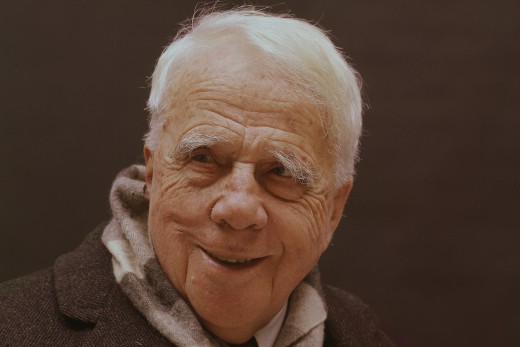
Robert Frost ( March 26, 1874 , At San Francisco CA , U. S. – – Robert Frost is considered one of the quintessential American poets celebrated for his ability to illustrate the common man as they attempt to traverse through the various philosophical aspects of life.

Born in 1874, Frost spent the first 11 years of his life in San Francisco. Upon his father’s death, he and his mother and sister relocated to Massachusetts, where he became interested in poetry. As such, a majority of Frost’s poetry is set in various New England settings. While enrolled at Dartmouth College and later Harvard University, Frost never formally earned a college degree.

At 21, Frost married his high school sweetheart, Elinor White, who was inspirational to him and his poetry. The two eventually moved to England, where Frost befriended poet Ezra Pound. As an established poet, Pound helped promote and publish Frosts’ work. Upon returning to American in 1915, he had already published two full-length poetry collections, and by the 1920s, he became established as one of the great American poets.

By the time of his death in 1963, Frost earned four Pulitzer Prizes, served as a consultant for the Library of Congress, was awarded the Congressional Gold Medal, and delivered a poem at President John F. Kennedy’s inauguration. According to President Kennedy, Frost “saw poetry as the means of saving power from itself. When power leads man towards arrogance, poetry reminds him of his limitations. When power narrows the areas of man’s concern, poetry reminds him of the richness and diversity of his existence. When power corrupts, poetry cleanses.”
Robert Frost Commemorative Gold Medal

October
BY ROBERT FROST ( 1874 – 1963 ) : : : :
O hushed October morning mild,
Thy leaves have ripened to the fall;
Tomorrow’s wind, if it be wild,
Should waste them all.
The crows above the forest call;
Tomorrow they may form and go.
O hushed October morning mild,
Begin the hours of this day slow.
Make the day seem to us less brief.
Hearts not averse to being beguiled,
Beguile us in the way you know.
Release one leaf at break of day;
At noon release another leaf;
One from our trees, one far away.
Retard the sun with gentle mist;
Enchant the land with amethyst.
Slow, slow!
For the grapes’ sake, if they were all,
Whose leaves already are burnt with frost,
Whose clustered fruit must else be lost—
For the grapes’ sake along the wall.

“October”A 21 lines in One long Stanza Pastoral poem, and published in ” A Boy’s Will ; first in 1913 in England , & in 1915 in America, By Robert Frost ( 1874 – 1963 ) is About exploring the philosophy of Time and Death with the use of Natural World. Frost wishes for time to be slowed before winter comes, and urges the reader to appreciate each moment. Frost uses winter as a metaphor for death and finality, and asks for fantasy to take him away from this reality. : : “October” is used in place for death. October time is requested to slow down a bit because the people are mostly against the changes that take place when the winter comes. He wants the shedding of the leaves to be a very slow : one from near tree and one from far ones. Thus he wants the Time to almost stop. Autumn is a betoken for winter so is old age for death. Frost does not want death to come to soon and in the same way it is compared with the October. : : October morning is quiet and mild because of cold. The leaves have ripened and may fall any time. If wind on the next day will be strong, it might make the leaves fall and turn into waste. The crows calling from the forest may gather themselves and move far from the chilly weather. So, the poet urges the October morning to begin the day bit slowly so that the day would seem bit longer. (In winter days are very brief). He says that human beings are not opposed to be enchanted. So, the nature should enchant them in its well known way. However, the poet urges nature to release one ripened leaf at dawn, one at noon, one from their trees, one from others. Once the leave are all gone, that symbolizes the time of death before the cycle begins again. Finally, in the evening, when the sun is going to set, he wishes that mist should slow down its journey and enchant the entire sky with purple colour of amethyst. : : CLICK HERE In BELOW to enjoy the Reading of “October” By Robert Frost ::::

https://youtu.be/Obt15rKYunU

First Part : : “O hushed October morning mild, 1
Thy leaves have ripened to the fall; 2
Tomorrow’s wind, if it be wild, 3
Should waste them all. 4
The crows above the forest call; 5
Tomorrow they may form and go. 6
O hushed October morning mild, 7
Begin the hours of this day slow. 8
Make the day seem to us less brief. 9
Hearts not averse to being beguiled, 10
Beguile us in the way you know. 11
Release one leaf at break of day; 12
At noon release another leaf; 13
One from our trees, one far away. 14
Retard the sun with gentle mist; 15
Enchant the land with amethyst. 16
Slow, slow! “17 : : lines 1 To 17 : : : :

About Addressing To The Season of Winter: The addressee ( on a day and changing Season ) is , ” Hushed October , Morning mild ( line 1 ) , “Leaves that have ripened to the Fall” ( line 2 ) The “Tomorrow’s Wind” , expectedly “wild”( line 3 ) may blow away these ripened leaves ( of their changed colours ) would then “waste them all.”( line 4 ) : : ” The crows above the forest call:” ( line 5 ) “may form and go , Tomorrow.”( line 6 ) is suggestive of the imminent migration ( towards south to spend winter time ) of the birds. : : The next line 7 is repetitive / refrain of line 1. : A humble request with a sank voice in supplication to “begin the hours of this day slow” ( line 8 ) which is for making “the day seem to us ( mankind at large ) less brief.” ( line 9 ) : : In The next ( line 10 ) is , ” Beguile us in the way you know.” crafty influence is wrapped for sake of”us” ( mankind at large ) “in the way you ( Attentive Natural World of October ) know.” For programming in five ways : 1) “Release one leaf at break of day.” : 2) ” At noon release another leaf.” : 3) ” One from our trees , one far away.” : 4) “Retard the sun with gentle mist.,” : 5) Enchant the wind with amethyst.”, that is, hold the land spellbound with the Purple Charm of ( amethyst ) Nature during Winter Time : : ( lines 12 To 16 ) addressing the Time , more specifically Morning , Noon time as well as more specific place in Natural World : “Our Tree” and “Tree far away” : The “Sun” to be specifically retarded by “Mist” in operating at a slower rate and checking out its activities. : : Finally , line 17 imperatively address wilh a message of well – being for Mankind in just two words , ” Slow, slow ! “that can influence the ‘attentive’ Nature / “October” : : : :

Final Quatrain : : ” For the grapes’ sake, if they were all, 18
Whose leaves already are burnt with frost,19
Whose clustered fruit must else be lost— 20
For the grapes’ sake along the wall.” 21 : : lines 18 To 21 : : : :

About “grapes .. along the wall.”yielding a lot of harms in winter when, ” leaves already are burnt with frost.( line 19 ) , “Whose clustered fruit must else be lost –” A refrain of ” For the grapes’ sake along the wall.” ( line 21 ) increase the significance of the “grapes” and their unpleasant and trying situations in the changing Season of Winter With Frost which entangle their twisting along the wall and stop them go high to achieve the still higher goals , skyward making it difficult, for their extrication from a fixed condition along the wall. : : : :

“October” , A Pastoral Poem By Robert Frost , Information Appreciation and poem Analysis Presented by V Jayaraj Pune India May 7 , 2023 : : : : : : : :

October : Paul Laurence Dunbar: : October Poems : : Months Poems : :

Paul Laurence Dunbar ( 1872 – 1906 ) : The author of numerous collections of poetry and prose, was one of the first African American poets to gain national recognition. His most popular poem, “Sympathy.” : :

October
Paul Laurence Dunbar – 1872-1906 : Ohio


October is the treasurer of the year,
And all the months pay bounty to her store;
The fields and orchards still their tribute bear,
And fill her brimming coffers more and more
. But she, with youthful lavishness,
Spends all her wealth in gaudy dress,
And decks herself in garments bold
Of scarlet, purple, red, and gold.

She heedeth not how swift the hours fly,
But smiles and sings her happy life along;
She only sees above a shining sky;
She only hears the breezes’ voice in song.
Her garments trail the woodlands through,
And gather pearls of early dew
That sparkle, till the roguish Sun
Creeps up and steals them every one.

But what cares she that jewels should be lost,
When all of Nature’s bounteous wealth is hers?
Though princely fortunes may have been their cost,
Not one regret her calm demeanor stirs.
Whole-hearted, happy, careless, free,
She lives her life out joyously,
Nor cares when Frost stalks o’er her way
And turns her auburn locks to gray.

— Paul Laurence Dunbar

“October”A 24 lines Poem , By Paul Laurence Dunbar ( June 27, — February 9, 1906 ) is About life’s philosophy while expressed by its comparison to a beautiful girl , her “beauty in full colours” and the way she lives “joyously” without caring that her beauty will pass away.” She would not care when “Frost stalks over her way. And turns auburn locks to gray.”( “Auburn” describes dark reddish brown chromatic colour ; “gray” an achromatic colour of lightness describes oldness ) Here, October does not care when “Frost”haunts in her way and dark red brown colours of her beauty is held up or kept engaged in lighter gray. A “treasurer” is responsible for the accounts and wealth—all payments paid to her, and she has to manage the control of what to do with this treasure. October, is the “treasurer of the year” in this sense that “all the months pay bounty to her store,” filling her “brimming coffers”/ Chests Full of valuables. The brimming fruits of their labor. She should have guarded the bounty diligently as the most valuable treasure. ; Yet she “spends all her wealth in gaudy dress.”that is, the flashy colourful costumes the display of which may be flimsy and tastelessly showy.

The “bounty” paid here is in the form of the harvest ; many fruits , vegetables and grains in abundant supply are ready to be collected , for Storage in “October”, and consumption that would duly last for rest of the months . “Bounty”, in a literal sense, is a generosity evinced by the seasonal culmination of months in hard work and nature’s nurturance on the plants of grains and trees of fruits and their human cultivators / farmers who are willing to give back freely. Dunbar calls “October” as a “lavish”overgenerous young girl, expending profusely from all the bounty given to her and exhibiting it in a brilliant colors shining brightly and intensively. ( a confirmed approval to the Fall colors and Turning of Trees.) Her habits as treasurer is based on the knowledge that “Frost stalks o’er her way, that is coming through stealthily in haunting search of the treasure no matter what this “October” girl does who may as well “live out joyously.” October is wealth manager in charge of this harvest economy. Yet, she is foolish and inefficient custodian of her wealth. Although she is happy, carefree, joyous, beautiful ; and the Poem is also unequivocally beautiful , an extended metaphor in personified red-headed blonde as October , the collector of the treasure and bounty keeper, should not be envied but remembered as idealized arrogant marked by erratic changeableness which is ironically humorous and mocking. In “October”, Dunbar alternates his rhyme scheme of ABAB to AABB to add some delightful variety. The autumn notes of harvest bounty and fast approaching Fall / Winter are overwhelmingly impressive. : : : :

Notes for each of the 24 lines Pending visit this post again later on to enjoy the appreciation of the poem V Jayaraj Pune India May 6 , 2023 : : : : : : : :

Design a site like this with WordPress.com
Get started