Blackberry Picking : : : : : : : : : : : :: : : : : : : : :
Late August, given heavy rain and sun
For a full week, the blackberries would ripen.
At first, just one, a glossy purple clot
Among others, red, green, hard as a knot.
You ate that first one and its flesh was sweet
Like thickened wine: summer’s blood was in it
Leaving stains upon the tongue and lust for
Picking. Then red ones inked up and that hunger
Sent us out with milk cans, pea tins, jam-pots
Where briars scratched and wet grass bleached our boots.
Round hayfields, cornfields and potato-drills
We trekked and picked until the cans were full
Until the tinkling bottom had been covered
With green ones, and on top big dark blobs burned
Like a plate of eyes. Our hands were peppered
With thorn pricks, our palms sticky as Bluebeard’s.
We hoarded the fresh berries in the byre.
But when the bath was filled we found a fur,
A rat-grey fungus, glutting on our cache.
The juice was stinking too. Once off the bush
The fruit fermented, the sweet flesh would turn sour.
I always felt like crying. It wasn’t fair
That all the lovely canfuls smelt of rot.
Each year I hoped they’d keep, knew they would not.
Seamus Heaney : : : : 🌹🌹🌹🌹🌹🌹🌹🌹🌹🌹🌹🌹🌹🌹🌹🌹🌹🌹🌹🌹🌹🌹🌹🌹🌹🌹🌹
“Blackberry-Picking” was written by the Irish poet Seamus Heaney and first published in 1966, in the collection Death of a Naturalist. The poem depicts a seemingly innocent childhood memory of picking blackberries in August. Written from an adult’s point of view, the poem uses this exciting experience of picking blackberries and watching them spoil as an extended metaphor for the painful process of growing up and losing childhood innocence.
The speaker / Poet , looking back in time, describes a period in late August when, if there was enough heavy rain and sunshine, blackberries would ripen over a single one-week period. One would ripen first, before the others, resembling a shiny purple clump, contrasting with those that weren’t yet ripe and still remained red, green, and very firm. The speaker addresses “you” (this could be the reader, the speaker, or an unspecified individual from the speaker’s life). This “you” ate that first blackberry and it was sweet like wine that has started to ferment and thicken. The blackberry juice was like the essence of summer. The dark juice left stains on the tongues of those who ate the berries and the taste inspired a strong urge to pick more berries. The previously unripe red berries then also became ripe, gaining a dark purple color like ink. The blackberry pickers, eager for more, went outside with their various containers/ can for picking and into the prickly blackberry bushes, which scratched them while the wet grass left marks on their boots. The pickers crossed hayfields, cornfields, and potato drills (shallow ditches for growing potatoes). Throughout this journey, they picked berries until their containers were full and the bottom of each can, which made a tinkling sound when the blackberries dropped into it at first, was covered. They first picked the green, unripe blackberries, which sat at the bottom, and then the darker, riper berries. These darker ones remained on top and the speaker compares them to a plate of staring eyes. When they were done, the blackberry pickers’ hands would be sprinkled with pricks of thorns from the blackberry bush briars and their palms would be sticky with blackberry juice. The speaker compares their sticky hands to those of Bluebeard (a fictional character known for murdering his wive(s).
The pickers stockpiled and saved the fresh berries in a barn, inside a bathtub, which they filled to the brim with berries. But then they discovered fuzzy gray mold taking over their valuable collection of blackberries. The blackberry juice would stink with the odor of fermentation and rot. After they had been picked, the berries would spoil and sweet becomes sour. The loss of the berries always made the speaker want to cry, because it seemed unfair that the containers full of juicy, ripe berries ended up stinking and rotting. Every year, the speaker hoped the blackberries would stay fresh, even though they knew this was not possible. : : : : : : : : : અર્થ નિર્દેશ આસ્વાદ કાવ્યાર્થ વિચાર સંકલન વિ જયરાજ : :અદ્ભુત કવિતા! Blackberry Picking ની તસ્વીર તાદૃશ્ય કરી છે! Thought provoking Poem by Seasmus Heany. Bitter disappointment at the end of the poem for the speaker and this experience of blackberry-picking serves as an extended metaphor for the tempestuous ખળભળાટ મચાવનાર process of growing up, something that is just as inevitable as the blackberries getting moldy. આપણા પ્રયત્નો થી કેટલીક વસ્તુઓ સાધી શકાય . તો પણ, નાની નાની બાબતો કદાચિત છૂટી જાય ત્યારે સમજાય છે કે બધા પ્રયત્નો ને આયાસ નકામા નીવડયાં અને એળે ગયાં. ઉનાળે મળે છે નિસર્ગ ના ઔદાર્યસમ : વિવિધ ફળ ફુલો ના સ્વરૂપે પણ ; જેમાંની કોઇક કરડકણી હોય અને તે મોટા થતા બાળક ની વિકસિત સભાનતા ઉપર પ્રભાવી અસર સંભવે ત્યારે તથાકથિત શોધખોળ જેમાંની કેટલીક ઇરાદાપૂર્વકની હોય તેની સાથે પડ્યો પનારો સ્પષ્ટ સમજણ આપી શકે , અને આખરે આવી વસ્તુઓ વિશેની એક પ્રકારની સમજ ઉપર પકડ મજબૂત બનાવે અને પોતાની બુદ્ધિશક્તિ ના માપ સમજાય તથા માપના અંશાકન નક્કી કરતા શીખે. ઓગસ્ટ બ્લેકબેરી ફળોનો પાકી જવાનો ripening period છે જેને બાળકોના મોટા થવાના સમય સાથે સરખાવી શકાય. બ્લેકબેરી ફળ ની કવિતા માટે Seasonal change; બાળક માટે બાળપણ માં થી પુખ્તતા તરફ લંબાયમાન થતું યુવાન માનસ ની શરૂઆત.The reference to “summer’s blood” also highlights the death of summer, implying the death of childhood, and the subsequent start of the harvest season. The poem itself then describes an act of harvest, which starts with the taste of a “sweet” berry (“that first one”) and ends in “lovely canfuls [that] smelt of rot,” mirroring the natural decay that eventually comes with aging. અનરાધાર વર્ષા અને ઉનાળાના અંત નું મિશ્રણ એટલે ઓગસ્ટ. બંને હોય ત્યારે બ્લેકબેરી પાકે.This reflects the realities of life, which has its own rain and sun, figuratively speaking—moments of dark and light, bad and good, negative and positive. Both the “heavy rain and sun” of life help people grow and mature, just like the blackberries. blackberry-picking itself is shown in somewhat violent terms. This innocent childhood act is not as simple, easy, or painless as it might first seem, much like growing up itself. The language to describe blackberry-picking is raw and aggressive: the “briars scratched” and the “wet grass bleached our boots.” Afterwards, the speaker’s “hands were peppered / With thorn pricks.” The children are left with physical marks. Similarly, eating the blackberries is described as “Leaving stains upon the tongue.”
The violence of this language is made even more ominous by the description of the dark berries that “burned / Like a plate of eyes.” The dark eyes watching appear to be threatening, a sense that is affirmed by the allusion to Bluebeard. The comparison of the children’s blackberry-stained hands to those of Bluebeard, a murderer, suggests the children themselves are not so innocent as they may first appear. They are painted in animalistic terms as they eat the sweet “flesh” of the berries and are driven by a “lust for / Picking.”
The speaker’s hunger is the driver: “hunger / sent us out.” The speaker’s desire for the berries thus seems unavoidable, like a basic need for food. The fact that the speaker develops a “lust for / Picking” further suggests a lack of control. This mirrors the reality that people—although they may “hunger” for the knowledge and freedom of adulthood—really have no control over growing up. The simply will grow up in time and lose their youth whether they like it or not, just as the berries inevitably “turn sour.”
Before Line 1
Lines 1-24
Theme Adult Wisdom and Acceptance
Adult Wisdom and Acceptance
Growing up and getting older goes hand-in-hand with a loss of childhood innocence—a second major theme in the poem. The speaker of the poem describes a childhood memory from an adult’s point of view. The poem’s events all occur in the past, and this memory is thus painted with the knowledge of a person who is aware of the transience of youth, who no longer possesses their own childhood innocence, and who is well acquainted with life’s inevitable disappointments.
The second stanza of the poem delivers on the ominous promise made by the first. In the end, the experience of blackberry-picking is marred by the simple fact that the blackberries don’t keep and instead get moldy. It’s impossible to avoid such disappointments and losses in life, the poem suggests—a fact that people come to realize as they grow up and lose their childish innocence.
To that end, the process of decay is described in repulsive, negative terms. The mold on the berries is “a fur, / A rat-grey fungus.” The smell is also bad: “The juice was stinking too,” and “the lovely canfuls smelt of rot.” The unsavory sense of taste is depicted with the phrase “the sweet flesh would turn sour.” The second stanza thus provides a stark contrast to the image of innocent children cheerfully picking blackberries, speaking instead, through its vivid description of decay, to the trauma of that innocence being lost.
The end result of “Blackberry-Picking” (both the poem and the process) is one that can’t be avoided—the rotting. This is made clear as the speaker emphasizes that this is an annual event, witnessed repeatedly: “I always felt like crying” and “Each year I hoped they’d keep, knew they would not.” The outcome is always the same. The speaker’s disillusionment takes time, however, as the speaker repeatedly witnesses with distress the inevitable cycle of harvesting and rotting. The speaker also notes that “It wasn’t fair” that the blackberries rotted. This reflects the fact that there is an injustice that comes with getting older. It’s not something people do because they want to, but because it’s unavoidable.
The way youth’s sweetness must come to an end. The epigraph sometimes published with the poem, “for Philip Hobsbaum,” could also be interpreted as an adult’s acceptance that life is filled with loss and disappointment. Hobsbaum was Seamus Heaney’s teacher. Teachers are often heroes of a person’s childhood. If the speaker is to be equated with Heaney himself, the poem might serve as his message to the teacher that he is now grown and understands adult realities.
It is bittersweet as the innocence of childhood gives way to the wisdom of adulthood. The process of change (of growing up, ripening, maturing) is not a calm one, the poem implies, but the poem also suggests that this adult wisdom itself may be a reward of sorts. Accepting these inevitabilities instead of mourning them is one way to make peace with the harsh reality of life.
Where this theme appears in the poem:
Before Line 1
Lines 17-24
Line-by-Line Explanation & Analysis of “Blackberry-Picking”
Lines 1-4
Late August, given …
… as a knot.
The way that growing up, which will soon be revealed to be a key theme of the poem, requires a certain degree of strife, just as the blackberries need harsh weather to ripen.
The second line builds a sense of suspense with the words “For a full week,” as the word “full” implies a sense of anticipation and waiting. The eager blackberry-pickers must wait the full seven days, to the very end of the week, for the berries to ripen. The alliteration (“For a full”) and assonance used (“glossy purple clot”) create round, robust language that builds up this sense of promise. The speaker uses past tense here (“would ripen”), making it clear that this is a memory being reflected upon from the perspective of an older person.
On one level, the blackberries in the poem represent both youth and the loss of that youth. The ripening of the blackberries described in lines 3-4 is representative of the maturing of a person and the physical development from childhood to adolescence. Just as the newly ripe blackberry’s “flesh was sweet,” this stage is when a person is still sweet and innocent, not yet damaged by the physical or emotional marks of aging and life’s hardships. But the fact that the blackberries leave “stains upon the tongue” foreshadows the changes to come.
Then, the somewhat violent impact that the blackberries have on the blackberry pickers symbolizes the hardships that come with growing up and getting older. Life makes its mark on people as they come to see the disappointments and losses it brings. Similarly, the blackberries make their mark as their “briars scratched” the pickers’ hands, leaving their hands “peppered / With thorn pricks.”
Finally, the ultimate fate of the blackberries, the rotting described in the second stanza, speaks to the eventual impact of aging on a person. From a physical standpoint, human bodies inevitably deteriorate over time. The grotesque images of the rotting blackberries (“a fur / A rat-grey fungus”, “The juice was stinking too”, “The fruit fermented”) represent this physical decline.
This is made especially clear with the phrase “the sweet flesh would turn sour.” From a psychological standpoint, aging and the life experience it brings often leave people jaded and disillusioned. The imagery in the second stanza surrounding the blackberries’ fermentation can also symbolize this aspect, particularly when considering the emotional impact the rotting berries have on the speaker. The speaker is left with the sight of disgusting fungus, with the smell of “stinking” juice, with the “sour” taste of spoiled flesh. As a result, the speaker “always felt like crying.” The symbol of the blackberries thus reveals both the physical and emotional toll of growing older and losing youthful vitality and innocence.
The “thickened wine” and “summer’s blood” referenced in Line 6 functions as a religious symbol and an allusion to the Christian tradition of celebrating Holy Communion. Given that the poem’s author, Seamus Heaney, was Catholic, he would have been familiar with the tradition. According to tradition, at the Last Supper, Jesus gave his disciples bread, telling them “This is my body,” and wine, telling them “This is my blood.” The reference to the blackberry as having “flesh” in line 5 suggests the berry symbolizes Christ’s body while its juice symbolizes his blood. The fact that the phrase “summer’s blood” is used to describe the berry juice supports this reading.
Holy Communion functions as a memorial act through which participants recall Christ’s words and actions on the night before he was crucified. Given that it is closely tied to his crucifixion, this symbol emphasizes an end point of life. Within the context of the poem, it represents the conclusion of a person’s childhood. The symbolism is fitting in relation to the poem’s overarching themes, especially when considering that Christ rose again following his crucifixion. Just as the end of childhood does not mark the end of a person’s life, the crucifixion did not mark the end of Christ.
This subtle hint at Christ’s story highlights the speaker’s point that people carry on after the tumultuous process of growing up, even though adolescence and the loss of childhood innocence will inevitably leave its marks on them. The reference to “thorn pricks” in line 16 further supports a religious reading, as it can be seen as a reference to the crown of thorns Christ wore upon his crucifixion. The marks left on Christ’s face as a result are sometimes shown in religious imagery. This is comparable to the thorn pricks on the hands of the blueberry pickers.
The reference to wine can also simply serve as a symbol of aging. Made from ripe, juicy grapes, wine is produced by fermenting grape juice. The substance itself requires aging, which again points to the inevitability of growing older and more complex.
The allusion to Bluebeard at the end of the first stanza punctuates the sense of foreboding that has been built up through the first 16 lines. Basically, Blackbeard symbolizes the children’s lust and greed. Bluebeard was a man who murdered his wife. Using a simile (“palms sticky as Bluebeard’s”) to compare the hands of apparently innocent children to a murderer’s is chilling. It serves to suggest that the blackberry pickers themselves aren’t totally innocent. It’s said a person “has blood on their hands” when they’re guilty of something, and this is exactly how the children are described.
Indeed, in the next stanza, the children appear to be guilty of gluttony and greed. They picked way too many berries and can’t even eat them all before they go bad. The fact that the children are described as having a “lust for / Picking” in lines 7-8 also suggests a sense of wrongdoing. Lust, greed, and gluttony are three of the seven deadly sins. Inserting the gruesome symbol of Bluebeard and using a comparative device to draw similarities to the children makes it clear they are not totally innocent, and hints that perhaps no one can truly remain innocent in the process of growing up.
The entirety of “Blackberry-Picking” functions as an extended metaphor, unfolding and developing the poem’s central comparison (of blackberry-picking to growing up and losing childhood innocence) across the poem’s two stanzas. In the first lines, the berries ripening “For a full week” suggests impatience, much like the impatience of a little kid who wants to grow up and be able to do “adult” things like stay up late. These first five lines speak to childhood innocence, as is reflected by the fact that the newly ripe berry’s “flesh was sweet” and unspoiled.
From line 7 onwards, however, the first stanza develops the metaphor of blackberry-picking in new directions, using almost violent language (“briars scratched” and “wet grass bleached”) and vivid imagery to mirror the tumultuous process of growing up and transitioning from childhood to adolescence. The blackberries end up “Leaving stains” which can be seen as the marks of tough experiences people increasingly accumulate as they get older. However, people, especially younger people, still strive to collect more experiences, comparable to the children’s “lust for / Picking.” Younger people in particular are eager and less cautious about entering potentially painful situations, like falling in love and opening oneself up to the possibility of heartache. By the end of the first stanza, the children’s hands are “peppered / With thorn pricks” and the experience of blackberry picking itself is concluded, indicating that the children may have reached a new stage of maturity.
The second stanza reflects the aftermath of such an experience, hinting at the way that many life experiences become marred by loss, disappointment, and difficulty. The berries rot (the experience sours) and despair ensues. This stanza points to the difficulty of accepting that hard experiences are simply a part of life and, in particular, of growth. The extended metaphor thus functions to display the entire cycle of a “growing” life experience, from the anticipation of the experience, to the challenges of the experience itself, and finally to the lasting marks these challenges leave behind.
The metaphor is carried through to the very end of the poem and plays one last important role with the final line: “Each year I hoped they’d keep, knew they would not.” The speaker is referencing the blackberries rotting and expressing a sad acceptance of the fact that they always do spoil. This can be compared to an adult kind of wisdom, namely the resignation older persons tend to develop regarding life’s losses and disappointments. The more difficulties people experience, the poem suggests, the more resigned they become to such challenges. The metaphor reflects this by concluding with resignation and acceptance, sentiments that tend to only develop later in life, once the tough process of growing up is in the past.
Simile
Where simile appears in the poem:
Line 4: “hard as a knot”
Lines 5-6: “sweet / Like thickened wine:”
Lines 14-15: “big dark blobs burned / Like a plate of eyes.”
Line 16: “our palms sticky as Bluebeard’s.”
Onomatopoeia
Where onomatopoeia appears in the poem:
Line 13: “tinkling”
Allusion
Where allusion appears in the poem:
Line 6: “Like thickened wine: summer’s blood was in it”
Line 16: “thorn pricks,” “Bluebeard’s”
Form, Meter, & Rhyme Scheme of “Blackberry-Picking”
Form
“Blackberry-Picking” does not adhere to any formal guidelines in terms of stanzas or verses. It consists of two uneven stanzas, one 16 lines and the second 8 lines long. These two stanzas reflect the trajectory of the poem’s narrative, distinguishing between childhood innocence and jaded adult wisdom. In the first stanza, the process of blackberry picking-reflects the process of growing up. In the second, the discovery of the rotten berries reflects the loss of childhood innocence and the disillusionment that adulthood brings, followed by the concluding adult acceptance of the fact that life is full of loss and disappointment. The break between the two stanzas highlights the contrast between these two distinct phases of human life.
The repetition ties the end of the poem back to its beginning, and lends a sense of continuity to the entire narrative. By the end, the reader has similarly come full circle, witnessing the transition from hopeful child to jaded adult. This narrative also encompasses an emotional journey on the speaker’s part. First, there is childish indignation in the form of tears. Then, there is adult resignation to the simple fact that loss is a part of life.
“Blackberry-Picking” Speaker
“Blackberry-Picking” provides an adult point of view on a childhood memory. The speaker is grown up and reflecting on the process of blackberry-picking, a seasonal event that the speaker experienced annually (every August) throughout the speaker’s childhood. In describing the event and the disappointment it resulted in every year when the blackberries rotted, the speaker reveals a defining moment of childhood, the realization that life is marred by loss and accompanying disappointment. The speaker wants to convey the impact of this epiphany and suggests that it is only the beginning of the journey to “growing up” and realizing that life will hold many such disappointments (and usually on a much larger scale than spoiled blackberries).
By describing childhood disappointment from an adult’s perspective, the speaker is further able to demonstrate an acceptance of the fact that life is filled with loss and disappointment. The speaker is no longer the child who “always felt like crying.” The speaker is instead resigned to the bitter facts of loss and no longer holds the naive hope of the child who “hoped they’d keep, knew they would not.”
There is no specification within the poem that the speaker is Seamus Heaney himself, or indeed any concrete information about the speaker’s exact age, gender, or any other biographical information. That said, the epigraph could support such a reading. Some versions of the poem are dedicated to Philip Hobsbaum, a teacher of Heaney’s at Queen’s University, Belfast. A teacher is often a role model for a child and may impart life lessons as well as academic ones. The epigraph functions as a message to Hobsbaum, a signal that the speaker (Heaney) now understands what the adults in his life have long known when it comes to loss and disappointment.
“Blackberry-Picking” Setting
“Blackberry-Picking” describes a childhood memory set on a farm in the countryside. This is apparent from the references to “hayfields, cornfields and potato-drills” as well as the “byre” (a sort of barn or shed). The memory is not a one-time occurrence but rather describes an event that happened repeatedly, in “late August.” The repetitive nature of the event, now encompassed in a single poem, is affirmed in the second stanza by the phrasing “I always felt like crying” and “Each year.”
Although it is clear that the speaker is reflecting on the past and that the poem describes a memory, it is not clear where the speaker may be located in the present day.
Though the poem doesn’t specifically identify Heaney himself as the speaker, it’s possible to read the poem as an autobiographical account. In that case, the setting could in rural Ireland, where Heaney himself grew up on a farm. Given that Heaney was born in 1939, the setting would then be roughly the mid-20th century.
Literary Context
“Blackberry-Picking” was first published in 1966, in the collection of poems Death of a Naturalist. Heaney’s first major published volume, it helped the Irish poet, then living in Belfast, to gain international recognition. The volume won multiple awards, including the Somerset Maugham Award and a Cholmondeley Award. Like many of Heaney’s earlier works, “Blackberry-Picking” is influenced by his rural upbringing in County Derry, Northern Ireland. He grew up a farmer’s son.
Heaney’s early influences include Robert Frost (1874-1963) who likewise dealt with topics and themes related to nature and the natural world, as well as the English romantic poet John Keats (1795-1821). In his 1995 Nobel Prize lecture, Heaney referred to Keats’s “Ode to Autumn” as the “ark of the covenant between language and sensation.” Especially given this poem’s use of imagery and literary devices like onomatopoeia to convey a sensory experience of blackberry-picking, this comment speaks to Heaney’s value of this mastery of language. William Butler Yeats (1865-1939) is significant another influence and Heaney even wrote essays on Yeats, “Yeats as an Example?” (1978) and “A Tale of Two Islands: Reflections on the Irish Literary Revival” (1980).
Patrick Kavanagh (1904-1967) was another of Heaney’s early influences. According to Heaney’s work, reading Kavanagh taught him that “nothing is trivial” and that seemingly insignificant, mundane occurrences (like picking blackberries) are just as important as larger, far-reaching themes. Michael McLaverty was another influence.
Heaney graduated from Queen’s University, Belfast (QUB) in 1961 and had his first poems published in student magazines during this time. Upon the publication of Death of a Naturalist in 1966, he was in the same year appointed as an English lecturer at QUB. Death of a Naturalist additionally includes ideas introduced to Heaney through his participation in The Belfast Group, a writing workshop organized by Philip Hobsbaum, his teacher at QUB. Some versions of “Blackberry-Picking” are printed with an epigraph dedicating the poem to Hobsbaum.
Heaney is arguably the best-known poet of The Northern School, a group of Northern Irish poets that began to garner attention in the 1960s, coinciding with the rise of political and cultural unrest in that country. The 1960s were a period of tumultuous evolution in Ireland and in Irish literature. Government censorship of the past was challenged more actively. In 1960, for example, Edna O’Brien published the novel The Country Girls, which described the oppressive force of the Roman Catholic religion on women. The novel was banned and O’Brien left Ireland.
Historical Context
Heaney was born in Northern Ireland in 1939. He grew up in a time when Ireland was wracked by what would become “The Troubles” or the Northern Ireland conflict. The Troubles were a dispute from about 1968 (different sources mark different start dates) to 1998 between Protestant unionists, who wanted Ireland to remain a part of the United Kingdom, and Roman Catholic nationalists, who wanted Northern Ireland to join the Republic of Ireland. The struggle was often violent and more than 30,000 people were wounded and 3,600 killed in these decades.
The year that “Blackberry-Picking” was published, Heaney was living in Belfast. The same year, the Ulster Volunteer Force, a unionist paramilitary group, was formed. In 1968, a civil rights march took place in Derry and in August of 1969, the Battle of Bogside occurred and British troops were deployed, escalating the violence. Heaney himself was Catholic and a nationalist who chose to live in the south of Ireland. Heaney was criticized for his failure to take explicit sides in the Troubles, but some of his writing did address the conflict (such as his books Wintering Out and North). “Blackberry-Picking” does not specifically address these events, but it perhaps hints at them through its themes of lost innocence and confronting difficult realities.
“Blackberry-Picking” includes religious symbolism referencing the Christian tradition of Holy Communion.
Seamus Heaney’s 1995 Nobel Lecture — The author of “Blackberry-Picking” won the Nobel Prize in 1995.In his speech upon the occasion he referenced influences like John Keats.
History of The Troubles in Ireland — Although “Blackberry-Picking” does not explicitly address the Troubles, these events were ongoing throughout Seamus Heaney’s career. Other writings of his do speak to these events. Learn about the history.
ઓગસ્ટ મહિનામાં બ્લેકબેરી પાડવા જવાની બાળકની શોધખોળ ; સાથે એની નિર્દોષતાના અભિપ્રેત ખોયા નો વારો આવે તથા પુખ્તતાની પ્રાપ્તિ ઉપરાંત નાઉમેદીમાંથી નિપજતી સમજણ વિશેની આ કલાસિક કવિતા , Seamus Heany ના published volume, the 1966 book of a Naturalist માંથી લેવામાં આવી છે. ; : : : Seamus Heaney, ‘Blackberry-Picking’ : : : : અર્થ નિર્દેશ આસ્વાદ કાવ્યાર્થ વિચાર સંકલન વિ જયરાજ : : : : મે ૧૦ , ૨૦૨૨ : : : : વૈશાખ સુદ નોમ : : સીતા નવમી : : પૂણે ઈન્ડિયા : : Poem Analysis Presented by V Jayaraj Pune India : : : : : : : : : :
Adlestrop : Edward Thomas : : Summer Time Classic : :
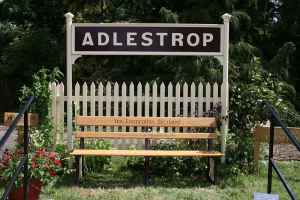
Yes, I remember Adlestrop –
The name, because one afternoon
Of heat the express-train drew up there
Unwontedly. It was late June.
The steam hissed. Someone cleared his throat.
No one left and no one came
On the bare platform. What I saw
Was Adlestrop – only the name
And willows, willow-herb, and grass,
And meadowsweet, and haycocks dry,
No whit less still and lonely fair
Than the high cloudlets in the sky.
And for that minute a blackbird sang
Close by, and round him, mistier,
Farther and farther, all the birds
Of Oxfordshire and Gloucestershire. 🌹🌹 — Edward Thomas : :🌹🌹🌹🌹🌹🌹🌹🌹🌹🌹🌹🌹🌹🌹🌹🌹🌹🌹🌹🌹🌹🌹🌹🌹🌹🌹🌹 અર્થ નિર્દેશ આસ્વાદ કાવ્યાર્થ વિચાર સંકલન વિ જયરાજ :: ‘Adlestrop’. The setting for this poem is the railway station serving the small village of Adlestrop in Gloucestershire; the moment is a day in ‘late June’ – specifically, late June 1914, when Thomas, on his Summer day lakeway to visit Robert Frost, noted the summery sounds and sights while the train stopped at the station. The poem captures a moment of English summer tranquillity in a few vivid, evocative images and sounds. : : : : The wonderful sixteen-line poem, which was once ranked Britain’s 20th favourite poem : : : : The origins of the poem lie in an event that took place on 24 June 1914, while English poet Edward Thomas (1878-1917) was on the Oxford to Worcester express train. The train made an unscheduled stop at Adlestrop (formerly Titlestrop) in Gloucestershire, a tiny village in the Cotswolds with a population of just over 100. (Jane Austen visited Adlestropthe former rectory at Adlestrop three times – her mother’s cousin lived there – and Mansfield Park in her novel of that name may have been partly inspired by her visits to Adlestrop House.) : : : : Detailed Poem Analysis : Pending : : : : Presented by V Jayaraj Pune India : : May 9 , 2022 : : : :
As Imperceptibly As Grief : Emily Dickinson : : Summer Time Classic : :
As imperceptibly as Grief
The Summer lapsed away –
Too imperceptible at last
To seem like Perfidy –
A Quietness distilled
As Twilight long begun,
Or Nature spending with herself
Sequestered Afternoon –
The Dusk drew earlier in –
The Morning foreign shone –
A courteous, yet harrowing Grace,
As Guest, that would be gone –
And thus, without a Wing
Or service of a Keel
Our Summer made her light escape
Into the Beautiful. 🌹🌹🌹🌹🌹🌹🌹🌹🌹🌹 — Emily Dickinson : : : : : : : : : : : : : : : : : : : : : અર્થ નિર્દેશ આસ્વાદ કાવ્યાર્થ વિચાર સંકલન વિ જયરાજ : : Prof. Oliver Tearle, at Loughborough University writes : : ” This poem describes the passing of summer, which happens imperceptibly. But this isn’t necessarily a bad thing: it happens ‘as imperceptibly as Grief’, suggesting that something is coming to a close but brighter times are just coming into view. An unusual take on the onset of autumn, admittedly, but one of the many reasons why Dickinson’s poems repay a cliser look.” : : : : ઉનાળો પસાર થવાનું એટલી ધીમી અને subtly થાય છે કે તે સમજવા – સમજાવવામાં ચૂકી જાય છે ; વર્ણન તો વળી એટલું જ મુશ્કેલ. તે ‘વ્યથા / શોક ની જેમ અગોચર/ ઇન્દ્રિયગોચર નહિ હોય એવું અદૃશ્ય રહી શકે છે, તદ્દન નજીવું પણ નજીક આવી રહ્યું છે . Its a bright time : જ્યાંથી જોઈ શકાય onset of Autumn નો સમય. પાનખરની શરૂઆતનો અસામાન્ય નિર્ણય, કબૂલ છે, પરંતુ એમિલી ડિકિન્સનની કવિતાઓ વસ્તુઓને સ્પષ્ટપણે લેવાનું ટાળે છે, અને નૈસર્ગિક વિશ્વ પર એક વ્યક્તિગત પરિપ્રેક્ષ્ય માં વાત વહેતી કરે છે. ઉનાળાના અંતને અવસાન અને શોક સાથે સાંકળે છે; જે પસાર થઈ રહ્યું છે તે વ્યથા અને ત્રાસ પહોંચાડે છે.પાનખર અને વસંત બંને નવીનતા લાવનાર , નવી શરૂઆત અને જુદું વિશ્વ. ખરતા પાંદડાઓ અને ખુલ્લી ડાળીઓની મોસમ ઉનાળામાં બદલાઈ જાય છે: : gentle quietness as mature and refined as a distilled whisky or other beverage that has been perfected over the years, or like nature spending a long, warm afternoon :: આ રીતે જોવું જોઈએ .The summer departs not as a bird flies (recalling the idea of birds flying south for the winter) or like someone fleeing on a boat; instead, it slowly makes way for the beauty of the arrival of autumn.
એ ઉનાળાના અંતની અને શરૂઆત ની સુંદર યોજના રચી આપે છે. As Imperceptibly As Grief : By Emily Dickinson : : Summer Time Classic : Poem Analysis Presented by V Jayaraj Pune India : :May 8 , 2022 : : : : : : : :
Shall I Compare Thee to a Summer’s day? : William Shakespeare : Sonnet 18 : (1) : : Sonnet 18 : Paul Kelly : 2016 Album ( Seven Sonnets and A Song ) : (2) : : Summer Time Classic : :
Sonnet XVIII
Shall I compare thee to a summer’s day?
Thou art more lovely and more temperate:
Rough winds do shake the darling buds of May,
And summer’s lease hath all too short a date:
Sometime too hot the eye of heaven shines,
And often is his gold complexion dimmed,
And every fair from fair sometime declines,
By chance, or nature’s changing course untrimmed:
But thy eternal summer shall not fade,
Nor lose possession of that fair thou ow’st,
Nor shall death brag thou wander’st in his shade,
When in eternal lines to time thou grow’st,
So long as men can breathe, or eyes can see,
So long lives this, and this gives life to thee. 🌹🌹🌹🌹🌹🌹🌹🌹🌹🌹🌹🌹🌹🌹🌹🌹 — William Shakespeare : : : : : : : : : : : : : : : : : અર્થ નિર્દેશ આસ્વાદ કાવ્યાર્થ વિચાર સંકલન વિ જયરાજ : : Hammond :: The Reader and the Young Man Sonnets. Barnes & Noble. 1981. p. 27 writes :::: ” In the sonnet, the speaker asks whether he should compare the young man to a summer’s day, but notes that the young man has qualities that surpass a summer’s day. He also notes the qualities of a summer day are subject to change and will eventually diminish. The speaker then states that the young man will live forever in the lines of the poem, as long as it can be read. There is an irony being expressed in this sonnet: it is not the actual young man who will be eternalized, but the description of him contained in the poem, and the poem contains scant or no description of the young man, but instead contains vivid and lasting descriptions of a summer day, which the young man is supposed to outlive. ” :::: :::: :::: :::: :::: :::: :::: Poem Analysis : : Line by line : : Pending : : May 7 , 2022 :: : : Pune India : : : : : : : : : : : : : :
Loveliest of Trees, the Cherry Now : A. E. Housman : : Spring Time Classic : :
Loveliest of trees, the cherry now
Is hung with bloom along the bough,
And stands about the woodland ride
Wearing white for Eastertide.
Now, of my threescore years and ten,
Twenty will not come again,
And take from seventy springs a score,
It only leaves me fifty more.
And since to look at things in bloom
Fifty springs are little room,
About the woodlands I will go
To see the cherry hung with snow. 🌹🌹🌹 — A. E. Housman : : : : 🌹🌹🌹🌹🌹🌹🌹🌹🌹🌹🌹🌹🌹🌹🌹🌹🌹🌹🌹🌹🌹🌹🌹🌹🌹🌹🌹. અર્થ નિર્દેશ આસ્વાદ કાવ્યાર્થ વિચાર સંકલન વિ જયરાજ : : A. E. Housman (1859-1936) didn’t write a great deal of poetry. When he died, he had published just two slim volumes, A Shropshire Lad (published at his own expense in 1896) and the fittingly titled Last Poems (1922).
The second poem in Housman’s perennially popular A Shropshire Lad, the poem that begins ‘Loveliest of trees, the cherry now’, is one of his most widely anthologised poems. આ કવિતા નું મુખ્ય પ્રતિબિંબ એ છે કે, વીસ વર્ષની ઉંમરે, કવિ પાસે સિત્તેર વર્ષ, જે બાઇબલ માણસના જીવનનું લાંબુ આયુષ્ય તરીકે જણાવે છે તેમાંથી જે પચાસ વર્ષનું .જીવતર બાકી છે. : “Of my threescore years and ten,
Twenty will not come again,
And take from seventy springs a score,
It only leaves me fifty more.” : : : : : : : : : : : : ‘ચેરી વૃક્ષ’ તેની ડાળીઓ અને ડાળીઓ : In full bloom, all along its boughs and branches સંપૂર્ણપણે મ્હોર્યા છે, કેમકે દર વર્ષે Cherry blossoms આવે છે.
સમય ઓછો છે, એથી કવિ જાહેર કરે છે કે : : : : : : : : : : : ” since to look at things in bloom
Fifty springs are little room,
About the woodlands I will go
To see the cherry hung with snow.” ધરતી પર બચ્યો સમય તે મહત્તમ સમય બરફ થી લદાયેલા ચેરી બ્લોસમ્સ ની આસપાસ ભમતા રહેવામાં વીતાવી દેશે. Poet will adopt a new approach to life, and try to make the most of the fifty years he estimates he has remaining on this planet. “About the woodland I will go.” ઘોડા પર સવારી કરતા લોકો માટે ખાસ કરીને Woodland / જંગલમાંથી પસાર થતો રસ્તો ‘ Ride ‘ કહેવાય. કવિતાની છેલ્લી પંક્તિમાં સફેદ ચેરી બ્લોસમનું ‘સ્નો’ તરીકેનું રૂપકાત્મક વર્ણન નવેસરથી કરવાની શરૂઆતના Fresh Start ના વિચારને વધુ બળવત્તર બનાવે છે. બરફ Purity પવિત્રતા નિર્દોષતા માટેનું સમજાય એવું પ્રચલિત પ્રતીક છે , જે પાપ રહિત કરે ; દોષ રહિત રાખે. ; નિષ્કલંક નવો જન્મારો સફળ બનાવી શકે. આપણા પુરાણોમાં ઉલ્લેખ છે “નિષ્કલંકતીર્થ” જ્યાં જવાથી બધા પાપ નાશ થાય : : સમજાવી શકાય તો “ચેરી બલોસમ્સ” તરફ લઈ જતો ‘વુડલેન્ડ’ માંથી પસાર થતા રસ્તા ની ride આ પ્રકારના ” નિષફલંકતીર્થ નો માર્ગ/રસ્તો છે ; જ્યાં બાકી જન્મારો વીતાવી “Rebirth” મળશે.: : : : : : : A. E. Housman’s ‘Loveliest of Trees, the Cherry Now’ : : : : અર્થ નિર્દેશ આસ્વાદ કાવ્યાર્થ વિચાર સંકલન વિ જયરાજ : : પૂણે ઈન્ડિયા : : : : Poem Analysis Presented by V Jayaraj Pune India May 6 , 2022 : : : : : : : : : :
The Trees : Philips Larkin : : Spring Time Classic : :
The Trees
The trees are coming into leaf
Like something almost being said;
The recent buds relax and spread,
Their greenness is a kind of grief.
Is it that they are born again
And we grow old? No, they die too,
Their yearly trick of looking new
Is written down in rings of grain.
Yet still the unresting castles thresh
In fullgrown thickness every May.
Last year is dead, they seem to say,
Begin afresh, afresh, afresh.🌹🌹🌹🌹🌹🌹 —Philips Larkin વૃક્ષો’. આ સૌપ્રથમ 1974 માં Larkins High Windows માં જોવા મળી. આધુનિક જીવનના પાસાઓ વિશેની તેમની Sardonic Poems વ્યંગાત્મક કવિતાઓની સાથે સાથે, લાર્કિન એક પ્રકૃતિવિદ કવિ પણ હતા, અને ‘ધ ટ્રીઝ’ એ ઋતુચક્ર વિશે એક સુંદર સંક્ષિપ્ત ગીત છે. ઋતુઓ પણ એ અર્થમાં કે વસંત ઋતુ માત્ર પુનર્જન્મ Rebirth જ નથી, પણ , રોસેટી અને ડિકિન્સનની SPRING Poems યાદ કરીએ તો, લારકીન ની ‘વૃક્ષો’ : ‘ ટ્રિઝિ ‘ પણ મૃત્યુ વિશે જ વાત લઈ ને આવે છે.The trees’ age is ‘written down in rings of grain’, after all. ચક્રાકાર વલયો ગણતા તેમાં પુરાણી તેની આયુ આશરે જાણી શકાય : : : : ” The Trees ” By Philips Larkin : : Spring Time Classic : : presented by V Jayaraj Pune India : : May 4 , 2022 ; : : : : : : :
Spring : Christina Rossetti : : Spring Time Classic : :
Spring
Frost-locked all the winter,
Seeds, and roots, and stones of fruits,
What shall make their sap ascend
That they may put forth shoots?
Tips of tender green,
Leaf, or blade, or sheath;
Telling of the hidden life
That breaks forth underneath,
Life nursed in its grave by Death.
Blows the thaw-wind pleasantly,
Drips the soaking rain,
By fits looks down the waking sun:
Young grass springs on the plain;
Young leaves clothe early hedgerow trees;
Seeds, and roots, and stones of fruits,
Swollen with sap put forth their shoots;
Curled-headed ferns sprout in the lane;
Birds sing and pair again.
There is no time like Spring,
When life’s alive in everything,
Before new nestlings sing,
Before cleft swallows speed their journey back
Along the trackless track –
God guides their wing,
He spreads their table that they nothing lack, –
Before the daisy grows a common flower
Before the sun has power
To scorch the world up in his noontide hour.
There is no time like Spring,
Like Spring that passes by;
There is no life like Spring-life born to die, –
Piercing the sod,
Clothing the uncouth clod,
Hatched in the nest,
Fledged on the windy bough,
Strong on the wing:
There is no time like Spring that passes by,
Now newly born, and now
Hastening to die. 🌹🌹🌹🌹🌹🌹🌹🌹🌹🌹🌹 —- Christina Rossetti : : ; : ; : : : ( 1830 – 1934 ) : : Celebrates the new life that the spring brings, as all of the ‘hidden life’ beneath the earth ‘springs’ into action, bursting forth upon the scene : : : : : : : ; : : :: અર્થ નિર્દેશ આસ્વાદ કાવ્યાર્થ વિચાર સંકલન વિ જયરાજ : : In The Bleak Of Mid Winter is her another most famous poem .. . Christina Rossetti (1830-94) was one of the Victorian era’s greatest and most influential poets. She was the younger sister (by two years) of the Pre-Raphaelite artist and poet Dante Gabriel Rossetti. Christina Rossetti was born in London in 1830, and lived with her mother virtually all of her life. She never married. Many of her poems engage with the question of religious belief, such as ‘Good Friday’ (a poem about honest religious doubt as much as faith) and ‘Twice’, about the importance of Christian forgiveness and redemption (the poem is spoken by a fallen woman, a theme that can also be seen in ‘Goblin Market’).
Christina Rossetti composed her first poem while still a very young girl; she dictated it to her mother. It ran simply: ‘Cecilia never went to school / Without her gladiator.’ Goblin Market and Other Poems was the first collection of her poetry to be published, and it was the book that brought her to public attention. The title poem is a long narrative poem which is often taken for a children’s poem because of its fairy-tale motifs and imagery; Rossetti, however, always denied that the poem was intended for children. Several of the poems in the volume, such as ‘Remember’ and ‘When I am dead, my dearest’, were composed before she had turned twenty.
Rossetti’s influences were as diverse as the many poetic forms in which she wrote: sonnets, ballads, narrative poems, lyrics, even Christmas carols (‘In the Bleak Midwinter’ to name but the most famous). She was remarkably prolific: the Penguin edition of her Complete Poems runs to well over 1,000 pages and is a treasure-trove for the poetry-lover.
Rossetti died in 1894 and was buried in Highgate Cemetery where fellow Victorian writer George Eliot had earlier been laid to rest. She went on to influence a range of later poets, including Gerard Manley Hopkins, Ford Madox Ford, and Elizabeth Jennings. Philip Larkin was an admirer, praising her ‘steely stoicism’.
આ કવિતા વસંતમાં જીવન કેવી રીતે ફરી એક વાર શરૂ થાય છે તેનું વર્ણન કરે છે, કેટલીક સુંદર આબેહૂબ છબીઓ તાદૃશ્ય કરી છે. રોસેટ્ટીની મોટાભાગની કવિતાની જેમ, તેમ છતાં, મૃત્યુ પ્રચ્છન્ન પણે પાછળ થી હંમેશાં લંબાયમાન થતું દીસે છે. અને વસંતના વીતી જવાની હોય વહી જતા સૌંદર્યની હતોત્સાહ લાવનારી વિભાવના melancholy છે. વસંતઋતુનું નવીકરણ ‘નવ જીવન’ મળતાં જ તે પહેલેથી જ નક્કી હોય તેમ કયારનીય ‘ ચાલ્યા જવાની ઉતાવળ’ કરી રહ્યું હોય છે; hastening to die.
રોસેટ્ટી, જેમણે અન્યત્ર શિયાળા વિશે ખૂબ જ સારું લખ્યું એ અહીં વસંતને તેના પોતાના ક્ષણભંગુર કટુસત્ય લાગણી સાથે ભાવભીની કરે છે: Percy Shelly ના શબ્દો માં ” If Spring is here , can Autumn be far behind ? ” : : જો વસંત અહીં છે, તો પાનખર કેટલીક પાછળ રહેવાની ? નૈસર્ગિક ચક્ર છે: ” Life nursed in its grave by death. ” જીવનને તેની કબરમાં મૃત્યુ એ સુવડાવેલું છે.”
SPRING : ‘વસંત’ એ રોસેટ્ટીના repetition ના પ્રયોગનું એક ઉત્તમ ઉદાહરણ પણ છે, જેમાં Same words and images are circling round : : શબ્દો અને કલ્પન ચિત્રો ગોળ ગોળ ફરતા હોય છે, કવિતામાં ફરી ફરીને પાછા ફરે છે, જાણે નિસર્ગ ના ચક્રને અમલી વાઘા પહેરાવે છે જે , તેના પ્રત્યેક વિષયમાં encoded છે. Pleasant thaw wind, waking Sun , young grass on the plain , curl headed ferns , Singing Birds pairing again , Stones of fruits , Life alive in everything , God guiding wings of birds on their journey back home , No life like Spring , Life born to death , Now newly born , and now hastening to die : : વસંત ના પ્રભાવી તત્ત્વો : : કેવો રહ્યો આ અનુભવ : : : : મે ૪ , ૨૦૨૨ : : અર્થ નિર્દેશ આસ્વાદ કાવ્યાર્થ વિચાર સંકલન વિ જયરાજ , પૂણે ઈન્ડિયા : : : : : : : : : :
Spring : Gerard Manley Hopkins : : Spring Time Classic : :
Nothing is so beautiful as Spring –
When weeds, in wheels, shoot long and lovely and lush;
Thrush’s eggs look little low heavens, and thrush
Through the echoing timber does so rinse and wring
The ear, it strikes like lightnings to hear him sing;
The glassy peartree leaves and blooms, they brush
The descending blue; that blue is all in a rush
With richness; the racing lambs too have fair their fling. 🌹🌹🌹🌹🌹🌹🌹🌹🌹🌹🌹🌹 What is all this juice and all this joy?
A strain of the earth’s sweet being in the beginning
In Eden garden. – Have, get, before it cloy,
Before it cloud, Christ, lord, and sour with sinning,
Innocent mind and Mayday in girl and boy, Most O Maid’s child , thy choice and worthy the winning.
🌹🌹🌹🌹🌹🌹🌹🌹🌹🌹🌹— Gerard Manley Hopkins ( 1844 – 1889 ) Jessuit Priest and Victorian Age Poet : : : : અર્થ નિર્દેશ આસ્વાદ કાવ્યાર્થ વિચાર સંકલન વિ જયરાજ : : : : : : : :‘Spring’ by Gerard Manley Hopkins describes the joys of spring against a backdrop of religious references to the Garden of Eden and Sin : : : :
Seamus Heaney calls this Sonet with Two Parter : The 1 st Parter in its 8 lines celebrate the phenomenon of SPRING and the 2 nd Parter in its 6 lines concludes to The Guard Of God . Written and spoken in rolling round of word sounds , with assonance and alliteration and half rhyme give Vibrance to the SPRING enriching the reader’s sensory experiences. વર્ણન , વસંતની સુંદરતાને દર્શાવે છે તે મહત્વથી ભરેલી છે. “Thrush” Birds include : : blackbird, fieldfare, ouzel, and redwing of Europe, as well as the American robin. Other true thrush groups are called ground thrush and nightingale thrush. Rufous-bellied thrush (Turdus rufiventris).American robin (Turdus migratorius), a large North American thrush, is one of the most familiar songbirds in the eastern United States.The Wood Thrush breeds in deciduous and mixed forests in the eastern U.S.Thrushes are Passerine that inform Song Birds.The blue colour in robin eggs is due to biliverdin, a pigment deposited on the eggshell when the female lays the eggs. There is some evidence that higher biliverdin levels indicate a healthier female and brighter blue eggs. Eggs laid by a healthier female seemed to encourage males to take more interest in their young.Fieldfares are large, colourful thrushes, much like a mistle thrush in general size, shape and behaviour. They stand very upright and move forward with purposeful hops. They are very social birds. એપ્રિલ થી જૂલાઇ દરમ્યાન , અમેરિકન રોબિન eggs મૂકી સેવનથી ૨ થી ૩ young ones ના brood મોટા કરે ; શિયાળો વિતાવી સ્થળાંતર કરીને ફરીથી મૂળ વતન માં પાછા આવ્યા હોય કે તરત : Thrush પક્ષીઓ ના ઝૂંડ જે યુરોપ અમેરિકા ના વિસ્તારમાં જોવા મળે તેની એશિયા/ ભારત ના ભાવકો ને ઓળખ આપવા માટેની આ થઈ જાણ – માહિતી .હવે કાવ્ય રચના સમજીશું. શરુઆત થઈ છે કવિના Spring વિશે ના સીધા , સરળ અભિપ્રાયથી : ” Nothing is so beautiful as Spring” : જેમાં નિખાલસ કબૂલાત કરી છે. વસંત SPRING થી વધુ સુંદર બીજું કંઈ જ નથી. દ્વિતીય પંક્તિ માં Weed (s) / ઘાસ જેવા રોપાઓ ને Wheel(s) સાથે સાંકળે Weeds in wheels shoot long and lovely and lush : abundantly / પ્રચુર માત્રામાં અને સારી પેઠે લાંબા/ વધેલા , અને દેખાવમાં લીલાંછમ . In wheels નું strange connection / વિચિત્ર લાગે : પણ , આ જોડાણ ગતિ વિષયક હોય શકે જેમાં બધું જ આગળ વધી રહ્યું છે. નકામું મનાતા ઘાસ બીડ તરીકે વિશાળ ઘેરાવામાં મોટા પ્રમાણમાં ફેલાઈ ને રોચક લીલોછમ દેખાવ , વસંતનું મનોરમ્ય દ્રશ્ય ચિત્ર સ્પષ્ટ કરે છે. ‘weeds’ અને ‘wheels’ શબ્દોમાંથી ‘we’ અને ‘I’ ના repitation : alliteration નું ઉદાહરણ છે. કવિએ , ત્રીજી પંક્તિમાં metaphor રૂપક પ્રયોજ્યો
Through the echoing timber does so rinse and wring” :woods / જંગલમાંથી પસાર થાય છે ત્યારે Thrush પક્ષીઓ ગીત ના ગુંજારવ રેડતા ઊડે છે. વૃક્ષ નું વર્ણન ‘echoing’ / ગુંજ અને ઉડાન ભરી ઉછળે તેને ‘cleansing’ સફાઈ કહ્યું છે. ૫ મી , છઠ્ઠી , ૭ મી અને ૮ મી પંક્તિઓમાં , religiosity / ઉભરી આવતા કવિ નો આધ્યાત્મિક અનુભવ દર્શાવે છે. Thrush પક્ષીઓ , વૃક્ષો વચ્ચે વીજળીના ચમકારા વેરતા જણાય છે. ” Strikes the ear like lightning to hear him sing; ” જે પ્રશાંતક : વસંત ના નવ ચેતન ની દ્યોતક છે. ‘lightenings’ plurality લાવીને many many lightenings ની feelings નો અર્થ નિર્દેશ કરે છે which is overwhelming. ૫ મી , છઠ્ઠી અને ૭ મી પંક્તિઓમાં The ear, The glassy peartree અને The descending blue , થી શરૂઆત કરીને , કવિએ anaphora વાક્યાંશ ની પુનરુક્તિ પ્રયોજી છે. પેઅર tree / નાસપતિ વૃક્ષ , પાંદડાં અને ફુલો નું વર્ણન આવે છે; જે પ્રચુર માત્રામાં ખીલ્યાં છે and they touch the descending blue. પેઅર નો આકાશમાં વાદળિયો સંસ્પર્શ. એટલા તો વિસ્તીર્ણ / ફેલાયેલા છે કે ધરતી ની નજીક આવી રહ્યાં છે. Everything is becoming spiritual and heavenly in this scene. જીસસ ક્રાઈસ્ટ ના માનવજાત માટેના પ્રેમ ને દર્શાવતા આ પેઅર વૃક્ષ મુક્તિ અને શાશ્વત જીવન ના પ્રતિક ગણાય જેનું વચન બાઈબલમાં આપેલું છે. પેઅર ના ફળો divine sustenance, abundance and longevity : દૈવી , અલૌકિક શ્રેષ્ઠતા , ગુજરાન અને પોષણ તથા દીર્ઘાયુષ્ય ના પ્રતિક મનાયા છે ;સ્ત્રી સ્વરૂપનું પ્રતિનિધિત્વ કરે છે. ફુલો અને પાંદડાંઓ , racing lambs જે Spring અને rebirth ના પરંપરાગત પ્રતિકરૂપ મનાતા આવ્યાં છે. નૈસર્ગિક વિશ્વ ની આ બધી વિશેષતાઓ છે ; અને કવિ કહે છે કે ” have fair their fling .”ઈસુને કેટલીકવાર ભગવાનના લેમ્બ તરીકે ઓળખવામાં આવે છે. ખ્રિસ્તીઓ ઘણીવાર પોતાને the Lamb of God તરીકે ઓળખ આપે છે. Sheep/lamb in a flock. ” They say ” God is a Shephered : ઘેટાં ચરાવે છે.Sheep are often hanging around the little baby Jesus. Here , the “blue is all in a rush / with richness,” the sky is hurrying down to share its brightness and beauty. There’s that sense of lushness, the “sh” and “ch” sounds, and the word “richness.”
Everything we’re getting so far in this poem is vibrant and full and rushing forward in its abundance. Sounds pretty nice. Also , lambs have connotation of innocence. નિર્દોષતા અભિપ્રેત થાય છે. ‘descending’ શબ્દ માં અભિપ્રેત છે તે એ કે સ્વર્ગ ધરતી પર સમગ્રપણે ઢૂકડુ થવા પામે છે. Heavenliness is not distant. ૮ મી પંક્તિ more or less playful થતી આવે છે. “have fair their fling” શબ્દાર્થ જોડવો અઘરું થઈ પડે છે : : પ્રથમ આઠ પંક્તિઓ માં વસંત SPRING નું વર્ણન સમજ્યાં પછી , સોનેટ ના દ્વિતીય ભાગ ની છેલ્લી ૬ પંક્તિઓ માં રહેલી religiosity માં પ્રવેશ કરીશું : : : : “What is all this juice and all this joy?
A strain of the earth’s sweet being in the beginning
In Eden garden. – Have, get, before it cloy,” : : આ પ્રશ્ર્ન પૂછ્યો તેની સાથે જ કાવ્ય બાની બદલાય જાય ; કારણ હવે ઈસુ શ્રોતા છે. આ બધો રસાનંદ શા’ને !? Spring contains joy , juice , potential for richness in life : : કવિ મન ની વ્યગ્રતા વ્યાપક રીતની છે : આ વાસંતી જીવનની પરિપાટી હરહંમેશ ની નથી . ફરીને શિશિર ઋતુચક્રમાં આવી બધું જ બદલી નાખશે. અહીં , Spiritual imagery પકડ જમાવે છે. શરૂમાં , પ્રકૃતિ અને જીવ , સુ સ્વર આલેખી રહ્યા હતા ; માટે , ઈડન ગાર્ડન ના સંદર્ભ માં ચિત્ર દર્શને , શરૂમાં વસંત SPRING આવી હતી જેની પછી માણસ ની પડતી થઈ . સોનેટ કાવ્ય રચના ની છેલ્લી બે પંક્તિઓ સમજીશું : : ” Before it cloud, Christ, lord, and sour with sinning,
Innocent mind and Mayday in girl and boy,
Most , O Maid’s child , thy choice and worthy the winning. ” : : : : વસંત ઝાંખીઝપ થાય ; મનુષ્ય જીવન ઈડન ગાર્ડન માં થયું હતું તેમ સમાપ્ત થઇ શકે છે; ” it was soured with sinning.માટે હવે , પ્રભુ વિશ્વની દરકાર કરે અને પાપો થી દૂર રાખે. ” May day Boys and Girls have innocence Minds and nature ; પાપ ગ્રાહ્ય તા સહજપણે આવી ધમકે. અહીં કવિ મન હતોત્સાહી થયું છે. Children must be brought to the religion to save them from the sins. Prayer કરવામાં ભલાઈ છે : children “being worthy of winning” be brought into the light of God. Maid’s child must win in all the eventuality of sins. Maid’s child , ઈસુ ખ્રિસ્ત છે . Thrush પક્ષીઓ ના ઈંડાનો Blue colour Mother Mary સાથે સંકળાયેલ મનાય છે અને અહીં કવિ તેને descending Heavenliness સાથે સરખામણી કરી છે : : : : SPRING By Gerard Manley Hopkins : : : : અર્થ નિર્દેશ આસ્વાદ કાવ્યાર્થ વિચાર સંકલન વિ જયરાજ : : Poem Analysis Presented by V Jayaraj Pune India : : મે ૩ , ૨૦૨૨ : : પૂણે ઈન્ડિયા : : : : : : : : : :
A Light Exists in Spring : Emily Dickinson : : Spring Time Classic : :
A Light exists in Spring
Not present on the Year
At any other period –
When March is scarcely here
A Color stands abroad
On Solitary Fields
That Science cannot overtake
But Human Nature feels.
It waits upon the Lawn,
It shows the furthest Tree
Upon the furthest Slope you know
It almost speaks to you.
Then as Horizons step
Or Noons report away
Without the Formula of sound
It passes and we stay –
A quality of loss
Affecting our Content
As Trade had suddenly encroached
Upon a Sacrament. 🌹🌹🌹🌹🌹🌹🌹🌹🌹🌹 — Emily Dickinson : : From ” Complete Poems ” By Emily Dickinson : Faber Edition : :🌹🌹🌹🌹🌹🌹🌹🌹🌹 🌹 🌹 🌹 🌹 અર્થ નિર્દેશ આસ્વાદ કાવ્યાર્થ વિચાર સંકલન : વિ જયરાજ : Dickinson’s classic poems are : : : : : : : : : : ‘I died for Beauty, but was scarce‘, ‘One need not be a Chamber to be Haunted‘, ‘I heard a Fly buzz – when I died’, and ‘I cannot live with You‘. ‘A Light Exists in Spring’ is not Emily Dickinson’s best-known poem, but it is a fine poem about the spring season . Written in around 1864 but not published until 1896 (as with many of Dickinson’s poems), ‘A Light Exists in Spring’ beautifully captures the way that spring slowly appears in our consciousness, like a light in the distance. Also seems to acknowledge what we now call ‘SAD’ or Seasonal Affective Disorder, with the passing of Spring affecting our contentedness. A distinctive colour and lights on the horizon, on the distant hills, which can’t have its magic as humans, feel. This light lingering reveals to us trees that are far away on distant slopes; the light of the SPRING will speak to Humans and silently passes away keeping the shadows in our mind. And we are taken aback behind. The gradual loss of the light with onset of new season , say of Rain , affects the level of contentedness we feel, much as trade or business, if it intruded on the religious sacrament, would rob it of some of its divinity.’ In ‘A Light Exists in Spring’ we have a ‘nature poem’ but also a ‘religious poem’, thanks to that final stanza. But what are we to make of Dickinson’s reference to science in the poem’s second stanza?
“A Color stands abroad
On Solitary Fields
That Science cannot overtake
But Human Nature feels.”. : : : : : : : : : : Science cannot supersede or outstrip the beauty of the spring sunlight: although Dickinson doesn’t go as far as Keats in his Romantic distaste for science’s desire to ‘unweave a rainbow’ (a poetry/science opposition that Richard Dawkins sought to challenge in his book, Unweaving the Rainbow), this stanza acknowledges that the human heart is alive to things which science can merely understand – not that understanding and analysing the natural world is not important, but that human interaction with the world is far more complex and ineffable than scientific analysis of nature. Note how ‘Human Nature’ draws a Blakean link between mankind and the natural world: our human nature is what comprehends nature. : : : : : : : : : : A Light Exists in Spring’ એ એમિલી ડિકિન્સનની સૌથી જાણીતી કવિતા નથી, પરંતુ તે વસંતઋતુ વિશેની સુંદર કવિતા છે. 1864 ની આસપાસ લખાયેલ પરંતુ 1896 સુધી પ્રકાશિત ન થયેલી. (ડિકિન્સનની ઘણી કવિતાઓની જેમ), ‘અ લાઇટ એક્ઝિસ્ટ ઇન સ્પ્રિંગ’ સુંદર રીતે કેપ્ચર કરે છે કે વસંત ધીમે ધીમે આપણી ચેતનામાં / અંતરમાં પ્રકાશની જેમ દેખા દેય છે. ડિકિન્સનની કવિતાની અંતિમ પંક્તિઓ પણ હવે જેને આપણે ‘SAD’ અથવા મોસમી ગરબડ/ ગોટાળા Seasonal Affective Disorder કહીએ છીએ તે સ્વીકારે છે, વસંત પસાર થવાથી આપણી તૃપ્તિ/ contentedness ને અસર થાય છે. વસંતમાં એક પ્રકાશ જ તો છે જે બાકીના વર્ષ- સમયમાં હાજર નથી. ક્ષિતિજ પર, દૂર ટેકરીઓ પર, માર્ચ મહિનો આવે તેટલું વહેલું : એક વિશિષ્ટ રંગ દેખાય છે, જેનો જાદુ વિજ્ઞાન દ્વારા સમજાવી શકાતો નથી, પરંતુ જે આપણે, મનુષ્ય તરીકે, અનુભવીએ છીએ. આ પ્રકાશ હરિયાળી પર લંબાય છે, અને એવા વૃક્ષો તરફ આંગળી ચીંધે છે જે દૂરના ઢોળાવ પર ઢળેલા પણ ઉંચા થઈ વધી રહ્યાં છે; અજવાળું એટલું પ્રભાવી છે કે તે લગભગ સાથે રહીને વાત કરવા લાગે છે. જેમ જેમ સમય પસાર થાય છે તેમ તેમ આ પ્રકાશ આપણને પાછળ લંબાયમાન પડછાયાઓ માં છોડીને ચુપચાપ જતો રહે છે. પ્રકાશની ખોટ એ તૃપ્ત કરનાર સ્તરને અસર કરે છે જે આપણે અનુભવીએ છીએ, જેમ કે વેપાર અથવા વ્યવસાય, જો તે ધાર્મિક વિધિ વિધાન ને લઈ આવે તો શું તેની દિવ્યતા નહીં રહે? Is this an encroachment ? ક્રિશ્ચયન ચર્ચ સાત વિધિઓમાંથી ‘sacrament’ ની એક વિધિ કરે છે’ ટૂંકમાં, પછી, ‘અ લાઇટ એક્ઝિસ્ટ ઇન સ્પ્રિંગ’ માં આપણી પાસે પ્રકૃતિની કવિતા છે પણ એમાં ધાર્મિકતા પણ છે, તે અંતિમ પંક્તિઓને આભારી છે. વધુમાં, કવિતા ની બીજી પંક્તિમાં વિજ્ઞાન ના સંદર્ભ વિશે આપણે શું વિચાર કરવો જોઈએ?
” A Color stands abroad
On Solitary Fields
That Science cannot overtake
But Human Nature feels.” : : : : વિજ્ઞાન વસંતના અજવાળાની સુંદરતાને વટાવી શકતું નથી અથવા તેનાથી આગળ વધી શકતું નથી: જો કે ડિકિન્સન વિજ્ઞાનની ‘unweave a Rainbow’ 🌈 ની ખ્વાહિશ માટે તેની રોમેન્ટિક અરુચિમાં કીટ્સ Keats ની જેમ આગળ વધતી નથી. રેઈન્બો’ (એક કવિતા/વિજ્ઞાનનો વિરોધ જેને રિચાર્ડ ડોકિન્સે Richard Dawkins તેમના પુસ્તક, ‘Unweaving The Rainbow’ માં પડકારવાનો પ્રયાસ કર્યો હતો), આ પંક્તિ સ્વીકારે છે કે માનવ હૃદય એવું સંજીવન અને જીવંત છે જેને વિજ્ઞાન માત્ર સમજી શકે છે – એવું નથી કે નૈસર્ગિક વિશ્વને સમજીને તેનું વિશ્લેષણ કરીએ ; એ નથી. તે પ્રકૃતિના વૈજ્ઞાનિક પૃથ્થકરણ Nature’s Scientific Laws કરતાં વિશ્વ સાથેની મનુષ્ય ની ક્રિયા પ્રતિક્રિયા વધું જટિલ અને ઈનેફબલ ineffable/ અવાચ્ય / અનિર્વચનીય છે. એટલે જ તો મેઘધનુષી કાવ્ય રચના સર્જકો અને ભાવકો ને મનપસંદ છે : ગીત,ગઝલ, કાવ્યો માં : Human Nature’ draws a Blakean link between mankind and the natural world: Our human nature always comprehends nature. (The fact that ‘feels’ is an almost replication of ‘ Fields’ consolidates this close bond between Nature and the Humans.) : : : : ડિકિન્સનની આ કવિતા સાથે, વસંતના ઝડપથી ચાલ્યા જનારા સૌંદર્યની ઉદાસીનતા / melancholy ના ભાવો વહી જાય છે : : :: Let us believe that Beauty is intransient : ::Emily Dickinson, ‘A Light Exists in Spring‘. : : Poem Analysis Presented by V Jayaraj Pune India : : : : અર્થ નિર્દેશ આસ્વાદ કાવ્યાર્થ વિચાર સંકલન વિ જયરાજ : : પૂણે ઈન્ડિયા : : : : મે ૨ , ૨૦૨૨ : : જેઠ સુદ બીજ : : : : : : : :
Now fades the last long streak of snow’: Alfred, Lord Tennyson : : Spring Time Classic : :
Now fades the last long streak of snow,
Now burgeons every maze of quick
About the flowering squares, and thick
By ashen roots the violets blow. (1)
Now rings the woodland loud and long,
The distance takes a lovelier hue,
And drown’d in yonder living blue
The lark becomes a sightless song. (2) Now dance the lights on lawn and lea,
The flocks are whiter down the vale,
And milkier every milky sail
On winding stream or distant sea;. (3). Where now the seamew pipes, or dives
In yonder greening gleam, and fly
The happy birds, that change their sky
To build and brood; that live their lives
(4)
From land to land; and in my breast
Spring wakens too; and my regret
Becomes an April violet,
And buds and blossoms like the rest. (5). –Alfred, Lord Tennyson : : : : : : : : : : : : : 🌹🌹🌹🌹🌹🌹🌹🌹🌹🌹🌹🌹🌹🌹🌹🌹🌹🌹. અર્થ નિર્દેશ કાવ્યાર્થ વિચાર સંકલન વિ જયરાજ : : : : : : : : હવે બરફ વર્ષા ના છેલ્લા લાંબા દોર ઝાંખાં પડી રહ્યાં છે. : : આ કેન્ટો/ મહા કાવ્ય નો ખંડ / સર્ગ/ પર્વ , કુલ ૧૩૧ Cantos માંથી આલ્ફ્રેડનો આ Canto CXV ( 100+10+5=115 ) લોર્ડ ટેનીસનની In Memorium A. H. H. (1850) માં લખાયેલી long elegy – તેના મિત્ર Arthur Henry Hallam ( મૃત્યુ ૧૮૩૩ માં ૨૨ વર્ષ ની ઉંમરે ) ની યાદમાં : અત્યંત લાગણીવશ ઉદાસીનતા દાખવવામાં લખાયેલ – વસંત ના આગમન પર એક bittersweet take ની પ્રસ્તુતિ છે . વિક્ટોરિયન કાળ દરમિયાન પ્રચલિત ધર્મ નિષ્ઠા અને સંશય : જીવન – મૃત્યુ , ઈશ્વર અને ચિરંજીવતા અથવા અવિસ્મરણીયતા ( faith and doubt : life , death God and immortality ) મહત્વના વિધિ તત્વો જેના સ્પર્શજ્ઞ તરીકે ટેનિસન નું કાવ્યાત્મક આકલન આ કવિતા માં રસપ્રદ પણે નિષ્પન્ન થતું જોવા મળે This is a poem of triumph of love , faith and God over death and doubt. જે ભાવક તરીકે આપણને પણ ગહન ચિંતન માં મૂકી શકે. કવિ મન ના ફેરફાર ની વાત લિરિકલી ઉપસ્થિત થાય : :બરફના ઢેરની છેલ્લી સિકલ ઓગળે છે તેની સાથે કવિ મન ની ગ્લાનિ અદ્રશ્ય થવા પામે છે. અફસોસ અને હતોત્સાહ ના સ્થાને પ્રેમ અને આશાના કિરણ સ્પર્શન પામે છે.૧૮૩૮ ની વસંત SPRING નું આગમન થયું છે : : વાતાવરણ , નવજીવન મળ્યું છે; અંકુરિત ફુલો ના તથા નાના નાના ઝાડવાં વધી રહ્યાં છે; જેની ખુશ્બો અને તાજગી થી ભર્યું ભર્યું થયું છે; રંગબેરંગી રંગછટા નિખરી ઉઠે; વાયોલેટ ફૂલનો મનોરમ્ય વિસ્તાર. આ બધું સૂચવે છે તે એ કે પ્રકૃતિ તેની પહેલાં ની લાંબી મૂર્છામાંથી આળસ મરડી બેઠી થઇ ગઇ છે. જ્યાં જુઓ ત્યાં જોશીલી ધરતી સમગ્રપણે સોહામણી અને ખુશખુશાલ નજરે પડે. Nature’s bliss is felt all over. ” દરેક માર્ગ પર અંકુરિત કળીઓ ફુલો ના ચોરસાકાર આંકતી ઘનિષ્ટ થવા ઝડપથી વિકસી રહી છે. આ રાખોડી જડો ( આગળ જતાં ) વાયોલેટ ( ફૂલનો પવન ) ફૂંકશે.” (૧). Spring brings happiness to birds and beasts as they enjoy newness all over. They chirp and sing to express their delight. The woodland rings with music. Even though the lark can not be seen , its presence can be felt in the melodies that it has poured. ( Shakespeare’s Sonnet 29, “the lark at break of day arising / From sullen earth, sings hymns at heaven’s gate” (11–12). ) . Tennyson ‘s Singing ” lark becomes a sightless song.” The snow covered land was dark and gloomy. As the snow melts , the land and valley glisten with light. Spring gives movement to the sea and river. The boats and ships are sailing in the sea and river. They look milkier because of the brightness of sunlight. The entire woodland seems to enjoy the Spring Season. The pleasant environment gleams in green and makes the birds fly and dance in merriment. They move to find comfortable place to give birth to the young ones. The sea mews sing and dive in pleasure over the sea. Its a New Life. Mark of happiness , joy and delight. The blooming flowers and the sprouting plant life along with the singing birds give life and movement to the woodland. A Gift Of Nature. Symbol Of Rejuvenation. Spring has not only awakened the earth but has also filled Poet with the Hope who recovers from his regrets and ” becomes an April Violet .” The Violet Flower is a Symbol Of Life and Freshness : Both for the earth and the poet. Following line evinces this thought : “From land to land; and in my breast,
Spring wakens too; and my regret
Becomes an April violet,
And buds and blossoms like the rest. ” : : : : Thus , Charms of season has been narrated beautifully in this poem. The word ” Snow ” symbolises the winter season and is an indication of regrets in the mood of the poet. The colour green , white and violet bear the Significance Of Life On The Earth. Words like burgeones , Violet , Birds are the Images reflective of Mood . Subject of the poem is ” Change from the mood of regrets .”Theme is ” Hope and Belief in Life. “: : : : વસંત પક્ષીઓ અને પ્રાણીઓ માટે ખુશી લાવે છે કારણ કે તેઓ સર્વત્ર નવીનતાનો આનંદ માણે છે. પોતાનો આનંદ વ્યક્ત કરવા માટે કિલકિલાટ કરે છે અને ગાય છે. વૂડલેન્ડ મ્યુઝિક સાથે ગુંજે છે. ભલે લાર્ક જોઈ શકાતું નથી, પણ તેની હાજરી તેણે રેડેલી ધૂનોમાં અનુભવી શકાય છે. બરફથી ઢંકાયેલી જમીન ધૂંધળી અને ઉદ્દીગ્ન હતી. જેમ બરફ પીગળે છે, જમીન અને ખીણ પ્રકાશથી ચમકે છે. વસંત દરિયાને અને નદીને ગતિમાન કરે છે. નૌકાઓ અને વહાણો દરિયામાં અને નદીમાં ખેપ ભરી રહ્યાં છે. સૂર્યપ્રકાશના તેજને કારણે દરિયાનું જળ ‘દૂધિયું’ જેવું લાગે છે. સમગ્ર વૂડલેન્ડ વસંતઋતુનો આનંદ માણી રહ્યો હોય તેવું લાગે છે. આહલાદક વાતાવરણ લીલા રંગમાં ચળકી ઉઠે છે અને પક્ષીઓને આનંદમાં ઉડવા અને નૃત્ય કરવા માટે પ્રેરે છે. તેઓ બચ્ચાઓના જન્મ/ઉછેર માટે આરામદાયક સ્થળ શોધવા માટે ઊડતા જાય છે. દરિયાઈ સિ- મેવ્સ પક્ષીઓ પાવો વગાડતા ( Sea- Gull’s laughing cry in fact on flying / readyness for leaving by their grown up large chicks ) તેના જળમાં આનંદપૂર્વક ડૂબકી મારે છે. તેનું નવું જીવન છે. સુખ આનંદ અને આનંદનું ચિહ્ન. ગાતા પક્ષીઓ સાથે ખીલેલા ફૂલો અને અંકુરિત વનસ્પતિ જીવન , વન પ્રદેશને જીવન અને ગતિશીલતા આપે છે. કુદરતની ભેટ. નવીકરણ નું/કાયાકલ્પનું પ્રતીક. વસંતે માત્ર પૃથ્વીને જગાડી નથી, પરંતુ કવિમનને પણ આશાથી ભરી દીધું છે જે તેના અફસોસ/ પસ્તાવામાંથી હવે સ્વસ્થ થાય છે અને “એપ્રિલ વાયોલેટ બની જાય છે.” વાયોલેટ ફૂલ એ જીવનનું અને તાજગી નું પ્રતિક છે: ધરતી અને કવિ , બંને માટે. નીચેની પંક્તિઓ આ વિચાર નું ઉદાહરણ છે : “જમીને જમીને ; અને મારી છાતીમાં
વસંત પણ જાગે છે; અને મારો અફસોસ
એપ્રિલ વાયોલેટ બની જાય છે,
અને ફૂટી છે કળીઓ અને ખીલ્યાં છે ફૂલો. ” : : : : આમ આ કવિતામાં વસંત ઋતુની મનોહર સામગ્રી સુંદર રીતે વર્ણવવામાં આવી છે. ” બરફ ” શબ્દ શિયાળાની ઋતુનું પ્રતીક છે અને કવિમનના મૂડમાં અફસોસ અને હતોત્સાહ નું સૂચક છે. લીલો, સફેદ અને વાયોલેટ રંગ ધરતી પરના જીવન ના સૂચક છે. શબ્દો જેવા કે burgeones ,Violet , Birds , એ મનના મિજાજ ને પ્રતિબિંબિત કરતા કલ્પન છે. કવિતા નો વિષય છે : અફસોસ ના મિજાજમાં આવતું પરિવર્તન. કાવ્ય રચના નો theme / મુખ્ય તાલસૂર છે : જીવનની આશા અને જીવન માટે ની શ્રદ્ધા . Its a New Life. વસંત SPRING આવતા ની સાથે જે ઉમટી પડી છે તે regrets છે. અફસોસ છે કવિ ને કે તેનો મિત્ર હવે આ દુનિયામાં રહ્યો નથી. that Spring is a reminder that the world continues to turn and life carries on. But Tennyson’s dear friend does not return. This is one of the best poems in long poetic sequence written by Tennyson in Total 131 Cantos and This one is 115 th Canto: : અનુવાદ : વિ જયરાજ : : : : : : : : : : : : : : હવે બરફ વર્ષાના છેલ્લા લાંબા દોર ના દ્રશ્ય અને તેના અવાજ ધીમે ધીમે બંધ થઈ રહ્યાં છે. હવે દરેક માર્ગ પર અંકુરિત કળીઓ ફુલો ના ચોરસાકાર આંકતી ઘનિષ્ટ થવા ઝડપથી વિકસી રહી છે. આ રાખોડી જડો ( આગળ જતાં ) વાયોલેટ ફૂલનો પવન ફૂંકશે . (૧). 🌹🌹🌹🌹🌹 🌹🌹
હવે વૂડલેન્ડ/ વનવિશ્વ ઉડી ને આંખે વળગે એવું સુદીર્ઘ પણે ગાજી ઊઠ્યું છે.
દૂરથી જોતાં સુંદર રંગછટા વિખરાતા રોચક દેખાતું હોય છે.
અને ત્યાં પણે વિદ્યમાન ગમગીની માં ડૂબી જતું
લાર્ક( પક્ષી ) એક દૃષ્ટિહીન ગીત બની જાય છે.( A song delivered on the wings of the songbird– ground dwelling bird : lark ) (૨). 🌹🌹🌹🌹🌹🌹🌹🌹🌹🌹 હવે નૃત્ય કરે ઘાસ બીડ ની હરિયાળી પર ;
એક સાથે ઊડતા પંખીડા પર્વતિય ખીણમાં વધુ ધોળાં લાગે છે
વાંકાચૂંકા ઝરણાં ના પ્રવાહ પર અથવા દૂર ( ધૂંધળા ) દેખાતા દરિયા પર દરેક નૌકા/વહાણ ના સફેદ સઢ ( સૂર્ય પ્રકાશમાં ચમકતા ) વધારે દૂધિયા દેખાય છે. (૩). 🌹🌹 🌹🌹
ત્યાં હવે દરિયાઈ / Sea- Mews પક્ષી ઓ પાવો વગાડતા / આનંદી બૂમરાણ મચાવતા જળમાં ડૂબકી મારી રહ્યા છે.
તેની બાજુમાં,પણે હરિયાળી પરના ચળકાટ ઉપરે
ખુશખુશાલ પક્ષીઓ ઉડે છે ત્યારે , ત્યાંનું આકાશ ઝંખવાણુ પડી જાય છે ;હયાતી સંવર્ધિત કરવા માટે , બચ્ચાં સેવન/ઉછેર કરવાના ઈરાદે (સહીસલામત) આશ્રયસ્થાન શોધી રહ્યા છે. (૪) 🌹🌹🌹🌹🌹🌹🌹🌹🌹🌹🌹🌹🌹🌹
જમીને જમીને અને મારી છાતીમાં પણ
વસંત જાગે છે; અને મારો અફસોસ/હતોત્સાહ
‘એપ્રિલ ના વાયોલેટ’ બની જાય છે.
અને કળીઓ ફૂટી રહી છે અને ફુલો ખીલી ઊઠે છે. (૫) 🌹🌹🌹– આલ્ફ્રેડ , લોર્ડ ટેનીસન : : અનુવાદ : : વિ જયરાજ : : : : : : : Now fades the last long streak of snow : : An Elegy : : By Alfred Lord Tennyson : : Spring Time Classic : : : : અર્થ નિર્દેશ આસ્વાદ કાવ્યાર્થ વિચાર સંકલન વિ જયરાજ : : મે ૧ , ૨૦૨૨ : : Poem Analysis Presented by V Jayaraj Pune India : : : : : : : : : : : : :
 MADHU MALTI