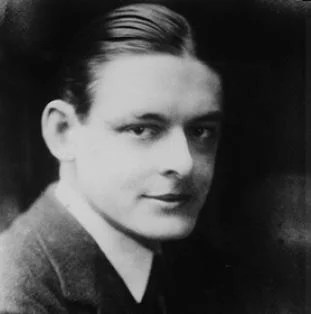
D H Lawrence , Aged 21 years Ash Tree in Summer Rustic House with Red Ash Tree outside in Aurumn.
D.H. Lawrence (1885–1930). Amores. 1916. 4. Discord in Childhood OUTSIDE the house an ash-tree hung its terrible whips, 1 And at night when the wind arose, the lash of the tree 2 Shrieked and slashed the wind, as a ship’s 3 Weird rigging in a storm shrieks hideously. 4 Within the house two voices arose in anger, a slender lash 5 Whistling delirious rage, and the dreadful sound 6 Of a thick lash booming and bruising, until it drowned 7 The other voice in a silence of blood, ’neath the noise of the ash. 8
“Discord In Childhood” , A Childhood Poem By D H Lawrence is about metaphorical “lashes , anger , craze, fury and constant conflict which surrounds the mindset of a child wherein the conflict in the home is compared to a “Storm” outside. : : : :
Stanza 1 : ” Outside the house an ash-tree hung its terrible whips,
And at night when the wind arose, the lash of the tree ” : : : : lines 1 &2 : :
“When the wind arose at night” (increased) , the branches of “an ash- tree” became“whips” : strike or beat about sharply. This is like lashing of the tree / coming togetherfor a while due to a “terrible” Storms. The noise of the shrill cry piercing sharply is heard as if slashing at the wind : ” Shrieked and slashed the wind “( line 3 ) which is comparable to what is weirdly heard from the riggingships in a storm hideously.”( line 3 & 4 ) Meaning , horridly or monstrously that sounds grossly offensive & bad.
” Shrieked and slashed the wind, as a ship’s
Weird rigging in a storm shrieks hideously.”: lines 3 & 4 : :
The terrifying image with the lines 3 & 4 , creates a turbulent and troubled scene of unrest in a child, watching and hearing about a storm outside , from the inside of his house. What is going on inside the house!?
Stanza 2 : : “Within the house two voices arose in anger, a slender lash 5
Whistling delirious rage, and the dreadful sound 6
Of a thick lash booming and bruising, until it drowned 7
The other voice in a silence of blood, ’neath the noise of theash.” 8 : : : : ( lines 5 To 8 ) : :
“Within the house two voices ( of the parents) arose ( increase ) in anger, a slender ( delicate or thinly build ) lashing ( challenging aggressively ) speech of a child’s mother , described as “Whistling delirious “( frantic / unrestricted /ill )”rage” ( furiously/ very angrily ) through the air ( just like the Ash tree outside ) , “and the dreadful” ( fearsome/ frightening ) “sound”. ( line 5 & 6 ) : : The other voice in a silence of blood ,”Of a child’s Father is “Of a thick lash booming and bruising,”( line 7 & 8 ) is a deep and resonant and expanding hard -hit boom , that is forcefully hurting ( bruising ) “untill it drowned ” : It could have caused physical or more an emotional injury , hence harmful which, “in a silence of blood,”is stretched along the house , “beneath the noise of the Ash.” And the poem ends here , D H Lawrence couldn’t extend it beyond the 8 lines in 2 Stanzas.: : In the words ” untill it ( Mother’s Voice / perhaps her life ) drowned by the Other (Brutal/ Compelling / dominant) Voice Of Father. : : These are unhappy moments of childhood and the “discord” that haunted one youth’s days. The child draws away from the quarrelling noise made by his / her parents and finds the quarrel pulled out across the binding branches of the Ash tree with the pressure of the storming air and the frightening noise is thus deflected in to the echoing Violent Sound in “ash-tree” , ‘slashed‘ and ‘ash’. Isn’t this , a misconception resulting from incorrect reasoning in the mindset of a child !? It’s pitiable and unfortunate. The pathos build inThePoem ,”Discord In Childhood”by D H Lawrence arouse emotions of pity , sorrows and sympathy fora child. : : : :
“Discord In Childhood” , A Childhood Poem By D H Lawrence , Information Appreciation and poem Analysis Presented by V Jayaraj Pune India December 4 , 2022 : : : : : : : :
Emily Dickinson. : Her Most Famous Quote : “Hope is the thing with feathers that perches in the soul – and sings the tunes without the words – and never stops at all.”
The Child’s faith is new : Emily Dickinson : : 637
The Child’s faith is new— Whole—like His Principle— Wide—like the Sunrise On fresh Eyes— Never had a Doubt— Laughs—at a Scruple— Believes all sham But Paradise—
Credits the World— Deems His Dominion Broadest of Sovereignties— And Caesar—mean— In the Comparison— Baseless Emperor— Ruler of Nought— Yet swaying all—
Grown bye and bye To hold mistaken His pretty estimates Of Prickly Things He gains the skill Sorrowful—as certain— Men—to anticipate Instead of Kings —
” The Child’s Faith Is New” , A Childhood Poem , By Emily Dickinson, is about Wide Eyed Innocence , Faith & Religion. : :
Stanza One, is about the purity of a child’s “new faith” , “Wholelike His principle“( correct maxim for a conduct ) and Wide like the Sunrise. ” On Fresh Eyes” , that is When a child is born and seeing a World around, S(H)E has “Never had A Doubt”. : That is the reason , as during childhood , S(H)E is filled with “Faith”and is full of hope. S(H)E laughs ( deals it by laughing & pretending to be amused by it ) at scruple ( Scruple means a feeling of doubt or hesitation with regard to the morality or propriety of a course of action / reluctance to do something that one thinks may be wrong ) ; and assumes everything and everyone before her/him as alright , even if that could be fake or a person before her/him is imposter and the things given are “sham”, not what seems to be. This is because men are born credulous ( having a tendency to believe readily ) : Thus , it appears that The Poet blindly believes in goodness, and disagrees with people of practicality and disbelief without any reservations or exceptions. When the belief System lowers the expectations, the things let you down. But, of no help, “the child’s faith is new” , raw, unused and is yet to be tested. : : : :
Stanza Two, is about attitude and belief of a child. The child feels that the whole world has been set up specifically for her/ him. Trust the world and consider it my own world , thus “Credits the World –” : the Poet acknowledges , ( perhaps in praise or respect) : “Deems His Dominion broadest of Sovereignties –” : Meaning ,’Conveys as her / his conviction’ ; and His authority to govern is free with dominance. : Knownas the biggest of all in This World , and in the Other World , that is the Universe, the Caesor in comparison with the child’s perceived dominion over the world, becomes a mean, “Baseless Emperor –” in reason or in fact unsupported as a ruler of the world. And his rule looks like of no value or importance. : : “Ruler of Nought– Yet Swaying all –” : Swaying or Swinging without carrying support or persuading aproval : : : : Stanza Three, is about realisation with growth and determining the right judgement. especially of things that can be “prickly”: irritable and hurting. As her/his “Pretty estimates” are now recognised as “mistaken”, S(H)E feels prickly by knowing faulty and alarming things; the grown up young child isnowable to anticipate the real Sorrow of common men, rather than kings. S(H)E will expect men to be men rather than King. Sees everyone, no matter how grand they seem to look like. Sees the weaknesses and flaws in everyone who appears strong or invincible. Everything is mortal afterall,S(H)Eunderstands. ( perhaps the common men dont express their sorrows, just as much the delicately raised kings. ) : : The Poet thus peculiarly expresses her own idiosyncratic gestures of looking at the individuals and the World around her. : :
“The Child’s Faith Is New” , A Childhood Poem By Emily Dickinson Information Appreciation and poem Analysis Presented by V Jayaraj Pune India December 3 , 2022 : :
James Whitcomb Riley , in 1913.: : was a poet who achieved national fame in the United States during the late 19th and early 20th century. “Little Orphant Annie” is one of Whitcomb’s most well known poems. Mary Alice “Allie” Smith, Riley’s inspiration for the poem. : Wikie notes : Mary Alice Smith was born near Liberty, Union County, Indiana, 25 September 1850. She lived on a small farm with her parents until (as one story goes) both parents died when she was about nine years old. Some stories say that Mary’s mother died when she was very young and her father, Peter Smith, died when she was ten. Other evidence points to her father’s being incarcerated at the time. Whatever the cause, she was considered an orphan. Mary’s uncle, a John Rittenhouse, came to Union County and took the young orphan to his home in Greenfield where he “dressed her in black” and “bound her out to earn her board and keep”. Mary Alice was taken in by Captain Reuben Riley as a “bound” servant to help his wife Elizabeth Riley with the housework and her four children: John, James, Elva May and Alex. As was customary at that time, she worked alongside the family to earn her board.In the evening hours, she often told stories to the younger children, including Riley. The family called her a “Guest” not a servant and treated her like she was part of their family. Smith did not learn she was the inspiration for the character until the 1910s when she visited with Riley. : : Riley had previously presented a fictionalized version of Mary Alice Smith in his short story “Where Is Mary Alice Smith?,” published in The Indianapolis Journal of 30 September 1882. In it, Mary Alice arrives at her benefactor family’s home and wastes no time in telling the children a grisly story of murder by decapitation and then later introduces them to her soldier friend Dave who is soon killed upon going off to war. The plot of this short story was heavily incorporated into the 1918 movie adaptation as well as Johnny Gruelle’s 1921 storybook. ( The Complete Works of James Whitcomb Riley: Written, Together with Photographs, Bibliographic Notes, and a Life Sketch of the Author, ed. Edmund Henry Eitel, “biographical edition,” vol. 6, Indianapolis: Bobbs‐Merrill Co., 1913, Pg 403 ) : During the 1910s and 1920s, the title became the inspiration for the names of Little Orphan Annie and the Raggedy Ann doll, created by fellow Indiana native Johnny Gruelle. : The verses of the poem detail the scary stories told by Annie when her housework was done, repeating the phrase “An’ the Gobble-uns ‘at gits you ef you don’t watch out!”It was popular among children, and many of the letters Whitcomb received from children commented on the poem. It remains a favorite among children in Indiana and is often associated with Halloween celebrations. : : Illustration by Ethel Franklin Betts in the Orphan Annie book While the Heart Beats Young by James Whitcomb Riley. : ( Wikie Pictures) HAPPY HALLOWEEN! Dear Children!!
Little Orphant Annie James Whitcomb Riley – 1849-1916
Little Orphant Annie’s come to our house to stay, An’ wash the cups an’ saucers up, an’ brush the crumbs away, An’ shoo the chickens off the porch, an’ dust the hearth, an’ sweep, An’ make the fire, an’ bake the bread, an’ earn her board-an’-keep; An’ all us other childern, when the supper things is done, We set around the kitchen fire an’ has the mostest fun A-list’nin’ to the witch-tales ‘at Annie tells about, An’ the Gobble-uns ‘at gits you Ef you Don’t Watch Out!
Onc’t they was a little boy wouldn’t say his prayers,— So when he went to bed at night, away up stairs, His Mammy heerd him holler, an’ his Daddy heerd him bawl, An’ when they turn’t the kivvers down, he wasn’t there at all! An’ they seeked him in the rafter-room, an’ cubby-hole, an’ press, An’ seeked him up the chimbly-flue, an’ ever’wheres, I guess; But all they ever found was thist his pants an’ roundabout– An’ the Gobble-uns’ll git you Ef you Don’t Watch Out!
An’ one time a little girl ‘ud allus laugh an’ grin, An’ make fun of ever’one, an’ all her blood an’ kin; An’ onc’t, when they was “company,” an’ ole folks was there, She mocked ‘em an’ shocked ‘em, an’ said she didn’t care! An’ thist as she kicked her heels, an’ turn’t to run an’ hide, They was two great big Black Things a-standin’ by her side, An’ they snatched her through the ceilin’ ‘fore she knowed what she’s about! An’ the Gobble-uns’ll git you Ef you Don’t Watch Out!
An’ little Orphant Annie says when the blaze is blue, An’ the lamp-wick sputters, an’ the wind goes woo-oo! An’ you hear the crickets quit, an’ the moon is gray, An’ the lightnin’-bugs in dew is all squenched away,– You better mind yer parents, an’ yer teachers fond an’ dear, An’ churish them ‘at loves you, an’ dry the orphant’s tear, An’ he’p the pore an’ needy ones ‘at clusters all about, Er the Gobble-uns’ll git you Ef you Don’t Watch Out!
This poem is in the public domain.
“Little Orphant Annie”, one of the best known poems , By James Whitcomb Riley ( 1849 – 1916 ) is about an orphaned girl who tells the children in whose house she lives scary stories about “the Gobble-un.” : : First published under the pseudonym “Benj. F. Johnson, of Boone” in the popular collection The Old Swimmin’ Hole and ’Leven More Poems (1883) & as “The Elf Child” in a Newspaper: ‘Indianapolis Journal’ , dated November 15 , 1885 : : The cartoonist Harold Gray named his comic strip about a similarly plucky girl Little Orphan Annie. : : Gray initially proposed a new feature to the Chicago Tribune Syndicate titled “Little Orphan Otto,” but the syndicate suggested that the lead character be female. Although Gray’s artwork was relatively unsophisticated compared with that of many of his fellow cartoonists, his storytelling riveted his readers and made Annie one of the most successful adventure strips of the 20th century.
Gray wrote and drew the serial until his death in 1968, after which the syndicate tried and failed to recapture the strip’s spirit with several replacements. From 1974 to 1979 they simply reprinted old strips. After the opening and resounding success of an Annie Broadway musical (1977–83, revived on Broadway in 1997), the strip was relaunched in 1979 with cartoonist Leonard Starr. When Starr retired in 2000, the feature was significantly redesigned and modernized by writer Jay Maeder and artist Andrew Pepoy. The Tribune Syndicate discontinued the daily print version of the comic in June 2010. Several Annie movies were made, the first in 1932; a television movie aired in 1999. : : The name was changed by Riley to “Little Orphant Allie” at its third printing; however, a typesetting error during printing renamed the poem to its current form. Known as the “Hoosier poet”, Riley wrote the rhymes in 19th Century dialect. it served as the inspiration for the comic strip Little Orphan Annie which itself inspired a Broadway musical, several films, and many radio and television programs. : : The subject was inspired by Mary Alice “Allie” Smith, an orphan living in the Riley home during her childhood. The poem contains 4 Stanzas ; the first introduces Annie and the second and third are stories she is telling to young children. Each story tells of a bad child who is snatched away by goblins as a result of his or her misbehavior. The underlying moral and warning is announced in the final stanza, telling children that they should obey their parents and be kind to the unfortunate, lest they suffer the same fate.: :Little Orphant Annie was made into a silent film in 1918, featuring Colleen Moore as Annie. She had previously been in A Hoosier Romance, also based on Riley’s work. Riley also appeared in the film as the silent narrator.
A short animated film based on the poem was released by Soyuztelefilm studio in Russia in 1992, directed by Yulian Kalisher. The poem was translated into Russian by Oleg Yegorov.
First Little Orphan Annie Sunday page (November 2, 1924)
The poem tells of Annie, an orphan, who has come to live at a house where other children reside. She does many of the family tasks and more significantly, she also tells stories to the kids. These stories are funny but exciting, and strange , unusually with a frightening event or features as with eerie ( supernatural ) characters. they also are intended to teach the children a valuable moral lesson. At the end of every stanza the, the drawn out warning of the “goblins” taking children who “don’t watch out” is repeated. This means they need to be careful of their actions and not be badly behaving naughty so astonot be taken by the scary goblins as a consequence. : : The theme of the poem is to have strong moral values, like Annie does, in order to be safe and live well. : : : :
Notes for each of the 4 Stanzas Pending visit this post again later on to enjoy the appreciation of the poem V Jayaraj Pune India December 2 , 2022 : : : : : : : :
Victor-Marie Hugo (French: [viktɔʁ maʁi yɡo] ( 26 February 1802 – 22 May 1885 ) was a French Writer in Romanticism and politician, Poet, novelist, dramatist, essayist : considered one of the greatest French Writers of all time.During a literary career of more than sixty years : Notable works Les Misérables , Ruy Blas, The Hunchback ofNotre Dame, He produced more than 4,000 drawings in his lifetime, and campaigned for social causes such as the abolition of capital punishment.he became a passionate supporter of republicanism serving in politics as both deputy and senator.His work touched upon most of the political and social issues and the artistic trends of his time. His opposition to absolutism and his literary stature established him as a national hero. He was honoured by interment in the Panthéon. “.. . And find their ragged babes that weep!”: : A smiling child in the shadow / lap of her mother. : Requiring to be clothed away , whether worn or torn , before it weeps. “When God seeks out these tender things Whom in the shadow where we sleep He sends us clothed about with wings,”( Victor Hugo )
THE POOR CHILDREN
by: Victor Hugo (1802-1885)
TAKE heed of this small child of earth; He is great; he hath in him God most high. Children before their fleshly birth Are lights alive in the blue sky. 4 In our light bitter world of wrong They come; God gives us them awhile. His speech is in their stammering tongue, And his forgiveness in their smile. 8 Their sweet light rests upon our eyes. Alas! their right to joy is plain. If they are hungry Paradise Weeps, and, if cold, Heaven thrills with pain. 12 The want that saps their sinless flower Speaks judgment on sin’s ministers. Man holds an angel in his power. Ah! deep in Heaven what thunder stirs, 16 When God seeks out these tender things Whom in the shadow where we sleep He sends us clothed about with wings, And finds them ragged babes that weep! 20
Stanza 1: About the creation of children. Every child is created pure and innocent because they’re created in the image and likeness of God. They’re so perfect that before they’re born they’re stars in the heavens, close to God : : “Light’s alive in the blue sky”( Line 4 ) : : : :
Stanza 2: Although the children are growing up, they still have ‘God Given’ innocence , and purity they received upon their creation. They speak haltingly , but God’s speech is be seated in their “stammering tounge”, and God’s forgiveness spreads their lips , with the amusement expressed in the Smiles. They have come in our light bitter world of wrong” : : : :
Stanza 3 Talks about the children’s innocence. They take the world as it is . If they are hungry , the Paradise weeps. Heaven thrills with pain when they are feeling cold. “Their right to joy is plain.”: Meaning ,they are not reactionary ( like Adults! ) : their senses and judgement are pure and unmixed. ” The sweet light rests upon our eyes.” Meaning , they are pleasing , loveableand fresh. : : : :
Stanza 4: As they grow, their “Want sap their sinless flower” , Meaning, their Virtues of Purity and Innocence get depleted just like SapCirculation in the vascular system of the flowering plant , made up with mixture of the water, air, with the presence of sunlight in the greens , and watery salts / minerals brought up through theearthenrootsabsorption in the living plants ; all being ungodly and wicked mixtures, play out, or weaken the ( Holy, impeccant ) Sinlessness , intact in the Flower ( A Symbol of Creation like a child ) : Thus Humanwantturns into greediness.“Sin’s ministers”corrupting The God created Children could be Worldly Living or Wicked Elements ( Demons ) corrupting with their Power. : But, “Man holds an angel in his power,” tells about Man’s ( religious!? ) ‘belief System’ with the help they stillreceivefrom God, even they’ve lost the Holy Perfection , Purity and innocencethey once had . “Ah, deep in the Heaven , what thunder stirs.” ( line 16 ) , Meaning , deep , that is , profound , prolongedthunder arising from the Heaven , is mysteriously incomprehensible , and so , magically spreading down across the earth which can touch, affect, and arouse the God created Children. : : : :
Stanza 5: “He sends us clothed about with wings” ( line 19 ). The mothers cover their Children with whatever clothes they have to protect them, and the Adults fit out them, with the shaped out cover of ‘influences’, ( such as their own ‘Thoughts and belief System’) that should save the children from losing the gift of God Given Purity & innocence showered with on their birth. Whether , these are the misfit & mistreat , remains as questionable. ” When God seeks out these tender things”( line 17 ) : Meaning , God looks for a tender / a small poor child, Or such things , and “in the shadow where we sleep , sends us clothed about with wings,” Meaning, a Poor innocent child sleeping in the shadow ( lap ) of h(er)is Mother, : “And finds them ragged babes that weep!” ( lines 18 , 19 & 20 ) : Meaning , The Virtuous Purity and innocence and perfection are found in the babies/ infantsbeing wrapped upin worn Or torn Clothes , when they “weep.”( The Poet for the first time reveals here they are Poor small infants/ Children God looks for”) : : One can also talk about society during the time Hugo wrote this, as the poem is a reflection on France , Her Poor Children ! We have discussed in the first two Stanzas about how God bless the world with children, and despite their beauty and innocence, they’re mistreated. That is why they are called “les enfants pauvres” : These “Children are lights alive in theblue sky , before their fleshly birth .. . “God gives us them awhile”( lines 5 & 6 ) : , that is only for a short time. Hence, “Take heed of this small child of earth;” Pay attention to the advice of the Poet.Because , it is God Saying : : ” He is great, ” :: : :
“The Poor Children”, A Children Poem , By Victor Hugo Information Appreciation and poem Analysis Presented by V Jayaraj Pune India December 1 , 2022 : : : : : : : :
Unwanted and Abandoned Children: Treasures on the Streets of Paris , during the early 19 th Century.
Alan Alexander Milne ( 18 January 1882 , Kilburn, London, England – 31 January 1956 , Aged 74 , Hartfield, Sussex, England ) : : Novelist, playwright, Poet.Children’s literature.: Winnie the pooh: Alma Mater : Trinity College , Cambridge.Spouse:. Dorothy “Daphne” de ( m. 1913 ) : English writer who was popular for his books about the teddy bear Winnie-the-Pooh, as well as for children’s poetry. Milne was primarily a playwright before the huge success of Winnie-the-Pooh overshadowed all his previous work. Milne served in both World Wars, as a lieutenant in the Royal Warwickshire Regiment in the First World War and as a captain in the Home Guard in the Second World War.Milne was the father of bookseller Christopher Robin Milne, upon whom the character Christopher Robin is based. It was during a visit to London Zoo, where Christopher became enamoured with the tame and amiable bear Winnipeg, that inspired Milne to write the story for his son. : : COMMEMORATION : : “I suppose that every one of us hopes secretly for immortality; to leave, I mean, a name behind him which will live forever in this world, whatever he may be doing, himself, in the next.”— A A Milne: :
The actual stuffed toys owned by Christopher Robin Milne and featured in the Winnie-the-Pooh stories. They are on display in the New York Public Library Main Branch in New York without Roo, who was lost when Christopher Robin was 9. Buckingham Palace : : A A Milne
Buckingham Palace : : A A Milne : : : : They’re changing guard at Buckingham Palace – Christopher Robin went down with Alice. Alice is marrying one of the guard. “A soldier’s life is terrible hard,” Says Alice.
They’re changing guard at Buckingham Palace – Christopher Robin went down with Alice. We saw a guard in a sentry-box. “One of the sergeants looks after their socks,” Says Alice.
They’re changing guard at Buckingham Palace – Christopher Robin went down with Alice. We looked for the King, but he never came. “Well, God take care of him, all the same,” Says Alice.
They’re changing guard at Buckingham Palace – Christopher Robin went down with Alice. They’ve great big parties inside the grounds. “I wouldn’t be King for a hundred pounds,” Says Alice.
They’re changing guard at Buckingham Palace – Christopher Robin went down with Alice. A face looked out, but it wasn’t the King’s. “He’s much too busy a-signing things,” Says Alice.
They’re changing guard at Buckingham Palace – Christopher Robin went down with Alice. “Do you think the King knows all about me?” “Sure to, dear, but it’s time for tea,” Says Alice
” Buckingham Palace” , By A A Milne , is about Alice and Christopher’s trip to see the changing of the guard , And about the Role of a King & People’s perfection of this Role. Milne only includes Christopher from the his World Famous Winnie-the-Pooh stories. : : His son was famously the inspiration for the character of Christopher Robin and his stuffed animals, the inspiration for the other characters. : : Alice and Christopher are consistently disappointed in regards to the changing of the guard in sentry box , they see on their Everyday Visit. They fail to meet their hope to see a King’s face, as he never came. They cite to the big ground Parties and on the intricacies , high Ness & low Ness, with what the king has to deal with, “too busy a Signing things.” ( Seems unimportant feature in a life not impressive ) & his ability to “know” everyone he rules.: : : : The Poem has 6 Stanzas , each with 5 lines ( quintains ) that follow a simple and repetitive rhyme scheme AABBA. : The use and reuse of refrains, for example, the first line of each stanza “They’re changing guard at Buckingham Palace” and the last line of each stanza “Says Alice”; And the second line of every stanza is also repeated in full,so in this way are followed throughout in all the Stanzas which is easy going for all the children to remain accustomed to the sameRhyme. : :
The young Christopher Robin asks if “the King knows all about me”. To this profound question in a child’s mind , Alice answers in ‘yes’ for sure , but its “time for tea”she says. With that remarks , they go into their daily chores. So , Dear Children , Visiting a King’s Palace Or say , PM’s House Or Office , from outside , is unimportant , meaningless and inessential.
“Buckingham Palace”, By A A Milne , A Children’s Poem , Information Appreciation and poem Analysis Presented by V Jayaraj Pune India November 30 , 2022 : : : : : : : :
Shadows on the wall Noises down the hall Life doesn’t frighten me at all
Bad dogs barking loud Big ghosts in a cloud Life doesn’t frighten me at all
Mean old Mother Goose Lions on the loose They don’t frighten me at all
Dragons breathing flame On my counterpane That doesn’t frighten me at all.
I go boo Make them shoo I make fun Way they run I won’t cry So they fly I just smile They go wild
Life doesn’t frighten me at all.
Tough guys fight All alone at night Life doesn’t frighten me at all.
Panthers in the park Strangers in the dark No, they don’t frighten me at all.
That new classroom where Boys all pull my hair (Kissy little girls With their hair in curls) They don’t frighten me at all.
Don’t show me frogs and snakes And listen for my scream, If I’m afraid at all It’s only in my dreams.
I’ve got a magic charm That I keep up my sleeve I can walk the ocean floor And never have to breathe.
Life doesn’t frighten me at all Not at all Not at all.
Life doesn’t frighten me at all.
“Life Doesn’t Frighten Me”, By Maya Angelou A perfect children’s Poem , is about overcoming fear and not allowing it to master you ; about self-belief and the importance of FACING THE CHILDREN’SFEARS. : : The Poet/ Speaker lists a number of Animals / Other Objects which are generally understood as Fearsome, in common parlance of the Children Worldviews. And by referring them keeps ingeminating at intervals her‘Mantra’ : The Sacred utterance which is , ” Life doesn’t frighten me at all”, At the Poem’s Ending too, the‘Refrains’ ( Refrains are used in poems and songs. They are repeated sections of text that usually appear at the end of a stanza or verse) : : ‘Life Doesn’t Frighten Me‘ was published in 1993 alongside illustrations by the artist Jean-Michel Basquiat. : : 14 stanza poem into uneven sets of lines, ranging from 1 line up to 7 lines ; mostly, tercet, meaning 3 lines. In the tercets main rhyme is AAAA or AAB , the other stanzas make use of an alternating rhymeofAABB. :
Stanza 1 & 2 : : ” Shadows on the wall Noises down the hall Life doesn’t frighten me at all
Bad dogs barking loud Big ghosts in a cloud Life doesn’t frighten me at all” : : The listed 4 Nos of fearsome animals ( 🐕Bad Dogs 🐕 ) /things ( Shadows , Noises & big Ghosts , described are like a Nursary Rhymes. None of them if happen to comes up in her life, frighten her at all. : : : :
Stanza 3 & 4 : : “Mean old Mother Goose Lions on the loose They don’t frighten me at all
Dragons breathing flame On my counterpane That doesn’t frighten me at all.” : : “Mean old Mother Goose,”( web footed long necked , migratory , large Acquatic Bird ) & “Lions on the loose”( Alliteration ) , And “Dragons breathing fire”( dragon is a fire rake, winged reptilian only in Teutonic / German , Scandinavian / British People’smythology on her bedspread”( decorative cover / counterpanecovering ) don’t frighten herat all. : : : :
Stanza 5 & 6 : : “I go boo Make them shoo I make fun Way they run I won’t cry So they fly I just smile They go wild
Life doesn’t frighten me at all.” : : She says “boo”( hissing , or spattering sound in crying ly / scaringly noise of displeasure/ disapproval ) and they “shoo”( Expression in frightening away to drive off the animals. They run when she makes fun of them and they fly away when she doesn’t cry. The following One line in Stanza 6, ” Life doesn’t frighten me at all ” : : : :
Stanza 7 & 8 : : ” Tough guys fight All alone at night Life doesn’t frighten me at all.
Panthers in the park Strangers in the dark No, they don’t frighten me at all.” : : She says , being all alone at night and when “Tough guys fight”. She isn’t scared of strangers or of “Panthers in the park” : : : :
Stanza 9 : : That new classroom where Boys all pull my hair (Kissy little girls With their hair in curls) They don’t frighten me at all.” : : She says , most children experience fear at new classroom but she does not. The boys might pull her hair , meaning strain abnormally with physically or forcefully or by way of exerting ( psychological ) power , say by taunting her, but she doesn’t care , true, also with kissy girl’s personality ( “With their hair in curls” ) If they show her “frogs and snakes” she isn’t bothered either. : : : :
Stanzas 10 To 14 : Notes Pending visit this post again later on to enjoy the appreciation of the poem V Jayaraj Pune India November 29 , 2022 : : : : : : : :
Roald Dahl ( 13 September 1916 , at Cardiff – 23 November 1990 , at Oxford , England , Aged 74 , ) in April 1954.: Novelist , Poet, Screenwriter : Active 1942 – 1990 : Notable works James and the Giant Peach , Charlie and the Chocolate factory, Fantastic Mr Fox, Danny the Champion of the world, George , Marvelous Medicine, The BFG , The Witches, Matilda. : : Spouse : Patricia Neal ( m. 1953 – div 1983 ) : Millitary Career : Squadron leader, Ii WW , A British novelist, short-story writer, poet, screenwriter, and wartime fighter ace of Norwegian descent. His books have sold more than 250 million copies worldwide. Dahl has been called “one of the greatest storytellers for children of the 20th century”Dahl was flying a Gloster Gladiator when he crash landed in Libya. Bad. Dangerous , Man- Eating Wolf Hungry To Eat Grandma and Her little grand child, With Sharp White Teeth , Great Big Eyes and Ears Little Red Riding hood, finding and courageously facing a Bad Wolf dressed up in disguising Grandma’s Big Furry Coat. She shoots him with 3 Bullets fired from her Pistol before he can attempt to eat her up.Illustration for Roald Dahl’s LITTLE RED RIDING HOOD AND THE WOLF by Quentin Blake
Little Red Riding Hood and the Wolf As soon as Wolf began to feel That he would like a decent meal, He went and knocked on Grandma’s door. When Grandma opened it, she saw The sharp white teeth, the horrid grin, And Wolfie said, “May I come in?” Poor Grandmamma was terrified, “He’s going to eat me up!” she cried. And she was absolutely right. He ate her up in one big bite. But Grandmamma was small and tough, And Wolfie wailed, “That’s not enough! I haven’t yet begun to feel That I have had a decent meal!” He ran around the kitchen yelping, “I’ve got to have a second helping!” Then added with a frightful leer, “I’m therefore going to wait right here Till Little Miss Red Riding Hood Comes home from walking in the wood.” He quickly put on Grandma’s clothes, (Of course he hadn’t eaten those). He dressed himself in coat and hat. He put on shoes, and after that He even brushed and curled his hair, Then sat himself in Grandma’s chair. In came the little girl in red. She stopped. She stared. And then she said,
“What great big ears you have, Grandma.” “All the better to hear you with,” the Wolf replied. “What great big eyes you have, Grandma.” said Little Red Riding Hood. “All the better to see you with,” the Wolf replied.
He sat there watching her and smiled. He thought, I’m going to eat this child. Compared with her old Grandmamma She’s going to taste like caviar.
Then Little Red Riding Hood said, “But Grandma, what a lovely great big furry coat you have on.”
“That’s wrong!” cried Wolf. “Have you forgot To tell me what BIG TEETH I’ve got? Ah well, no matter what you say, I’m going to eat you anyway.” The small girl smiles. One eyelid flickers. She whips a pistol from her knickers. She aims it at the creature’s head And bang bang bang, she shoots him dead. A few weeks later, in the wood, I came across Miss Riding Hood. But what a change! No cloak of red, No silly hood upon her head. She said, “Hello, and do please note My lovely furry wolfskin coat.”
— Roald Dahl : : Revolting Rhymes : : : :
“Revolting Rhymes”, A Revolting , Horrific and Funny Modern Day Fairy Tale, By Roald Dahl, is a Retelling of the 17 Th Century Fairy Tale , as adapted with a different plot , opposite ending, and a newly reformed protagonist character of a little girl – child , Red As Champion to bring fairy happiness in the end, by eliminating an antagonist Villainous Character by way of indulging herself , becoming a violent fighter in self defence. Alongside these transformed elements of Fairy Tale, many resemblances remain intact inasmuch as written by Perrault’s “original” Red Riding Hood with a meek little girl , as a principal character. : : : :
PART 1 : : Wolf feels he is in the mood for a decent meal and knocks on Grandma’s door. Terrified, Grandma knows she will be eaten. Wolf is not satisfied with the Grandma, since she was small and tough, so he decides to wait for Little Red Riding Hood to return from her walk in the woods. The wolf dresses in grandma’s clothes, puts on shoes , brushes and curls his hair, and waits in ( now dead ) Grandma’s chair. PART 2 : : When the little girl comes in, she comments on Wolf’s great big ears and great big eyes; the wolf responds by saying , ” All the better to see you with.”: : The wolf is quite happy that he is about to eat the child, but the little girl compliments the wolf’s fur coat. The wolf gets angry at her for saying the wrong line, but states that he will eat her anyway . Red Riding Hood smiles at this and suddenly pulls out a pistol very quickly, hidden in her knickers, and shoots the wolf with firing three bullets. : : : : : : : : : : PART 3 : : A few weeks later, the narrator comes across Little Red Riding Hood in the woods , and finds unexpectedly that she looks much different as she is not wearing her red cloak , that is, her usual red loose outer garment. Instead, she wears a lovely, furry, wolf-skin coat which she shows him.
Thus , in the above lyrical Fairy Tale Poem , We find the Villainous Character Of Wolf ; as being shifty and untrustworthy. He pursues deceitful and evasive ways to enjoy a decent meal , first by knocking at Grandma’s door and by saying in worldly pleasing manner , “May I Come in?” and made his smiling face pulling back the lips over ( “the horrid grin ” : terrifyingly bad offensive appearance ), when door is opened up by her. And thereafter , he eats her up in one bite with his sharp white teeth. Moreover , he also tricks little Red Riding hood with a devious plan to eat her too. : : : : So , Dear Listening Children , you should always be careful in finding out such bad furry creature , with sharp white teeth and great big eyes and ears , standing with a flimsy smiling face made up to deceive you. Believe me , they would turn out later as to be untrusty and dangerous. And , importantly , the children should learn how to become courageous in facing and outsmarting such evasive , devious , and bad , dangerous creature just like what in the poem, little Miss Red Riding hood , does by shooting the bad wolf with her pistol. : : Be a plucky ( with courage and determination in difficulties and dangers ), resourceful , and brave girl / boy , who pulls a weapon even like a pistol when required in self- defence: : ( She “Whips a pistol from her knickers!”) : : No hunter is going to rescue each and everyone at all times. Little children should become robust, gutsy , brave, and spirited. Nothing should inhibit a brave child in facing any danger. : : The story is a warning to elderly women against talking to the wrong kind of men. As Women like our elderly innocent Grandma who meekly opens the entrance door to a bad stranger , We have to protect her against a risky Conversations with a bad Strangers. Appearance could be deceiving .”Don’t trust faker and bogus , innocent looking , fraudulent disguised bad strangers” : This is the Central Idea of this Modern day Fairy Tale : : : :
A silly – looking “Red hood” of a little girl , is replaced by herself for a coat made of the Skin of a villainous wolf killed by her. This serves element of comedy as well as for shock value and also inculcates a new modern day value system of independence and hard – headed heartlessness in to our younger generations in dealing with bad strangers, whenever required. Dahl’s children’s poem reflects the emerging modern standards of society, and women’s lib. The 20 Th / 21 St Century Child is to be perceived as an entity distinct from the adult, and be recognised for imparting for modern day needs relevant to our changing time , especially by revised education system and learnings from the new institutions and the Newly designed books, written specifically for them. : : : :
“Little Red Riding hood” , By Roald Dahl , A Children’s Poem Information Appreciation and poem Analysis Presented by V Jayaraj Pune India November 28 , 2022 : : : : : : : :
Allan Ahlberg Born: 5 June 1938 (age 84); Croydon, England Education: Sunderland Technical College Spouse: Janet Ahlberg (m. 1969; died 1994); Vanessa Clarke Years active: 1976–present. Allan Ahlberg, a former teacher, postman, plumber’s mate, and gravedigger is an English children’s author. His books are known for their gentle humor and are enjoyed by both children and adults. He has written more than 140 children’s books. His wife, Janet Ahlberg ( died in 1994 ) , illustrated many of the books. Allan Ahlberg is known for Woof! (1989), Jackanory (1965) and Happy Families (1989).
Please Mrs Butler By Allan Ahlberg
Please Mrs Butler This boy Derek Drew Keeps copying my work, Miss. What shall I do?
Go and sit in the hall, dear. Go and sit in the sink. Take your books on the roof, my lamb. Do whatever you think.
Please Mrs Butler This boy Derek Drew Keeps taking my rubber, Miss. What shall I do?
Keep it in your hand, dear. Hide it up your vest. Swallow it if you like, my love. Do what you think is best.
Please Mrs Butler This boy Derek Drew Keeps calling me rude names, miss. What shall I do?
Lock yourself in the cupboard, dear. Run away to sea. Do whatever you can, my flower. But don’t ask me.
From Collected Poems. : : From clpe.org.uk For Educational purposes only.
“Please Mrs. Butler “, By Allan Ahlberg as HERE In ABOVE, is about a conversation in the School Classroom between a Teacher , Mrs. Butler & Her Three Students. Each one of all the three Students complains about a naughty boy Derek Drew who keeps copying the work book in one case , keeps taking rubber in another case , and keeps calling rude names in a third student’s case. The Names of the three victim students are not mentioned in the poem. However , Mrs. Butler does reply to their questions / complaints, requiring her to advise them what they should do. The complaints are clear in which they all have explained in what way , a notorious Derek Drew has been harrassing them , And the expectations are specific redressal of their daily occuring problems. Although the victim students can’t take any direct actions on their own, Mrs. Butler replies with her evasive statements like, “Go and sit in the hall , on the roof , err , in the sink, with the books”to evade notorious Derek harrassing his classmate by continuously copying the workbook maintained by one victim student. In the second case , the vague statement is made by Mrs. Butler by saying , ” keep the rubber in the hands, hide up to a vest, err swallow it “, meaning ” do what you think is best” to prevent notorious Derek harrassing , always by taking the rubber. And in the third case , the ambiguous statement is made by Mrs. Butler by saying , ” Lock youself in the cupboard, run away to sea “, meaning do “whatever you can ( ! ) , but don’t ask me ( !! ) “If a victim student wishes to remain unused or unspent in getting away from hearing rude name-calling by a prankster Derek with his rude tongue. Mrs. Butler calls upon the victim students describing with My dear / My love / My flower, And lamb , but didn’t treat them empathetically. She neither took infamous Derek Drew to task using her Authority as a Teacher to censure severely or angrily for his notorious and ludicrous uncivilized bad manners. It appears in the poem that Mrs. Butler is avoiding her duty of an ideal teacher or escaping from the difficulty of facing ill- natured crossfire. So much so that she wouldn’t try to practice reprimanding or counselling seriously required for notorious Derek Drew harrassing his classmates , here and there. If she can’t handle such students matter herself , she would have to refer it or to higher authority like with her Supervisor or Principal of the school , but she wouldn’t. She doesn’t question Derek Drew ,And always says to the victim students, ” Do whatever , But don’t ask me” : : She would not try to settle the everyday matters happening among the students , but would set aside considering it as squabbles of the quarrelling students over some petty points giving a twisted turn up to the funny sides that seem apparently bad at the time. Some Readers may argue with sympathy for the Stressed Teachers. For instance , If each one of the 30 Students in one class asks the teacher atleast one Question everyday , then 30 × 26 = 780 Qs. / Per month , & 780 × 10 = 7800 Qs./ Year have to be addressed by One Teacher which is extremely stressful. Hence , the flying Replies with thoughtful hilarious Turn by the Teacher , Mrs . Butler is justified. The rest , let us hope, will be taken care of by the educational learnings , Socialisation and En – culturation of the children to the norms and behaviour patterns of the surrounding culture , and expected development of their personality. So , in the meantime, let us enjoy the funny sides of everyday matters of the school going children , and associated aspects of Serious Studies in Sciences , and languages with Overall Good Value System learnt in our socio – cultural milieu. : : : :
“Please, Mrs. Butler”By Allan Ahlberg : A Children’s Poem Information Appreciation and poem Analysis Presented by V Jayaraj Pune India November 27 , 2022 : : : : : : : :
FEW BEST QUOTES From The Two Books By Allan Ahlberg : : The First 10 Quotes From The Book , ” The Jolly Postman” : : The Rest 10 Quotes From 11 To 17 Are From The Book , ” Please Mrs Butler” : : : :
“Once upon a bicycle, So they say, A Jolly Postman came one day From over the hills And far away…” : 1
“Once more on his bicycle The Postman rode To a beautiful palace, so we’ve been told, Where nightingales sang And a sign said ‘SOLD’, With a letter for…Cinderella. (There’s a surprise!)” : 2
“Off went the Postman, Toodle-oo! In his uniform of postal blue To a gingerbread cottage- And garage too! With a letter for the Wicked Witch.” : 3
“Later on, the Postman, Feeling hot, Came upon a ‘grandma’ in a shady spot; But ‘Grandma’- What big teeth you’ve got!”: 4
“Now the Jolly Postman, Nearly done (so is the story), Came to a house where a party had begun. On the step Was a Bear with a bun.” : 5
“So Goldilocks put the pound note In the pocket of her frock, And the Postman joined the party And they all played ‘Postman’s Knock’. “ : 6
“Pat-a-cake, pat-a-cake baker’s man, Bake me a cake as fast as you can, Carry it in on a beautiful plate And light up the candles- TODAY I AM EIGHT!” : 7
“So ‘Grandma’ read the letter And poured the tea, Which the not-so-Jolly Postman Drank…nervously.” : 8
“So Cinders read her little book, The Postman drank champagne Then wobbled off On his round again (and again and again – Oops!)” : 9
“Soon the Jolly Postman, We hear tell, Stopped at a door with a giant bell And a giant Bottle of milk as well” : 10
“In the last week of the holidays. I was feeling glum. I could hardly wait for school to start; neither could mum.
Now we’ve been back a week, I could do with a breather. I can hardly wait for the holidays; Teacher can’t either.” : 11
“There is a fish tank in our class which no fish in it. A guinea-pig cage with no guinea-pig in it;
A formicarium with no ants in it; and according to Miss Hodge some of our head are empty too.” : 12
“I’ve writ on the wrong page, Miss. My pencil went all blunt. My book was upside-down, Miss.
My book was back to front. My margin’s gone all crooked, Miss.
I’ve smudged mine with my scarf. I’ve rubbed a hole in the paper, Miss. My ruler’s broke in half.” : 13
“My work’s blew out the window, Miss. My work’s fell in the bin.
The leg’s dropped off my chair, Miss. The ceiling’s coming in.
I’ve ate a poison apple, Miss. I’ve held a poison pen! I think I’m being kidnapped, Miss! So . . . can we start again?” : 14
“There is a girl with no front teeth. And a boy with hardly any hair Having had it cut.
There are sums without answers, painting unfinished, And projects with no hope of ever coming to an end.” : 15
“The only thing that’s brim-full in our class is the waste-paper basket. Here is the rule for what to do whenever your teacher has the flu, or for some other reasons takes to her bed and a different teacher comes instead.” : 16
“When you want to change places or wander about, or feel like getting the guinea-pig out, Never forget, the message is this: ‘Our teacher always lets us, Miss!‘” : 17
Joseph Hilaire Pierre René Belloc ( /hɪˈlɛər ˈbɛlək/, French: [ilɛːʁ bɛlɔk]; 27 July 1870 – 16 July 1953 , Aged 82 ) was a Franco-English writer ( active 1896 – 1953 ) and historian of the early twentieth century. Belloc was also an orator, poet, sailor, satirist, writer of letters, soldier, and political activist. His Catholic faith had a strong effect on his works. Belloc wrote over 150 books,[26][27] the subjects ranging from warfare to poetry to the many current topics of his day. He has been called one of the Big Four of Edwardian Letters,[28] along with H. G. Wells, George Bernard Shaw, and G. K. Chesterton, all of whom debated with each other into the 1930s. Shaw coined the term “Chesterbelloc” for their partnership. Belloc was co-editor with Cecil Chesterton of the literary periodical the Eye-Witness, Belloc said, “Because my children are howling for pearls and caviar.” Belloc observed that “The first job of letters is to get a canon,”that is, to identify those works a writer sees as exemplary of the best of prose and verse. For his own prose style, he claimed to aspire to be as clear and concise as “Mary had a little lamb.”The Path to Rome, an account of a walking pilgrimage from Central France across the Alps to Rome. The Path to Rome contains descriptions of the people and places he encountered, his drawings in pencil and in ink of the route, humour, poesy. In 1909, Belloc published The Pyrenees, providing many details of that region. He wrote satire, letters, and even working as a political activist. Some of his best-known works include those focusing on Sussex, like The County of Sussex, published in 1936.
As an essayist he was one of a small group (with Chesterton, E. V. Lucas and Robert Lynd) of popular writers.His Cautionary Tales for Children, humorous poems with an implausible moral, illustrated by Basil Temple Blackwood (signing as “B.T.B.”) and later by Edward Gorey, are the most widely known of his writings. Of more weight is Belloc’s Sonnets and Verse, a volume that deploys the same singing and rhyming techniques of his children’s verses. Belloc’s poetry is often religious, often romantic; throughout The Path to Rome he writes in spontaneous song. : Stephen Fry has recorded an audio collection of Belloc’s children’s poetry. : The composer Peter Warlock set many of Belloc’s poems to music. : Peter Ustinov recorded Belloc’s The Cautionary Tales in 1968 for the Musical Heritage Society. “Cautionary Tales” sails from one generation to the next, read by enthralled parents to children who are often perplexed and sometimes bored by the verses, rarely as amused as we hope they will be.Illustration by Basil Blackwood. : :
Matilda (1907) Hilaire Belloc Matilda told such Dreadful Lies, It made one Gasp and Stretch one’s Eyes; Her Aunt, who, from her Earliest Youth, Had kept a Strict Regard for Truth, Attempted to Believe Matilda: The effort very nearly killed her, And would have done so, had not She Discovered this Infirmity. For once, towards the Close of Day, Matilda, growing tired of play, And finding she was left alone, Went tiptoe to the Telephone And summoned the Immediate Aid Of London’s Noble Fire-Brigade. Within an hour the Gallant Band Were pouring in on every hand, From Putney, Hackney Downs, and Bow With Courage high and Hearts a-glow They galloped, roaring through the Town ‘Matilda’s House is Burning Down!’ Inspired by British Cheers and Loud Proceeding from the Frenzied Crowd, They ran their ladders through a score Of windows on the Ball Room Floor; And took Peculiar Pains to Souse The Pictures up and down the House, Until Matilda’s Aunt succeeded In showing them they were not needed; And even then she had to pay To get the Men to go away!
It happened that a few Weeks later Her Aunt was off to the Theatre To see that Interesting Play The Second Mrs Tanqueray. She had refused to take her Niece To hear this Entertaining Piece: A Deprivation Just and Wise To Punish her for Telling Lies. That Night a Fire did break out- You should have heard Matilda Shout! You should have heard her Scream and Bawl, And throw the window up and call To People passing in the Street- (The rapidly increasing Heat Encouraging her to obtain Their confidence)-but all in vain! For every time She shouted ‘Fire!’ They only answered ‘Little Liar’! And therefore when her Aunt returned, Matilda, and the House, were Burned.
“Matilda” By HilaireBelloc ( 1870 – 1953 ) is a moral poem that was written in the early 1900s as part of a collection of stories that were designed to teach children simple life lessons. : : The tale of “Matilda , a completely invented fictional character and story of a girl who told lies and was burned to death” was adapted into the play Matilda Liar! by Debbie Isitt. Matilda keeps lying all the time that led her to the most disastrous consequence of losing her life. The poet intends to give a message to the readers to refrain from lying as this would spoil the credibility of the person and could never be trusted again. The image of “fire”🔥 is an effective template to warn children NOT TO LIE A child might respond readily to being told by a parent if they are put in fear of something really fearsome is happening if they do not mend their habits and take care of the things as per the advice of his / her Seniors. : Quentin Blake, the illustrator, described Belloc as at one and the same time the overbearing adult and mischievous child : enthusiastic , courageous , but outrageous involving herself in to a humorous mischief. The Rhyme & Cartoony Story makes it lighter and humorous. You can enjoy this it made you laugh even though it’s like a replay of “The Boy Who Cried Wolf”( from Aesop’s Fables ),: : The liers are often put in the troubles. The end could be sad. We must loudly say all the time that speaking TRUTH ALWAYS HELPS : :
In Part 1 Of The Story, Matilda phones up and calls the Fire Brigade to her London house where she lives with her Aunt And They arrive in a gallant force : : “With Courage high and Hearts a-glow They galloped” ( with high speed on fast gait of horses of water tanker ), “roaring through the Town ‘Matilda’s House is Burning Down!’ Inspired by British Cheers and Loud Proceeding from the Frenzied Crowd,” ( wild , distraught with grief for breakout of fire ) : : “They ran their ladders through a score Of windows on the Ball Room Floor; And took Peculiar Pains to Souse( worked up excessively to douse with a water to wet the inside of the house ) The Pictures up and down the House,” : : Which adds to the excitement and drama : Thus “London’s Noble Fire Brigade” professionally proceed to run “their ladders through a score / Of windows on the Ball Room Floor; ” : : Matilda’s Aunt has great trouble in “showing them they were not needed; / And even then she had to pay / To get the Men to go away!” : : : :
In Part 2 Of The Story , The Final Outcome Of A Complex Sequence of the event is given to understand alongside the calamitous ruining of an intelligent girl’s life and her London house , ” burned ” And Then Her accusing “Aunt Returned”. Aunt is such a truthful lady who for her own belief and reason for teaching a lesson on mischief in lying and for truthfulness, did not allow Matilda to go with her for a theatre show in the name of punishment for a habit of lying. A Reader can mock a question , ‘Why has a little girl Matilda been left alone in the house ? In the midst of real break out of a fire in the house, Nobody listened and helped save her on her “shouting fire” 🔥 calling her , “Little Lier” : : In this Sense , the Humourous Poem becomes a dark comedy. An entertainment with diverting with a view to holding Attention to Useful Moral learning. The consequences are exaggerated but with a lesson. : : : : ” You should have heard Matilda Shout! You should have heard her Scream and Bawl, And throw the window up and call To People passing in the Street” The Poet had expressed in his daresay. : : : :
“Matilda” is relevant more to the 20 Th Century growing Children.
“Matilda Who Told Lies And Was Burned To Death ” By Hilaire Belloc, A Children’s Poem : Information Appreciation and poem Analysis Presented by V Jayaraj Pune India November 26 , 2022 : : : : : : : :
Born in Missouri on September 26, 1888, T. S. Eliot is the author of The Waste Land, which is now considered by many to be the most influential poetic work of the twentieth century.
Macavity: The Mystery Cat T. S. Eliot – 1888-1965
Macavity’s a Mystery Cat: he’s called the Hidden Paw— For he’s the master criminal who can defy the Law. He’s the bafflement of Scotland Yard, the Flying Squad’s despair: For when they reach the scene of crime—Macavity’s not there!
Macavity, Macavity, there’s no one like Macavity, He’s broken every human law, he breaks the law of gravity. His powers of levitation would make a fakir stare, And when you reach the scene of crime—Macavity’s not there! You may seek him in the basement, you may look up in the air— But I tell you once and once again, Macavity’s not there!
Macavity’s a ginger cat, he’s very tall and thin; You would know him if you saw him, for his eyes are sunken in. His brow is deeply lined with thought, his head is highly domed; His coat is dusty from neglect, his whiskers are uncombed. He sways his head from side to side, with movements like a snake; And when you think he’s half asleep, he’s always wide awake.
Macavity, Macavity, there’s no one like Macavity, For he’s a fiend in feline shape, a monster of depravity. You may meet him in a by-street, you may see him in the square— But when a crime’s discovered, then Macavity’s not there!
He’s outwardly respectable. (They say he cheats at cards.) And his footprints are not found in any file of Scotland Yard’s. And when the larder’s looted, or the jewel-case is rifled, Or when the milk is missing, or another Peke’s been stifled, Or the greenhouse glass is broken, and the trellis past repair— Ay, there’s the wonder of the thing! Macavity’s not there!
And when the Foreign Office find a Treaty’s gone astray, Or the Admiralty lose some plans and drawings by the way, There may be a scrap of paper in the hall or on the stair— But it’s useless to investigate—Macavity’s not there! And when the loss has been disclosed, the Secret Service say: ‘It must have been Macavity!’—but he’s a mile away. You’ll be sure to find him resting, or a-licking of his thumbs; Or engaged in doing complicated long division sums.
Macavity, Macavity, there’s no one like Macavity, There never was a Cat of such deceitfulness and suavity. He always has an alibi, and one or two to spare: At whatever time the deed took place—MACAVITY WASN’T THERE! And they say that all the Cats whose wicked deeds are widely known (I might mention Mungojerrie, I might mention Griddlebone) Are nothing more than agents for the Cat who all the time Just controls their operations: the Napoleon of Crime!
From Old Possum’s Book of Practical Cats.
“Macavity the Mystery Cat ” By T S Eliot, is about Cats , Deception , suavity , and Theft . Macavity, who is loosely based on Professor Moriarty from the Sherlock Holmes stories (of which Eliot was a devoted fan). He’s a master of disguise, a “cat-burglar”,and a criminal who covers his (paw-)tracks with skill. According to Stephen Tunnicliffe, ‘Macavity’ is particularly good reading for 11- and 12-year-olds. : : Eliot himself owned numerous cats. Old Possum’s Book of Practical Cats was later turned into the Andrew Lloyd-Webber musical Cats. : : : :
Notes of Each of the 7 Stanzas Pending visit this post again later on to enjoy the appreciation of the poem V Jayaraj Pune India November 25 , 2022 : : : : : : : :